
Feed testing station wins Landcare award
The producer-initiated Running Creek feed-efficiency test station located near Beaudesert in southeast Queensland won the DAFF-sponsored ‘Innovations in Sustainable Farm Practices’ award announced at the 2012 Landcare conference dinner last week. The feed-efficiency testing project beat a series of state finalists in the award from across the country. The award, announced by MC Catriona Rowntree and presented to project coordinator and local beef producer Matthew Arkinstall by Agriculture minister Joe Ludwig, was chosen by a judging panel appointed by Landcare Australia. The Running Creek feed efficiency testing station project was part-funded under a sustainability grant from Woolworths Supermarkets, There are currently more than 20 young steers involved in a pre-trial phase for the next feed comparison intake, which should be completed by Christmas. Readers can keep up to date with progress at the feed test station at www.rathdowneyblondes.com.au, following matthew on twitter(@rathdowneybeef) or liking the Rathdowney Blondes page on facebook http://www.facebook.com/#!/rathdowney.blondes
More social media workshops for NSW
 Spaces are filling fast for two beef producer social media workshops planned for Tamworth next week. Due to the positive response, extra workshops are now being planned by NSW I&I for northern NSW. Social Media offers beef producers more than just sharing photos with friends and family. It presents opportunities ranging from promoting your beef business to presenting the beef industry’s credentials in areas like animal welfare and sustainable land management to the broader community. Producers keen to know how to use social media more effectively, or curious about what it all means, can attend a half-day workshop targeted specifically at the beef industry. A limited number of spaces remain at two workshops planned for Tamworth on September 25 (9.30-12 Noon and 1.30-4pm) at the Sustainable Farming Systems Training Centre, 11 Marsden Park Road, Calala. Participants are asked to bring their smart phone; laptop or tablet. To register for the free sessions, producers need to contact the NSW I&I at Tamworth on (02) 6763 1266 or by emailing Alastair.rayner@industry.nsw.gov.auby this Friday. Two additional workshops will be held in October in Tumburrumba and Holbrook. Expressions of interest will help in future workshop planning, Al Rayner from NSW I&I said.
US pork, chicken production to fall in 2013
Heavy rises in feedgrain prices in the US are likely to produce a significant reduction in chicken and pork production next year, according to the latest World Agricultural Supply and Demand Estimates. Latest WASDE now estimate US pork production for 2012 suggests total output of 10.56 million tonnes this year, 0.1pc higher than what it was forecast back in January. However the sharp rise in corn prices following the historic drought in the Midwest has dramatically altered the outlook for pork supplies in 2013. The September USDA forecast for pork supplies next year at 10.4MT, 1.3pc lower than the 2012 number. Similarly, chicken production next year is currently forecast at 16.35MT, 1.1pc lower than 2012 levels.
Aussie preg-test tool pitches for further development funding
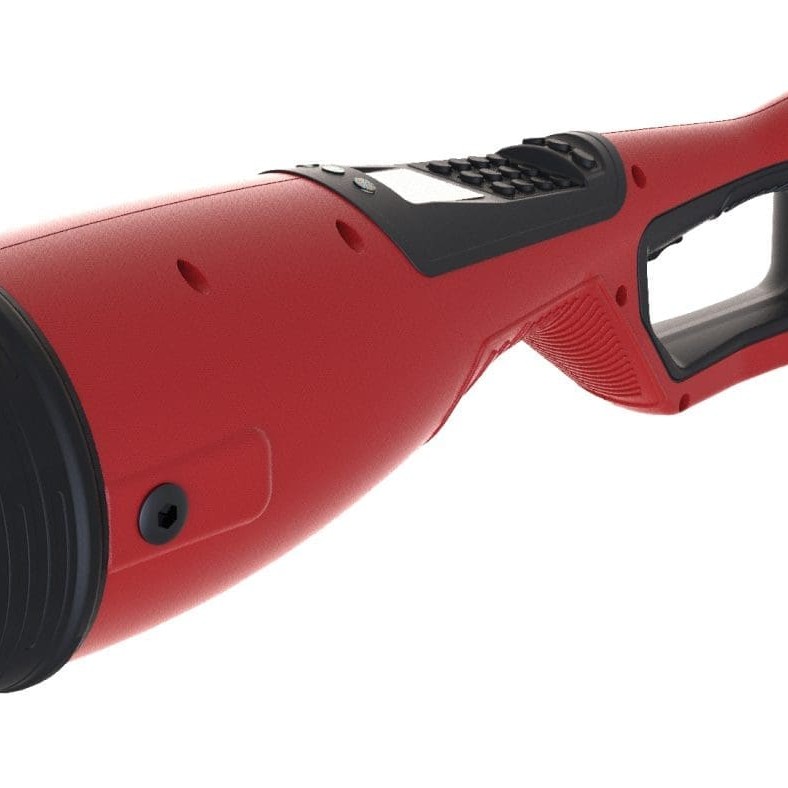 Heard System’s innovative e-Preg pregnancy diagnosis tool recently pitched for additional development funding to a highly-regarded US agriculture-oriented seed funding forum. The e-Preg device, pictured here, is based on picking up audio signals from the foetal heartbeat, while screening-out all the background ‘noise’ going on in the cow’s own digestive, respiratory and circulatory systems. Crucially, the device is designed to be used by an appropriately trained layman, rather than a veterinarian or trained preg-tester. Attendeees from animal health companies and venture capital firms at the Kansas City Area Development Council's Animal Health Investment Forum hear pitches from a selected group of early-stage companies. The so-called Kansas City corridor, which covers parts of western Missouri and northeast Kansas, is said to be home to 30pc of the global assets of the animal health industry. The group’s target profile for pitching companies is late-stage R&D or early stage commercialisation, for projects needing between $500,000 and $20 million to complete commercialisation. Heard Systems needs additional funding to complete development, and to scale-up for commercialisation, and despite a very competitive field, received an invitation to present earlier this month. Outcomes have not yet been announced, but Heard Systems is hopeful of receiving the further development capital it needs. We will keep readers posted.
Labelling call for mechanically tenderised meat
A group made up of consumer stakeholders and food safety organisations in the US is lobbying US Agriculture Secretary Tom Vilsack seeking a system of labelling to identify beef products that undergo a mechanical tenderising process. The group has cited the potential risk of pathogen contamination from mechanical tenderisation, which is used mostly to improve the eating characteristics of older or lesser quality beef by breaking down some of the connective tissue using a series of blade insertions, sometimes referred to as ‘needling.’ A Food Safety and Inspection Service proposal to label mechanically tenderised meat has been under review since March, and is now under greater pressure from the lobby group for approval. The group’s letter to Ag Secretary Vilsack argues that “consumers need to be provided with labelling information so that they can make appropriate selections and take the necessary steps in handling and cooking these products.” Yet according to a 2010 analysis by the American Meat Institute of recent illness-related recalls linked to mechanically tenderised beef products, all of the recalls were tied back to products that were altered further before consumption, such as through marination. This suggests it was not the mechanical tenderisation process itself that created the problem. “Without a label to identify mechanically treated products, along with information to help mitigate the risk, the unsuspecting purchasers of these products have no idea that the product that they have selected needs additional protective handling and preparation,” the group argued. Some mechanically tenderised Australian primals are sold into the US and other markets, often as budget lines, exporters say.