
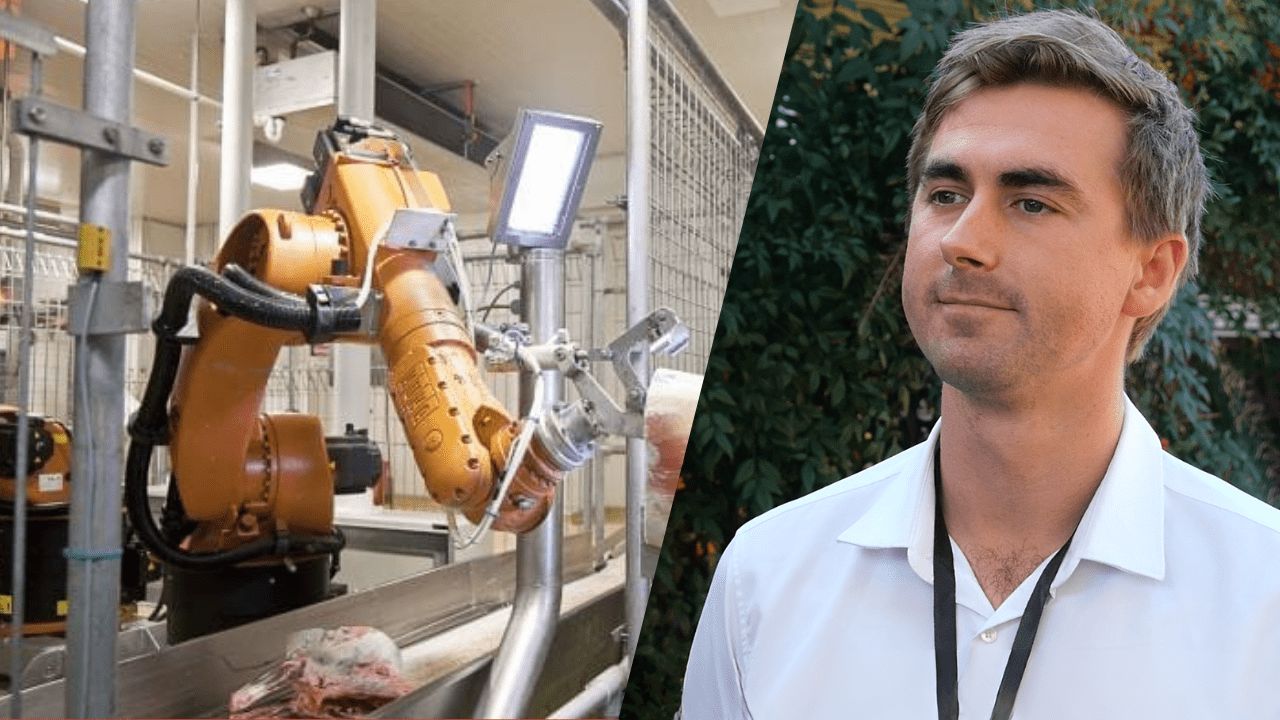
Dr Fraser Border
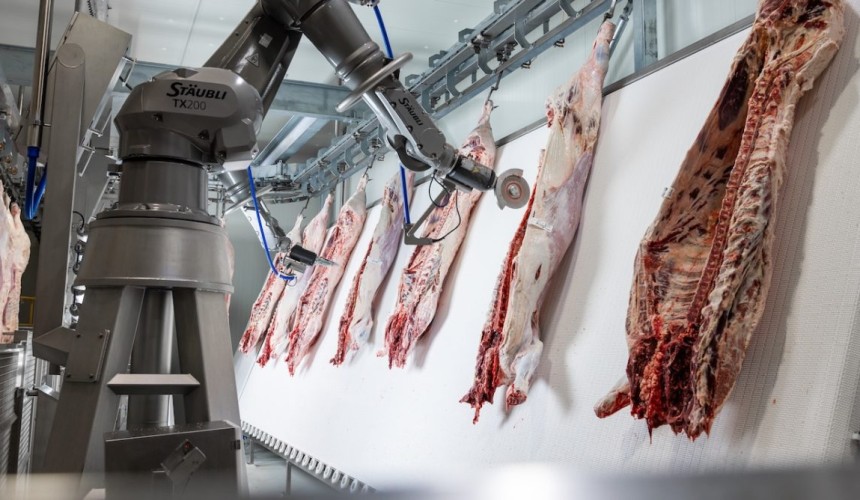
AS Australia’s red meat processing sector invests millions into robotics and artificial intelligence, there is a conversation that keeps following the technology when it hits the market.
That is questions over who will service the machines, who will fix them when they are broken and who will install them.
With a potential skills shortage looming in the increasingly sophisticated industry, the Australian Meat Processor Corporation has started a series of courses for secondary school students interested science, technology, engineering and mathematics (STEM).
The students visit a meat processing plant, take a series of classes with experts in processing and then pitch an idea to a panel of judges in a “shark tank” type setting.
Meat Tech futures convener Dr Fraser Border has been working in the field for the past 10 years, having designed several robotic tools himself. He said commercialising these tools was a challenge.
“The same conversation is happening every time at the processing plant. They say ‘I can see the yield you’re going to save me, I can see the value of what you’re doing. But who’s going to service it? Who’s going to install it? who’s going to come at 2pm on a Saturday when we’re running a shift to fix it?’
“Because if that thing’s not running every minute, there’s so many other issues.”
Bringing STEM kids to the meat industry
A big part of the Meat Tech Futures program is about communicating to students interested in the STEM subjects that there are opportunities in the meat industry.
 “Agricultural kids end up in agriculture because they know about it, they already know how important it is and how critical it is to Australia. It is inbuilt in them,” Dr Border said.
“This is about getting those STEM tech kids who maybe are dreaming of being aerospace engineers, or dreaming to work on F1 cars, and have those types of skill sets be highlighted in red meat.”
Dr Border said it was important to get to students with an interest in these areas before they have committed to a university degree.
“As soon as they enrol in university, they’ve already committed to a 40 grand university degree and they’re either going to be an engineer or scientist or not,” he said.
“It happens in many communities where you’ve got kids in a community that actually understands and appreciates ag but they’re the STEM kids. They want to go away to Sydney, Melbourne, Brisbane, all the metro areas, because they’re told that that’s what they should do to get a job as an engineer. I was the exact same.
“Once they leave the community, suddenly you’ve got all these regional communities where a lot of processors operate with all the skills just disappearing into metro and it’s really hard to bring people back from that.”
Dr Border said he became passionate about the red meat industry when he saw the opportunities to solve problems.
“I love solving problems that no one has ever solved before and red meat has that opportunity,” he said.
AI to take robotics to the next step
Asked about the evolution of artificial intelligence and how it could impact processing, Dr Border said it could be the next piece of the puzzle.
“In automation, you tend to be able to create programs that are quite simple in general,” he said.
“That has worked really well for a very long time in industries where you have fixed products (like cars) and everything about it is rigid.
“We don’t have that in meat. The variability of beef is just phenomenal and that is why automation in beef is nowhere near what it’s done for pork or chicken or other meats that we can make quite uniform.
“That’s where AI comes in. You can have a cut path or a trim path, or you can have the robot know roughly what it should do, but you really need AI to adjust for all that variation.”