
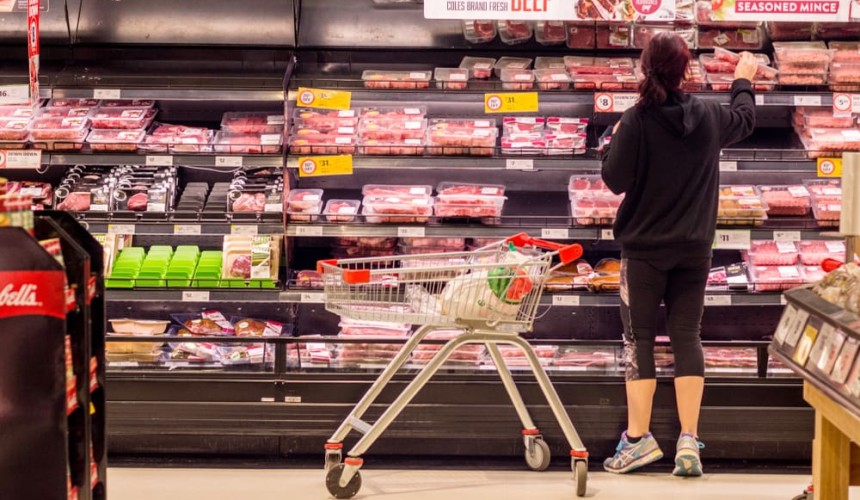
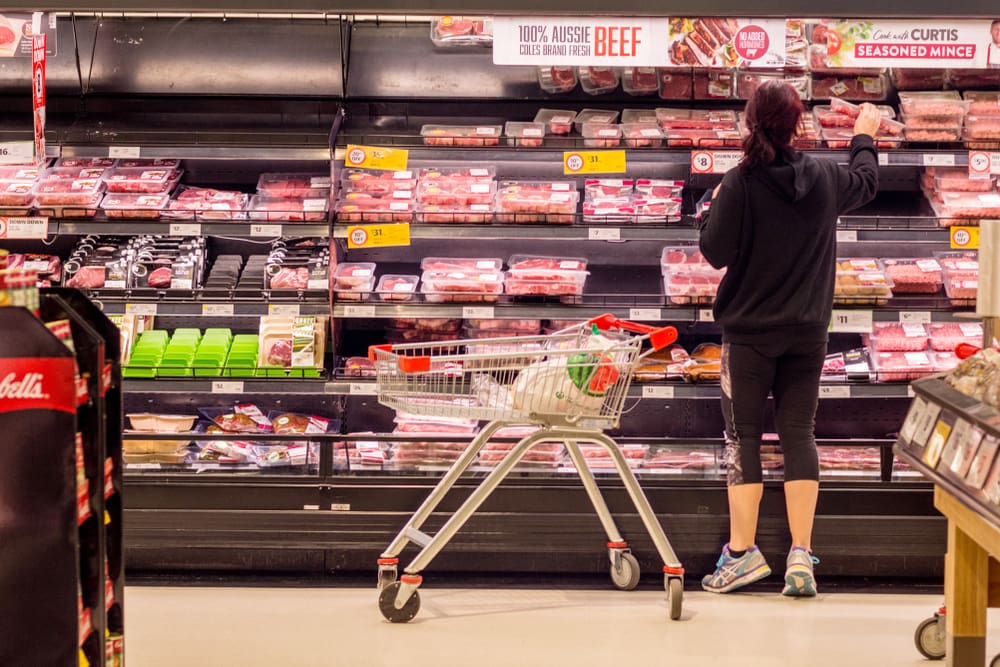
THE relationship between major retailers and their meat processor suppliers has never been simple. But in the past three to five years, it has become measurably more demanding, meaning processors who understand that shift are finding themselves on the front foot for building strong, long-term retail relationships.
Across Australia, the UK and the broader European market, the pattern emerging across the supply chains of major retailers is that the bar keeps rising across the same four areas: animal welfare data, sustainability accountability, supply stability, and the kind of genuine partnership that underpins all three.

Andrew Smyth
So, what’s driving the escalation?
According to Andrew Smyth, Head of Business – Customer Success APAC at Foods Connected, investors, ESG ratings, and now climate and sustainability reporting in Australia all require retailers to show evidence of what’s happening in their supply chains to third parties.
“That’s a very different conversation to the one we were having ten years ago, and it’s what’s driven the escalation in data requirements on processors.”
From policy to performance on animal welfare
Nowhere is that shift more visible than in how retailers are approaching animal welfare. The ‘ask’ hasn’t changed in principle – processors have always been expected to meet welfare standards, but what has changed is the evidence required to prove it.
Retailers are increasingly asking for welfare outcome measures – actual animal-level data captured consistently – rather than relying solely on policy documents and annual audits
“The conversation has moved from policy to performance,” he says. “Retailers are increasingly asking for welfare outcome measures – actual animal-level data captured consistently – rather than relying solely on policy documents and annual audits.”
“The reputational stakes around welfare have also risen dramatically,” he says. “Retailers and processors both need to be able to demonstrate, quickly and credibly, that their supply chains are sound.”
While industry frameworks like the Australian Beef Sustainability Framework and the Global Roundtable for Sustainable Beef have done important work in establishing shared language and a recognised model for what ‘good’ looks like, frameworks alone no longer satisfy what buyers need to see.
“The processors pulling ahead are the ones who can capture, store and share welfare outcome data digitally, and make it readily available when retailers ask for it,” says Mr Smyth.
Sustainability: the data retailers can’t generate themselves
Retailers have also made climate commitments to investors, regulators and customers. Red meat sits squarely in their Scope 3 emissions footprint, which means they cannot meet their own targets without their supply chains moving with them.
MLA’s carbon neutral by 2030 ambition and the Australian Beef Sustainability Framework have given the sector shared direction, but the differentiator now is data maturity at the individual supply chain level – the ability to produce auditable, product-level emissions data that feeds directly into a retailer’s own disclosures.
“The processors who are going to be the long-term partners are the ones investing in emissions data capture now, not because a retailer told them to, but because they can see where the market’s going,” he says.
Supply stability in a volatile system
Of the pressures retailers are managing right now, supply volatility may be the most acute -– and Australia’s structural position makes it particularly complex. Unlike the UK, where processors and retailers tend to operate on longer-term contracts that smooth out market swings, Australian pricing is reset week to week. That means when export demand surges, the dollar moves, or drought changes how many cattle are available, the domestic supply chain feels it almost immediately.
While Australia’s exposure to multiple export markets is a strength, it also means domestic retailers are constantly competing with export demand for the same product. When overseas buyers are paying well, processors face a real choice about where their beef goes.
For retailers, the consequence of that volatility is that committed domestic volume programs become the steady base in an otherwise unpredictable system. “Processors who hold their programs when export demand is pulling hard are building the relationships that’ll matter for years,” says Mr Smyth. “And I’d say the same is true in reverse: the strongest retail-processor relationships I see are ones where both sides commit through the cycle, not just when conditions suit them. It runs both directions.”
What a long-term partner actually looks like
All three factors combined mean that processors doing best in their relationships with major retailers aren’t always the cheapest on any given week.

James Hennessy
Global Head of Sales – Protein at Foods Connected, James Hennessy, knows that while processors always follow through on their commitments, their reliance on a ‘shared risk, shared reward’ mentality means that it has to run both ways – up and down the chain – if the partnership is going to hold.
“Balancing supply and demand is a juggling act – and livestock and raw material are two highly variable, significant inputs to a processor’s P&L,” he says. When processors give forward commitments to retail partners, that commitment carries risk. Data helps build that risk into pricing models, but Mr Hennessy says that numbers only go so far. “There will always be other contributing factors at play that are hard to quantify in pricing discussions – the opportunity cost of a forward commitment in a high-demand export market being a good example. That’s where trust becomes critical.”
Without it, he argues, a shared risk, shared reward structure simply won’t hold. “Data is strong by itself. But it’s most impactful when used in conjunction with people’s industry knowledge.”
He points to value-add marketing as a case in point – an initiative our supply chain is currently rallying around, focused on extracting maximum value from the carcass. “That will only succeed if all entities pull together to bridge the needs of the consumer to the actions in the paddock and at the plant. Data is the driver, people are the vehicle. Both are needed to succeed.”
The strongest processor-retailer relationships, Mr Hennessy suggests, are built on exactly that kind of openness – where conversations move beyond price point alone, to address the motivations and challenges on both sides of the table.
Want more information on Foods Connected and the possibilities using its supply chain management software? Click here