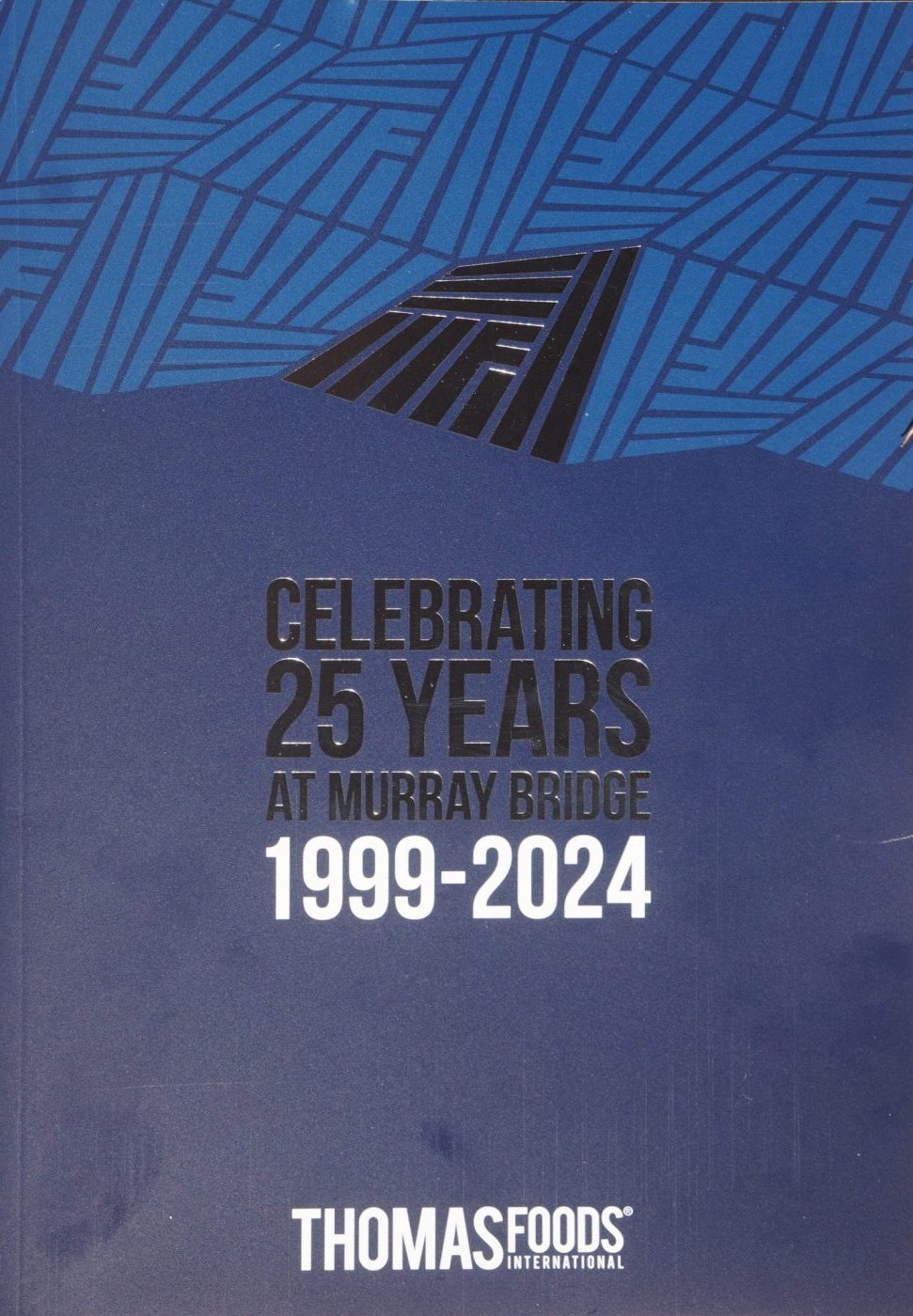
THE challenges, setbacks and just occasionally, rewards, so common in the red meat processing industry are captured in vivid detail in a new publication chronicling the past 25 years of ownership of Thomas Foods International’s Murray Bridge facility in South Australia.
The self-published work, covering 96 pages, adds to the small but growing library of documents capturing the colourful and eventful history of meat processing operations in this country.
 TFI’s predecessor – T&R – bought the old Murray Bridge beef and lamb processing site from Chinese-owned CITIC in 1999.
T&R principals Bob Rowe and Chris Thomas formed a formidable partnership in the South Australian meat trade. For 40 years they navigated the boom and bust cycles of the livestock industry with shrewdness and optimism.
Chris Thomas, 13 years Bob’s junior, joined the business out of the stock agency industry in 1973, and together the pair built a successful domestic wholesale and retail business out of Gepps Cross, processing at SAMCOR, and branching into export into the US.
Buying the Murray Bridge facility in March 1999 was the deal of a lifetime, the account suggests.
“We hocked everything to buy it -socks and all,” Simon Rowe recalled.
“But Bob and Chris approached it like any other livestock trading deal, and in the end they got it for a bargain.”
In fact T&R paid just one quarter of what CITIC had paid for the Murray Bridge facility only four years earlier.
“Dad used to say, we’ll never own a meatworks, but all of a sudden it was just a natural progression,” Simon said. “It gave us more control over what we were doing, at the same time as a lot of other operators were in decline.”
Learning from mistakes
When T&R first started processing at Murray Bridge, the leadership team didn’t have all the answers, Chris Thomas recalled. However they were prepared to take risks and make mistakes, and that fast-tracked the learning process.
Chris said in the early days a lot of decisions were made without knowing if they were right or wrong.
 “But we made decisions,” he said, with dramatic simplicity. “The worst thing you can do is not make decisions. People say, if you’ve never made a decision, you’ve never made a mistake. That’s not something we’ll ever be accused of.”
The transition out of the old T&R company into today’s TFI is set out in detail, with the Thomas family buying out the Rowe family’s share and decoupling the assets in 2009.
The Rowe family, through Bob’s son Simon, has gone on to establish their Princess Royal property as one of the better feedlots in southern Australia, with a one-time capacity of 25,000 head (see references in Beef Central’s Top 25 Lotfeeders report. )
Previously, T&R was a ‘hybrid’ meat processor, lotfeeder and pastoralist, but the de-merger of the Rowe and Thomas families changed all that.
“From that point onwards, we were no longer pastoralists, nor lotfeeders,” Chris’s son Darren Thomas recalls.
“We became dedicated meat processors. Some of our longer term employees at Murray Bridge saw the buyout as a commitment by our family that we were here for the long haul.”
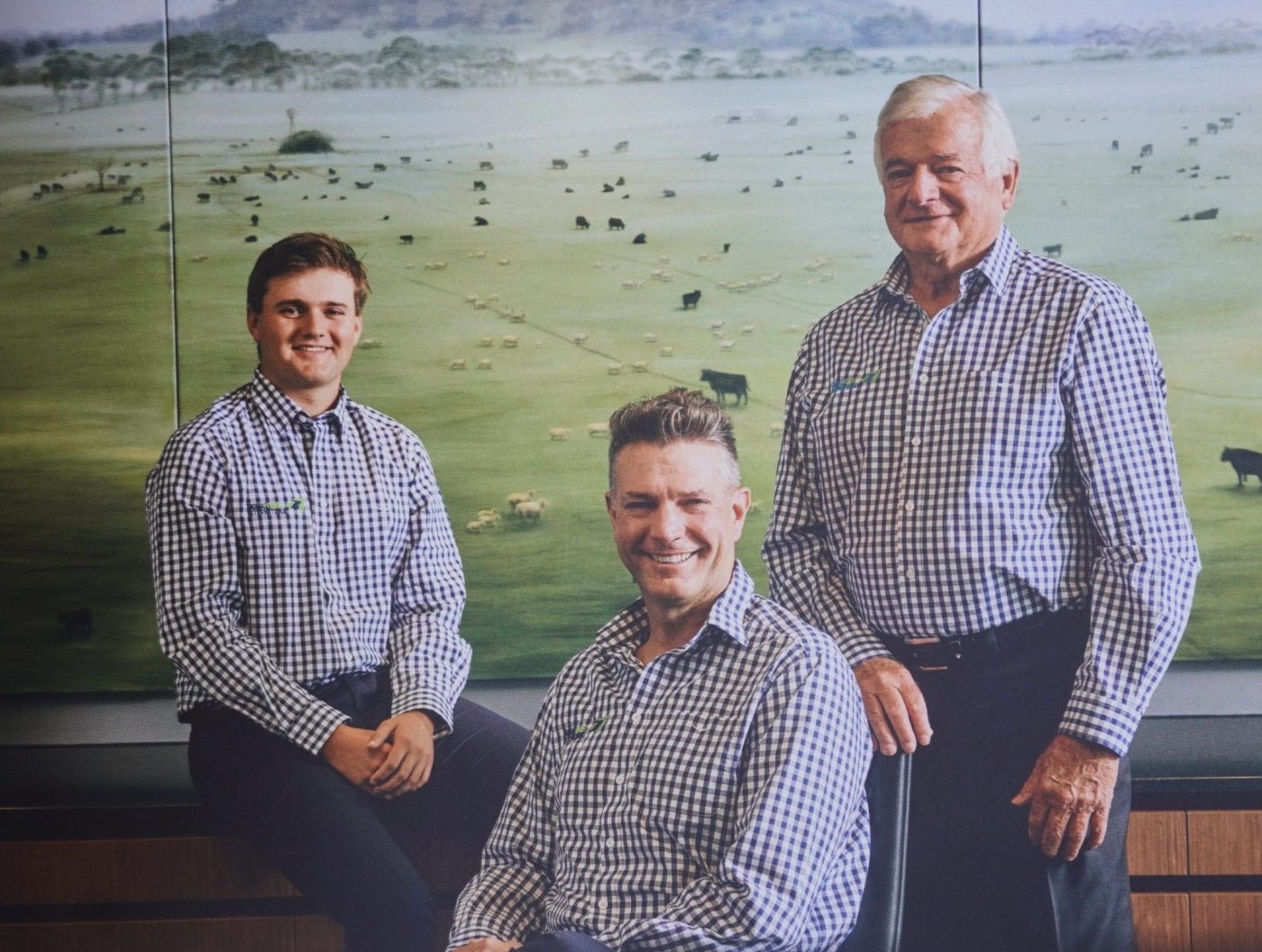
Three generations – Chris, Darren and Jack Thomas
The document is a ‘warts and all’ look at the trials and tribulations of meat processing, with former Murray Bridge plant manager and TFI board member James Rattus recalling the day in October 2000 when T&R failed an audit leading to the plant’s temporary loss of its US export license.
“It’s not a day I’ll ever forget,” James said. “We weren’t the first meatworks to lose a license, but it was the single worst thing that happened in the ten years I was there. However it taught us some lessons – we were focussed on the quality of our products and hygiene, but we had to focus on the QA systems more.”
Other contributors to share insights in the history included cattle producers Ben Hayes, Viv Oldfield and Alex McGorman and Gary & Jason Thornhill from TransAustralian Livestock transporters.
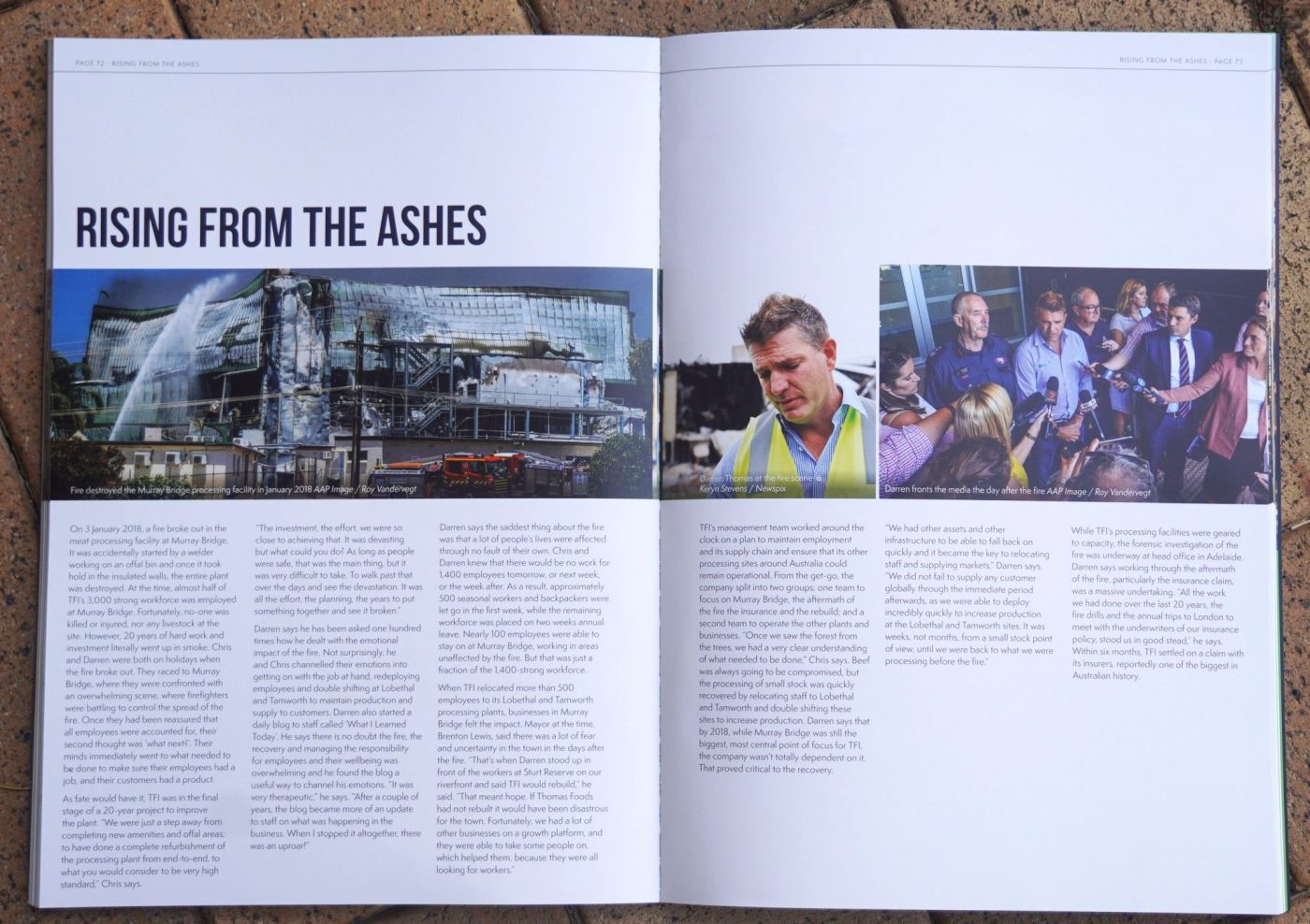
Account of the disastrous 2018 fire
Fire event
No history of TFI or Murray Bridge could be complete without an account of the dramatic fire that destroyed the beef plant in January 2018.
Started by a welder working on an offal bin, once the fire took hold within the insulated panel walls, there was no stopping it. It was easily the largest abattoir fire ever seen in Australia. TFI settled on a claim with its insurers, reportedly one of the biggest in Australian history.
At the time, half of TFI’s 3000-strong workforce were employed at Murray Bridge . More than 500 employees were relocated to the company’s Lobethal and Tamworth plants, double shifting to increase production.
“We did not fail to supply any customer globally through the immediate period after the fire,” Chris Thomas recalls.
Within days of the fire event, the Thomas family vowed to rebuild the Murray Bridge plant, with the first sod on a new nearby greenfield site turned in December 2020. Beef processing recommenced on the site in May 2023.
The book states that the Murray Bridge fire was a most significant event in the company’s history, and it proved that Murray Bridge had endured everything.
“Industrial changes, drought, flock reduction, fire – whatever it is, Murray Bridge has survived.”
Hi, The book appears to be a good read. Is it possible to get a copy and if so, where from and what is the cost.
thanking you.