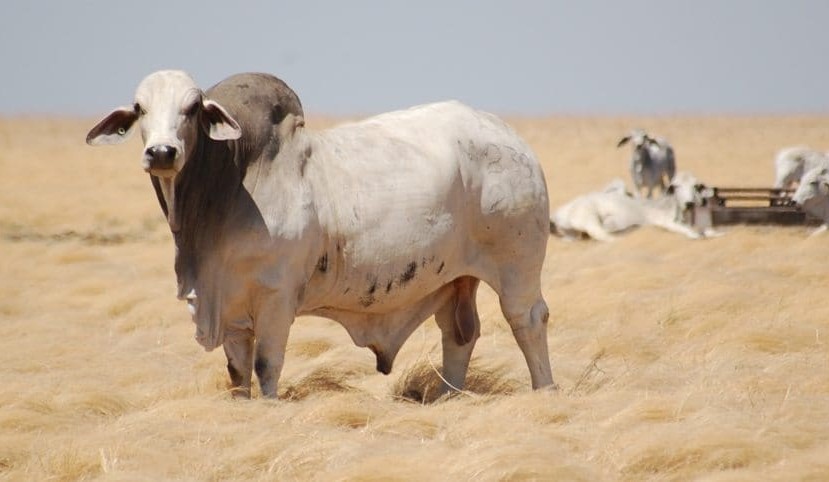
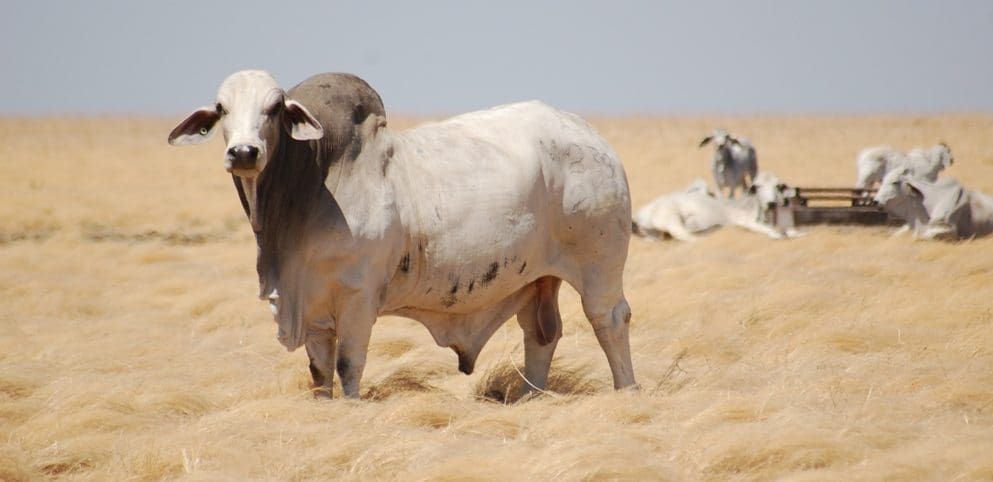
THE ability to walk and graze is fundamental in achieving any production goal in beef herds.
In Australia, much has been made of the requirement of cattle to be able to walk and forage. In selection terms, this has often meant that selection focus has largely been on the physical ability of cattle to walk and cover ground. This places most of a producer’s attention on traits such as structural soundness of feet and legs, as well as on jaws and muzzles.
These are certainly important attributes, and rightly deserve producers’ attention at selection time and as part of ongoing herd improvement. However, it is not the only area where producers can seek to make some improvements in the grazing ability of their herd and possibly have an impact on greater pasture utilisation across their landscape.
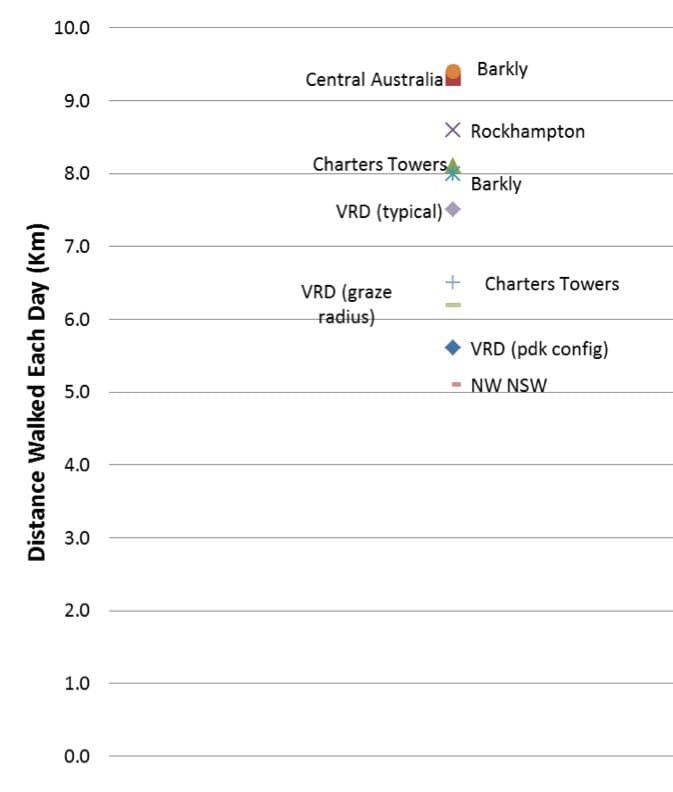
How far cattle walk and graze has been the focus for several studies over the years. While there are many examples of cattle walking more than ten kilometres a day, the actual average distance is somewhat lower than this.
Click on image to enlarge
A Meat & Livestock Australia report outlining the methodology behind the use of Adult Equivalents was published in 2014. Prepared by Bush Agribusiness, the report summarised several studies where distance travelled by cattle was a focus of research.
This summary indicates that the average distance most cattle with travel each day is 7km. The report noted an observation from noted CSIRO researcher Dr John McIvor stating that “In broad terms, cattle walk a similar distance each day, irrespective of paddock size.”
There is, however, a difference between distance travelled and grazing activity. The distance cattle must travel each day is determined by feed and water availability.
70pc within 3km
Research conducted by Robin Cowley & Dione Walsh several years ago in the Northern Territory showed that at least 70pc of grazing occurred within 3km of water. In well-watered areas the research showed that the amount of grazing that occurred within 3km radius of water increased to 90pc.
The research also found that while cattle would graze out to a 5km radius of water, the amount of grazing cattle undertook was much lower. As a result, the areas closer to water were more heavily grazed, resulting in more cattle around a water point, less forage available per head and a decline in land condition closer to the water.
While cattle will modify their grazing behaviour when water is less available, and will graze further, most cattle will stay within a 3km radius. This fits with the statement that Dr McIvor made in cattle will walk similar distances each day.
So, while cattle do have the ability to walk reasonable distances, and provided they are physically capable of doing so, most of a herd is less likely to graze further out from water.
This poses many challenges for producers and grazing managers, particularly those attempting to ensure that forage per animal is not restricted, and land condition is not compromised. The traditional method of managing this has been to alter stocking densities in paddocks. However, this juggle isn’t always possible.
Longer term, a solution for many graziers has been to increase water access and open areas of grazing so that cattle can access new areas of forage, while still grazing within their preferred radius from water. While this is often a goal, it is both costly and, in some cases, not physically possible to achieve.
Individual grazing habits vary
However, there are cattle in every herd that choose to graze further from water. Investigations in the US have shown that there is a genetic trait that can influence cattle grazing behaviour and in particular the choices made to graze further, or in some cases on higher or steeper terrains.
Research conducted in the American rangelands is starting to show there are differences in terrain use by cattle. As with Australian data, this research shows that distance from water is a consistent factor influencing cattle grazing. However there are cohorts of cattle that graze further and use more feed further out than the used by the average of the herd.
The preliminary research suggests that there may be a genetic basis for grazing behaviours and more efficient use of landscape.
The potential for Australian selection may come in selecting cattle that are likely to do more grazing further than 3km from water. If as noted earlier cattle have a predisposition to walk the same distance irrespective of paddock size, then selecting for grazers and walkers that go further may allow producers improvements in grazing efficiency. This could lead to reduced pressure on water points, more even utilisation of paddock feed and help with future infrastructure planning.
While there are many factors that impact grazing behaviour, it might be worth looking more closely at which animals are grazing where and seeing if there are cattle that can be selected as better grazers in a herd.
 Alastair Rayner is the General Manager of Extension & Operations with Cibo Labs and Principal of RaynerAg. Alastair has over 28 years’ experience advising beef producers & graziers across Australia. He can be contacted here or through his website www.raynerag.com.au