
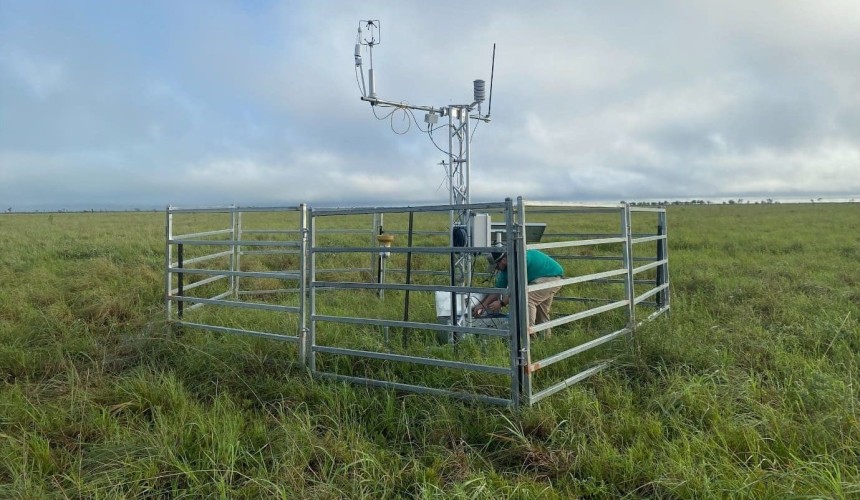
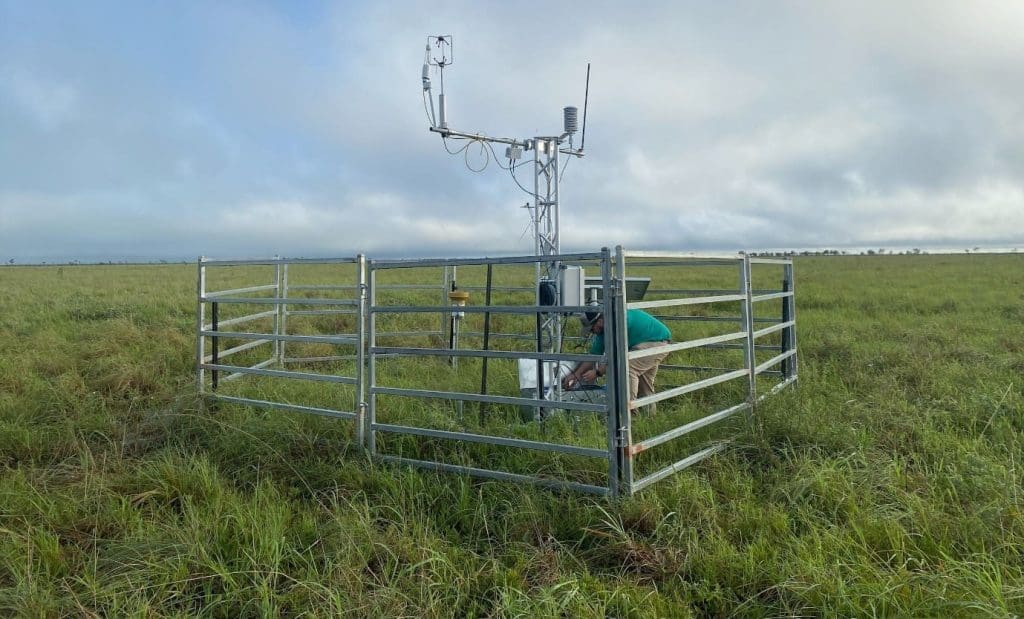
Picture: Zac Geldof, Agrimix
CATTLE Australia is calling on industry research and development bodies, including the newly formed net zero CRC, to reset the industry’s climate-related research priorities.
On top of the list is giving the industry a more complete understanding of the fluxes of emissions in livestock operations – rather than treating livestock as one-way emitters.
The Net Zero Emissions Ag cooperative research centre formed earlier this year with the most funding a CRC has ever received, being $175m split Government and industry partners. The CRC is expected to announce its first projects later this year.
CA deputy chair and Central Queensland producer Adam Coffey it was important the money is spent wisely.
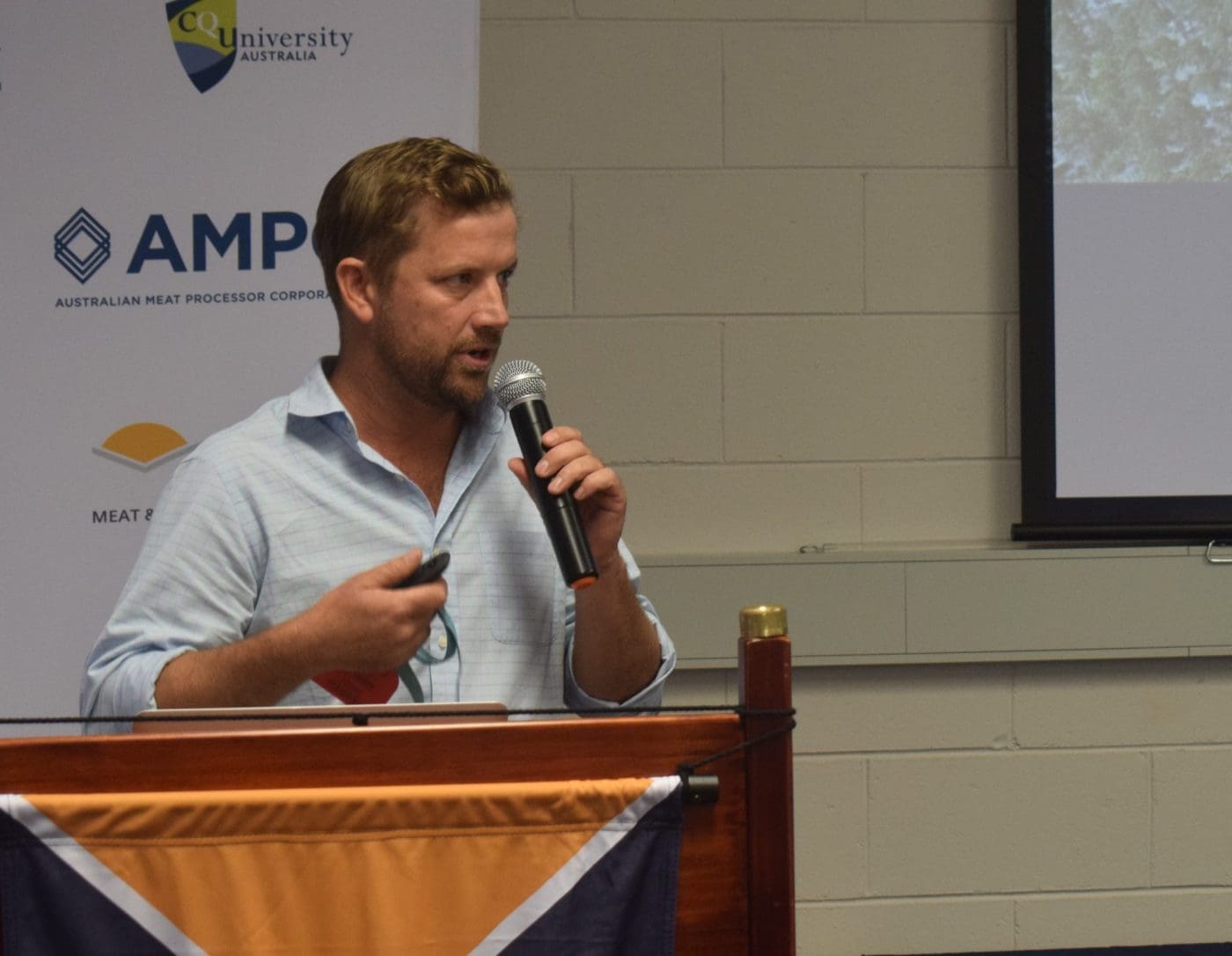
Adam Coffey
“There is a lot of money in the net zero CRC and, when we reflect on recent years, there has been a lot of research with a huge focus on emissions reduction and mitigation,” Mr Coffey said.
“But it’s well and truly time to look at the big picture and work out how the industry can better engage, and I believe the CRC is best placed to assist with that process.”
One of the main issues CA has been raising since forming in 2022 is with methane reporting metrics, with the globally recognised GWP 100 known to overstate the warming impact of a stable source of biogenic methane by three-to-four times.
Mr Coffey said if research bodies like the CRC can address these inequities, the industry was likely to be more engaged.
“We are hearing a lot of disenchantment from producers who are being told to undertake on-property carbon accounting and ‘know your number’, when there is plenty of evidence to suggest the number is inherently incorrect,” Mr Coffey said.
“These numbers continue to paint us as big, bad, one-way emitters, when we know that is not the case. Cows do not exist in emissions chambers, they are part of a natural biogenic cycle.”
Differentiating grazed and ungrazed land
Mr Coffey said the large amounts of funding presented a huge opportunity to undertake research that could have significant outcomes for the beef industry and Australian agriculture as a whole.
“CA has been looking into a research project on a US cattle ranch, which used flux towers, remote sensing, modelling and ground-truthing to understand the full emissions profile of the property, making interesting comparisons between land that was grazed and not grazed,” Mr Coffey said.
“Undertaking similar research in the Australian context would be invaluable, and it’s why we have been in discussions with the CRC, Research Councils, MLA and CSIRO about starting similar, long-term, research projects in Australia.”
Mr Coffey said such research would involve large, multi-site projects collecting data for a minimum of five years, which would require significant funding.
“Correctly quantifying, understanding and differentiating the emissions profiles of land that is commercially grazed and ungrazed is one of the biggest gaps in knowledge we have,” he said.
“A big part of what they have done in the US is looking at the ecological outcomes on livestock operations over the long-term, alongside carbon sequestration.”
Industry needs incentives for climate action
Activist groups, scientists and other industry participants have suggested in recent times that the push to reflect the warming impact of methane with metrics other than GWP 100 is the industry trying to use creative accounting to get itself out of acting on climate change.
Mr Coffey said sequestering carbon on agricultural land and correctly quantifying the biogenic carbon cycle was one of the biggest opportunities in the “net zero” economy and producers needed incentives for these opportunities to be realised.
“We know better performing beef cattle enterprises have the ability to sequester more carbon and produce beef with less emissions intensity; we need to think smarter around how we incentivise that, rather than just painting all livestock as one-way emitters,” he said.
Net zero CRC considering CA proposals
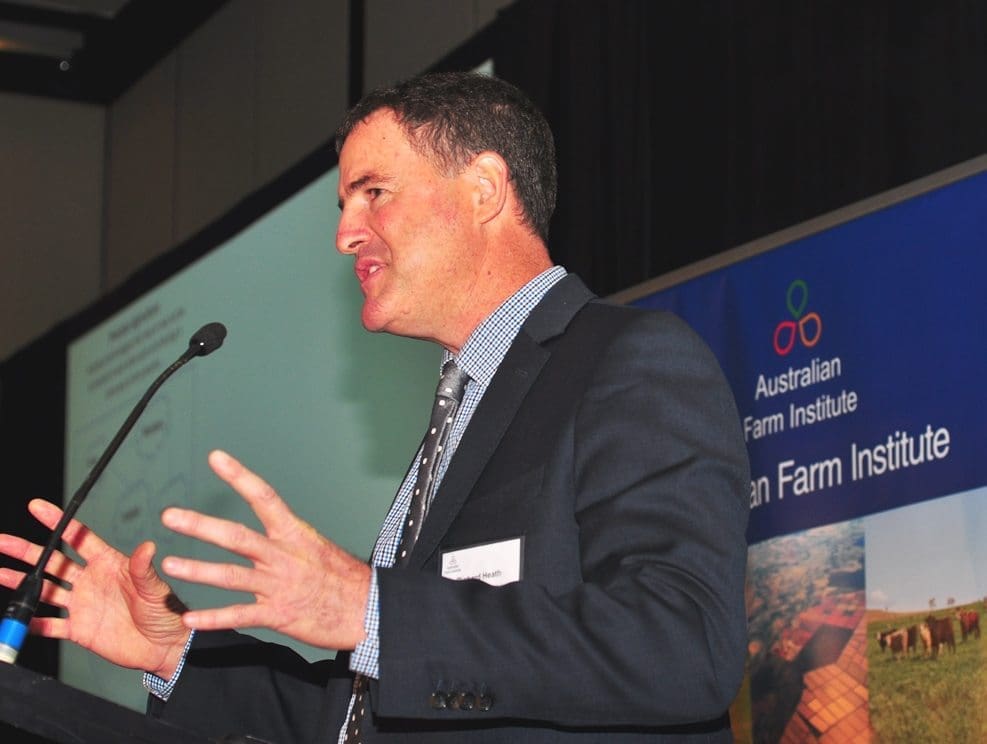
Richard Heath
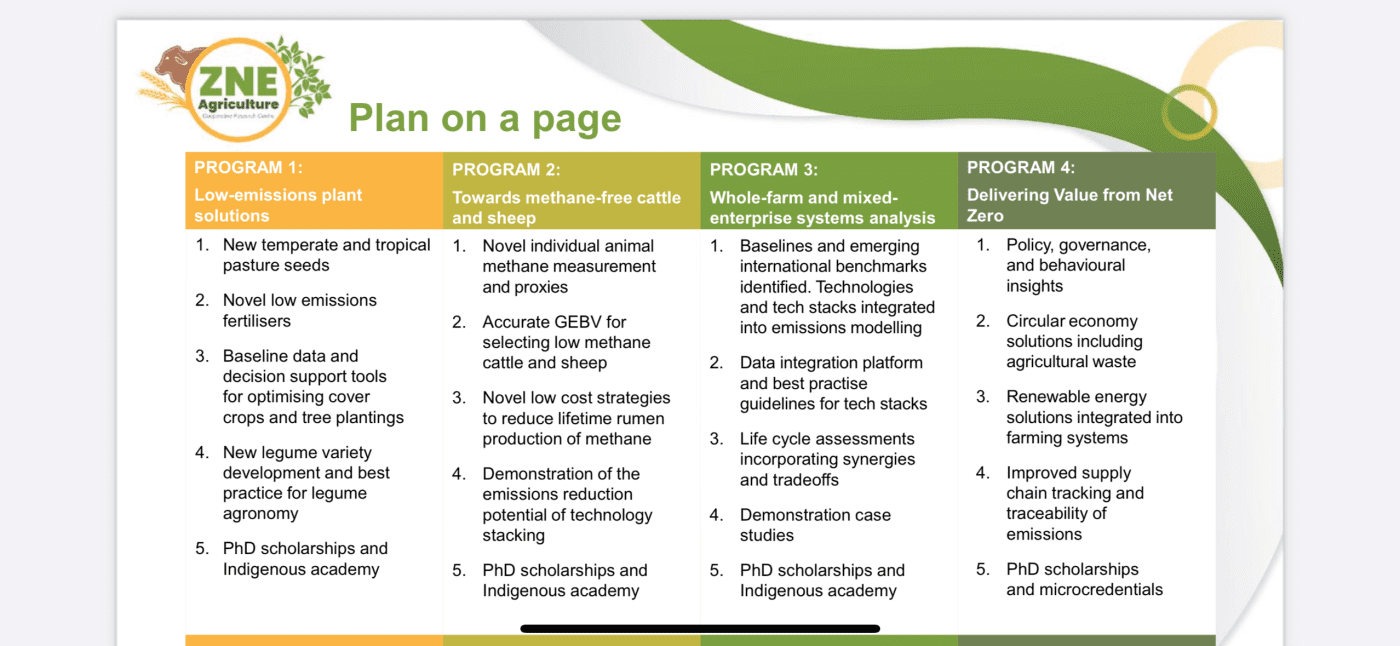
The net zero emissions CRC is considering CA’s proposal with methane reduction and “baselines and emerging international benchmarks” making up two of its four overarching programs.
NZE chief executive officer Richard Heath said the priorities of the CRC were put together over the past two years while the proposal was being put to the Federal Government. Industry organisations, lobby groups, government departments, companies and universities are all partners.
CA is not a direct partner of the CRC.
Mr Heath said emissions reduction was one of the clear directions the CRC that set early in the process as a lot of work had gone into carbon sequestration.
“Emissions reduction technologies were where it was felt there was a gap, particularly how you can build that across a farm business and stack lots of technologies together,” he said.
“Where we will be aware of and monitoring the developments around carbon sequestration technologies is in our program three, which is about whole farm systems analysis. To understand the farms emissions footprint and its net zero position effectively, we have to be able to measure sequestration as well as reduction.
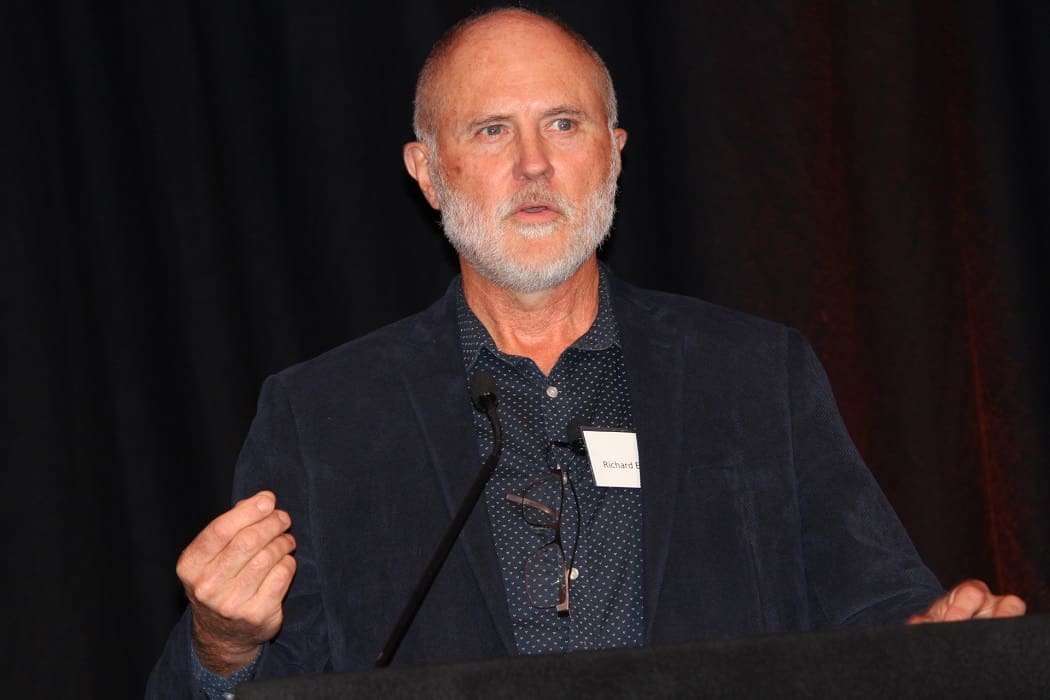
Professor Richard Eckard
“There is a strong element in the CRC that will be looking at the measurement, validation and reporting systems.”
Heading up the CRC’s program three is University of Melbourne professor Richard Eckard, who has been integral in rolling out the current emissions calculator SB GAF and has been a defender of GWP 100.
Asked whether there was any plans to review the current accounting frameworks. He said that there were no plans to include other methane reporting metrics, particularly GWP*, in the GAF tool because GWP 100 was recognised in international frameworks like the Science Based Targets initiative.
“It is therefore superfluous to include it. It’s also practically not feasible, because it requires the user to know the animal numbers 20 years ago and we struggle to get them to understand their animal numbers today,” Dr Eckard said.
“There would be very few producers that would know how to fill out a calculator that asks for animal numbers 20 years ago.”
He said across the 25 demonstration sites planned for the CRC, they were planning to answer some of the questions using tools like flux towers.
- Beef Central will have more on the US research referred to in this article
Is this another case of the top telling us what cattle producers' needs are, rather than the producers' concerns or interests being considered.
Grassfed cattle producers are already NET ZERO- if they’re going to tax the methane they must first credit the co2 taken in by the grass
This should be obvious, look at the work of scientists like Walter Jehne and others - but it seems our compromised “industry leaders” will allow farmers to be belted once again
HungaTonga volcano erupted in Feb 22. It was one of the largest volcanic eruptions since Krakatoa in the 1880's. It is stated that 58000 olympic swimming pools of water vapour were blasted into the atmostphere, about 10% of the earch's atmostpheric quantity. Immense amounts of sulfur dioxide and dust as well. What does this all do to the 'climate change' models and forecasts?
Then there are rocket launches, which are increasing at a massive rate with starlink launches and the demand for spy satellites due to the war in Ukraine and ISS re-supply missions. Falcon 9 ~400 tons of fuel per launch, Falcon Heavy~1300 tons of fuel per launch
Fuel is RP-1 (kerosene) plus LOX, all of which combusts to exhaust roughly half CO2 and half water, which is dispersed from the ground all the way up directly into the upper atmostphere.
The Nordstream sabotage leaked/wasted 300 million cubic metres of methane into the atmostphere as well, and then there is the massive fuel use and destruction in the Ukraine war.
Why are no climate scientists (sic) talking about this? Where are the green warriors? They are concerned about some farting cows.
We are dealing with well credentialed and possibly well intentioned people, but they must be either functionally stupid or corrupt.
Air New Zealand, Australia Post & the country of Scotland have all dumped their "climate goals", & many more will soon follow.
CA should take note.
It was only ever a dodgy marketing ploy anyway.
Stop throwing effort & funds after foolishness.
This is a great start but until some actual research is done to establish the levels of methane in both rain-forest areas as compared to the paddock or saleyards then we are wasting our time.
To date no-one has done this research and we haven't a clue what the current levels are. We must establish a datum or reference point right now to establish the real culprits of methane emissions.
As an aside, does anyone understand that methane is a critical component of lightning? Understand that without lighting, particularly in tropical areas, rain will fall into the oceans in preference to land.
Chris Davis
Beef Industry is not recognising that there is a natural genetic solution to the reduction of Methane Gas - Limousins can reduce Methane Gas Emissions by upto 30 per cent (GreenBreed Cattle Research Test Station Results - Ireland)
<strong>That's a bold claim, Patrick - can you provide a link for people to check out? Editor</strong>