
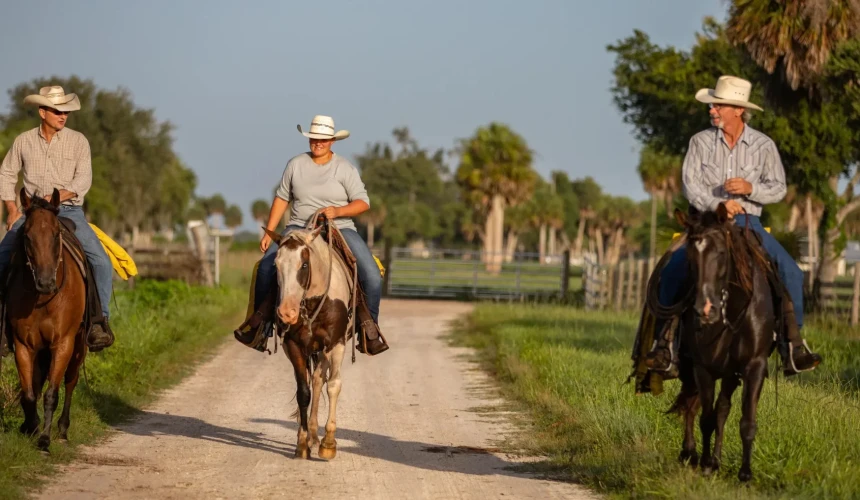
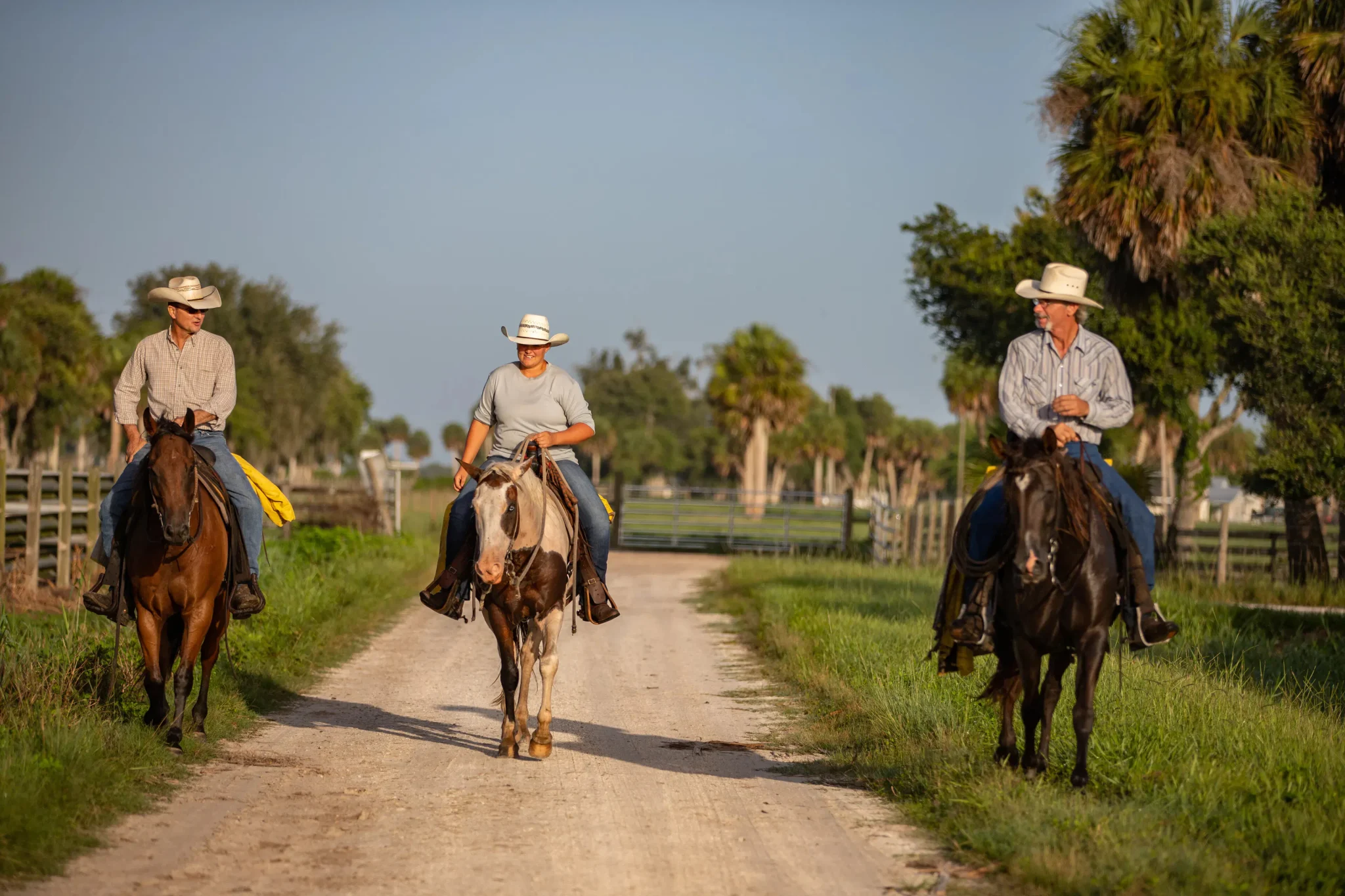
For the past 10 years, Buck Island has been performing one of the most comprehensive studies livestock emissions in the world. Photo: Archbold
A NON-PROFIT science and conservation group in the United States has piqued the interest of the livestock industry across the world by performing one of the most comprehensive studies on livestock emissions.
The work on Florida’s Buck Island Ranch looked a range of factors that make up the emissions profile of its cattle operation, with one of its most significant findings being that its grazed land had a lower footprint than ungrazed land.
Now Cattle Australia is calling on research groups like the newly formed net zero emissions agriculture cooperative research centre to replicate the research in Australia.
Since 1988, the Buck Island Ranch has been run by a conservation group called Archbold Biological Station – which has set the ranch up as an environmental research centre for Florida’s grazing industry.
Buck Island has a similar climate to parts of Northern Australia, with defined wet and dry seasons and areas that are wetlands for part of the year.
Cattle have always been part of Archbold’s approach to conservation, with the organisation wanting to make sure that it stays as relevant to the industry as possible. Dr Elizabeth “Betsey” Boughton said with 1/5 of Florida’s land used for grazing, the industry played an important role in conservation.
“Ranch economic sustainability is synergistic with conservation,” she said.
“It is very low intensity agriculture, these are really diverse mosaics of wetlands, woodlands and other land types.”
Responding to pressure on industry emissions
In the early years of Archbold’s management of Buck Island, the main focus was on water quality and managing wildlife.
But as the world started to focus emissions and methane from cattle came into the firing line, Archbold was wanting to answer some of the big questions about methane emissions.
Dr Boughton said acting on the climate change pressures required a comprehensive understanding of the emissions profile.
“Understanding whether you are a sink or a source of emissions is the first step to knowing how the industry can improve,” she said.
“It answers questions like; do I need to reduce my emissions or increase my carbon uptake?
“We really had no idea whether we were a source or sink of carbon. We had no idea how our management impacts it, we graze and use a lot of prescribed fire – so it was all just a big question.”
Since 2013, Archbold, along with collaborators, has been using five Eddy Covariance Flux towers, which detect fluxes of emissions on and off a pasture.
The first study was looking at the methane output from cattle and comparing it to the methane output from the wetlands and wet soils.
“It is well known that when you have anaerobic soils, there are microbes that release methane which is part of their metabolic pathway,” she said.
“We found that cattle were only 19-30pc of the methane budget of areas on our ranch.”
Archbold has looked into all manner of emissions fluxes over the past decade, including comparisons between grazed and ungrazed land.
 “We found that the grazed system was a stronger carbon sink than the ungrazed system,” she said.
“That was because cattle were eating grass and removing it from the ecosystem and we had a lot less ‘litter’ making a thick layer of leaves on the ground. When cattle were removed there was much more of the litter decomposing from microbial activity.”
Livestock feed company Alltech has funded further work to model the outcomes and determine whether the ranch is a sink or source of emissions.
“Putting it all together, we ended up being a net sink,” Dr Boughton said.
Archbold is now working on extending the research to other parts of the US and hopes the research can help the industry tap into carbon markets.
Potential to replicate research in Australia
Cattle Australia has been calling on research groups in Australia to take a similar to Archbold in guiding the industry’s approach to emissions.
Kari Moffat from one of CA’s regional consultative committees said learning from approaches in other countries was important.
“There is great potential to learn from this research and replicate it in an Australian context,” Ms Moffat said.
“While the combination of ecosystems on which we produce cattle here in Australia is nearly unique globally, there are lessons we can learn from our global partners for specific land types we both use.
“With a global movement towards better understanding cattle production impacts on natural landscapes, being able to replicate research such as this in an Australian context is so important. Being able to learn from the approach taken at Buck Island allows us to get ahead of the curve replicating it and in applying the lessons here at home.”
Similar landscapes to Northern Australia
Ms Moffat, who works out of Darwin, said the similarities of Buck Island to Northern Australia was what drew her attention to the research.
“There aren’t too many places where you see tropically adapted cattle standing on floodplains being utilised for commercial production purposes and environmental research.
“Globally, there isn’t much research on grazing these ecosystems, so it was very exciting to see it, especially in an established production system such as the US.”
Ms Moffat said the similar landscapes in Australia formed an important part of the production system.
“Floodplain productions systems fit a unique part of the landscape in the far north of Australia.
“They allow the preparation of cattle in coastal environments where pasture becomes more available as the year progresses, which is the inverse of what happens a few hundred to a few thousand kilometres inland.
“They form a key part of drought resilience and ensuring continuity of trade with our domestic and export markets. Ensuring that the manner in which we use them is productive for years to come, both commercially and environmentally, is critical to building resilience northern Australia. Increasing focus on highly relevant, contextual research such as this has enormous value into the future – if we can quantify it.”
Opportunity to keep producers commercially sustainable
Ms Moffat said approaching research in the way Archbold has at Buck Island was an opportunity to make sure managing emissions kept producers profitable.
“Through discussions with researchers at Buck Island, we were able to better understand their approach to quantifying the net impact grazing ruminants have on the environment, compared to ungrazed, something I haven’t seen quantified here in Australia,” she said.
“What stood out to me in those conversations was the comment that one of their key drivers was ensuring ranchers are commercially sustainable, as they play a key role in conservation. There is a real opportunity here in Australia for quantifying the services Australian producers provide.”
That is very interesting I'm looking forward to learning more I'm curious if there's any one doing that kind of study here in the rockies (Wyoming)
It doesn't matter what happens on ungrazed lands - that is considered ‘Narural’ and not counted, like the termites who emit more CO2 than anything else in the Australian landscape.
No the agenda is not about cow CO2 sinks - if it was we would be measuring the whole life cycle of the cow, from conception to consumption, recognising these wonderful creatures are converting what would be lost to rotting or burning into valuable protein to feed the masses.
No the agenda is to rid the world of cattle and following that, other domesticated ruminants through greenfare. Only the super rich will have steak. You peasant tax payers can eat worms.
If pasture production of protein is a sink, the banks will be knocking down doors to invest. Yes the CRC needs to look at this research.
If anyone has any common sense, cutting the grass causes grass thru photosynthesis to grow, taking carbon from the air and putting it in the ground turning a relatively non digestible product, grass, into a protein source. Maybe our politicians should go to biology class!
This research is very helpful in understanding the value of grazing animals conservation contributions. Keep up this great research 👌
Thanks for the insights shared in this article. However, I would love to know if there has been a study on the impacts of zero glazing animals where IMO is used...
This is great research and hopefully the beginning of better understanding for the cattle industry and farming. Farmers are the best land stewards and we all need sustainable practices. Precisely what’s going on here. Bless them and publicize this research.
w/ similar climate,this is apt also for the Philippines & neighbor Borneos. ...
Excellent news. The Albonese government is planning to make the banks the gate-keepers in its net-zero enforcement programme. It will be essential for pastoralists to be able to justify that their enterprise is a carbon sink rather than a carbon source. This article points the way.
Thanks Beef Central - At last a good news story for cows and farmers - what a great research project - agree, we need to seek out honest researchers and funding bodies to support hydroxyl ion/ methane research. maybe the flux towers can be used to measure variations in both methane and carbon dioxide in various grazing systems. Only last month another USA research project proved that trees absorb large amounts of methane in their bark - this is also not taken into account for global or national methane accounting - The IPCC has seriously poor accounting for any of these sinks.
Mick,
Stuart Larsson here.
I have jest replied with our SOFT BIOCAR METHANE work.
If interested i can forward, you a paper on it.
regards
Stuart