

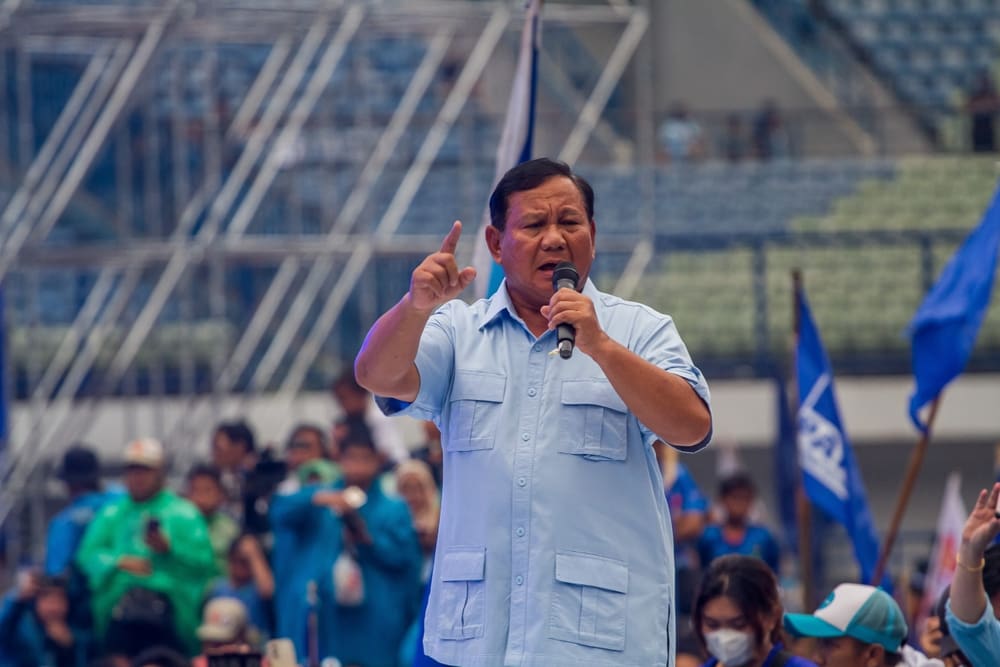
Indonesian President Prabowo Subianto addresing crowds during the 2024 Presidential election campaign.
On the 6th of June, Tempo Jakarta published an announcement by the Finance Minister, Sri Mulyani Indrawati outlining President Prabowo Subianto’s 11 priority programs which will require AUD$41.9 billion or about 12.3% of the national budget totalling AUD$340 billion (all amounts have been converted to AUD$).
Considering Prabowo’s history as a military strongman with close connections to the elite political and financial leaders of Indonesia, I did not hold out much hope that his policy priorities would target the majority of Indonesians who are made up of mainly low income farmers, small business battlers and very low paid employees.
If the budget initiatives as published and summarised below are correct, then I think I owe President Prabowo a sincere apology for doubting his commitment to policies which focus on addressing the needs of the lowest income earning citizens of Indonesia.
The 11 flagship programs and their allocated budgets are:
- Free Nutritious Meals (MBG): $11.37 billion. This program, a centrepiece of Prabowo’s election campaign, aims to provide free meals to millions of schoolchildren and pregnant mothers. To fund this, substantial budget cuts have been implemented across a range of ministries. The program has attracted a lot of criticism suggesting that it is too ambitious, too expensive and logistically too difficult. So what? Imagine any father of a large family declaring that he was going to squeeze the family budget to ensure that his kids and pregnant wife would enjoy a higher level of nutrition, he would be a hero, nobody would dream of suggesting he was an irresponsible parent spending too much on food.
- Three million homes via the Housing Financing Liquidity Facility (FLPP) – affordable housing for low-income communities: $3.9 billion.

- Merah Putih Village Cooperatives: $18.8 billion. Designed to bolster the rural economy and improve village welfare by cutting out middlemen, stabilizing food prices, increasing farmers’ incomes, and making essential goods more affordable for consumers.
- People’s Schools: $1 billion.
- Garuda Excellence Schools: $188 million.
- School Rehabilitation: $320 million.
- Free Health Checks: $320 million. Focusing on changing health care priorities of the entire population from treating health problems to preventing them.
- Tuberculosis Eradication: $141 million.
- Quality Hospital Construction: $160 million.
- Food Estates: $2.2 billion. Improving food security by targeting strategic crop production including rice, corn and cassava.
- Dam and Irrigation Development: $1.9 billion.
In summary, the winners are: child and mother nutrition, food security, health, housing and education. And not a nuclear submarine anywhere to be seen.
Australian primary industries which are already a major exporter to Indonesia especially live cattle, beef, grains, dairy and sugar may well see further increases in demand as a direct result of some of these policies.
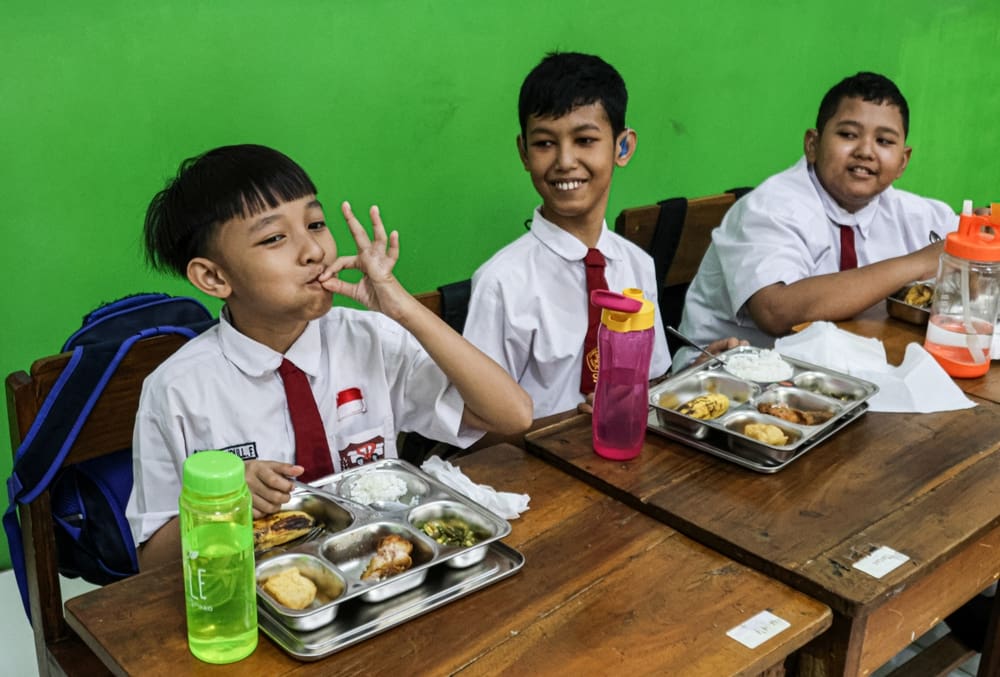
Students receiving meals under the free nutritious meal program at the Special School for Students with Special Needs in Jakarta. Image: Shutterstock.
The defence budget for 2025 is $14.6 billion which represents 0.6% of GDP. By contrast Australia spends about $59 billion on defence or just over 2% of GDP. Despite President Prabowo’s long history as a military man and more recently Minister of Defence, his 2025 defence budget has actually been cut to accommodate greater spending on social programs.
In addition to these specific programs there is a very large budget allocation of $29 billion for long standing national subsidies which also end up benefiting the low income end of the population. These subsidies cover household electricity and gas, staple foods, public transport, fertilizer and other key needs for low income citizens. President Prabowo has also continued to support the BPJS National Health Insurance program which brings affordable health care to everyone including the poorest in the nation (similar to Medicare in Australia). He did not start this very expensive program (introduced in 2011) but continues to give it his full support.
Economic commentators have expressed plenty reservations when analysing the President’s first budget but this is a natural part of any commentary of an ambitious new push to reduce poverty, improve health and provide greater equity and prosperity for the lowest income earners in the population. With a projected annual growth rate of about 5% and an annual deficit of 2.53% of GDP, the overall budget is generally regarded as prudent and manageable.
On the 15th of June the Coordinating Minister for Food announced that Indonesia was officially abolishing quota limits for live cattle imports for both dairy and beef cattle (breeder and feeder). This policy change was announced during April 2025 by President Prabowo and has now worked its way through the administrative systems with application to both live beef and dairy cattle as well as other food commodities such as beef and sugar. The official policy for imports of dairy cattle have a 5 year target of 2 million head, aiming for 250,000 head during 2025. As of mid-June the total dairy cow imports are about 20,000 head. This disappointing result will mean less locally produced milk for the school meals program. I would not be surprised to see further reductions in red tape for dairy cow imports towards the end of 2025 as the final import tally will undoubtably fall well short of the annual target.
Bravo Prabowo.
Well said Ross. President Prabowo is certainly a surprise packet for those who have never scratched the surface, and continue to believe he is still the person who was such a problem for the East Timorese. ('I was a soldier' he said). The level of determination he showed to finally win the top job (as his late father hoped for him) is a testament to his incredible inner strength. And this support for the ordinary 'foot soldier' of the Republic is not a recent conversion. He has been consistent since he returned to Indonesia. But like his former father-in-law, he does not treat well those who make things difficult for him.