
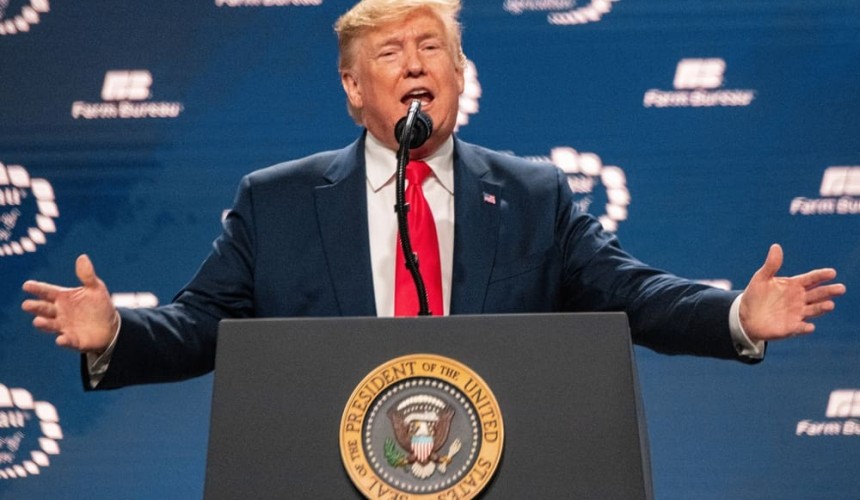
DONALD Trump’s threatened tariff rise on Brazilian imports would make the sale of Brazilian beef into the United States unviable, Brazilian authorities and trade sources said on the weekend.
The comments came after the US president late last week announced an additional 50pc tariff on all imports from Brazil from August 1.
If executed as threatened, the impost of an additional 50pc tariff on imported Brazilian beef – on top of existing tariffs of 26.4pc under the MFN ‘Other Country’ quota within which Brazil operates – would take the tariff total to a colossal 76.4pc.
The Brazilian Beef Exporters Association (ABIEC) issued a statement on Friday saying the tariff measures would make the cost of Brazilian beef so high that it would be ‘unfeasible’ to sell the product to the US, Agencia Brasil reported.
President Trump framed the 50pc additional tariff threat as a response to what he described as a “politically-motivated witch hunt” against former Brazilian president Jair Bolsonaro, who faces charges related to an alleged coup attempt.
In a letter to the Brazilian President, Trump stated the tariffs were imposed “due in part to Brazil’s insidious attacks on free elections, and the fundamental free speech rights of Americans.” He also cited vague economic reasons for the tariffs, such as “unfair trading practices,” and ordered US officials to open a trade investigation into Brazil.
In the absence of market access to other high-paying Asian destinations like Japan and Korea, Brazil would be forced to ship even more product into markets like China, where Brazil already consigns about half of its total export volume.
Beef Central asked around Australian export beef trade desks this morning, to see if there’s been any reaction yet to the tariff change from US customers. Most said it was still too early, given that the news only broke on Friday (local time), as most US importers were about to walk out the door for the weekend.
However several felt that US beef importers were likely to take a ‘wait and see’ approach, suggesting they felt that Trump may change tack, even before the deadline falls in a fortnight’s time.
Brazil seeks new markets
In the meantime Brazil’s Ministry of Agriculture and Livestock (MAPA) has been entrusted with seeking new markets to replace placements that may be affected by Trump’s threatened 50pc additional tariffs.
The move was designed to minimise the tariff measure’s impact, Brazilian Ag Minister Carlos Fávaro told local media on Friday.
“I will reinforce these actions, seeking the most important markets in the Middle East, South Asia, and the Global South, which have great consumer potential and may be an alternative for Brazilian exports,” he said.
“Proactive actions will take place here at the Ministry of Agriculture and Livestock to minimise the impacts,” Fávaro said in a statement on social media.
Minister Fávaro described the US government’s action as ‘indecent’ and said the Brazilian government was acting proactively. He said he had already spoken with the main representative entities of the most affected export sectors, including beef, orange juice and coffee, to find alternatives.
According to experts interviewed by Agência Brasil, one of the short-term side effects is likely to be a drop in domestic Brazilian meat prices. In the US, the reverse was likely to apply, with the exclusion of Brazilian beef only likely to force already high beef prices, even higher.
Trump’s plan for a 50pc tariff on goods from Brazil will likely raise prices for the beef, as US food food manufacturers increasingly rely on Brazilian (along witjh Australian) imports in manufacturing American hamburgers, during a time of declining domestic production, traders and analysts said on Friday.
The tariff proposal was also a blow to US meat companies facing tighter cattle supplies due to a halt of livestock imports from Mexico over New World screwworm, a flesh-eating parasite spreading south of the border.
The tariff would slash imports of Brazilian beef and force companies to seek supplies from other nations as Trump is broadening his global trade war, analysts said.
“If the tariff policy does not get modified, you just cease the importation of Brazilian beef to this country,” said Bob Chudy, a consultant for U.S. companies that import beef. “Not one pound will be economic at those levels,” Reuters reported.
US beef imports from Brazil over the first five months of this year more than doubled from the same period in 2024, to 175,0000t, according to the latest US government data. That accounted for 21pc of total US imports for the period.
“This tariff will likely raise the price of beef, a staple food for many, on the heels of Congress voting to reduce food assistance to the most vulnerable consumers,” said Thomas Gremillion, director of food policy at the Consumer Federation of America.
“There’s not going to be a whole lot of Brazilian beef coming this way,” said Altin Kalo, chief economist at Steiner Consulting Group. “That’s the reality of it.”
Big unknown
In today’s regular regional cattle markets wrap, Elders analyst Richard Koch says the big unknown in the market is whether Trump is going to impose the additional 50pc tariff on Brazilian imports.
“Apparently, he is not vey happy about Brazilian domestic politics. The imposition of this tariff would effectively shut Brazilian beef out of the US market and leave Australia as the only volume supplier of imported lean beef,” Mr Koch said.
“It would of course push more Brazilian beef into other secondary markets but apart from China where Australian beef competes in different segments, Brazilian beef does not yet have access to north Asian markets. Less Brazilian beef imports into the US may also draw US beef out of exports markets,” he said.
Share prices react
Brazilian beef related shares remained under pressure on Friday, with the Brazilian currency, the Real’s weekly decline on track to be the largest since at least late February.
JBS share value dropped below 72 Real on news of the tariff threat last week, from a recent high-point of +80 Real a fortnight earlier. The shares recovered a little to 74R by close of trading on Friday. Rival Minerva shares fell from 5.65 on July 8 to 5.38, losing 5.9pc over the past month.
Meanwhile Canada is seeking to finalise a free trade deal with Southeast Asian nations as part of a push to expand into new markets, its top diplomat said, responding to the hefty tariffs imposed on it by the United States.
Canadian Foreign Minister Anita Anand said Canada intended to continue a muti-lateral trade relationship with the ten-member Association of Southeast Asian Nations. Canada believes the global economy will be driven by the Indo-Pacific region in the years ahead, she added.
Anand said the ASEAN-Canada FTA was one of the ways Canada can diversify its trade relations beyond the Group of Seven nations.
Canadian companies are boosting trade with allies other than the United States, and with smaller markets, as they try to minimise the economic damage from President Donald Trump’s tariffs, government data has shown.