
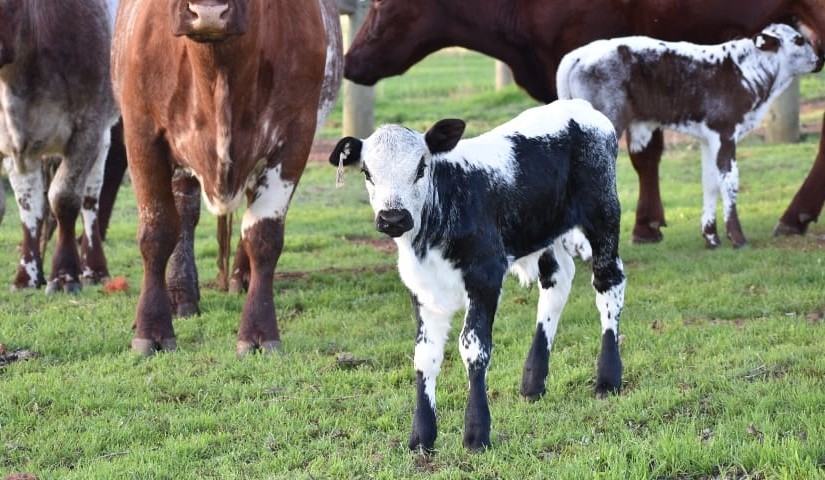
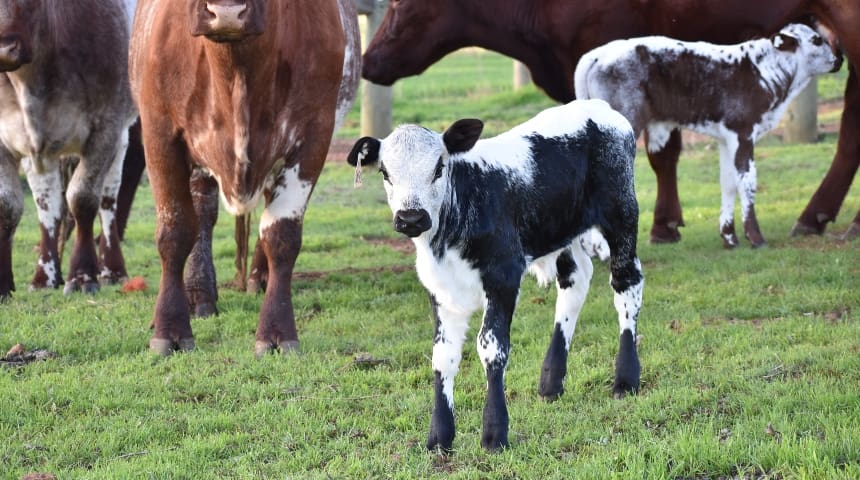
Murdoch University has welcomed the first calves in an innovative new breeding and research program, marking the introduction of the Nguni cattle breed to Western Australia.
The cattle will be used for veterinary teaching purposes and as part of a special research project undertaken by Doctor of Veterinary Medicine students to determine the suitability of the Southern African breed for Western Australian farming.
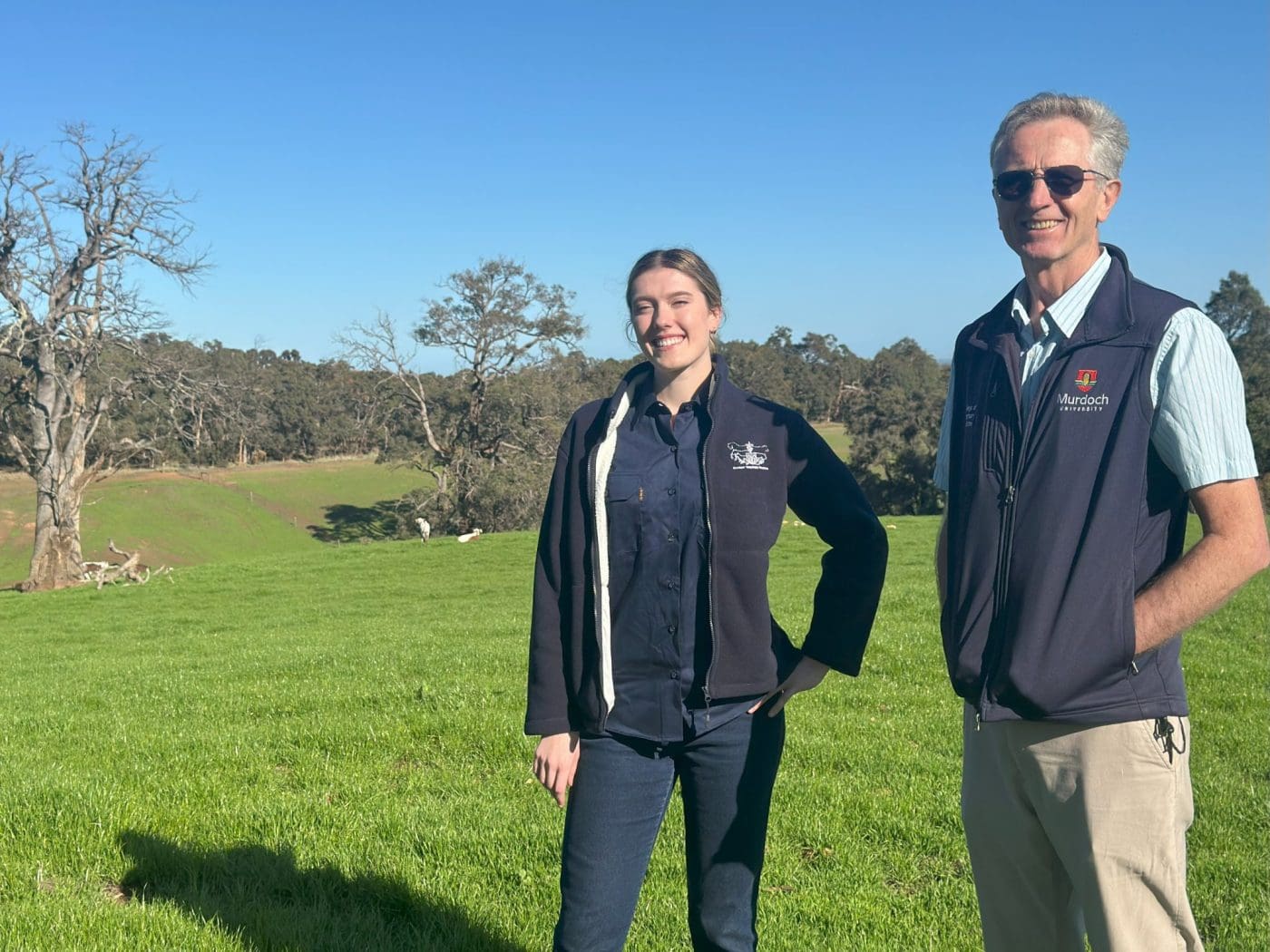
Murdoch University Dean of Veterinary Medicine Dr Henry Annandale said the new Nguni calves had been eagerly anticipated and will allow for new teaching and learning opportunities.
“Nguni cattle are an ancient breed acknowledged for optimal production under harsh conditions and sustainable breeding, with a lower methane output than other breeds,” Dr Annandale said.
“We were excited to welcome the 32 new Nguni calves at our Whitby Falls Farm teaching facility in late May, including a set of twins, bringing Nguni breeding to WA for the first time.
 “This breed offers the opportunity of a unique, economically sustainable advantage to beef farmers.
“Having acclimatised over centuries to extreme environments, Nguni cattle have proven to be the ultimate survivors, thriving despite challenges such as infectious diseases, drought, and tick infestations.”
Dr Annandale said a slight adjustment in the timing of the calving season, which now runs from mid-May to August, gave Murdoch University students the greatest number of learning opportunities to study pregnancy diagnosis and breeding management, during the annual teaching calendar.
“Two Murdoch University veterinary students will also undertake a special research project, looking at the growth and development of the animals, comparing them to traditional European breeds,” he said.
“Their research is significant as it aims to document the suitability of the Nguni breed in our local farming system.”
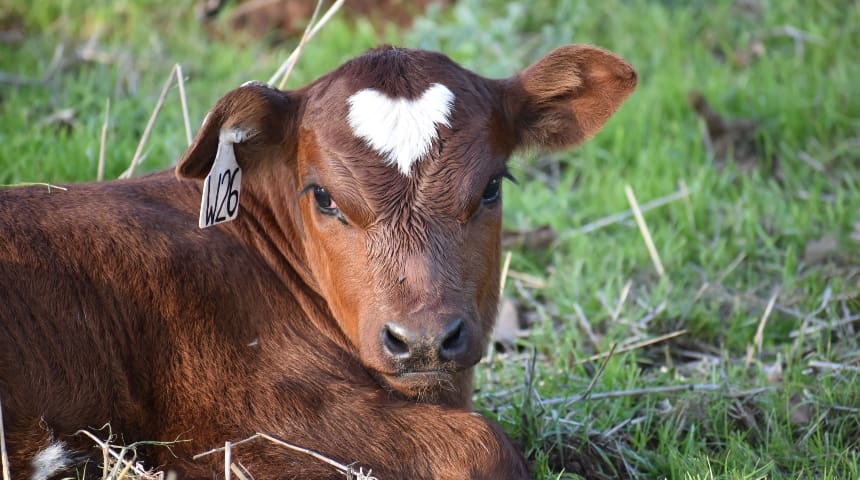
Veterinary Medicine student Caitlin Cooper, who will be a research lead, said it was an exciting opportunity to work with a new breed, and to carry out research which might lead to changes within the local farming industry.
“Studying Nguni cattle will give us the chance to learn about the animals but also to share what we learn to help the local farming industry, and perhaps to undercover information which will impact the industry in years to come,” Ms Cooper said.
“And seeing the calves right from the beginning of their lives is certainly a special experience for me as a student.”
Murdoch University veterinary specialist and cattle fertility researcher,Associate Professor Pete Irons, is supervising the students throughout the process. He said the project has given them exposure to hands-on learning in a new way.
“The breeding process has used artificial breeding technologies, namely semen freezing, synchronisation of heat, and artificial insemination,” Associate Professor Irons said.
“All these methods are giving students a new chance to learn, and we are generating data while we’re at it, which we use in our classroom teaching.”
The initiative has been made possible by generous donations from Garlone Moulin and Henry Townsend of the Australian Nguni breeding community.
testing Why Chianina cattle are out performing local south African cattle. had interesting results. l hope you add Chianina to your tests however I can tell you now the Chianina will have a bigger impact on the WA meet industry that the Nguni breed
Ho Hum..... seen this scenario before!
The only similarities between the cattle breeding of South Africa and WA would be soley restricted to alike landscapes such as the Western Cape of RSA and southwest of WA, the latter having very few head. The species Nguni would not be appropriate for breeding north of the latitude parallel with Bunbury.
I agree with Matthew's comment, a pure marketing play with no commercial or environmental impact.
Have noticed the comments from the abc rural report the other day, seems that these cattle are the next best thing since sliced bread! , only one problem has no one noticed that these cattle have quite significant horns & that the beef industry has been for quite a number of years been trying to breed poll genetics into most of the cattle breeds to safeguard workers & lessen injury & damage to cattle when yarding & transporting. Would love to discuss this aspect with the experts.
Kind regards, a beef producer.
I think we've all seen this kind of marketing before. Murdoch could have saved themselves alot of money and just syphoned a few off the next truck coming from the Kimberley. the pbr boys could use some hybrid vigour aswell i suppose. cheers Matthew Della Gola