
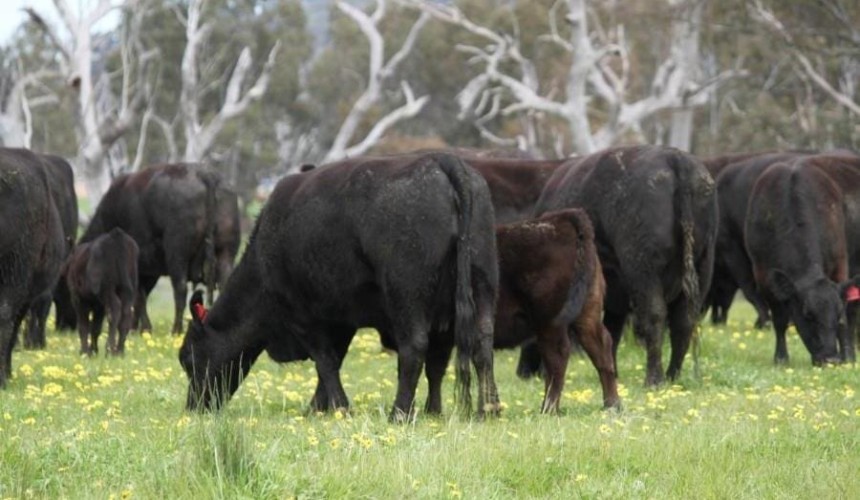
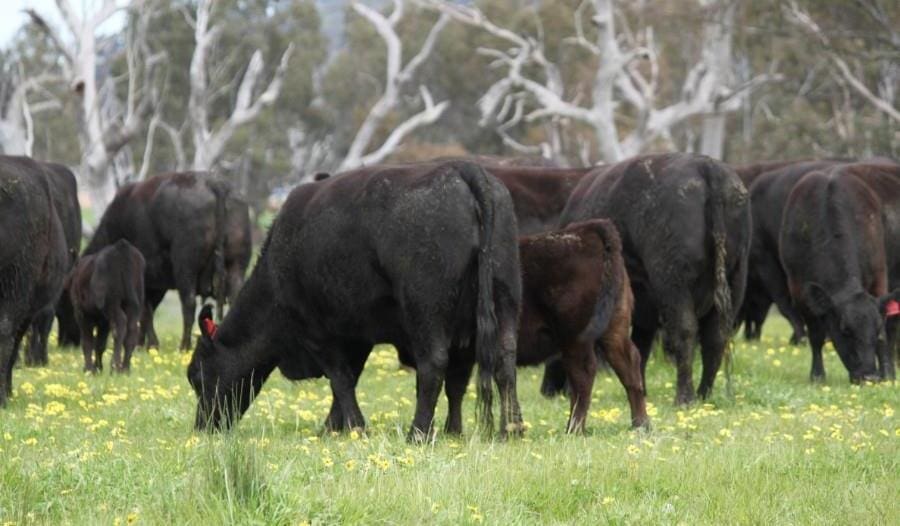
SPRING calving in many herds often gets underway in mid-winter in temperate and sub-tropical cattle areas.
Conversations at spring bull sales often reflect not just the observations around the sires on offer – experiences with calving also frequently become topics of note. While these general conversations can reveal both positive and negative experiences, these conversations sometimes carry more weight than intended.
What begins as casual conversation can subtly change a producer’s approach to a sale and to their long-term breeding direction.
A difficult calving, or lost calves or breeding cows, are not events that no producer wants to experience. However there are occasions when isolated experiences overshadow the larger picture.
It’s easy, after a challenging season or a tough pull, to start focusing on bulls with lower Birth Weight or higher Calving Ease EBVs to address what may not be a recurring issue.
This shift in emphasis often emerges from a few shared stories and good intentions, but it may not reflect the real needs of the herd.
While it is natural to want to address problems, there is often a risk that decisions based on isolated events can drift into confirmation bias: That is “in remembering the 50kg calf that had to be pulled far more vividly than the hundred 35kg calves born unassisted” (see last week’s genetics review for discussion on the topic of confirmation bias).
This bias can be reinforced by the experiences shared with others and can quickly evolve from anecdote to influence, especially when backed-up by sale agents pushing the idea of a “great heifer bull” based on Birth Weight or Gestation Length EBVs alone.
In the heat of the auction, it’s easy for beef producers to make quick decisions, opting for the bull with the lowest Birth Weight figure on the sheet, rather than considering the whole animal or the needs of their herd.
Without individual herd data to provide context, repeated reactions to individual calving events, or well-meaning advice, can cause selection pressure to drift over time.
Many producers each year attend bull sales already set on finding the lowest birth weight sire, even if their herd has no history of widespread calving difficulty. This pattern risks narrowing genetic diversity or compromising growth and vigour, all in response to what may have been an isolated or seasonal event rather than a systemic problem.
There is no doubt that birthweight has been an issue in some breeds for many years. Selection for faster and heavier growth at younger ages (200d and 400d weights) inevitably had an impact on birth weight.
As these growth traits are positively genetically correlated, it meant selecting for early growth and heavier weaning and yearling weights also increased birth weight. As a response, many producers then started to place greater emphasis on genetics for lower birth weights.
While the risks associated with heavier calves are well known, there is now increasing awareness of the problems caused by calves that are too small, particularly those under 28-30kg. These lighter calves may be born unassisted but often struggle to survive, especially in more variable or challenging seasonal conditions.
Poor vigour, delayed suckling, and difficulty maintaining body temperature are common issues, which can lead to early losses if not identified and addressed quickly.
Calf Alive Project
Research from the University of Queensland’s Calf Alive project has highlighted the multiple factors contributing to early calf loss in extensive northern systems. While large calves and assisted births remain well-known risks, the study (based on northern indicus influenced cattle) also identified significant losses among calves with birthweights less than 28kg.
These lighter calves often lacked vigour, were slow to stand and suckle, and had difficulty regulating body temperature. Many also failed to receive adequate colostrum within the critical first 6-12 hours after birth, compromising immunity and survival, especially among calves born to maiden heifers with delayed milk let-down.
Dr Luis Prada e Silva from the University of Queensland noted that many of these very light calves are not pulled, but neither do they thrive. They are born unassisted yet fail to perform, with higher mortality rates or reduced growth trajectories.
In practical terms, producers may be avoiding the challenges of difficult calvings but are still losing productivity through weaker calves that don’t survive or don’t grow out as well.
Given these insights, it makes far more sense for producers to identify their own optimal birthweight range – based not on isolated incidents or hearsay, but on real data from within their own herds.
Collecting consistent records on calving ease, assistance rates, calf survival, and performance through to weaning allows for a clearer picture of what works best under specific conditions. This evidence-based approach supports more informed selection decisions, rather than reacting to a single hard pull or a small calf that happened to thrive.
Birthweight ‘sweet spots’
As a general guide, both research and producer experience suggest there is a birthweight “sweet spot” that balances ease of calving with calf viability. This will vary by breed, dam maturity and production system.
In Bos indicus and northern herds, optimal calf weights may fall in the 28–38kg range, while in British breeds such as Angus or Hereford, the range is more likely to sit between 32–42kg. For maiden heifers, a tighter range of 32–35kg, combined with strong Calving Ease EBVs, tends to offer the best compromise between minimal calving issues and robust calf performance.
It is tempting, and common for producers to make quick judgements on BreedPlan figures, particularly around Birth Weight. However, this often overlooks the fact that BreedPlan is a tool, not a directive. If performance figures are used correctly, they can help guide a more balanced and informed selection decision, particularly when used alongside visual assessment and with actual herd performance data.
In the context of birth weight, beef producers should remember that while Birth Weight EBVs reflect genetic differences in calf size at birth, these need to be considered in context of the production system and female maturity.
Gestation Length EBVs can help shorten intervals and modestly reduce birthweight, though they should be applied cautiously. Calving Ease EBVs, both direct and maternal, are useful for identifying sires whose calves are more likely to be born unassisted.
However, over-reliance on EBVs, at the expense of structure, maternal function, and calf vigour, can be risky. Structural soundness, body shape, hip width, shoulder smoothness and overall capacity remain vital for long-term herd productivity and maternal performance. These traits should continue to be valued alongside genetic data to ensure cattle remain fit-for-purpose across a variety of commercial conditions.
For many commercial herds, the opportunity is not in selecting the lowest BW sires, but in identifying those with good calving ease, moderate birthweights, and the genetics to produce functional, resilient calves.
Big calves cause problems but so do calves that are too small.

Alastair Rayner
Alastair Rayner is Principal of RaynerAg and an Extension & Engagement Consultant with the Agricultural Business Research Institute (ABRI). He has over 28 years’ experience advising beef producers and graziers across Australia. Alastair can be contacted here or through his website: www.raynerag.com.au
A few thoughts
Alastair has only touched on this complex topic. Dystocia has been an issue for many years . Some solutions in the past have been using traditional Angus ,Jersey and other “small” breeds to produce smaller calves
Unfortunately this usually resulted in smaller progeny which when mated to ordinary bulls just reproduced the same problem in the progeny . A one off fix only!
Measuring pelvic area to match the birthing area and calf size has been tried . Possibly a good screening process but it did not completely solve the problem
Another solution was using “curve bender “ bulls who had low birth weights but normal growth and mature weights
This I assume was due to shorter gestation periods which avoided the rapid growth rate prior to birth
So they were some of the genetic solutions
In addition some believe that some genetic traits are carried thru the female line only ( by the mitochondria?)
However why do we only get problems in certain years ? Have we ignored the other significant factor in birth weight , nutrition?
There was a suggestion that poor nutrition ( protein or energy ?)in the first or second trimester encouraged the placenta to over compensate to ensure the foetus was adequately nourished , which if followed by good nutrition in the third trimester resulted in a much larger birth weight
To test this requires complex and expensive research trials which have never been done ??
Traditional Brahmin cattle supposedly had innate mechanisms which reduced birth weight but selection for growth and mature size seems to have reduced this controlling factor
So some have suggested using British bulls over Brahmin cows not the other way around
A trial in USA found that taking cows from cold to warm areas reduced birth weights significantly as blood flow was redirected away from the placenta to the skin for thermostatic control
So another environmental factor may be implicated ?
So may I suggest that research be directed to looking at the potential interaction of genetics and the environment which the plant breeders have been doing for some time with significant success.
<strong>Thanks for your comment, Charles. Your points may help answer an earlier question raised in a reader comment from Matthew Della Gola in WA (see below). Another birth-weight point we would add is the weightgain effect of hybrid vigour in crossbreeding, which starts in utero - not after the calf is born. Perhaps there is a follow-up topic in all this for Al to explore. Editor </strong>
now I think we are getting somewhere. there is also an interesting correlation between birth weight of calves born in cold country in the east and the same genetics born in western australia and the quite large difference in birth weights. does this also occur when the same gene are used in the Northern areas like Queensland? cheers Matthew Della Gola