
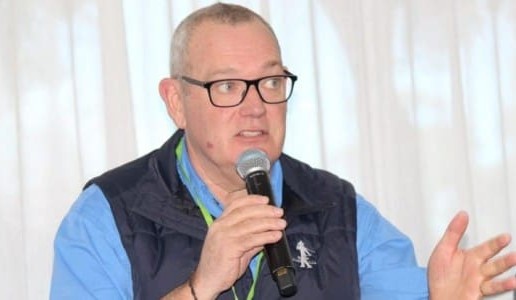
OUTGOING Cattle Australia chief executive officer Dr Chris Parker called for more sophisticated, less reactive agricultural advocacy, at the Victorian Farmers Federation 2025 Livestock Conference in Bendigo yesterday.
 Dr Parker was part of an agricultural advocacy and policy panel at the conference and suggested agriculture seize the opportunity to influence long-term policy with the Albanese Government.
He said “disunity is death” in terms of government action on agricultural issues.
Panel chair and Sheep Producers Australia chief executive officer Bonnie Skinner said the industry should always be asking itself ‘What is effective advocacy?’ “because we always want to be doing the best thing, especially when we are representing producers.”
She asked if the producer sector is too reactive “and how do we get ahead of policy rather than chasing it?”
The Cattle Australia leader agreed with Ms Skinner’s and said ever since his involvement with advocacy as chair of the South Australian Farmers Federation’s livestock section the industry seemed to be reactive.
“And one of the things I observed over my time in agriculture, and agriculture is all I’ve ever done, and particularly my time in government, is that industry in particular, agricultural industries, have got more reactive and less sophisticated about what they do.
“And I think that has been a real challenge for all of us going forward in industry advocacy, particularly in agriculture.”
Dr Parker said the industry really needed to think about the manner it wanted to engage with government.
“We’ve got nine years of this mob federally …. right … nine years … that’s nearly as long as Howard was in charge.
“It has two things associated with it, one is that there is an arrogance about this government; that they’re in charge and they know they’re in charge and they have a huge majority,” he said.
“However, nine years creates an opportunity for us, nine years creates an opportunity in the sense that they will be looking to formulate longer term policy than what usual governments do.
“And I think that’s a real opportunity for agriculture in this space,” Dr Parker said.
“But we need to fill that space with some sophisticated policy work and it is something we’re not as good at as our opponents are.
“Let me be really blunt, our opponents are better resourced and better connected, and they also happen to be more savvy than we are and they’ve been training to do this, often, for a long long time,” he said.
“And they are just as committed to their point of view as we are,”
But Dr Parker said farming is still the most trusted profession in the country.
“That’s our big advantage. We can still get in to see ministers very easily, simply on the basis we represent production groups or farming groups.
“We can still get in because we are an important part of rural communities and we are an important part of the economy,” he said.
“So there’s our in, but we have been too reactive in the past.”
Disunity is death
When asked what is getting cut-through in Canberra, as an ex-ministerial adviser Dr Parker said “disunity is death.”
“I loved that as a senior adviser when I could tell my minister ‘mate, you don’t have to do anything because there are two points of view out there and they are both as strong as the other one.
“And by that I mean within the same industry, I’m not talking two alternate points of view, I’m talking on a single issue in farming there will be two groups, in farming, grazing, giving the minister different points of view, that’s death, because then the government will do nothing,” Dr Parker said.
“And that’s the thing that we need to be really really conscious of moving forward; that we aren’t able to be cut up and we aren’t able to be played off against each other.
“The second thing is they will respond to base politics, that’s what they are and that’s who they are , but they will do that through the lense of ‘they want to do good’, he said.
“I haven’t met a politician on either side that doesn’t want to do good.
“They might want to do good for their own political side of things and their own way they see the world, but they want to do good,” Dr Parker said.
“That sometimes isn’t doing good they way we see it maybe, but it is from their point of view.
“So nearly always in my experience ….. it is very rare that they don’t want to do good, they might not want to do the sort of good that we want them to do, but they still want to do it,” he said.
“So again, you’ve got to appeal to whatever it is they want to be doing.”
Dr Parker used an example of putting cattle industry development in northern Australia in terms of economic and social development, and food security for the north, rather than the financial benefits
He said agriculture needed to be thinking about the messages that appeal more broadly, “particularly for this colour government.”
Live sheep export advocacy
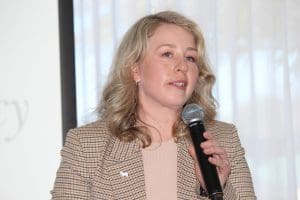 Ms Skinner said she had a similar experience with advocacy against the phaseout of live sheep exports by sea. She said the argument that the industry was now achieving good animal welfare outcomes wasn’t going to get cut-through with politicians.
“What got cut-through was economic arguments around competition, in particular, to help them understand that that what was really at stake with WA producers, but also looking more broadly to our trading partners as well, and that real threat of action by our trading partners in terms of their reaction against this policy.”
Ms Skinner said “in 2025 if you are not influencing public opinion of course, you’re not influencing policy,
“And if you’re not at the table you are on the menu.”
Ms Skinner said SPA represents the views of 20,000 sheep producers across the country at the federal level.
“Our job is to be in those rooms, at those tables in Canberra, in ministerial offices, with regulators and yes, with people who have never set foot on farms and sometimes have never eaten a lamb chop.
“Our advocacy is not always about shouting from the rooftops, advocacy comes in many forms’ it’s about strategy, relationships, reframing arguments and picking fights that matter,” she said.
“We need modern evidence-based policy that speaks to both farmers and the broad community.
“We need producers and advocacy groups actively at the table, not just when there is a crisis, but all the time, and that’s why today’s discussion really matters.”