
BRAZIL is the world’s largest beef exporter, and therefore, has a significant impact on global exported beef demand.
Livestock pricing is heavily influenced by supply and demand dynamics. This means cattle prices in Brazil greatly affect the global competitiveness of Australian beef.
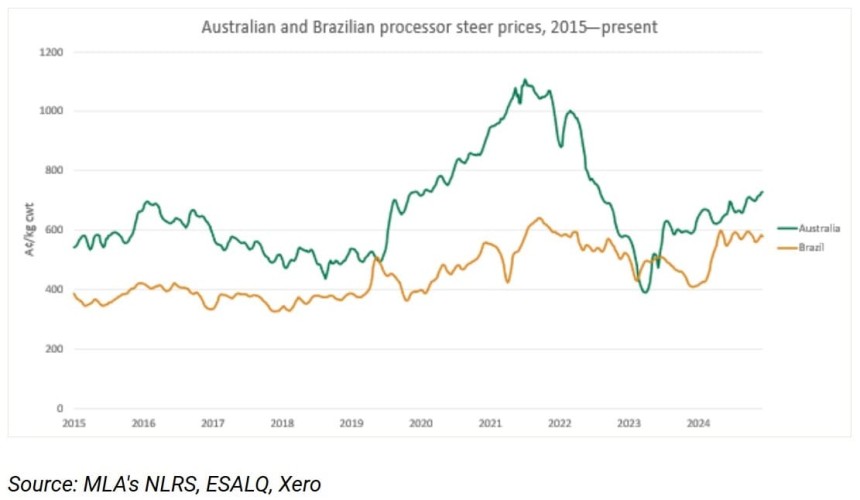
Australian cattle prices have generally run higher than Brazilian prices over the last decade. This reversed in late 2023 when Australian finished steer prices briefly fell below Brazilian equivalents. This was mostly due to a sharp price drop in Australia* and less affected by anything in Brazil. It reversed once Australian prices corrected.
The most significant price shift since was a sharp increase in Brazilian steer prices over 2024’s final quarter. They rose from A421¢/kg carcase weight (cwt) to A611¢/kg cwt, reducing the gap between Australian and Brazilian prices from A246¢ to A17¢.
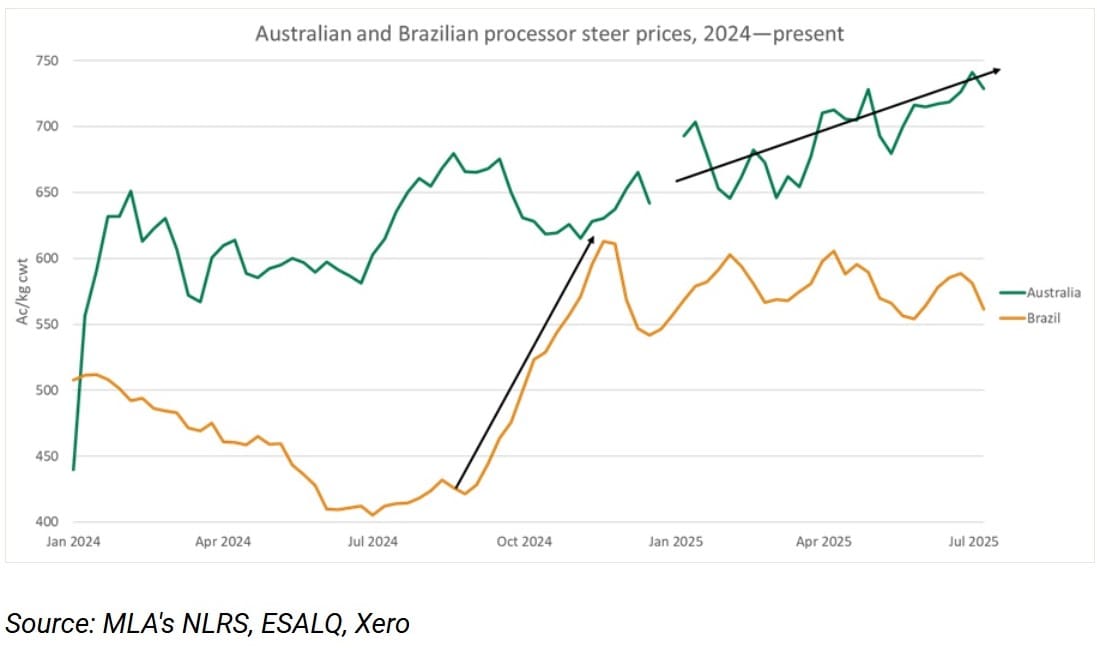
Brazilian prices were primarily driven by a substantial improvement in drought conditions. The National Center for Monitoring and Alerts of Natural Disasters (MCTI) reported the number of municipalities in extreme drought (the second-worst rating) fell from 201 to 9. Additionally, municipality numbers in severe drought fell from 1199 to 173. This improvement of on-farm conditions lessened the destocking need, seeing less cattle sold to processors.
Brazilian finished steer prices in 2025 have been historically high and remained relatively tight – ranging between A550-600¢/kg cwt. With a constant steady lift in Australian prices, the price gap has grown to A167¢/kg – in line with long-term averages.
Strong Brazilian prices ultimately increase production costs for Brazilian beef, therefore increasing Australian global market competitiveness. Brazil’s improved weather conditions and subsequent price increases will likely constrain Brazilian beef production and exports.
* Editor’s comment: The Australian cattle market was severely spooked by the risk of Lumpy Skin Disease entering Australia from nearby Indonesia in late 2022, causing some panic selling and a mini cattle price collapse for a few months that is reflected in the graph above. Here is an earlier story on the episode.
– Tim Jackson, MLA Global Supply Analyst