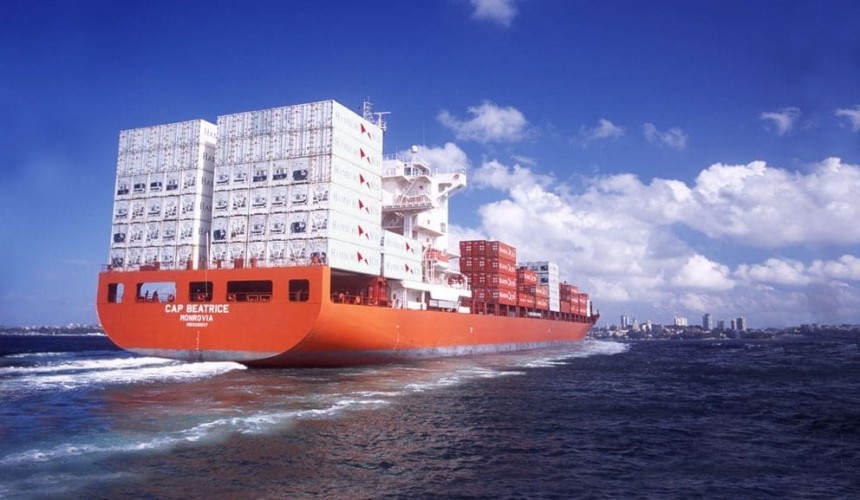
EUROPE’S ban goods linked to deforestation is facing more pressure from within the continent, with 18 of 27 European countries writing to the European Commission calling for significant changes to the legislation.
The letter follows a resolution made by the European Parliament last week to walk back the legislation for countries where forest area is stable or increasing – before it comes into effect on December 30 this year.
Under its current form, Australia and most other countries in the world are declared a low-risk of deforestation, with only four countries (Belarus, Myanmar, North Korea, and Russia) being a high risk and about 50 countries in the standard risk category.
While the European Commission is not obliged to act, there is now a push from the European Parliament to add a “no-risk” or “negligible risk” category for countries with stable or increasing forest area – to ease the administrative burden and exporters and importers.
Towards a further simplification of the EU Deforestation Regulation #EUDR
Joint letter of ministers of Agriculture of 🇱🇺🇦🇹🇧🇬🇭🇷🇨🇿🇪🇪🇫🇮🇭🇺🇮🇪🇮🇹🇱🇻🇱🇹🇵🇱🇵🇹🇷🇴🇸🇰🇸🇮🇸🇪 to @vonderleyen @EU_Commission pic.twitter.com/Vqbzvnx9At
— Luxembourg in the EU 🇱🇺🇪🇺 (@RPUE_LU) July 7, 2025
The joint letter from the agriculture ministers reinforces that point.
“The regulation in its current form does not sufficiently take into account countries with effective forest protection and a negligible risk of deforestation. Instead of targeting deforestation where the risk is highest, the regulation imposes disproportionate bureaucratic obligations on countries, where deforestation is demonstrably insignificant.”
Will the legislation change?
The European deforestation regulation has had troubles since it was first introduced in 2022. It was supposed to come into effect at the end of last year before it was delayed until the end of this year.
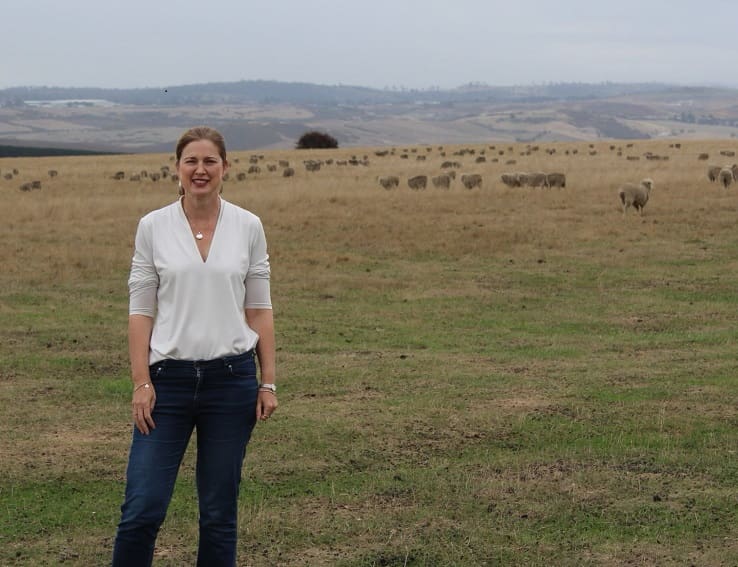
Julie Collins
Plenty of money has already been spent on systems to demonstrate compliance by importers in the EU and countries exporting to the EU.
Through the Integrity Systems Company, there is an opt-in system for Australian producers who supply the EU to add their “geo-location” – which industry groups say will be enough for compliance.
Both the Australian Government and industry bodies have been preparing for the legislation by encouraging producers to use the ISC system.
Agriculture minister Julie Collins said the Government was also advocating for the EU to reduce administrative burdens.
“The Government is aware of calls from a number of EU Member States to simplify the regulation,” Minister Collins said.
“The Government continues to engage with the European Commission on the need for simplification of the regulation to reduce the burden on Australian companies exporting to the EU.”
Asked whether Australia would fit into the category of stable or increasing forest area, the minister’s office pointed to the State of the Forests report which said Australia’s total forest area has increased by 0.75 million hectares over the five-year period from 2016 to 2021, and has continued to increase since 2008.
Cattle Australia supports simplification
Cattle Australia chief executive officer Will Evans said the organisation supported a simplification of the deforestation regulation.
“We would support and have been pushing for a simple system in the EU. The low-risk category seems like a further move in this direction,” Mr Evans said.
 “Australia is currently registered in the lowest risk category available under existing EUDR classifications. Cattle Australia has been leading work in this area, and the work of the Land Management Commitment has been integral to seeing this achieved.
Mr Evans said if a no-risk category was added, Australia would likely fit the criteria.
“It is likely Australia’s risk rating would be lowered further given the proven, beneficial, land management practices already deeply embedded in our industry,” he said.
Cattle Australia has been one of several industry organisations recommending EU producers use the ISC system to comply with the regulations coming at the end of the year.
“The system developed in Australia to comply with these emerging market access requirements for EU is simple, provides easy access for producers and meets the minimum current EU requirements.
“It remains that position of Cattle Australia that more work is needed to continue to reduce non-tariff barries across multiple markets, but we are satisfied that the current mechanism for EU producers available, via the Integrity Systems Company and LPA certification, is of relatively low impost considering the benefit of being able to supply these markets.”