
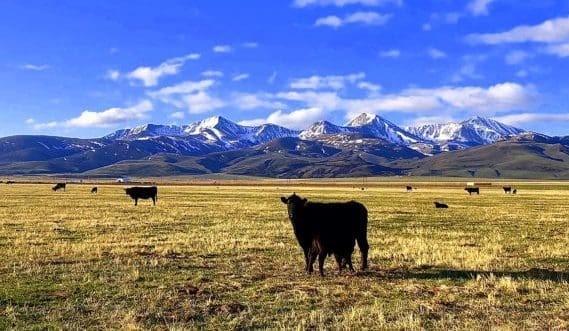
Chute Canyon Ranch, Montana.
TWO key United States cattle industry reports released on Friday show the national herd has fallen to its lowest mid-year level on record, while heifer retention remains limited—signalling that herd rebuilding is not yet underway in any significant way.
Analysts say the rebuild may be starting slowly, but ongoing high cattle prices continue to incentivise liquidation over retention.
The US biannual cattle inventory report released on Friday showed about 94.2 million cattle and calves, down 1.3 percent from the 2023 levels (no report in 2024) and the lowest mid-year count on record.
Also released on Friday, the US Cattle on Feed report for July 1 showed that heifers as a percentage of total feedlot inventories stood at 38.1 percent, up from the April 1 level of 37.6 percent.
With the number of heifers in feedlots remaining mostly stable relative to that for steers, US experts say the reports indicate that while close to occurring, US heifer retention is not yet underway to a significant level.
 “My feeling is that some movement towards herd rebuilding may be starting but is very slow and cautious,” Dr Derrell Peel, a professor of agricultural economics at Oklahoma State University, commented in US media reports this week.
“It is possible, perhaps even likely, that the January 2025 beef cow herd will be the cyclical low, but the January 2026 inventory will likely be close to unchanged showing very little, if any, growth this year.”
While historically low herd numbers – the lowest in 75 years, record cattle prices and improved pasture conditions have driven speculation US ranchers will soon move to rebuild their herds, high cattle values are also contributing to the ongoing herd liquidation as ranchers opt to take advantage of strong markets and sell breeding cattle rather than join them.
However other commentators also noted that the amount of heifers on feed at July 1 is down from 39.4% one year ago, which suggests that year-on-year there were more heifers being kept back for replacements.
Increased heifer retention when the US herd shifts to a rebuilding phase would reduce US beef output and open the door to more opportunities for Australian beef exports, before competition intensifies again from expanding US production.