
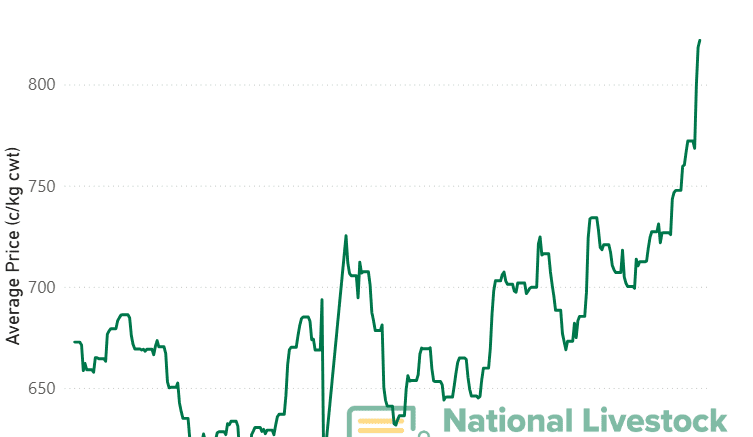
SALEYARD prices have continued their upward trend as the benchmark Eastern Young Cattle Indicator goes above 800c/kg carcase weight for the first time since 2022.
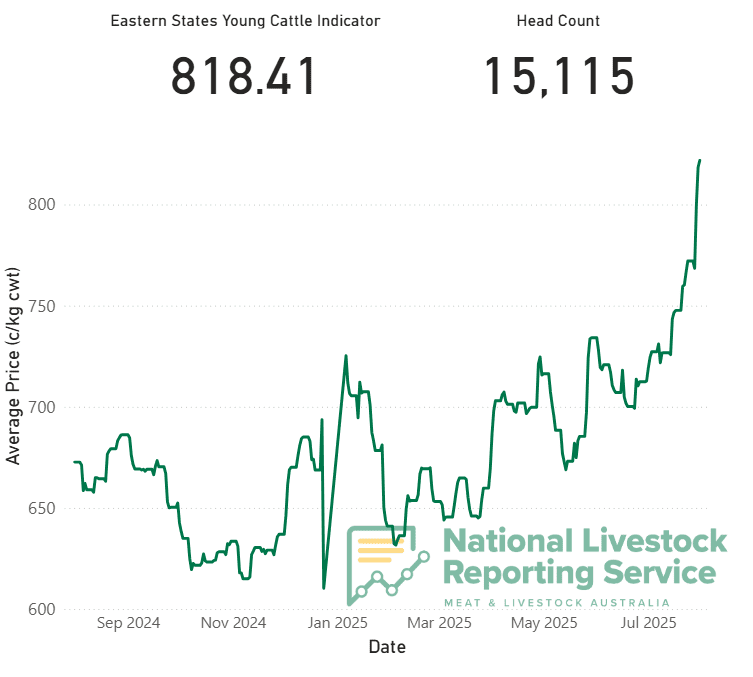 While the indicator has been rising for most of this month, this week has been its sharpest rally as it has jumped 46c to close yesterday at 818c.
The recent rally has been the indicator’s first show of any volatility in the past two years, as it has been consistently hovering between 600c-700c for most of that time.
While the Roma and Dalby saleyards have been contributing the most cattle towards the EYCI, southern saleyards are contributing the highest prices.
According to EYCI results, average prices at Wagga were 943c/kg, which is almost 200c dearer than the Roma saleyards where the contribution was 771c.
Heavy cattle have been particularly in demand, with southern processors active in northern saleyards – which pushing up the price of cows. (see today’s other item)
With most of Southern Australia destocking in drought, the Wagga saleyards held some record yardings earlier this year and, at one stage, was looking at holding extra sales to accommodate for the numbers.
But rain has been consistently falling across the Riverina in recent months, which has limited numbers – with Wagga this week yarding 1590 head.
National Livestock Reporting Service Wagga reporter Leann Dax told The Week in Beef podcast that the rain is bringing some renewed confidence to the area.
 “We have had 20mm, 30mm there around Albury and Wagga and I’m told there has been rain further north,” she said.
“This week was the first time we have seen restockers step up and really have a go, because they have just been sitting on the sidelines with it being so dry.”
Ms Dax said most of the confidence is in anticipation for Spring, with a good moisture profile in most soils waiting for some warmer weather.
“We are still really cold here, the frosts have been cold and bitter with temperatures of -3 or -4,” she said.
“We can see green grass but it is very slow. We have been set up now with a Spring, at least we are going to get some good growth for six or eight weeks into Spring.
“We are just hoping on more showers and we need run-off rain, a lot of dams are still dry and we are relying on bores.”