
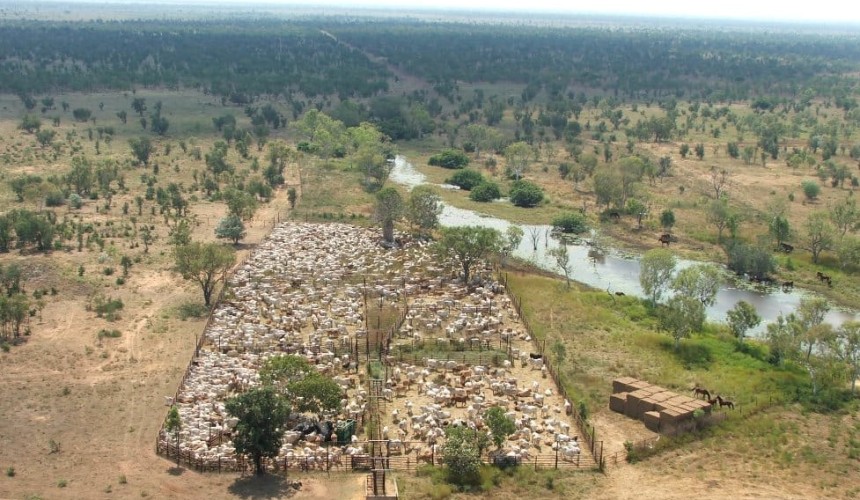
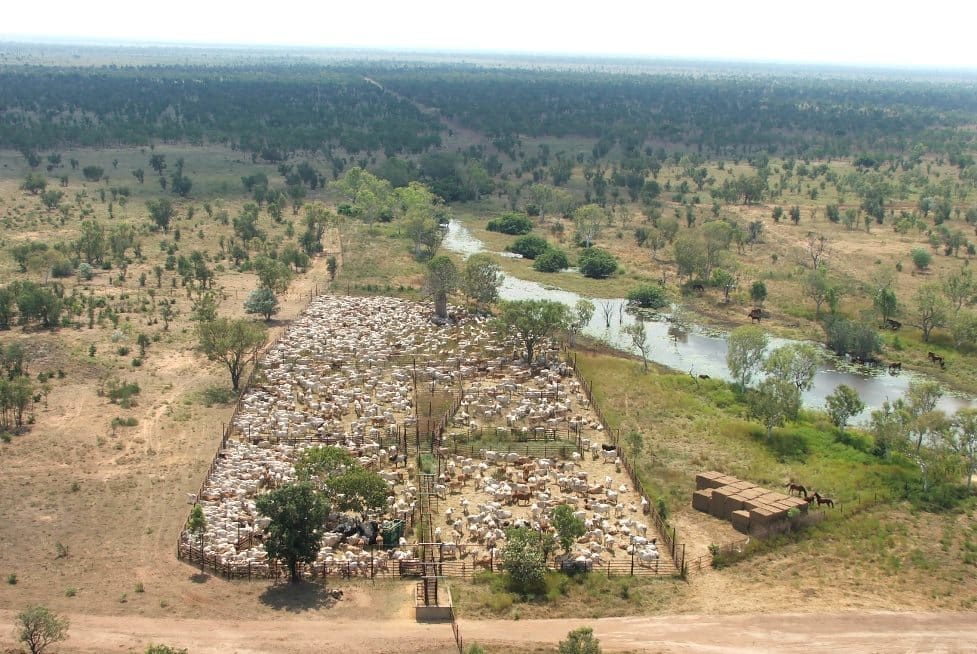
File picture of cattle yarded at AAM Investment Group’s Legune Station north east of Kununurra in the NT near the WA border.
THE opening of the Kununurra cotton gin earlier this week is the latest tangible sign of how the northern Australian agricultural sector is being transformed through diversification.
In the same week as the gin’s opening, AAM Investment Group (AAM) has also announced progress towards the development of its greenfield Northern Agriculture Project near Kununurra on the Northern Territory side of the NT/WA border.
In February 2022, AAM was selected from a public tender as the successful proponent of the Northern Agricultural Development Project (then referred to as the Keep Plain Agricultural Development – now referred to as the “Sweetwater Development” which will be the name of the newly subdivided area of land involved in the project).
The project was the Northern Territory Land Corporation’s single largest land release for agricultural development.
Set to lodge approvals
AAM managing director Garry Edwards told Beef Central earlier today the company has been progressing planning and stakeholder discussions with Government and regulatory bodies, pastoralists, industry groups, Traditional Owners and local communities and is now ready to submit applications for the primary approvals to progress the project to the next stage.
From the total 67,500 hectares involved in the land release, a portion of 2500 hectares has been identified as suitable for cropping development within a “development envelope” of up to 3270 hectares.
“Our intention is it will be an integrated cropping development,” Mr Edwards told Beef Central.
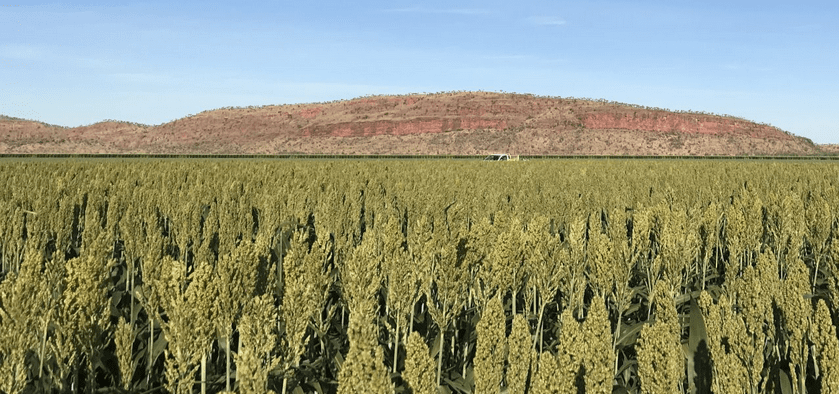
“It will start off as a dry land or monsoonal rain fed system, but ultimately transition to be an irrigated development in that area, where we will have a focus on sorghum for cattle production, but also a rotation of which cotton will be part of that.”
AAM said it is ready to progress with development as soon as the application process is completed and approvals are received.
Sourcing water
The Project directly adjoins Western Australia’s Ord Stage 2 Development and the Ord River Irrigation Scheme.
Asked if the project will access water from the nearby Ord River Irrigation Scheme in WA, despite being in the Northern Territory, Mr Edwards said that was the proposed arrangement.
 “There’s an inter-government agreement to take water from the Ord scheme back into the NT, remembering that nearly half of the water that fills the Ord dam actually originates from the NT,” he said.
“So as part of this agreement, part of the development of this scheme many decades ago, there was an allocation to make water available to the NT side of the border for this development.”
He said AAM plans to commence the project by capturing overland flow via a storage dam that will be topped up in periods of non-peak usage from the main scheme, with subsequent plans to transition to full irrigation capacity “within a couple of years”.
“So we will build a storage dam on site and that dam will be used to harvest and hold the water that happens through the monsoon period,” he said.
“Because obviously in that part of the world you’ve got the opposite problem, for three or four months a year, you deal with taking water off your farming land, not putting it on, just with the natural rainfall that comes.”
Beyond the Sweetwater project, AAM’s property holdings in the Northern Territory include more than 1.6 million hectares across Legune Station, Limbunya Station and Maryfield Station, with the company employing 80 staff across the region.
Boost for northern investor confidence
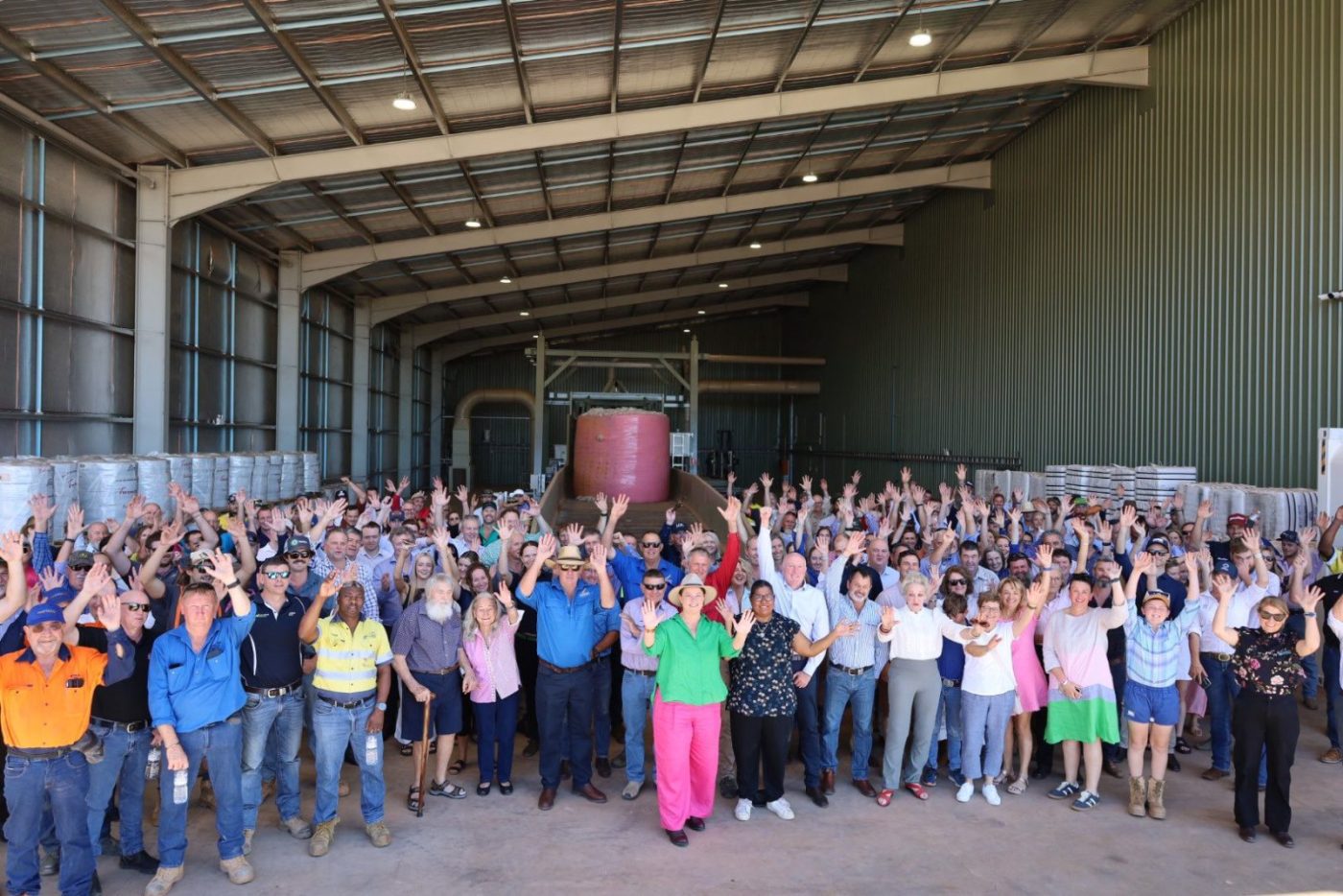
Mr Edwards said this week’s opening of the cotton gin at Kununurra was a major boost for investor confidence in the entire region.
“That’s the sort of essential infrastructure that underpins the cost efficiency of investing in these projects,” he said.
“Because you take away the significant transport cost, which has been the limitation, and you start producing products at scale.
“The historic success of the Ord Scheme has been limited by its inability to get collective scale in a single commodity.
“Having the gin there allows that to happen. It allows farmers in the area to invest knowing that they’ve got a point of offtake within the approximate area.”
A locally produced supply of cotton seed would also help to fill a protein gap for northern cattle herds.
“Well certainly it’s a new supply of protein that’s been sadly missing, and is a key ingredient in feed rations in order to get liveweight gains through feed lotting, or assisted feeding if you like,” he said.
“It might be harder to do pure feeding unless there’s a larger grain supply, but certainly having cattle fed for periods of time will be a new addition to the Territory.
“And I assume anyone that’s operating a meat processing plant will be very happy to see extra kilos put on beef up there, because that’s been the key limiting factor in the success of meat processing in northern Australia.”
Potential for expanded northern feedlot capacity
In response to questions about whether AAM has plans to develop more advanced feedlot infrastructure in the region, Mr Edwards said that was definitely on the cards.
“We’ve got a small feeding capacity for a couple thousand head at Legune at the moment, and we would look to take that to 6000 head in the foreseeable future,” he said.
 “I expect that feeding cattle and feed lotting as such will become more of a transition, for many of those pastoral enterprises in the north.
“I know there’s been some discussion about putting a cattle feeding facility more permanently around Kununurra by other private operators, so it’s obviously something that they’re looking at, and that’s really driven off the cotton seed opportunity.”
Asked if cotton seed from the Kununurra plant will be made accessible to the local cattle industry or will be exported to customers overseas, he said the expectation was that the cotton seed produced locally would be made available to the livestock industry.
AAM has been developing cropping on Legune Station and also grew 10,000 tonnes of sorghum at its NT station Maryfield this year, Mr Edwards told Beef Central, providing a valuable source of supplementary feed to keep cattle gaining weight through the drier second half of the year.
Indonesian feedlot strategy lifting beef quality
AAM has also developed its own integrated supply chain business in Indonesia where it has leased its own feedlot. About 80pc of cattle turnoff from its northern properties is fed in the Indonesian feedlot for 60 and 120 days, with beef marketed directly to cold chain supply customers.
“Part of that strategy is it is allowing us to take higher quality cattle that have better eating quality attributes into the Indonesian market and process it locally,” Mr Edwards said.
“The diversity of cattle that is now going to Indonesia is very interesting. Obviously the mainstay is the Brahman animal, but there’s a lot of high-quality composite cattle and Wagyu cattle making their way.
“There’s several thousand Wagyu on 400-day feeding programs in indonesia these days, which is very different to what people perceive.”
In addition to the 2500 ha cropping development that will be the initial focus of the Sweetwater project, Mr Edwards said there were other small and discreet portions that also had development potential.
In a media statement AAM said the development would deliver optimal social and economic benefits to the NT through mindful development that balances production and environmental outcomes and well-being of local communities.
Expanding on that, Mr Edwards said indigenous communities were directly attached to the Sweetwater Development location and surrounding land areas.
“And rather uniquely, what that means is they can stay living in their communities, but have the opportunity for employment and all the other economic activities that come from that.
“There’s a lot of desire from the local indigenous groups to expand tourism in this particular area.
“So putting in the infrastructure, improving access and roads actually has a bigger impact and just the farming component.”
Mr Edwards said AAM’s ongoing engagement activity will now extend to a broader public consultation process and further discussion with Traditional Owner groups.
The Sweetwater project represented “a monumental opportunity” to expand agricultural production in Northern Australia, he said, which would see tens of millions of dollars invested in the East Kimberley region over coming years.
Earlier article: Why Kununurra’s Legune Station stands apart 3 June 2022