
FEEDER cattle prices have now been steadily increasing for two months, with grids this week going up by at least 10c across most categories.
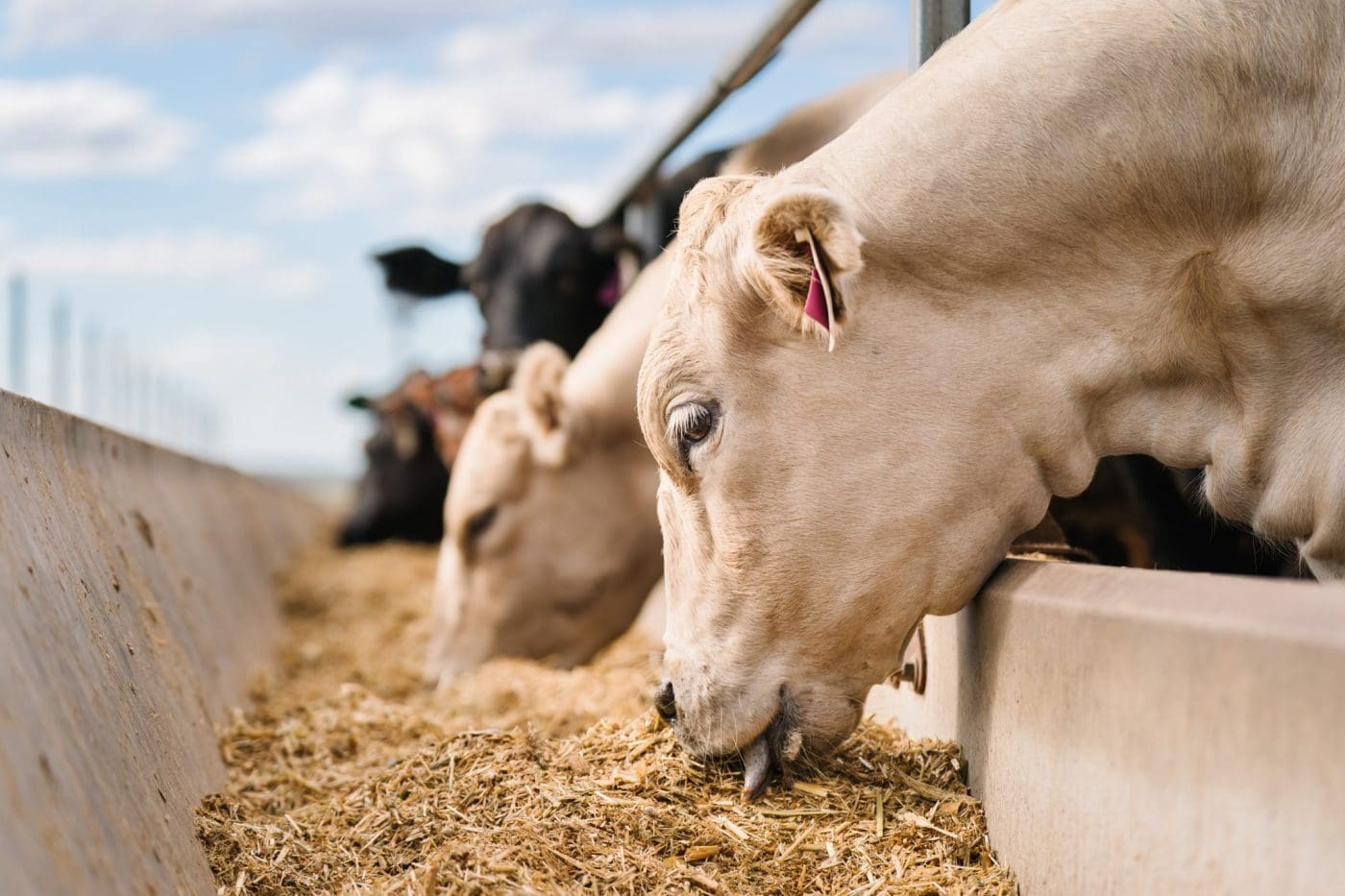
Image Source: ALFA
Flatback feeder steers heading to Darling Downs feedlots have increased by about 20c on the past fortnight, with paddock quotes ranging between 410-430c/kg. Angus prices are up about 10c on the Downs, ranging between 510-520c/kg.
One large multi-site lotfeeder on the Darling Downs made a 20c increase to its flatback and Angus grids this morning pushing them to 430c/kg and 510c/kg respectively. It also made a 50c increase to a British X quote making it 480c.
Southern Angus prices have seen a 10c increase on the past fortnight, with quotes this morning ranging between 520-530c/kg. British X cattle in the south are ranging between 440c and 480c/kg.
Some rain is forecast in New South Wales and Victoria, however, it looks to be reasonably coast on the weather bureau’s eight day forecast.
There is some anticiapation that if there is not another break in Victoria and Southern NSW in the next fortnight that some feeders may come to market. The New England region of Northern NSW is experiencing a different season, with mild temperatures over winter and speeding up the growth of feeder cattle.
Feedlot procurement is quickly heading into its Christmas shutdown period for 100-day cattle to account for the closing of processors during the festive season. The start of September will be about 100 days from plant closures around December 19.
While this period can put downward pressure on prices, one buyer noted that it did not seem to be impacting the market as much in recent years.
“There was once a period where just did not yard feeder cattle in August because of the Christmas shutdown. But feedlots seem to manage it a lot better now,” he said.
Several reasons been given, including allowances for cattle to be fed longer than 100 days, an increase in processor throughput on the weeks before and after the Christmas closure and favourable economic conditions for processors in the past two years.
Saleyard prices steady
 Saleyard prices have been relatively firm in the past week, with Meat & Livestock Australia’s feeder steer indicator increasing by 4c to close last week at 458c. 400kg+ cattle increased by 13c to 463c/kg.
Early sales this week have seen similar prices for heavy feeder steers as last week. 400kg+ steers at Wagga increased by 6c to average 481c/kg – with 329 offered. At Tamworth, only 65 steers above 400kg were offered to average 472 and of 410 steers between 330-400kg averaged 501c.
Roma has 7900 booked in for tomorrow.
Elders Tamworth livestock manager Scott Simshauser said the feeder market at the saleyards had been “rock solid” in recent weeks.
“The feedlots buyers are working very hard to fill their orders, they just seem to be competitive on every pen and every individual steer or heifer that is available,” Mr Simshauser said.
| Indicator | Head count | Av Price (lw/kg) | One week change |
| Overall National Feeder Steer Indicator | 7054 | 458c | + 4c |
| 400kg+ National Feeder Steer Indicator | 2630 | 463c | + 13c |
| 400kg+ Qld Feeder Steer Indicator | 864 | 420c | + 1c |
| 400kg+ NSW Feeder Steer Indicator | 1631 | 474c | 0 |
| 400kg+ Vic Feeder Steer Indicator | 78 | 468c | + 16c |
| 400kg+ SA Feeder Steer Indicator | 36 | 493c | N/A |
| 400kg+ WA Feeder Steer Indicator | 24 | 415c | N/A |
Source: MLA NLRS saleyard indicators Monday 4 August 2025.
Forward contracts adjust higher
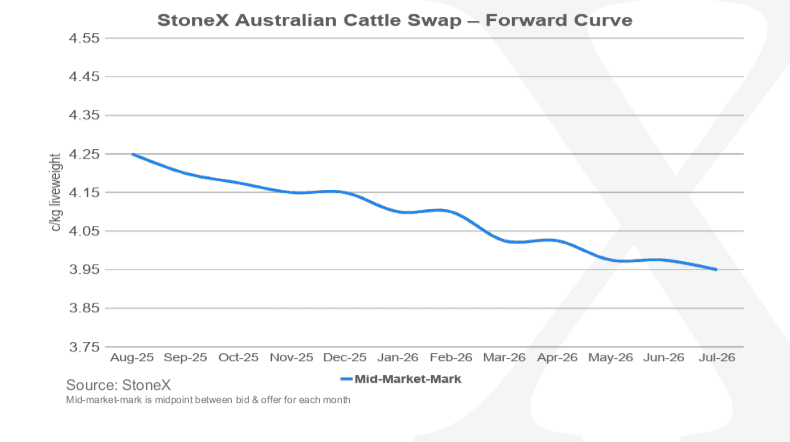
StoneX livestock manger Ripley Atkinson said in line with spot prices, forward bids and offers had increased on the Australian Feeder Cattle swap.
“In recent market discussions, there has been some underlying tension between where buyers are willing to trade at and what price sellers will accept, mirroring what is being seen in the physical spot market,” Mr Atkinson said.
“This is reflected in the bids forwards remaining stable and spreads widening as sellers offer the market higher. The spreads in the marketplace on swaps forwards indicate the market is somewhat uncertain of the future direction of prices.”
still grappling with the price charts, and charts,