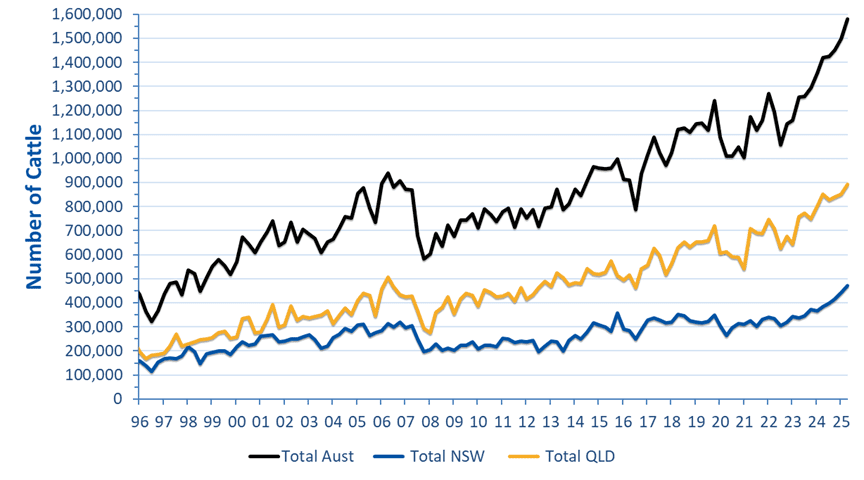
CATTLE numbers on feed in Australia continue to surge to record highs, now within sight of 1.6 million head based on results from the June quarterly feedlot survey released this morning.
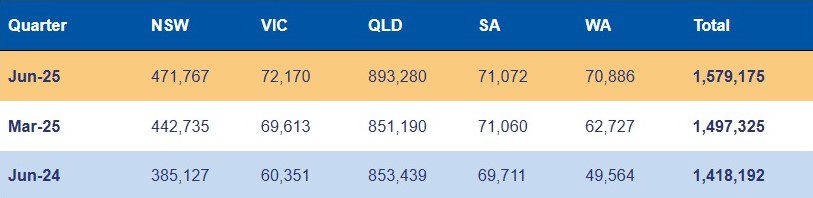
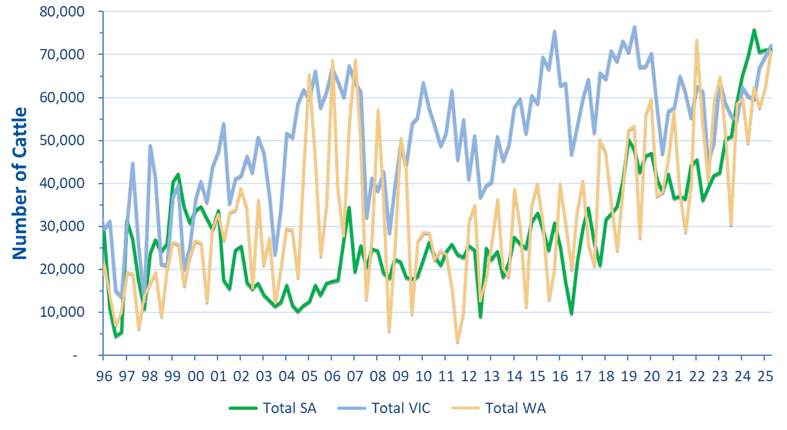
The upwards trajectory to new record highs is consistent across all feeding states expect South Australia, where numbers have fallen seasonally since December.
Nationally, the June quarter results saw 1.579 million on feed, while feedlot capacity has also hit new highs, at 1.706 million head.
Numbers on feed, by state
Also reflecting the current level of grainfed activity was feedlot utilisation, where yards last quarter were operating at 92.55 percent of capacity. That figure is up from 90pc the previous quarter and 86.6pc in the June quarter last year.
On a state basis, Queensland feedlot utilisation sat at a record +93pc at the end of June , while NSW was at bursting-point at 95.4pc.
 In commercial terms, 90pc utilisation is considered operating ‘at capacity’, due to downtime caused by pen cleaning, maintenance and other factors.
As a comparison, June quarter numbers on feed were up more than 160,000 head on the same period last year, Beef Central is looking into recent feedlot expansion projects in an upcoming article.
Also noteworthy is the rise in lotfeeding activity among smaller operators. There’s been a clear rise in smaller feedlot operations (categories less than 500 and, and 500-1000 head), which last quarter accounted for 60,200 head on feed – a 21pc rise on the previous quarter and 38pc higher than December. Softer feedgrain prices and the opportunity to ‘value-add’ grain by putting it down an animal’s throat may be part of the reason.
Beef Central will look at the rise in lotfeeding activity among smaller operators in a story to come tomorrow or Monday.
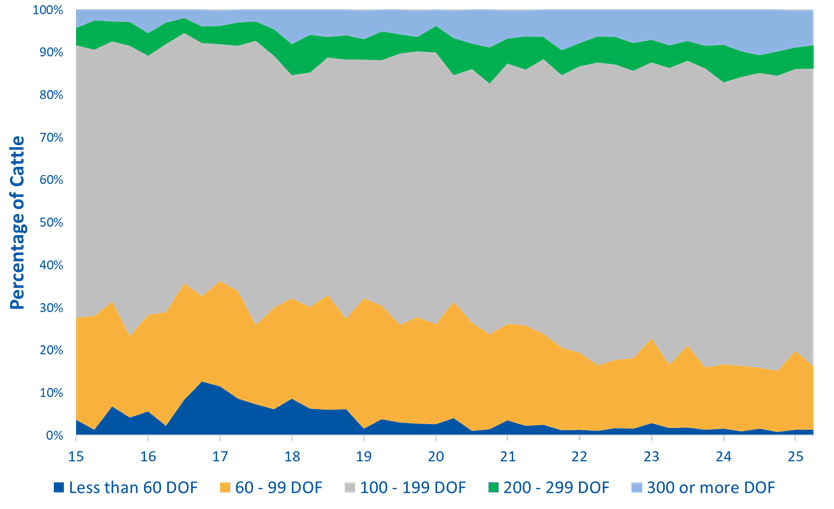
In terms of feeding activity broken down by days on feed, there has been a moderate decline in +300 day cattle (ie Wagyu) over the past three quarters, with increases seen since March in cattle fed 100-200 days, and to a lesser extent, 200-300 days. Domestic fed cattle (60-99 days) also declined last quarter, and continue a long-term decline evident since at least 2017.
Cattle numbers on feed – National, Qld and NSW
Cattle numbers on feed – SA, VIC & WA
Australian Lot Feeders Association president Grant Garey said the industry has continued to invest in long term growth of the Australian grainfed sector.

Grant Garey
“This marks the fifth consecutive quarter of growth for Australian feedlots. The sector’s role in delivering consistent, high-quality beef to both domestic and international markets has never been more important,” he said.
Feedlots continue to be utilised as part of long-standing programs supplying consistent beef to a range of markets. Additionally, the use of feedlots as a finishing and quality tool, alongside the systems adoption for drought mitigation has caused a subsequent lift in utilisation, with national pens 93pc full, another record.
Grainfed cattle production
Grainfed cattle turnoff also hit a new high, with 894,178 head processed last quarter, which drove record grainfed production and export volumes. More cattle are being placed into longer-fed 200-300 programs, contributing to a significant lift in quarterly grainfed beef output.
National comparisons over five years show the change in the feedlot system. Numbers on feed have lifted 38pc, capacity has lifted 23pc and grainfed cattle turnoff is up 13pc, while grainfed exports are up 42pc.
“The continued expansion in capacity and utilisation reflects strong confidence in the sector. As we break new records, Australian grainfed beef continues to find demand in global markets,” Mr Garey said.
Strong global demand
MLA acting market information manager Erin Lukey noted that while input costs have risen, global demand remains robust.
Australia exported 112,935 tonnes of grainfed beef last quarter, up 25pc on June 2024 volumes, which at the time was a record. Grainfed beef made up 29pc of total exports last quarter, as non-grainfed production remains firm.
“Australia consumes a relatively stable volume of grainfed beef, meaning that record turnoff and production, results in a subsequent record export volume. Global demand for grainfed beef remains solid as competition from the US continues to face reduced production.
“Australia exported grainfed beef to 51 countries over the quarter, the most diverse mix of markets since 2017,” Ms Lukey said.
China’s share of Australian exports continues to grow, now accounting for 35pc of total exports in the June quarter. Japan and South Korea remain key trading partners, contributing 26pc and 18pc respectively.
In the last quarter, lotfeeders faced a rising market, with competition intensifying, Ms Lukey said.
“Saleyard throughput for feeder steers and heifers declined by 6pc and 11pc respectively, reducing the availability of stock. As a result, prices rose by 6–7pc over the same period.
“As southern production systems rebuild, competition is expected to intensify, particularly from restocker buyers,” she said.
Click here to access Beef Central’s earlier Top 25 Lotfeeders report
Quarterly grainfed cattle turnoff by days on feed