
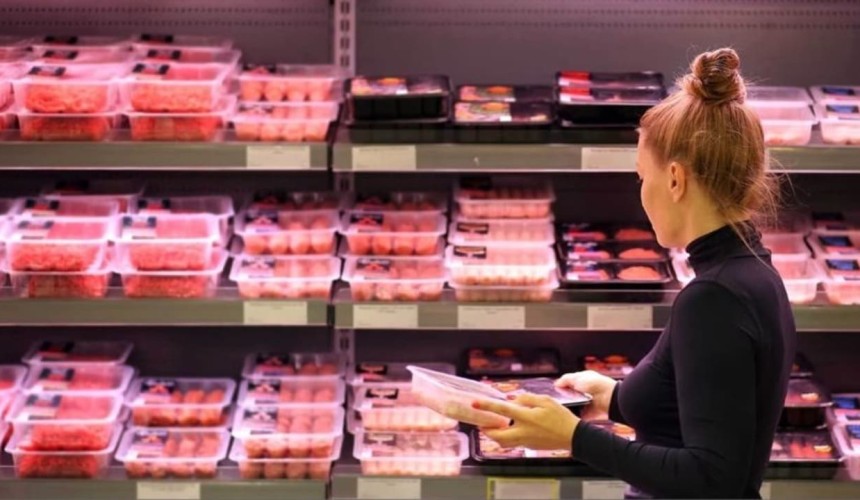
HIGHER prices can often lead to reduced sale volumes, but domestic beef sales are defying that general rule this year.
Australian Bureau of Statistics figures show domestic beef and veal prices increased by six percent in the 12 months to June 30.
Despite the higher prices at retail, beef purchase volumes have held up and have even risen slightly.
That’s according to NeilsenIQ Homescan data provided to Beef Central by Meat & Livestock Australia this week, showing beef purchase volumes rose by 0.2pc in the 12 months to July 2025.
 Lamb prices have also risen significantly in the past year, climbing 10.7pc to June 2025, according to ABS stats.
However, unlike the beef story, retail lamb purchase volumes have slid over the same period, with NeilsenIQ Homescan data recording a drop in sales in the year to July 2025 of -13.3pc.
Reasons given for the lower lamb sales were increasing prices and seasonality, with an increase in purchase volumes expected as spring and summer approach.
For other proteins the ABS also recorded price rises in the year to June 2025 of 3.5pc for pork and just 1.2pc for poultry.
In its full-year results released today Woolworths reported that as an entire category, fresh meat sales volumes were up in the “high single digits” for the past 12 months.
What’s driving beef’s resilience?
So what is behind the resilience in beef sales volumes during a period of rising retail prices?

Stephen Kelly
Sydney retailer Stephen Kelly, Sutcliffe Meats, who owns and runs five large shopping centre butcheries across Sydney and Newcastle, pointed to a couple of different dynamics at play.
He said retail beef prices rose sharply during the COVID period from March 2020 to March 2022, by as much as 20-25pc.
However, since then, retail beef prices have remained relatively stable, albeit with some seasonal highs and lows.
By comparison, even the 6pc rise over the 12 months to June 2025 can be considered modest, and consumers would not change their protein choices because of it, Mr Kelly said.
This contrasted with retail prices for lamb which he said had risen over 30 percent in some instances during 2025.
Mr Kelly said, in his experience, sales volumes for beef have increased slightly over the past 12-24 months, but this was probably due to increased availability.
“Slaughter numbers began to increase from around mid-2023 and continued to rise during 2024 and 2025,” he said
“Numbers are still approximately 30-35pc above the same period in 2023.”
Export demand also having an effect on domestic market
Export dynamics have also had an influence on the domestic retail market this year, he noted.
“The increase in numbers has seen beef exports rise substantially, with strong demand overseas negating the need for processors to divert product onto the domestic market.
“This diversion normally happens (extra product to domestic market) and results in price falls – it has not happened this year.”
A rising consumer preference for eating at home as opposed to at hotels or restaurants may have also contributed to more resilient beef purchase volumes this year.
“I think there is also another factor in the slight increase in beef volumes at retail and that would be the decrease in volumes sold through the food service sector.
“Consumers still enjoy beef whether it be mince or a steak – they just prefer to eat it at home these days rather than at a restaurant, pub or club.”
Chicken: Stable prices, growing volumes
The rise in red meat prices has been contrasted with very modest price increases for chicken.
Mr Kelly said chicken as a protein had been “remarkably stable in price” over the past 10-15 years, which was largely due to that industry’s to continually find efficiency in production and processing.
“We have seen chicken breast prices this year at $8-$9/kg which is the same retail price from 10 years ago.
“Sales volumes for chicken continue to increase and now command over 35pc of all protein sales at retail (in volume terms).
“The efficiency of the chicken industry in both production and processing has enabled chicken prices to remain stable over many years.”