
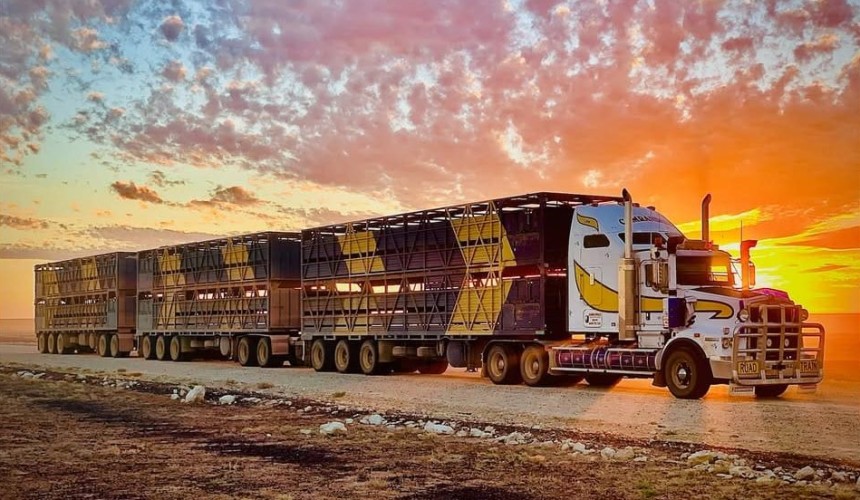
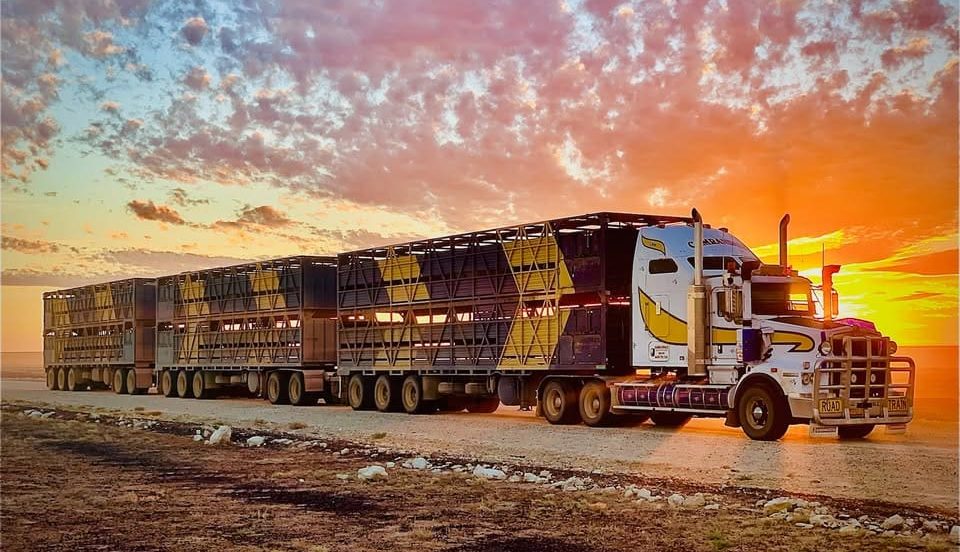
Road train operated by Camrandale Transport, Quilpie QLD
“COMING home empty” has been a perennial problem for the livestock transport industry’s efficiency, but an Australian-developed freight and logistics app is helping solve that challenge.
At any given time, it’s been estimated that one-third of Australian road transport vehicles are running empty, costing the industry billions and contributing to unnecessary emissions and road congestion.
But there’s a tech-driven solution that’s providing some support.
Developed by ASX-listed Freelancer Ltd, the Loadshift digital platform (see link below) is designed to put transport operators and customers together to fill more backloads and deliver greater efficiency.
The website and app-based platform has initially targeted the general freight and refrigerated freight sectors, but livestock transport (plus bulk rural commodities like hay and stock supplements) are now regularly featuring among users.
The platform has facilitated more than 800 million kilometres of freight, to date.
 Loadshift operations manager Simon Manton told Beef Central that livestock transport currently represented about ten posts per week on the platform.
“That’s not a lot in the overall context – we regularly see more than 1000 jobs post each week from the broader transport and freight industry – but the livestock transport numbers are growing,” he said.
“Awareness is the big part, to see greater use in the livestock transport industry, especially in more remote regional areas.”
“For example, a load of general freight might be heading from Melbourne to somewhere in the Northern Territory, and they need a load for the return trip. It might not be easy to find a load out of a region like that, and we can often find something for them. The same can apply for livestock work.”
“We’re pretty happy with how the platform is going so far.”
Mr Manton said the service was being initiated from both ends – by transport operators looking for a return load, as well as customers looking to get a consignment shifted somewhere.
 “Mostly, at this point it is the shippers (customers), posting the job, with the carriers responding – but it can work both ways.”
Asked if there was an expectation around some form of ‘discount’ because the load represented back-freight on a vehicle that would otherwise travel empty, Mr Manton said this sometimes occurred, but not always.
“It depends on the circumstances – sometimes it is more about time-saving.”
“If it is in a busy sector – say Wagga to Melbourne, which might attract 30 quotes on a job – there might be some price discount. But in more remote rural areas where there is less competition, we often find it’s not about a price discount, but simply that a transport operator is ‘in the area’ and can pick up the load promptly.”
The Loadshift business model attaches a commission on each job that goes through the site.
The concept was developed in Australia, but the developers are looking at prospects to take the model overseas, with Canada the first likely target.
“It’s important we look at new technologies and practices to boost productivity and safety for Australians working in this area – particularly when it comes to one of the biggest challenges facing carriers today: running empty,” Matt Barrie, Loadshift’s chief executive said.
“Empty runs are not only a waste of money, fuel, and time, they also decrease safety for all Australians on the road by increasing traffic and road wear.”
The Loadshift platform (website and app) can be accessed here.
See Beef Central’s recent Top 25 Livestock Transporters feature