
The long and the short if it, in cattle breeding fads
THE term ‘fad’ has been in use within the English language since the 1830s. According to literature, the term initially referred to ‘hobbies or pet projects’ before evolving into the more commonly understood meaning of ‘a temporary fashion or craze.’
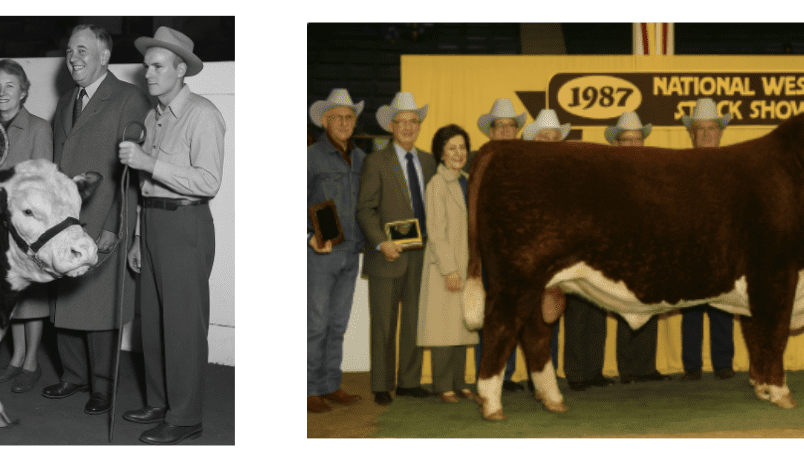
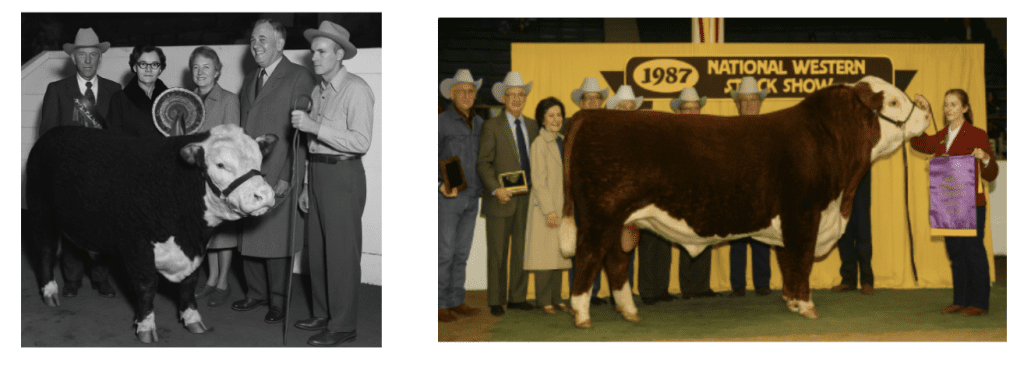
The history of the beef industry is interspersed with numerous “fads”, perhaps the most referred to is the change in mature size from small framed early maturing cattle to large late maturity animals. For examples of this, take a look at the Hereford show bull images above, from the 1950s and 1987.
It’s not uncommon to attend field days or industry conferences, particularly those focussed on breeding to have a presenter share images like those above.
Often the message is to highlight the transition that has occurred in a period of 30 years for frame size. It’s also common for these images to be used to highlight issues that range from chasing growth, phenotypic selection or just the risks of showing cattle.
These are all valid points that have contributed in their own way to the types of cattle that currently exist within the wider population. However it is very rare to look a little deeper into the motivations that exist behind these decisions to select for the traits that have resulted in such massive changes.
Fundamentally, a “fad” is driven through characteristics such as novelty and more specifically social imitation. New ‘fads” pull attention away from established trends or practices, particularly if there is a high novelty value.
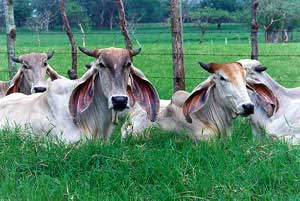 Take the exaggerated, long, pendulous ‘banana leaf’ ears that evolved in Indu Brazil cattle in the US and South America in the 1970s and 80s, which served no other purpose than being ‘fashionable.’ One of Australia’s most popular Brahman AI sires of the 1980s, CMT Tuxpeno 308/0, carried plenty of Indu Brazil genetics, blended with American Grey Brahman.
Novelty however doesn’t always explain these changes. There are other factors that often predispose a person to taking on the fad, often creating significant changes to their operation as a result.
While the show ring is often the most cited cause of industry fads, there are other several other factors that also impact producers’ predispositions to new fads. These include the impact of social signalling and peer influence.
It is common for many producers to compare themselves against neighbours or industry peers.
If a breed, practice, or technology appears to be gaining attention, this creates pressure to adopt quickly so as not to be “left behind.”
There is also among some producers a perceived market advantage. If a fad seems to promise premiums, producers may adopt without fully assessing long-term viability. This can also be compounded by general uncertainty and optimism bias. As noted in an earlier Beef Central column on bull buyers’ behaviour,
producers often overestimate the upside and underestimate the risks when something looks new and profitable.
Often the risks of fads become more entrenched due to weak or lagged feedback loops within the industry. Since genetic or management decisions may take years to be fully expressed, this delay allows fads (like oversized cattle) to persist longer than they would in industries with immediate feedback.
It is possible to avoid fads or to at least consider the impact a new fad or invocation may have on a breeding program. The most effective method is to have clear, defined and measurable breeding objectives.
 Breeding objectives create a clear reference point for decision-making. Rather than being swayed by novelty or peer pressure, producers can weigh new ideas or innovations against their stated goals. If an innovation contributes to improving fertility, carcase compliance, or feed efficiency in line with their breeding plan, it can be considered. If not, it is easier to set aside, no matter how fashionable it appears.
One of the main risks with fads is that they exploit what is immediately visible, such as frame size, markings, or show results. Breeding objectives shift the emphasis toward long-term profitability and measurable traits, supported by EBVs, indexes, and herd records.
This reduces the risk of selecting animals on looks or hype alone. Clear objectives also establish a framework for monitoring progress. When decisions don’t move the herd toward that outcome, the deviations are noticed earlier. This shortens the feedback loop and can stop fads from becoming embedded and overlooked.
A key risk with many fads is to draw attention by promising premiums or advantages that seem compelling in the short term. Breeding objectives help producers test those claims against the reality of their production system and market.
If a fad breed or trait doesn’t fit the end market specifications, feedbase, or management resources, the breeding objective highlights the mismatch before costly adoption occurs.
It’s worth remembering that breeding objectives also strengthen producer confidence. When goals are clearly defined, producers are less likely to chase what neighbours, or the show ring are doing.
Producers can explain to themselves and others, why their choices are aligned to profitability and sustainability in their system. This reduces susceptibility to social imitation and helps the industry progress on long-term trends rather than short-lived swings.

Alastair Rayner
Alastair Rayner is Principal of RaynerAg and an Extension & Engagement Consultant with the Agricultural Business Research Institute (ABRI). He has over 28 years’ experience advising beef producers and graziers across Australia. Alastair can be contacted here or through his website: www.raynerag.com.au
surely the days of the showring having influence on breeding decisions are long gone
speaking of fads!!!! why arent the real ones ever addressed???
many years ago there was only 1 breed of beef cattle, and that was POLL HEREFORD!!!!! then the marketers were paid handsomely and off they went beating the angus steak drum, TO THIS DAY!!!!
now the steak on everyones lips is WAGYU 🤣🤣🤣🤣🤣 AND 99.99% OF ECPERTS HAVE NEVER EATEN A WAGYU STEAK, they have eaten a great deal of wagyu cross steaks, and thats about it. i could go on but then theres no point
I very much doubt consistent eating quality meeting consumer approval has anything to do with a breeding "fad" Andrew. It does however benefit from slick marketing based on science and intelligence.