
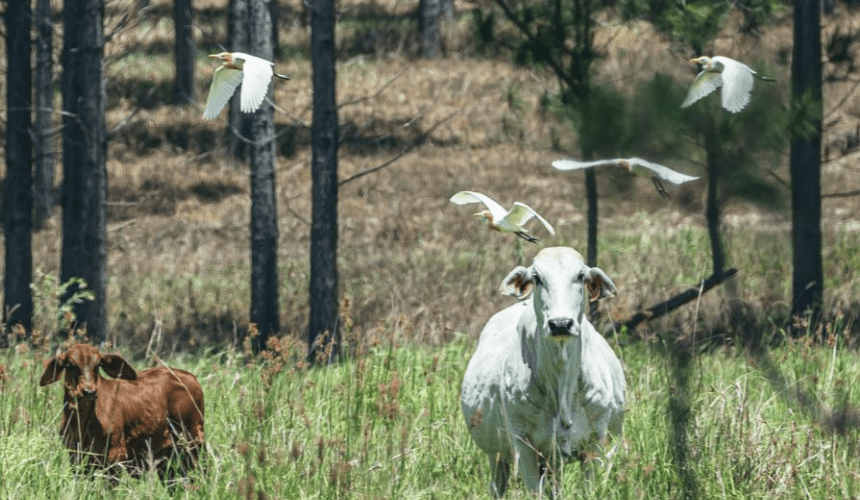
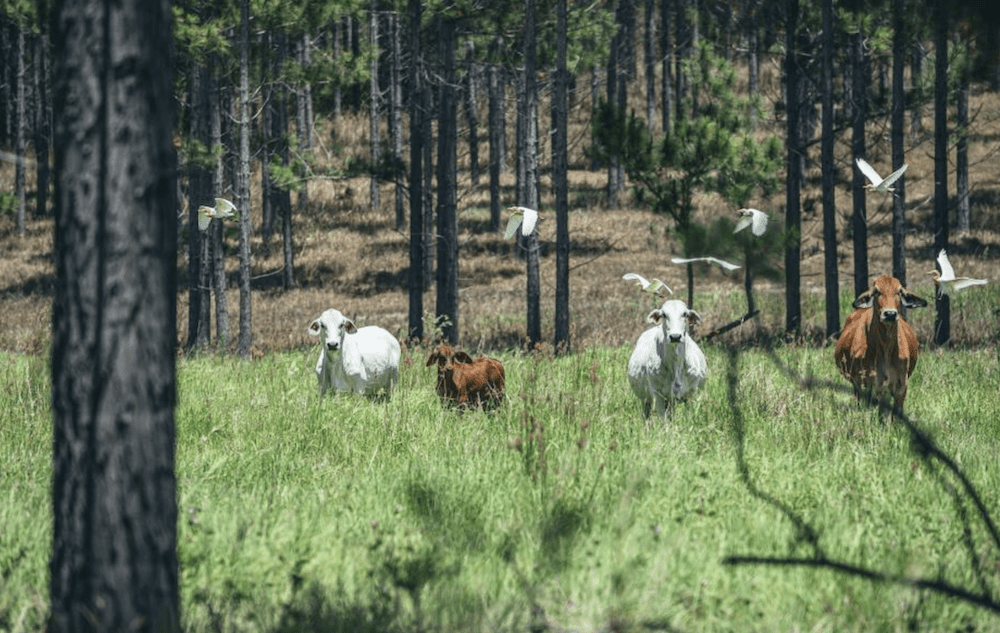
New economic analysis has demonstrated the whole-of-farm returns that can be achieved through managing remnant and regrowth native forests on grazing land with silviculture practices, while also helping to reduce Australia’s heavy reliance on imported timber.
But fully capitalising on those opportunities also relies on policy settings catching up and allowing carbon credits to be earned for managing existing native vegetation, not just for planting trees as is presently the case, a conference in Brisbane this week was told.
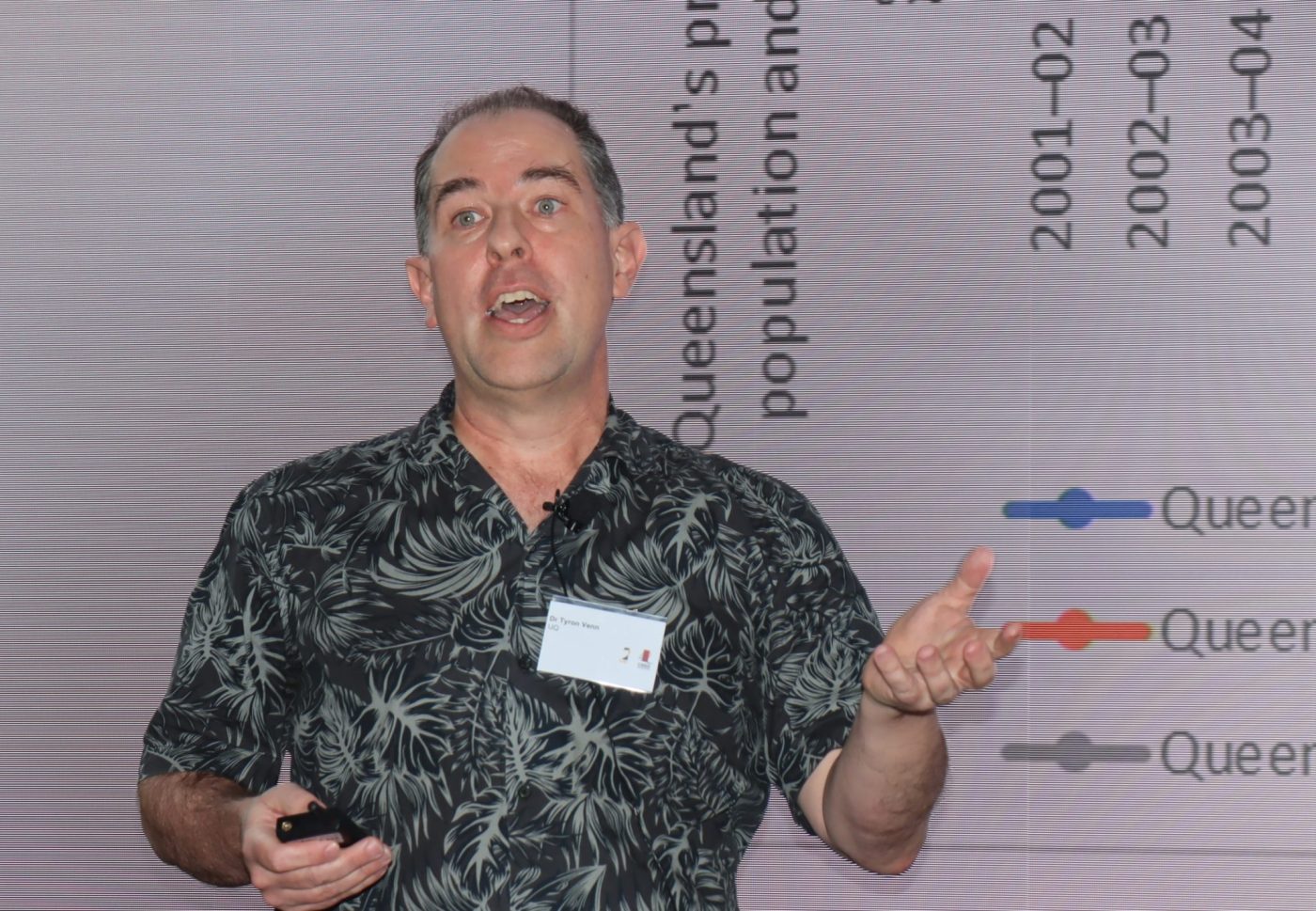
Addressing the Timber Queensland and AgForce “Doing Timber Business” conference on Tuesday, University of Queensland forestry economist Dr Tyron Venn presented the results of case study analysis showing the financial performance of grazing operations with and without silviculture practices in Spotted Gum and Pine regions of Queensland.
The Week in Beef podcast: Timber Qld CEO Mick Stephens explains how the cattle and timber sectors can benefit from working more closely together in this week’s episode
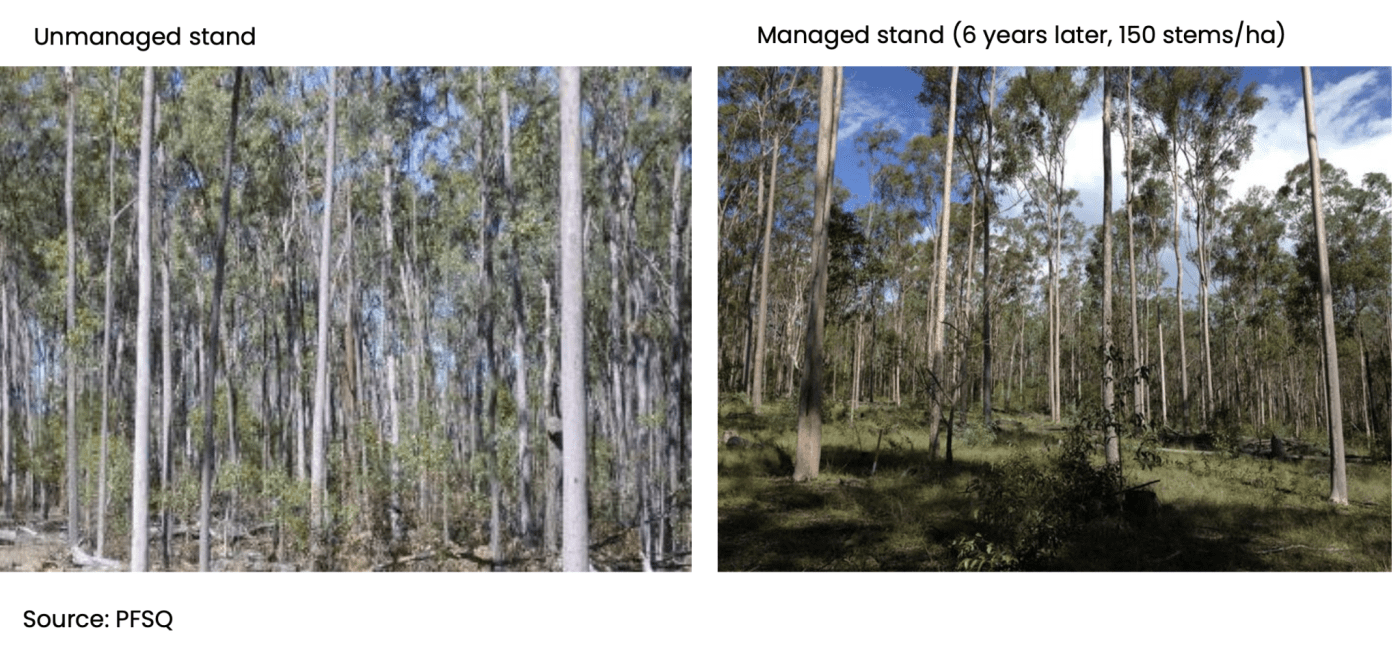
The research showed that thinning and managing trees with silviculture, or planting trees in alleys on open pastures, can deliver more grass and more harvestable timber over 20 year periods than a business as usual approach without those interventions.
 For beef operations with areas of native hardwood timber such as spotted gum, the analysis showed that retaining and actively managing regrowth to code outperformed clearing to open pasture on production and profitability metrics.
Thinning remnant spotted gum to code generated a net present value around $1300/ha over 20 years.
Dr Venn said including the management of native remnant and regrowth forest in carbon accounting methodology would provide the incentives needed to encourage landholders to adopt silviculture over clearing, while also unlocking a vast untapped timber supply that would reduce Australia’s reliance on imports from countries that are deemed high risk for deforestation, illegal clearing and forest degradation.
Dr Venn said a strong argument for enabling landholders to earn carbon credits for managing native regrowth and remnant forests through silviculture lies in future “emissions avoidance” – the timber harvested from those practices replaces emissions-intensive steel, concrete or plastics in building and construction.
“Presently, there is no method that allows you to manage natural vegetation to earn carbon credits,” Dr Venn said.
“But how is that any different from someone planting trees in a plantation forestry scenario? It’s not.
“So this should be eligible for carbon credits in future ACCU methodology.”
Work internationally and in Australia had shown that sustainably managed remnant forest systems can sequester more carbon than a strict conservation alternative, Dr Venn said, because of the diversified carbon pools and the avoidance of carbon-intensive substitutes in building and construction.
“In the long run, production forests can sequester more carbon than a conservation forest, and that’s played out in many examples all over the world,” Dr Venn said.
Australia’s area of State-owned native forest has declined over the past 30 years, increasing reliance on timber imports from 24 percent of Australia’s traded wood in 1996 to 46 percent in 2022.
Countries with a high risk of deforestation or illegal clearing made up a substantial percentage of Australia’s annual imports.
“If we’re going to mitigate the climate and extinction crises, we need to supply more of our own timber domestically, rather than rely on high risk countries to grow the wood for us,” Dr Venn said.
Hardwood timber supply in Queensland is currently about 260,000 cubic meters of log per year.
If silviculture practices were applied to thin 16 percent of the State’s remnant native forests, or about 300,000 hectares, that would double Queensland’s hardwood production to about 520,000 cubic metres, he said.