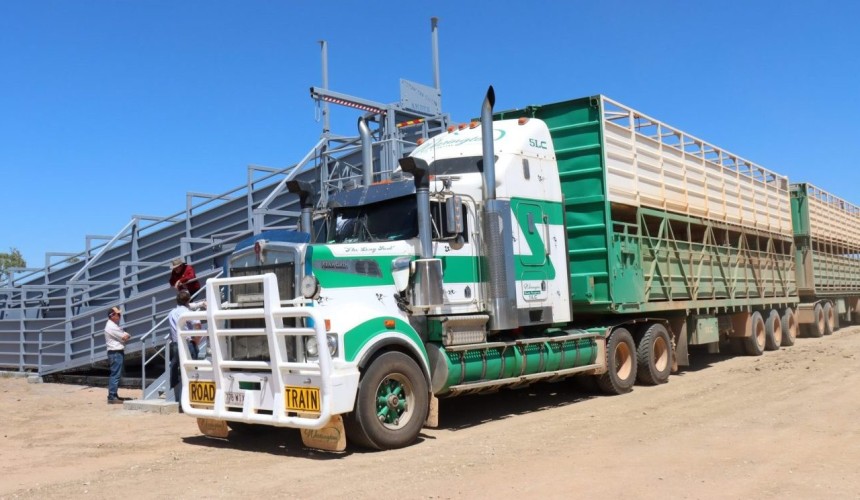
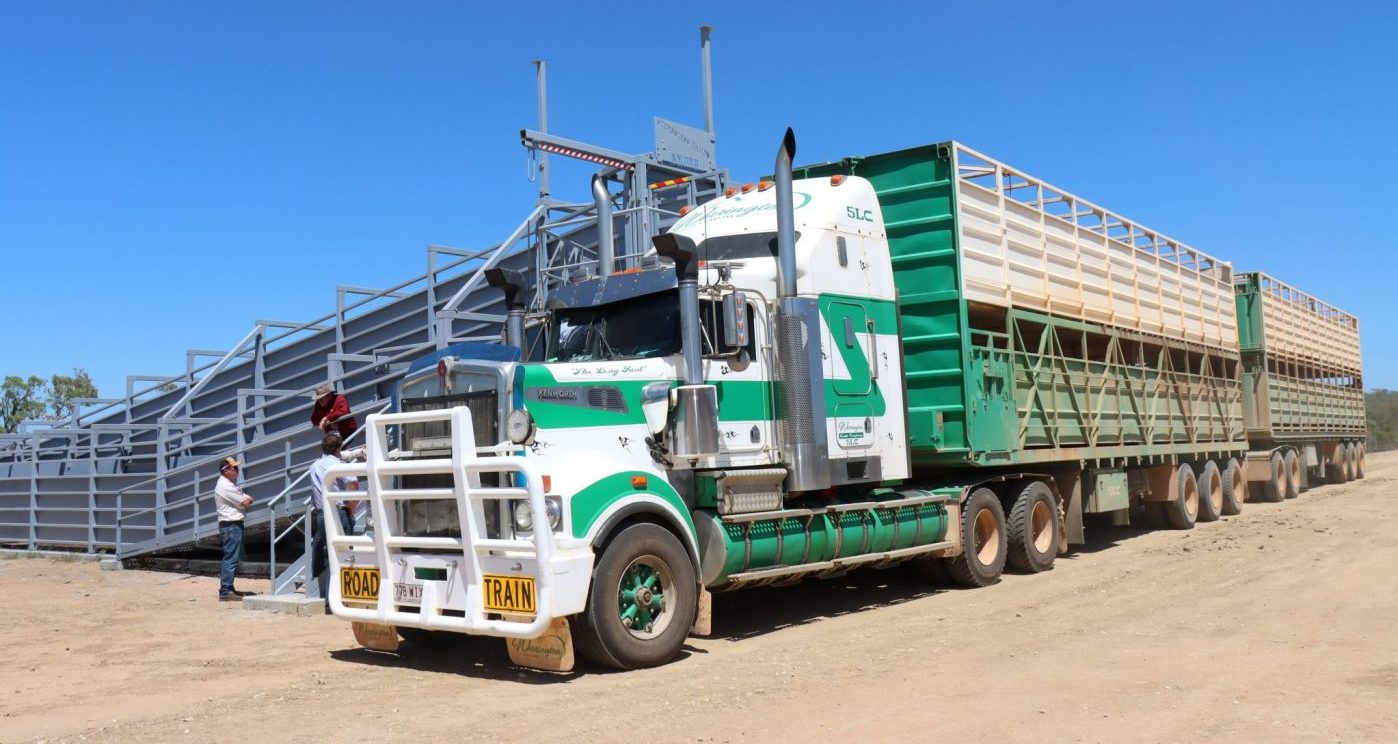
A SHOWCASE double-width, double-deck loading ramp installed on the Lethbridge family’s Amber Station at Mount Surprise sparked robust, direct and at times confronting conversations about cattle loading practices and safety standards at a field day on the property earlier this week.
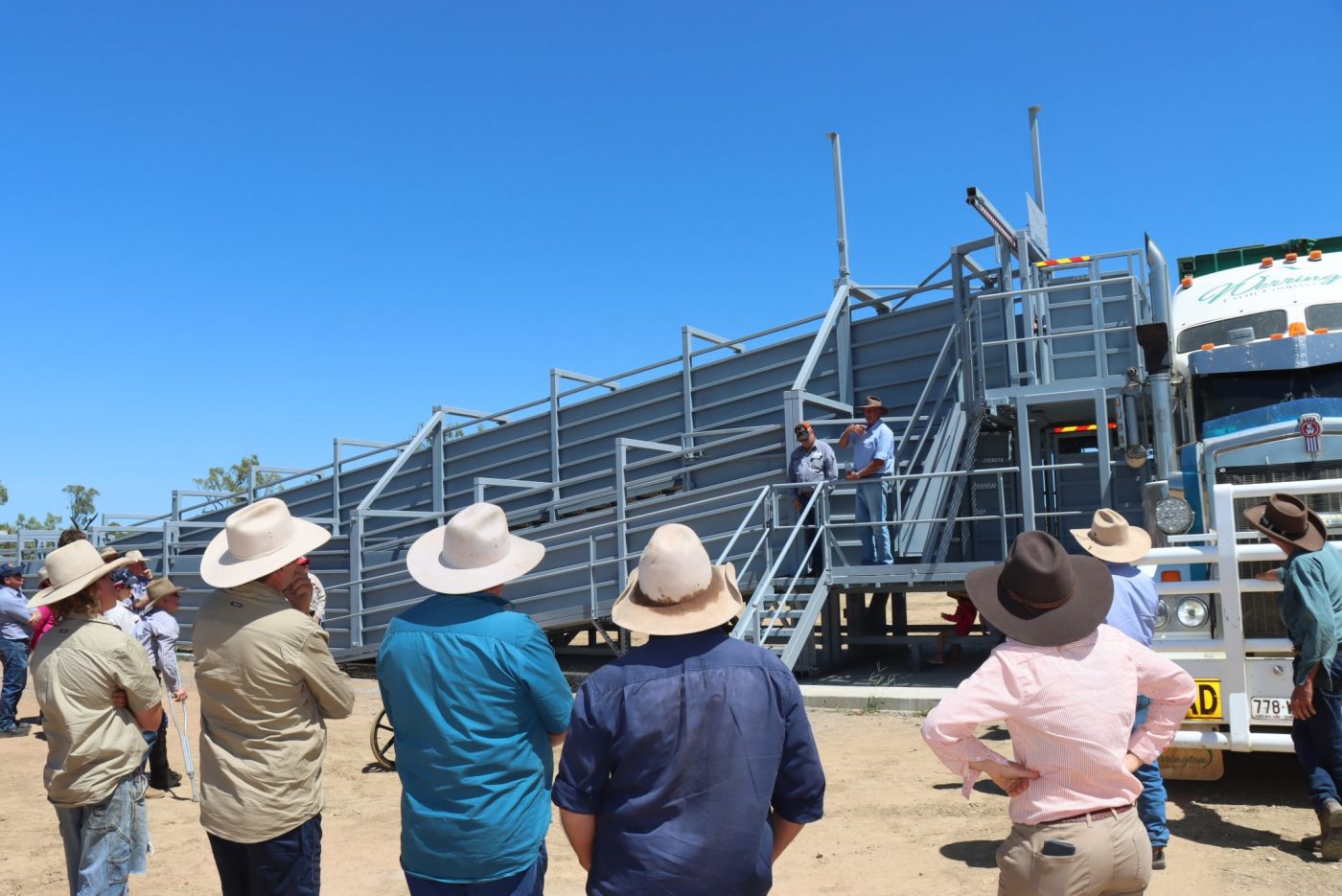
Producers watch a demonstration of the ramp in action at Amber Station on Monday.
Dozens of cattle producers made their way to the station about 300km inland from Cairns on Monday, where the new ramp was demonstrated in action loading cattle.
The strong turnout at the relatively isolated location reflected the growing focus in the north on cattle handling, loading and transport – a part of the cattle value chain that several speakers noted had gone too long without receiving adequate attention.
The design of the new ramp on Amber Station drew on a lifetime of knowledge accumulated by John Lethbridge, a cattle producer and livestock transporter (and uncle of Amber Station owner Russell Lethbridge), and North Queensland engineering works owner Shawn Chapman (More below)
Risks to welfare and reputation
A key message from discussions at the field day was that outdated facilities and poor preparation standards continue to put both animal welfare and the industry’s reputation at risk, while creating problems that snowball further through the value chain – not just to processors but all the way back to producers’ own hip pockets.
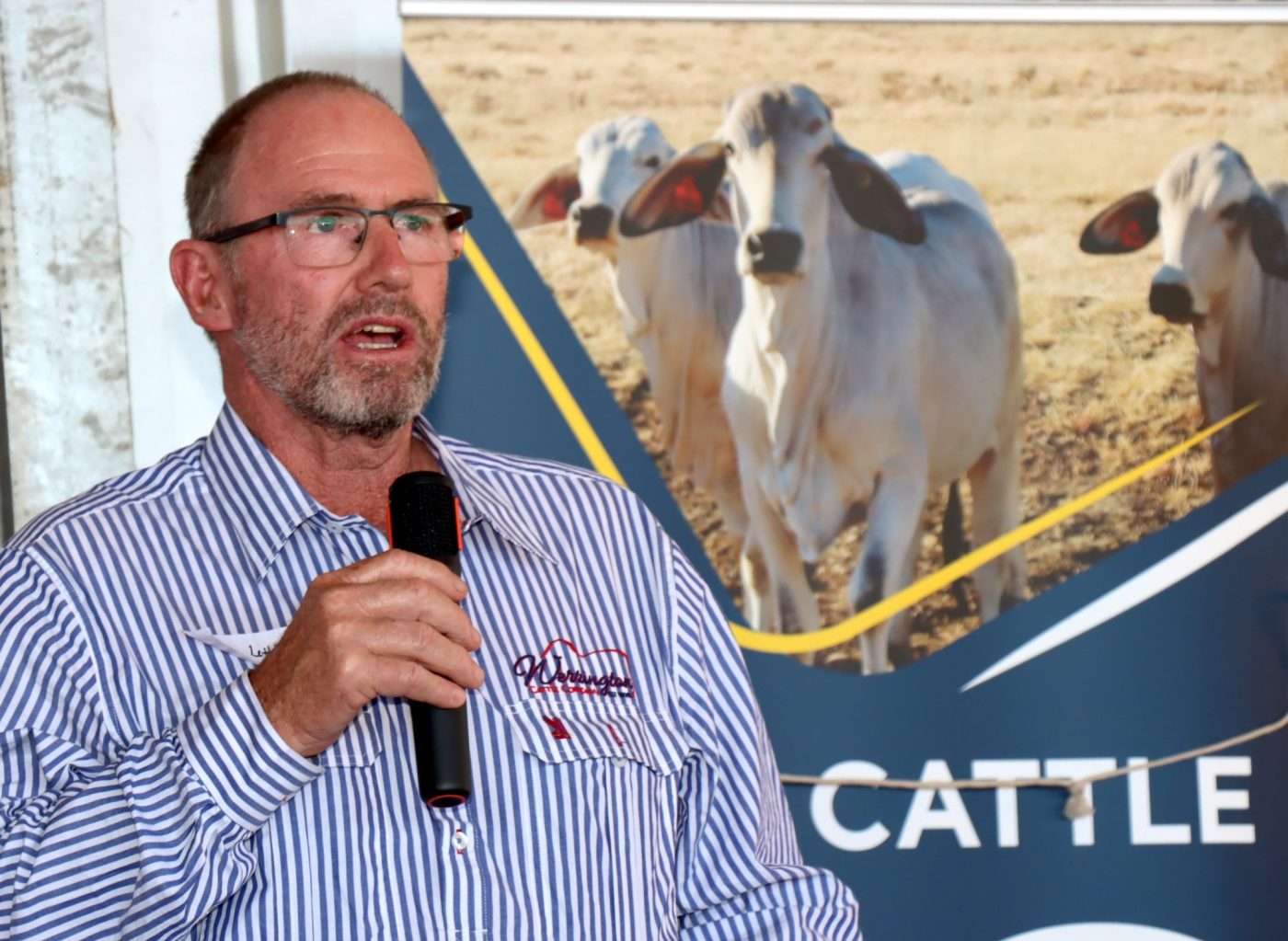
NQ cattle producer and MLA board member Russell Lethbridge whose family hosted the field day on Amber Station near Mount Surprise.
In a passionate and heartfelt address, Russell Lethbridge urged producers to take greater responsibility for animal welfare during transport and loading.
He recounted three examples he had witnessed where poor preparation and overloading had led to preventable tragedies, and which motivated him to bring greater attention to the need for better practices across the industry.
One involved coming across 18 decks of 460kg steers parked on a pad at Torrens Creek where cars and caravans were also congregated. “These steers were an absolute mess.. that’s what got me out of bed to get something happening. We’ve all got our entire lives invested in this industry.
“Those fellows worked there for about an hour to get those steers up and get them as best they could on their wheels. One reason caused that, and it was loading density.
“They had one too many on each pen, and those steers couldn’t find their feet, there was no way in the world.”
A second case involved seeing 12 decks of “beautiful fat cows” unloaded off a truck at a meatworks after a journey of just 300km, with seven pulled off dead.
And a third which happened recently involved people preg-testing heifers straight onto a truck.
“Straight on, gone, good luck with them truck driver,” he said.
“The thing about those three situations I just described is that they are all 100 percent preventable.
“Yes, it’s not all bad, but there is enough bad to be an extreme risk in this industry and just bear in mind that we will always be judged by the lowest common denominator in this industry.”
Mr Lethbridge said that just as the live export industry had experienced, if producers don’t manage to lift standards in their industry, “someone will”.
“If we don’t want that sort of involvement in our industry, then we’ve got to take action.
“The thing about those three situations is that they are all 100 percent preventable. Yes, it’s not all bad, but there is enough bad to be an extreme risk in this industry and just bear in mind that we will always be judged by the lowest common denominator in this industry.”
Mr Lethbridge said that just as the live export industry had experienced, if producers don’t manage to lift standards in their industry, “someone will.”
“If we don’t want that sort of involvement in our industry, then we’ve got to take action. For me, the main reason is all around the welfare of the animals.
 “I don’t want to be doing this because we might get caught, or someone might take a photo. I want people in this industry to take responsibility and control, because we are the only ones that can do that.
“As an industry we’ve actually made some great gains in customer sentiment. Our records at MLA tell us that at the moment, so let’s keep it that way.
“I think all should make change, those that are good could be better and for no other reason, just because it’s the right thing to do.”
The cost of stress
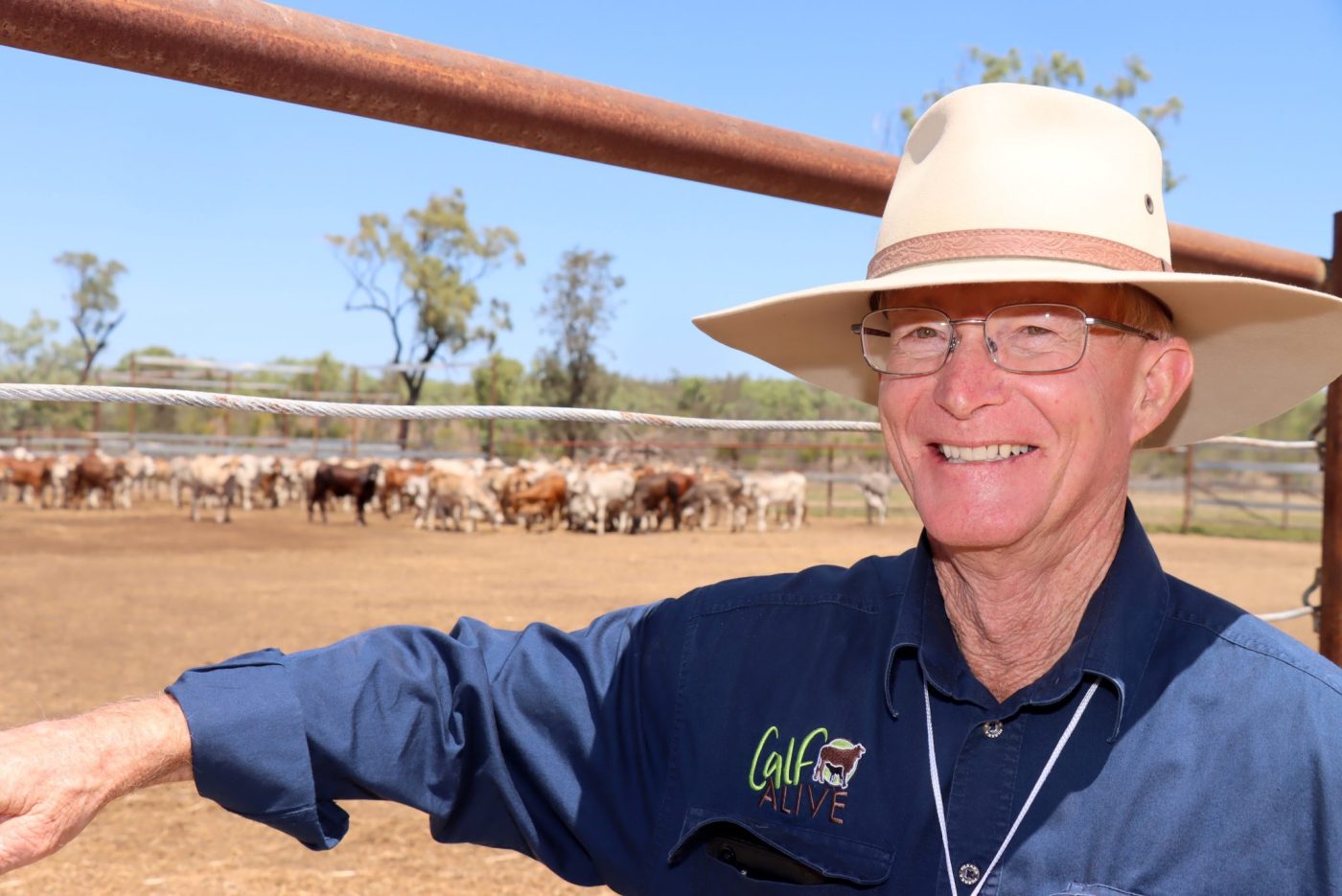 Well-known NQ vet Geoffry Fordyce, GALF Cattle, highlighted the pain that allowing animals to be stressed causes to cattle businesses, and the “extraordinary impact” good infrastructure can make in reducing that stress.
Dr Fordyce said science shows that the loading procedure onto the truck is one of the greatest causes of stress to animals. There was an incredible amount of research showing the impact of stress on cattle, which included widespread gut and lung infections which across large numbers of cattle add up to tonnes of liveweight being lost.
Loss of fertility in cows and bulls was a further impact. Dr Fordyce estimates many northern Australian businesses could save between $100,000 and $1 million a year by reducing stress on their bull power.
“Most of us haven’t done the calculations of what pain we’re experiencing because of this,” he said.
“How do you get it right? The key thing about getting it right is down to one word, and it is respect.
“You don’t need to go to town and buy some drug… Often the human and their stress and their mongrel infrastructure are quite often the problem. Fix your behaviour, fix your infrastructure and lots of the stress will go away.”
Get the cowboys out
Getting the “cowboys” out of the show and implementing good stock handling procedures was another simple message he emphasised.
“When you are making a decision, think about what impact is it going to have on the welfare of the animal, what impact is it going to have on the liveweight production – which is how much you’re going to sell – and what impact is it going to have on your costs?
“Many are going to look at that big piece of tin out there (the new Amber Station loading ramp) and say ‘I can’t afford that, that’s crazy.’ But actually, if you start asking the questions and analysing it correctly, many of you might find out you could pay something like that off in about two years in some big operations.
“It’s quite extraordinary just how much money is associated with doing things wrong.”
“And there is an incredibly good quote that I came across from Jim Lindsay (Founder of Low Stress Stockhandling) many years ago – ‘if you’ve been doing the same thing wrong for 40 years, by golly, you get good at doing it wrong.’ And I think there’s a lot of that going on in our cattle industry.”
‘We’re all in this together’
Livestock agent Andrew Meehan from Queensland Rural, which is involved in the marketing of thousands of decks of cattle from the north every year, emphasised the message that “we’re all in this together”, and each link has a responsibility to minimise any negative impact on the next stage in the chain.
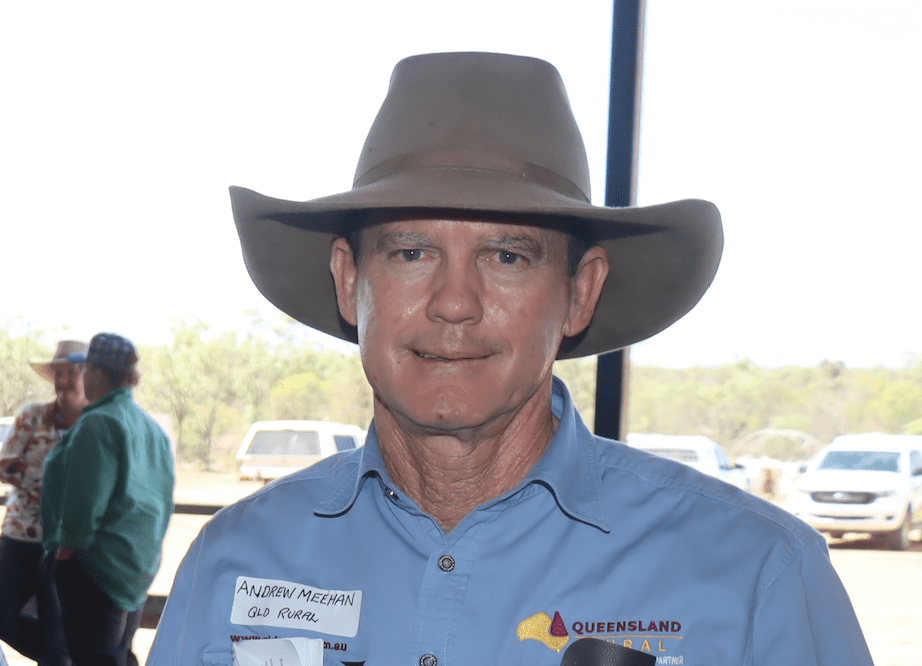
Andrew Meehan, Qld Rural
“Communication is vital because if we don’t get it right, the negative impact snowballs, and it can become a pretty darn costly exercise,” he said.
“We need to work as well as we can to minimise the stress on those animals and the impact on the next part of the chain.
“It’s not hard if cattle are stressed to blow 15 or 20 kilos, whether they go into a saleyard or to a live export order or a feedlot job. Even being conservative on today’s rates at $3 a kilo, a loss of 20 kilos is $60 a head. Put that over a load of cattle and it adds up to a fair bit of money.
“And if someone’s yard facilities, or particularly loading facilities, aren’t right, $60 a head can go a fair way to improving those sort of things, so I think we do need to be conscious of that.”
‘It comes down to one word: Respect’
He said respect was a key word for everyone in the chain.
“I think if we respect the cattle, we respect one another no matter what part of the chain we’re in, I think that’s a pretty neat thing to do, and there’s nothing better than being able to do repeat business, whether that be with a grazier or livestock transporter or an exporter or a processor.
“We are all industry stakeholders at various levels. We should never underestimate the effect any level can have on the next link in the chain. It’s a great industry that we’re involved in. We’ve come a long way in the areas of animal health and OH&S, but I do think there is still plenty of room for improvement, and I realise it is a work in progress.”
Trucking realities
Rural transporter Brian Smith, who runs four livestock trucks from his depot at Mount Garnet, pulled no punches in describing the negative impacts that can come from poor preparation, poor handling and overloading from producers trying to save money on equipment and freight.
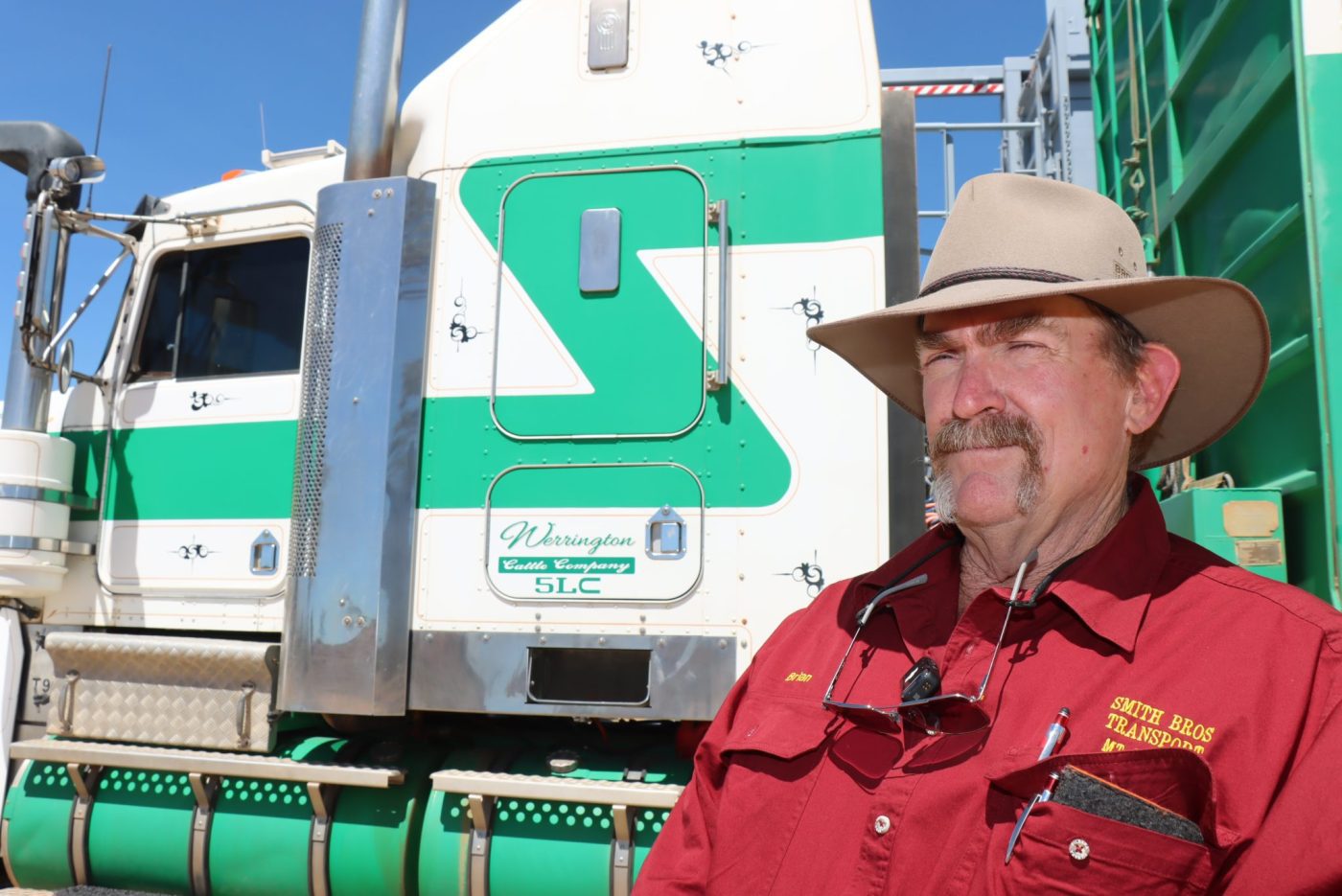
Brian Smith, Smith Bros Transport, Mount Garnet
He outlined a scenario of a producer mustering cattle into a set of portable yards with limited water and a small single-deck ramp “designed for a prickle farm, that handles five or six cows a year” and trying to push a few more cattle onto each load to save a bit on freight costs.
Loading six decks in that scenario took closer to four hours than the one hour it would take with better infrastructure. Cattle were overheated and packed tight on the trip and started to go down just hours into the journey.
It all added up to fatigue on the cattle, fatigue on the driver, and cattle that were bruised and knocked around, with some destined not to survive the journey.
“Bear in mind all these scenarios I’ve struck in my life carting cattle so many times that it’s not funny,” Brian said.
“Do you think that those particular practices are good for your cattle?
“Instead of bruising maybe 1 percent, it’s going to be 10 percent.
“At the end of the day I suppose he’s saving himself a few dollars on his freight. But when you sit down and work out what he has actually saved in his freight, he’s blown that in losing that one cow or two cows and the extra 8 or 9 percent of bruising that he’s got in those cows when he sends them to the meatworks or wherever they go.
“Some graziers might say ‘Oh, they’re going to the saleyard, the buyers won’t know.’ Buyers aren’t stupid. They know every place if those cattle have been knocked around.”
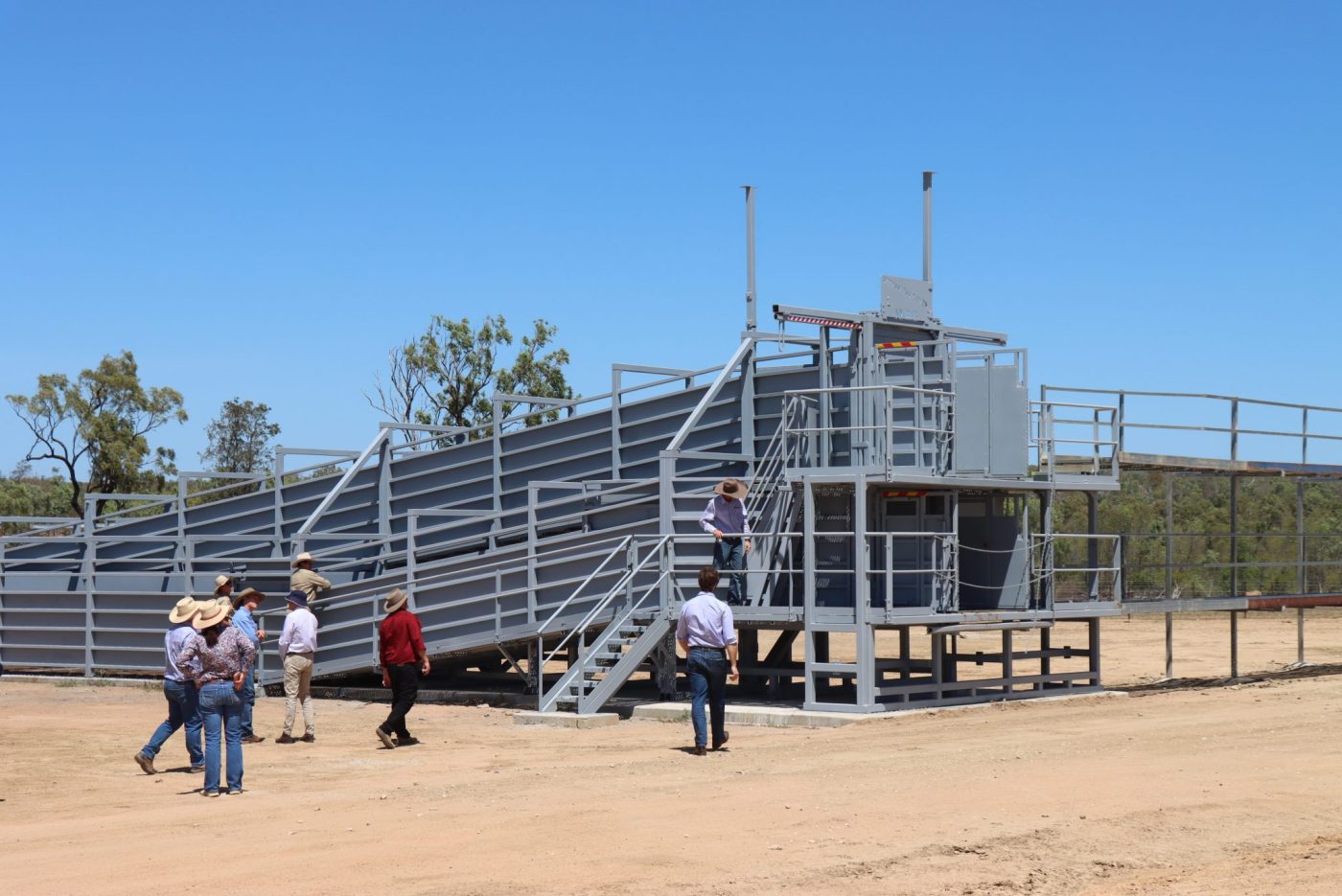
The double deck ramp at Amber Station.
Getting cattle in early so they could get onto feed and water and have a break before transport was not only better for the cattle but also for the producer’s hip pocket. “You get better money for them because they present better and look better,” he said.
Driver retention key issue for industry
Poor infrastructure also made it hard to keep specialist drivers, who were critical to the future of the industry.
“I honestly think that the grazing industry in Northern Australia really wants to look at itself about how they treat operators, how they treat their cattle.”
Brian said wide ramps worked well because cattle could walk up side-by-side. “They go straight in, before you know it, they’re in the pen and the door is shut.”
He said he was also a big fan of double-deck ramps, because it avoided needing to use ramps within crates which are generally too steep.
“It doesn’t matter what you do to make them, 14 foot or even worse 10 foot, they are not used to climbing things like that, they’re not a goat. You have got to give them as much help as you possibly can.”
The designer
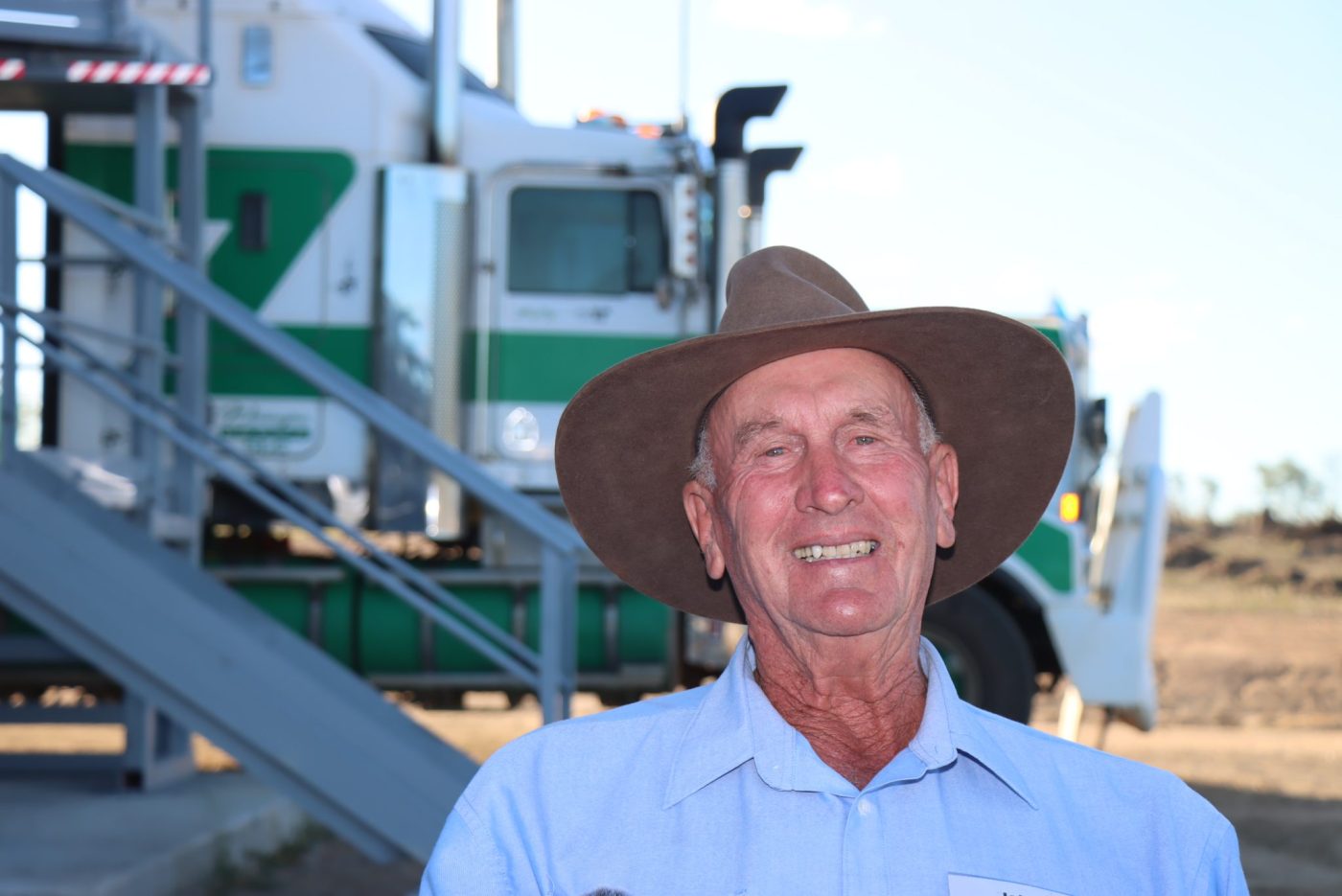
John Lethbridge
As a lifetime cattle producer and livestock transporter with a ‘foot in both camps’ John Lethbridge says he saw a very big need for better infrastructure, particularly around ramps, that he believed was not being met.
“I saw animals and people under a lot of pressure and stress just because of lack of good infrastructure.
“So when I retired, out of respect to the animals and out of respect to my mates that are still carting animals, I decided to compile all the good things I’ve seen in various ramps, right around Queensland, the Territory, incorporating a few ideas of my own and from Shawn Chapman, who constructed the ramp for me.”
The width of the ramp and the additional length, which reduces the steepness of the incline and makes it easy for cattle to ascend, are among its key features.
“Because cattle aren’t confined into a single-file procession onto the truck, the psychological reassurance those animals get from going up as a herd rather than as a single animal is just profound. So they take a lot less pressure, they want to load,” he said.
“It’s a win for animal welfare and then on the back of that’s a win for Workplace Health and Safety, because frightened animals are dangerous animals, and the more you’ve got to pressure them, the more dangerous it is for the animals and for the people.”
Livestock Transport Hub contains key guidance for industry
MLA Project Manager for Animal Wellbeing Research, Development and Adoption, Sharon Dundon – who is also a professional livestock transport driver – said an industry materiality assessment conducted in 2019 identified livestock transport as one of the industry’s highest risk areas.
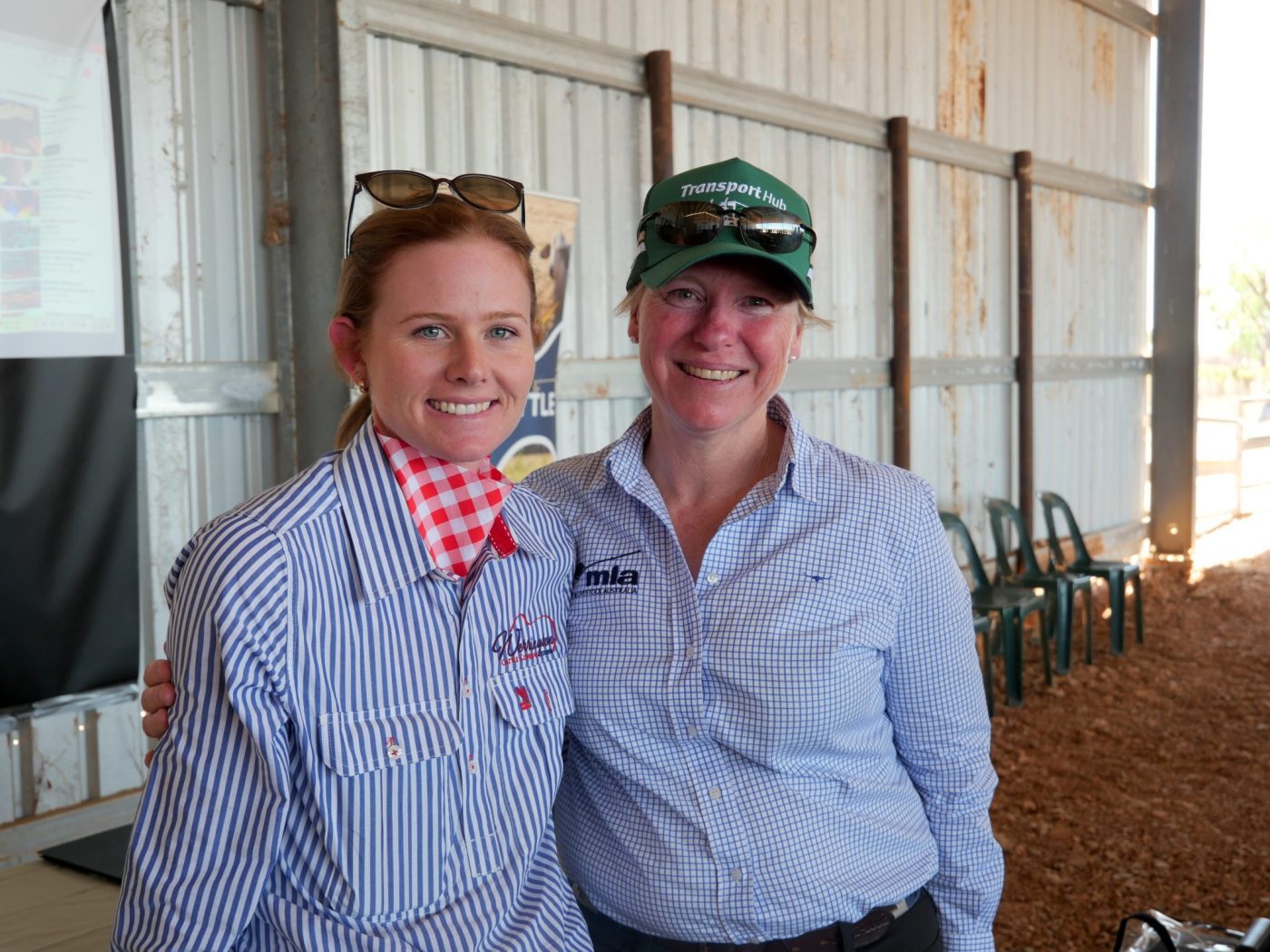
Georgia Slaney from Amber Station, Mount Surprise and Sharon Dundon from MLA.
“The risk to our industry is real, and particularly for the grey nomads that come up to this part of the world, all they see is the truck driver and the animals on the back of the truck.
“As transport operators, we are cradling the baby that we’re given. If the baby’s not prepared well, and he’s got a gut upset or whatever, he’s probably going to be pretty cranky and sulky in the journey, and it makes it pretty hard.”
For producers wanting to learn more about best-practice livestock preparation and transporting guidelines, MLA last year launched the Livestock Transport Hub, which was developed in consultation with transport operators. The hub is designed to help everyone in the industry understand their roles and responsibilities for livestock transport and the preparation techniques that underpin best practice.
- To come: Real life examples from regulators highlight safety responsibilities
Congratulations to the designers of this ramp and all those looking to improve safety and welfare for both animals and humans. Remember, every poor outcome is a free kick for anti farmer people, if you are responsible for one of those bad outcomes you are letting us all down. We are smart enough and creative enough to do better, and as an industry we owe it to ourselves (and to our stock) to do better.
Congratulations to John Lethbridge and his team for this long overdue welfare and safety of cattle. This needs to be mandatory for all involved the cattle or other animals being transported starting at the property through to destination. No ifs, buts or maybe! Cowboys at any level or stage are not acceptable including the owners.
thank you for the information.
I Have been in livestock transport industry for 21 years ,and my family have been in wool ,sheep and cattle industry for a lifetime . I am bewildered why agents and producers want too overload pens to save a little bit on freight.
Another bug bear as a carrier is poor livestock preparation. eg animals not yarded when you arrive for your pick up particularly if they are being sold over the hook.
I operate in Northern NSW and Southern Queensland.
Thanks for the opportunity too have a say.
Great article and a great piece of innovation from the Lethbridge family
Thanks for the article are you able to share the design?
An online video of the ramp in action and perhaps some diagrams would be useful for people considering this type of ramp