AS lotfeeders gathered in Toowoomba last week, it was clear researchers and industry are still working hard to limit the impact of animals catching a cold when they enter the feedlot.
Bovine Respiratory Disease is widely regarded as the feedlot industry’s biggest animal health issue and a major cost to the industry.
Plenty of work has already been done with lotfeeders pushing suppliers for pre-vaccinated cattle, backgrounding programs helping cattle ease into the feeding process and operators continually improving management of the disease.
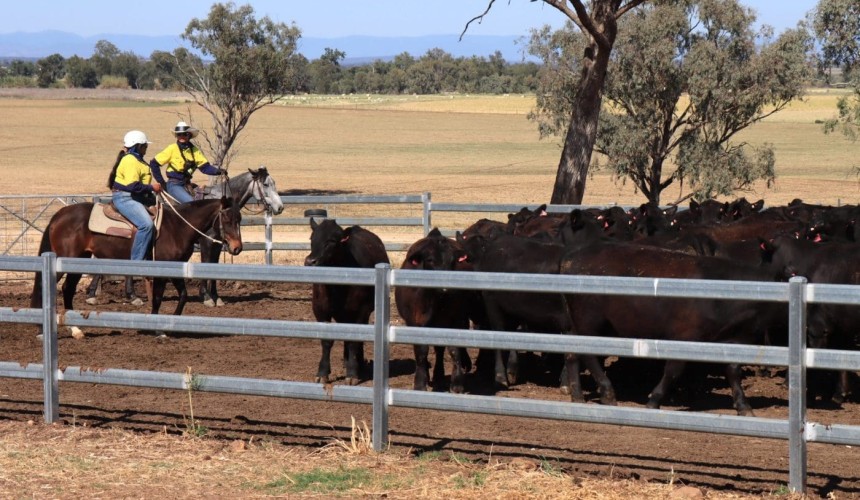
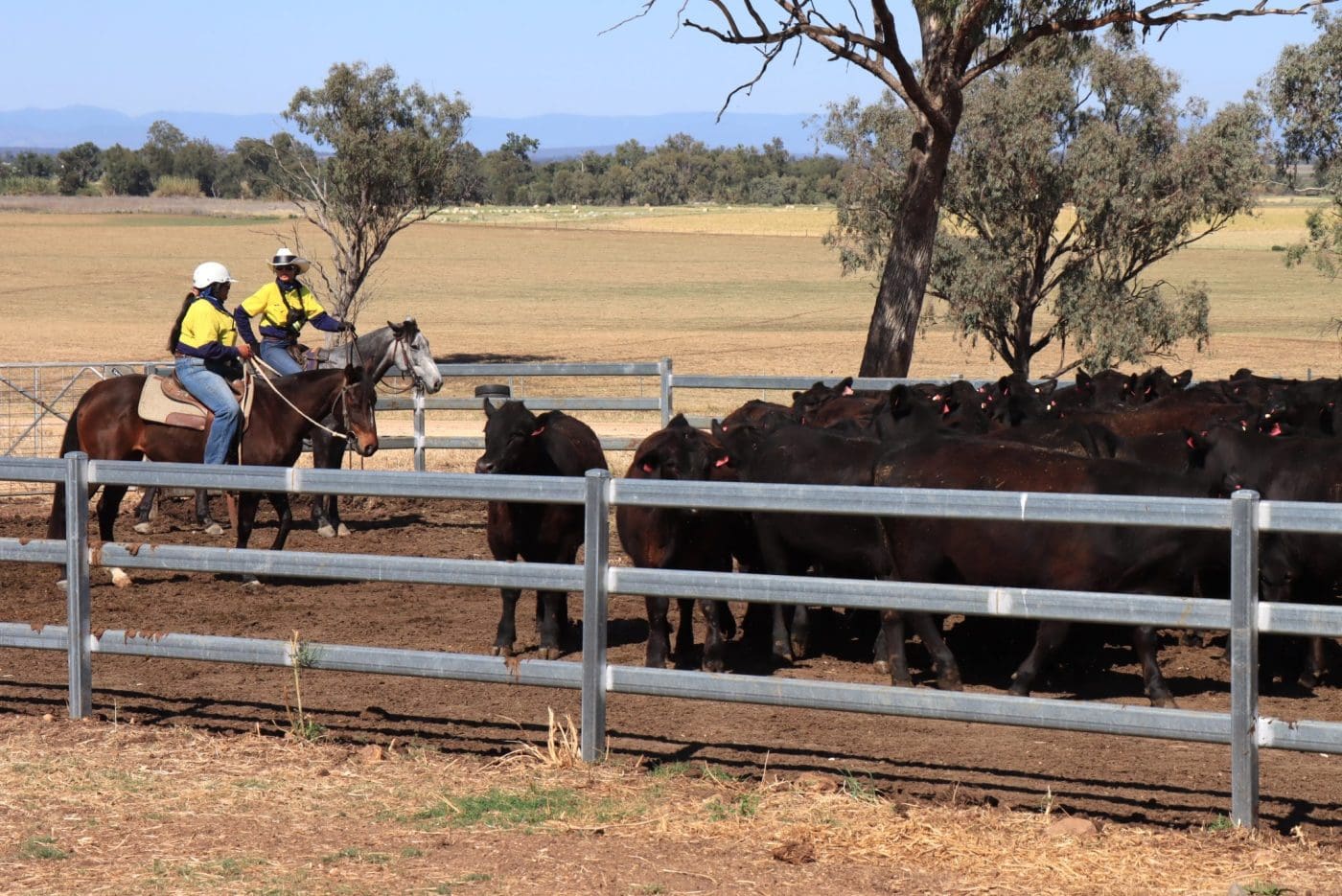
While there are plenty of experienced pen riders who can efficiently spot cattle with BRD symptoms, few companies have been able to use technology to more accurately and reliably detect the disease in a commercially viable way. (See previous article here)
Australian Lot Feeders’ Association president Grant Garey told the Week in Beef podcast that situation with BRD is improving.
“A lot of it comes with the management and experience of our people. It comes with vaccines and the research that the industry does,” Mr Garey said,
“We haven’t quite cracked the technology piece yet, the ‘fitbit for cows’ solution. But we do think we will crack that in time and I think it is important we keep working in that space.”
JBS going on the technology journey
Australia’s largest lotfeeder, JBS, has recently started trying to crack the technology code – by going through a process of investigating technology options and trialling them in the feedlot.
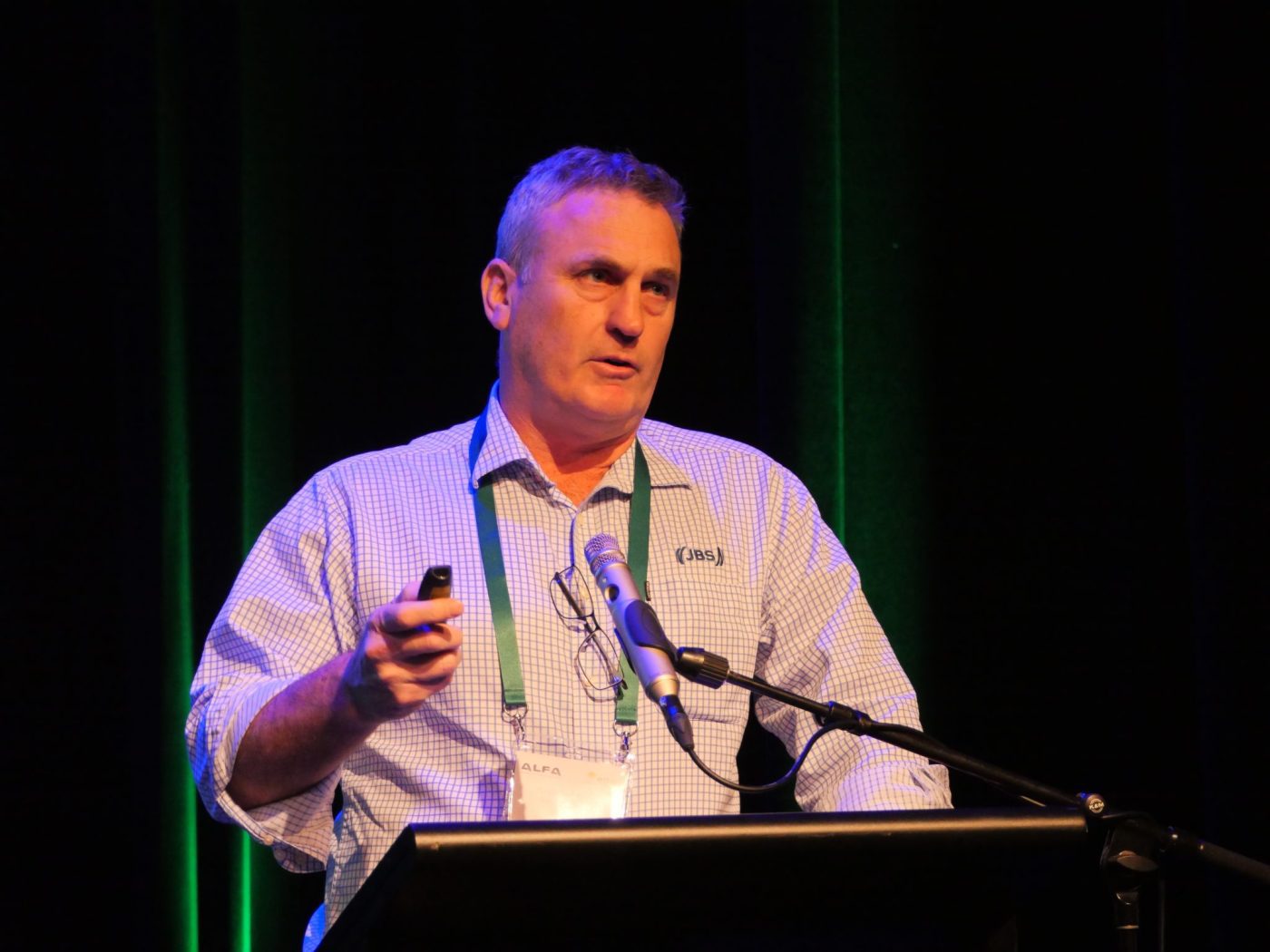
Michael Finucan presenting to the grainfed beef symposium in Toowoomba.
JBS general manager of feedlots Michael Finucan told the Grainfed beef symposium that it was becoming increasingly important to support the company’s pen riders in diagnosing disease.
“We have a lot younger workforce doing pen riding, not as many days, years and decades in the saddle as our predecessors, and so that skill set of identifying sick animals early is declining,” Mr Finucan said.
“At no point were we looking to replace the pen rider and become cyborgs running the feedlot. We were just looking at what tools we can build to support our pen riders and make their job easier. We didn’t have the initial objective of getting 100pc accuracy and capture all BRD, we just wanted to improve.”
Having assessed the technologies around through desktop work, a trip the United States and a call to action for potential suppliers to come forward, JBS decided to trial two types of smart ear tags.
The smart tags were gathering data on body temperature and time at the bunk and cameras were set up to monitor bunk behaviour. The trial was supported by ultrasound machines and rumen boluses.
Setting up for more trials
Mr Finucan said trial was ultimately unsuccessful as the potential solutions were causing both operational and welfare issues.
“With the sensitivity of the tag, it had too high a pull rate. The technology provider, although telling us it was commercially ready, it certainly wasn’t. They had a lot of learnings to do and they were still working on their algorithm.” he said.
 “When you punched the tag in, it was quite tight and it was creating a bit of an abscess, and then it was pulling through the ear with the weight. So as soon as we found that issue, we pulled it.”
While the trial was technically unsuccessful, starting the journey was important.
“We’ve learned a lot, we started that journey, we definitely have a deeper understanding of how to work with these technologies, or understanding what they’re selling us, and how we can question them,” he said.
“We have set our pens up. We’re ready for a bit of plug and play. Setting up a whole feedlot with wireless is never going to be a cost-effective outcome, so we’ve got to think about these technologies. But if we’re not on the journey, we can’t start actually validating the tech.
“These smart tags are not there, in my view. They are not commercially viable yet, and they are also not scientifically ready, but we need to continue to trial them, because I do think they are part of the solution to BRD. I think they will help us as an industry to really break the back of that and help our new, new starters in the business with the tools to do their job better.”