

Cattle
Yea sale success: Sometimes emotional opinion gets in the way of simple solutions. With two years of argy bargy about agents having access to the Yea saleyards on the same day, the council made the decision outside of the argument.
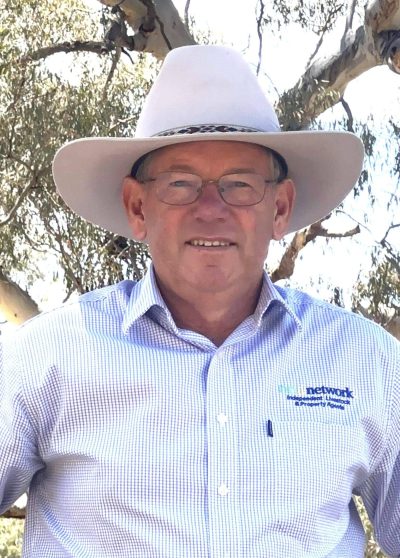
Chris Howie.
Last Friday we saw the new combined agents sale kick off at Yea with the inclusion of Alex Scott and Staff and the newest agency Victorian Livestock and Property.
Greg Price, Director of Alex Scott and Staff, commented “not only was the yarding of a high quality with buyers from near and far but the sale created a real community event with a large crowd”.
The involvement of all agents will create a sale that draws numbers, buyers and alleviates some pressure on the Leongatha centre with regular store sales as well as feature weaner sales. In my travels Yea still holds top spot for the best run of Angus weaners I have ever seen at a sale, weight for age, confirmation and drafting.
Coonamble and Dubbo cattle quality: With a quick trip around central NSW I called into both of these centres. With the spring feed hardening, sale cattle are looking excellent. Coonamble yarded 1500 and Dubbo 6000 with it hard to find a pen not fitting the prime category. Feedlot and processor competition was strong with heifers showing increased support as long as not over fat.
Calling into Mortlake and Mt Gambier sales before the AFL grand final, my comments about bull prices last month may have understated the demand. Never have I seen bulls consistently making over $4.50/kg and topping at $5.15. Doing the sums on a 1200 kilo old fella indicates some of us need to stop being tight arses and spend a bit more on your sires. Win Win.
Sheep and lambs
Forbes sale is a major player in the lamb and cattle centres yet does not seem to gain the media coverage of Wagga, Bendigo, Ballarat or Dubbo. Speaking to Kimberly Chudleigh of MCC Chudleigh Dobell, Forbes, the last 10 weeks have seen this centre yarding over 50,000 lambs and sheep. Lambs have been consigned from as far away as Longreach in Queensland. With supply short the rewards for producers and agents have seen continued high prices for quality and numbers at Forbes. I would suggest if consigning lambs don’t be scared to use the MLA sale yard comparison tool to compare centres, it may be very beneficial to the final result.
 Young Merino ewe sales have kicked off as expected with a range from $230 in the West to $370 in SA and Victoria. Although it is the first time in a very long time that Jamestown has cancelled the second of the young ewe sales. Driven by limited bookings it does highlight how much of an impact last years season has had in SA and the use of electronic platforms is having on physical store stock auctions, especially sheep. As a purely commercial outcome it is difficult to argue the economics of computer based marketing in some instances. Although the decline of the annual regional sheep sales has a significant impact on the rural communities. Social engagement, mental health, sharing of stories, comparison of livestock, catering, auctioneering, carriers the list goes on.
As another positive example of community following Yea, Spence Dix and Co, Clare, Joe Scammel took the plunge over the last number of years and established the Marrabel sheep sale in SA where there had not been a sale for a very long time. Yarding 8000 quality ewes from some of the best merino country in Australia it shows how producers support those that support the community.
Perhaps the importance of balance needs to be reflected upon by creating the drive for physical sales interfaced with electronic platforms to provide national competition. Often the benefit is much larger than the monetary return. Nothing highlights the negative impact on rural communities as much as the erosion of confidence in WA to remain in the sheep industry following the closure of the live export trade. Hopefully, some how, we can create the line of communication to the greater population of the damage ill informed decisions made by those that don’t understand have on the rural fabric.
First cross ewes: Considering the value of lambs and mutton I would suggest the top quality 1st cross ewes in the coming series will dig well into the $500 range. Does this make them over priced is the main question. As I have noted previously the value of the ewe is a direct reflection of the value of the lamb. The issue we have always had is the inconsistency of pricing driven by excess supply due to season or flock size. Currently we only have one dynamic in play domestically, that is season. Available kill space, limited supply and international demand all bode well however the faster we can progress to a quality value not just a commodity value for lamb the better the entire industry will be.
Season
The crops are balanced with a need for rain in many areas. Driving back from Ballarat it was apparent many farmers are hedging their bets and dropping crops that are a little bit behind for hay. Areas that received September rain have very strong feed. Those that didn’t are looking for rain right now.
Speaking to Heath Templeton, Southern Grampians Livestock and Property, Hamilton in late September he was concerned for the Western Districts season with only 225mm up to that point. “Plenty of green but no bulk” It is easy to follow the road and think all areas are having a cracking season.
Speaking to long time friend Greg Knaggs, Elders Livestock, Dubbo & Western NSW some areas did not receive the rain and feed is quickly tightening. Even though crops look great pastures have run to seed. Again we have both noticed the “western division agistment” saga play out for the new and unwary. What looks like fantastic feed in early September of clover and herbage quickly disappears with October heat and see weight gains fall away. Often this creates an additional transport cost or selling stock not quite good enough. Eyes wide open is important.
Optiweigh solution:– if I was still an agent I would have Optiweigh units that I would hire to clients. The daily information on weight gain/loss is the key to optimising feed. Even when the producer is on the header or tractor the smart agents can check livestock performance real time. I would also suggest anyone with a unit has a discussion with their financier about visibility of the trade as it happens. Risk mitigation should be reflected in the finance rate as a positive outcome for both parties. In my opinion…..
New year opportunities are now pointing to creating as much weight as possible in both sheep, lambs and cattle for the new year supply. Feedlots are trying to keep numbers up and lamb feedlots having ridden the price up are now looking at conversion rates and margin with stores averaging around $200. Heat will start to impact Northern supply of cattle once we hit November which swings the focus back to the South.
Mapping your feed now is so important: Do the sums on how many you can carry, how many you can finish and what needs to go now. If you are in any doubt call in a livestock production advisor or take the excellent money at this time and remove the pressure of weight loss later.
Managing experience and talent: Having spent the majority of my career working for Elders I still struggle with the “restructure” mentality. I worked through my first in 1991, again in 2000 then the big one in 2008. 2014 to 2018 saw States reappear and now it’s back to zones. Looking at the old staff list of those made redundant it is mind boggling to me why Elders continue to release quality staff. Perhaps it is just easier to move those that push back on poor decisions out than manage them to advantage. Hopefully Elders get it right this time because the staff and clients who are proud of the big E are sick of it.
Opportunities
- Map your feed and weight gain.
- Not enough feed, sell now, take the money
- Plenty of feed, weight is your friend
- Wary of seed in lambs
- Careful your heifers don’t get too fat before sale
- Take the time to discuss safety and long hours with staff. Especially new staff.
- Enjoy the prices.
Chris Howie is a regular Beef Central and Sheep Central market columnist and the CEO of RMA.