
SE Asia Report: From Jakarta to Hanoi – Contrasting Fortunes for Our Northern Neighbours
141st Edition: October 2025
Key Points:
- Indonesia bids for FMD-free status in nine eastern provinces, but 2026 looks ambitious given weak surveillance and vaccination
- Vietnam tightens wastewater rules and pushes VAT reforms to ease feed costs
- Philippines expands buffalo meat imports
Regional Trends and Overview
Regional Price Graph
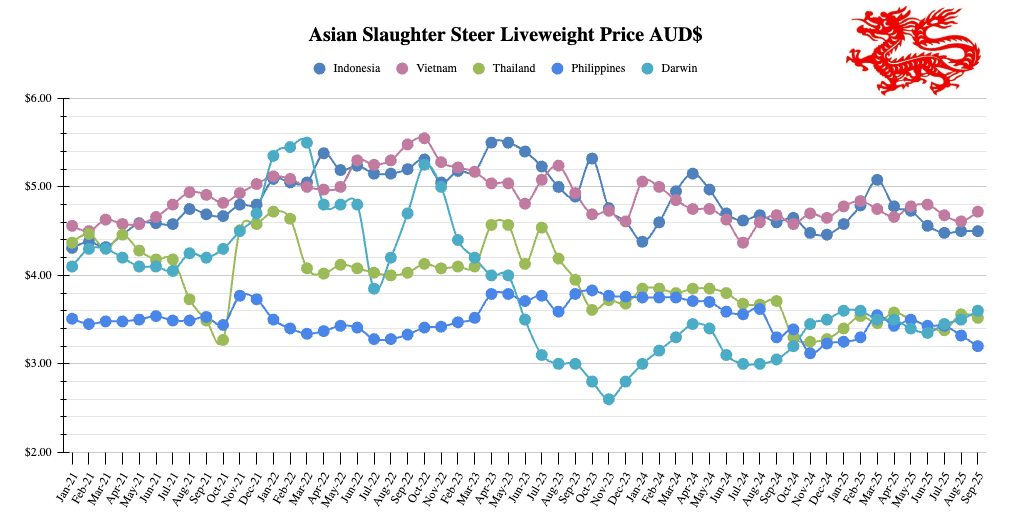
Indonesia: Slaughter Steers $4.50 AUD per kg live weight (IDR 10,995 = $1 AUD)

Dr Michael Patching
Prices
Live cattle prices in Indonesia have continued to firm, with Lampung bulls and steers now trading at IDR 49,000–50,000/kg ($4.46–4.55 AUD).
In Java, bulls and steers are slightly higher again at IDR 51,000–52,500/kg ($4.64–4.77 AUD), maintaining their premium over other regions.
In the retail sector, wet market beef is selling at IDR 130,000/kg ($11.82 AUD), while supermarket beef knuckle is priced at IDR 164,900/kg ($15.00 AUD).
Poultry values remain lower, with supermarket non-branded broiler chicken at IDR 36,900/kg ($3.36 AUD).
Indonesia Seeks FMD-Free Status Without Vaccination for some Eastern Provinces
Indonesia has formally submitted a bid to WOAH for recognition of nine eastern provinces Papua, Maluku, North Maluku and East Nusa Tenggara as FMD-free zones without vaccination. It’s aiming for recognition by 2026, with a national FMD-free target set for 2035. From an Australian perspective, it’s a positive ambition. These provinces sit closest to northern Australia, and re-establishing WOAH-recognised status would help restore the geographic buffer lost when FMD re-entered Indonesia in 2022. But on current evidence, the goal still feels distant. Surveillance remains inconsistent, and vaccination coverage is falling short. As of late August, less than a third of the 1.9 million doses allocated for the June–September round had been used.
 While the Ministry is right to highlight progress in keeping the virus out of certain island regions, that doesn’t mitigate the risks posed by red zones like Java, Bali and parts of Sumatra where most outbreaks still occur, and where feedlots, slaughter points and livestock movements are concentrated. Over 91,000 cases were recorded in the first half of 2025 alone, across nearly 20,000 outbreaks.
That said, it’s not impossible. Indonesia has done this before. With coordinated vaccination, movement restrictions, culling and disinfection, it achieved FMD-free status in 1986. Whether it can repeat that success in a more complex and decentralised environment remains to be seen. For now, the ambition is welcome but 2026 looks optimistic without a significant lift in capacity and compliance.
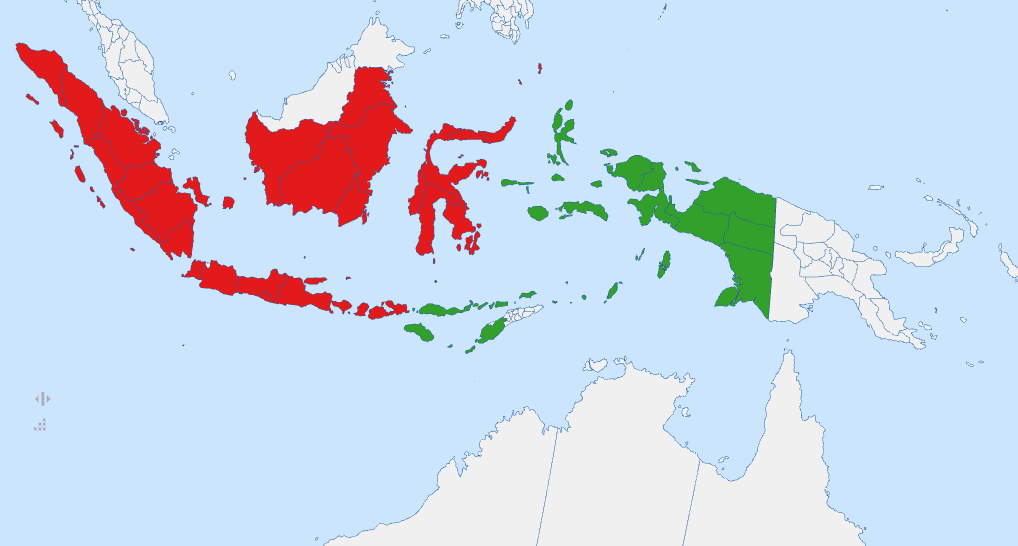
Photos: Map of Indonesia showing the proposed provinces (green) for FMD free status.
Dairy cattle imports fall well short of target
Indonesia’s push to ramp up local milk production through dairy cattle imports continues to fall short. By September, just 11,500 head had arrived—barely 7.7 percent of the official 2025 target of 150,000.
The latest shipment, 523 head from Australia via PT Asli Juara Indonesia and North Australian Cattle Company, was received at Tanjung Priok with the usual contingent of Ministry officials on hand. But behind the staged photos, the program’s sluggish progress is becoming harder to ignore – even in local media, where the disparity between headline targets and real outcomes is now drawing attention.
As flagged in earlier reports, this isn’t just about cattle. Without matching investment in processing, cold chain, breeding and farmer incentives, the live import program can’t deliver the kind of structural shift needed to reduce Indonesia’s 80 percent reliance on imported milk powder. What’s changing is the political context. The dairy imports are part of a broader nutrition agenda linked to the free school meals program, a Prabowo flagship now under fire following a string of mass food poisoning cases. With more than 7,000 children reportedly affected and mothers protesting in the streets, the shine has well and truly come off.
That adds risk for any initiative tied to the same policy framework. If the meals program continues to backfire, dairy development could get caught in the political crossfire. The one-million-head import plan already looked like a stretch. Now, it risks being quietly walked back or deprioritised amid growing scrutiny of the government’s food and nutrition promises.
Vietnam: Slaughter Steers $4.72 AUD per kg live weight (VND 17,450 = $1 AUD)
New national wastewater regulations take effect
Vietnam’s new wastewater rules, including Circular 04/2025/TT-BTNMT, came into force on 1 September and are already unsettling parts of the livestock sector. Facilities discharging into urban or residential systems must now meet tougher standards set by local authorities, with companion circulars tightening controls across domestic and industrial effluent.
This shift isn’t unexpected. In our DFAT-backed AVEG report, I highlighted wastewater as a critical weakness in Vietnam’s abattoir sector, especially for smaller sites operating within residential areas. Many discharge untreated effluent into community drains and lack the capital or space to upgrade.
For Australian exporters and JV partners, it’s a double-edged sword. Higher compliance could lift processing standards, but the transition will be messy. Urban abattoirs, particularly in the north, face the biggest risk. Without support for relocation or upgrades, closures are likely. Whether this delivers real consolidation or just pushes the problem out of sight will depend on enforcement and whether funding follows policy.
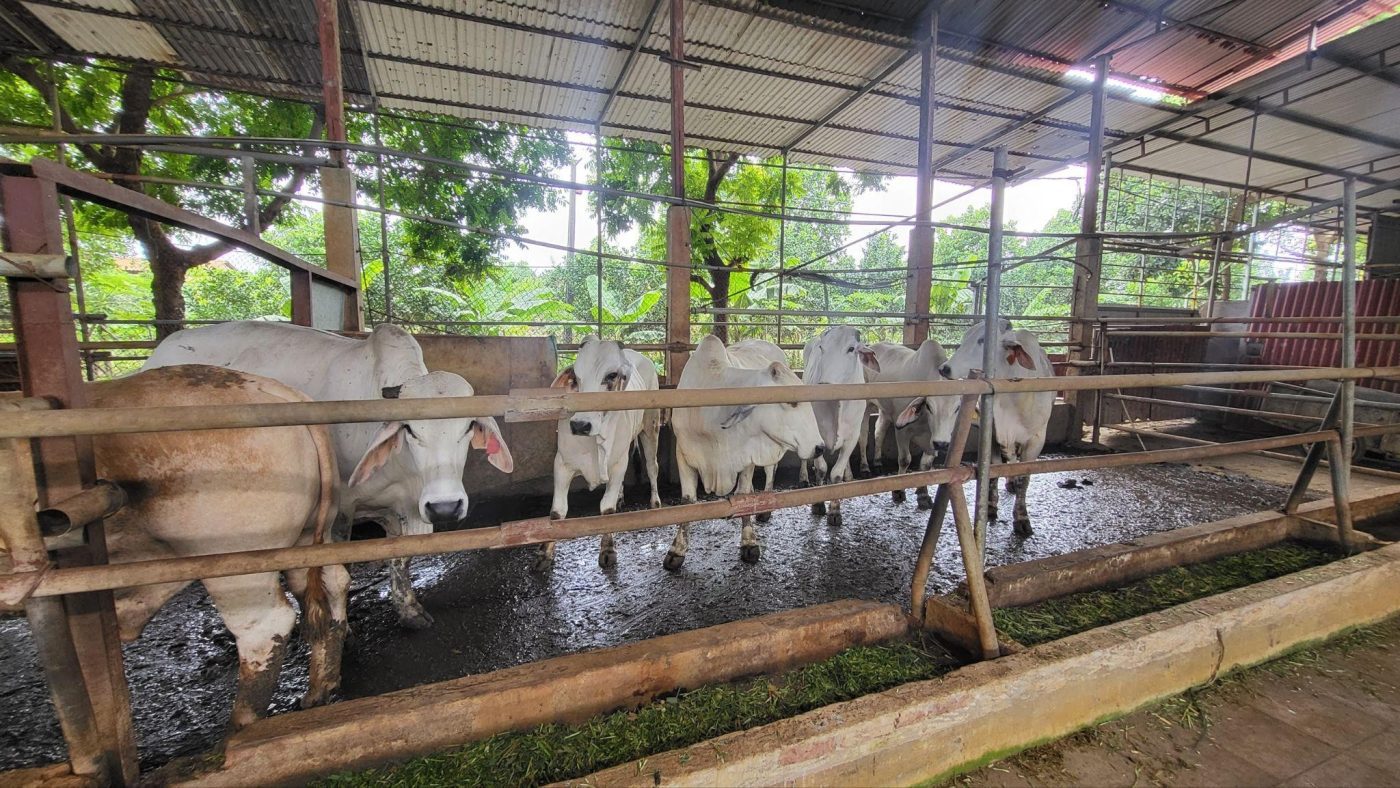
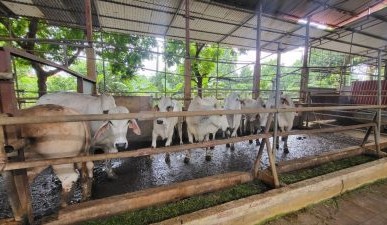
Photos: Australian cattle in an abattoir close to Hanoi. The abattoir is only several hundred meters from the closest residential area. Pens are washed down daily to reduce smell but this creates significant waste water.
Ministry seeks VAT reforms to ease livestock feed costs
The Ministry of Agriculture and Environment has submitted a formal proposal to revise VAT rules on livestock feed and breeding stock. While inputs like corn, cassava and rice bran are technically VAT-exempt, some provinces continue applying a 5 percent tax, pushing up costs for producers.
Because feed is exempt, businesses can’t claim input VAT credits, further inflating production costs and feeding through to retail prices. Similar inconsistencies affect breeding stock, with items like piglets and day-old chicks taxed in some areas despite national exemptions. The Ministry has asked the Prime Minister to intervene, urging the Ministry of Finance to fast-track legal amendments and implement interim relief. Industry is hopeful these changes will ease cost pressures and improve competitiveness against cheaper imports.
Philippines: Slaughter Steers $3.20 AUD per kg Live weight (₱38 = $1 AUD)
Prices
Livestock and meat prices have generally softened, with wet market beef at ₱380/kg ($9.88 AUD) and supermarket rates easing to ₱415/kg ($10.79 AUD).
Slaughter steer prices dipped slightly to ₱123/kg ($3.20 AUD) live weight, while pork carcass remains steady at ₱240/kg ($6.24 AUD). Broiler has declined to ₱160/kg ($4.16 AUD) in supermarkets, with branded Magnolia broiler now trading at ₱185/kg ($4.81 AUD).
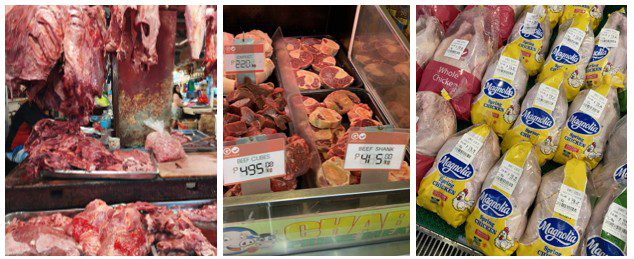
Photos: Local meat and livestock sales in Mindanao.
Philippines to expand Indian buffalo meat imports
The Philippines is moving to expand access for Indian buffalo meat, accrediting more plants and considering direct retail sales. Agriculture Secretary Francisco Tiu Laurel Jr. said the goal is to reduce food costs and provide processors with more stable supply. Buffalo meat has long served the processing sector, but it’s now being positioned as a budget protein for households. India–Philippines agri-trade reached $555 million in 2024, with $413 million from Indian agri-food exports. Officials credit President Marcos’ recent India visit with boosting cooperation across livestock, dairy and food processing.
For those of us watching regional trends, the growing presence of Indian buffalo meat in the Philippines feels very familiar. We’ve already seen how it’s changed the game in Indonesia and Vietnam, consistently undercutting fresh beef and reshaping demand, particularly at the lower end of the market. The Philippines still has a taste for fresh products and quality does matter, but the price gap isn’t going away anytime soon.
Australia
Prices have firmed again on the back of early Indonesian buying for the 2026 festival. Exporters are stepping in ahead of schedule and competing with processors for limited numbers.
It’s still too early for floodplain cattle, so supply is thin and that leverage sits with producers for now.
All the domestic indicators have been rocketing upwards over the past few months, and the question isn’t whether northern feeder prices hold, but how much further they’ll run once floodplain cattle start to flow.
Indo demand is already in play, so there’s every chance the peak comes earlier and sharper than usual.
Year 2025 cattle exports – comparison across SE Asian markets
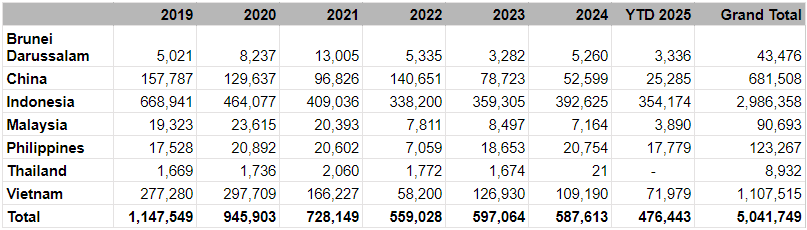
Source: DAFF website