AS Cattle Australia prepares to tackle a review of the cattle transaction levy – a task it could have easily avoided – new CEO Will Evans says the reason for doing so was simple.
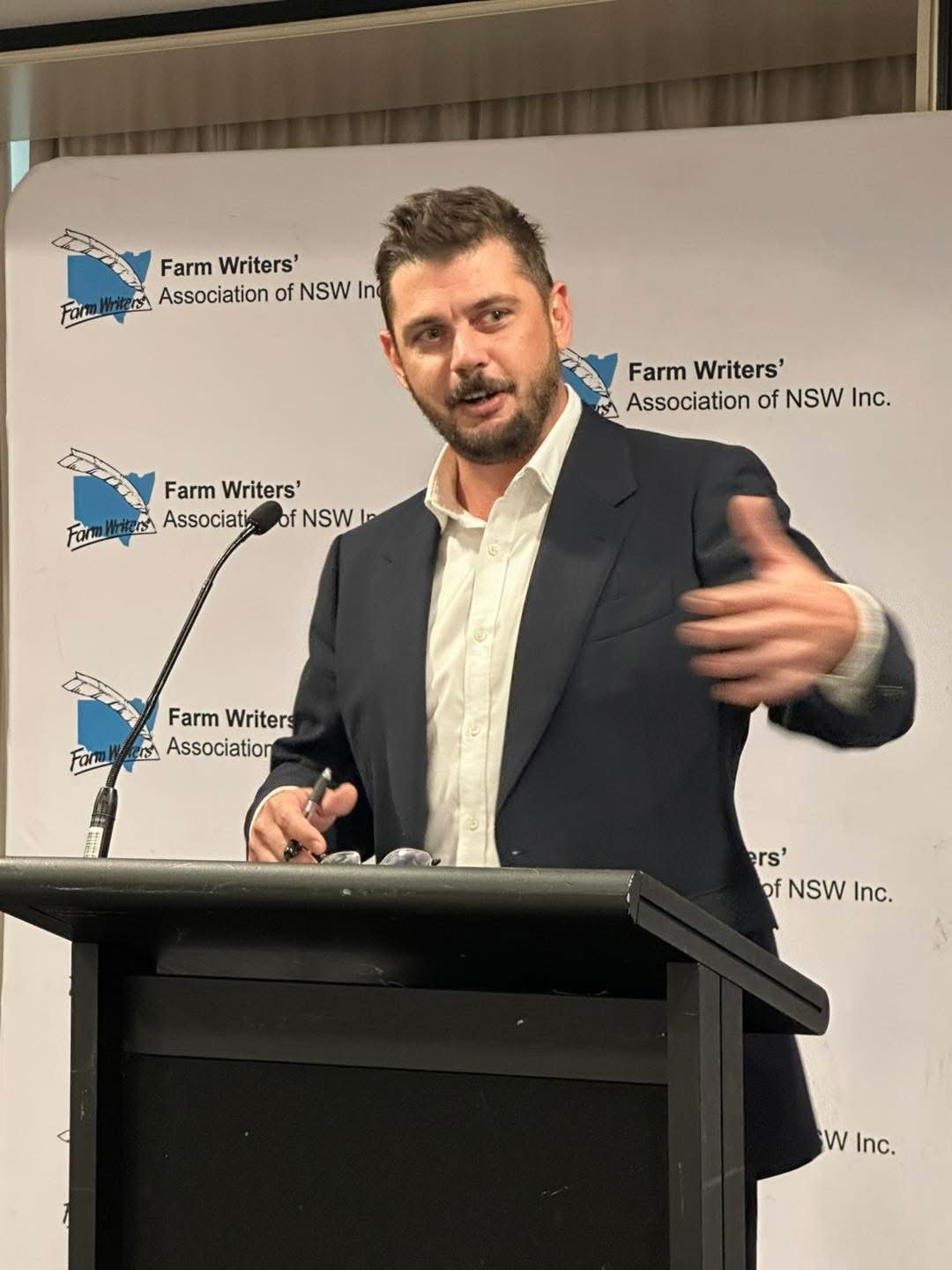
Addressing a NSW Farm Writers lunch in Sydney today, Mr Evans said work by the peak cattle producer body since announcing the review in March was already underway through engagement other industry organisations, the Federal Government and Department of Agriculture and industry service providers.
 “In the spirit of the agricultural sector and agricultural policy in general there have been many hurdles to get over. Doubtless there will be more,” he said.
“Our reasoning behind calling for this, on one level, was simple.
“It is needed.
“When we as an industry last reviewed the levy more than 17 years ago, it was written that the levy should be reviewed every three years from there on in. For any number of reasons this had not happened.
“On another level, and at the dawn of the new organisation that is Cattle Australia, we felt it integral to our role and function to ensure that this fundamental aspect of all our businesses should be considered more closely.
“There is not one of us in this room who would not look more closely into our own business model were it to be 1-2 or 5 years old, let alone 17. It is simply neglectful to let this continue.”
He said the “simpler path” would have been to not seek to undertake such a review task and let the problems linger.
“I’m not sure many within the industry would have minded if we did and I do know there are many concerned that we did not.
“But there is also a deeper truth here.
“That we, as an industry, have left this conversation go for too long.
“This is as much about our collective needs as it about a responsibility and a duty we all owe ourselves and a duty we owe each other.”
Mr Evans said the review will give the industry an opportunity to come together and talk, to contest ideas, challenge expectations, find agreement and define a pathway for the future.
“I have long believed that it is in the contest of ideas and through the brutality of our common honesty that we find the best of ourselves, the best of each other.”
He acknowledged that issues that have divided the industry in the past would continue to emerge, including concerns about small operations being trodden over by big, funds being wasted on business class flights for executives, compulsory unionism and north versus south.
“Some of these are old fears. Some learnt from hard lessons.
“But today, while we should always consider the past and be informed by it, we cannot allow these feelings to dictate our future.
“Indeed, we must do everything to ensure they do not. Dedicate ourselves to this with totality.
“Because this is a new time, that offers an opportunity to not see these mistakes repeated. To make sure they are not.”
As a born and bred Queenslander and former CEO NT Cattleman’s Association he said he had already faced allegations of being a “northerner” and of not appreciating or understanding the south.
He did concede that he was very proud of his northern roots and indeed grateful for the leadership guidance and learning experiences he benefitted from working under ‘northern’ industry leaders including David Connolly, Henry Burke, Tracey Hayes and the late David Warriner and Luke Bowen.
“(And) so many others I haven’t named only add to this.
“But you see this is not my future – but my past. It guides – but does not dictate.
“I work for an organisation whose role is to serve Australia’s cattle producers. All of them.
“And I see it as a great honour to do so.
“While it is true that my past will always be with me, my identify set, the great opportunity I have today is to grow, change and learn from all of Australia’s cattle producers, not just the ones with whom I share a common history.
“As we move forward with these discussions of the coming months, I would hope all of us are able to take a similar approach.
“To appreciate our collective past but look for a brighter future. Bring with us our experiences, but be open to those of others.”
Mr Evans said Australia’s beef industry stands as the envy of the world.
“There can be no doubt we are the greatest beef producing nation globally.
“All others stare in amazement at what we do and seek to learn our secrets.
“And, if we are being truthful, part of this greatness comes from our levy structures and the work nameless people in small offices have done for our industry over the years. Often under appreciated and undervalued, but rarely in vain.”
Cattle Australia will begin consultation on changes to the levy in due time as it builds the framework to see the work undertaken, he said.
“All voices will be valued, and all offered an opportunity to be heard.
“In the north and in the south. Families and corporates. Friends known and those yet to be met. Our past will form part of this discussion.
“But I am so grateful, so excited and so privileged to be able to say that is to the future that we will all be asked to look, to build together.”
Earlier in his speech Mr Evans drew attention to a memoir penned by former Federal Agriculture Minister John Kerin about the tumultuous 1983-1991 agricultural policy era in Australia.
In his book Mr Kerin reflected on what he saw as a key weakness in farming representative bodies – their tendency to focus on and react to short-term problems rather than preparing for the future.
Mr Kerin argued that the politics and structure of many farm organisations made them reactive instead of forward-looking, limiting their ability to respond quickly to change.
Mr Evans said he agreed there was some truth to that view, in that rural groups often had to deal with immediate pressures such as financial stress and failing infrastructure.
But he added they also pushed back, noting that what can look like inflexibility from the outside is often a sign of resilience and hard-earned wisdom.
“Where Minister Kerrin and I disagree is that he sees this is a weakness, when for me I have seen it, at times, be the basis of our biggest strengths.
“Our, somewhat frustrating, embrace of the past into the present, can from the outside appear to be inflexibility and resistance to change – but perseverance and resilience are so often built around the pillar of certainty that comes only from knowing you can get through tough times, because you have before.”
It is a very long bow to claim the Levy has not been reviewed since 2006. I do hope that an extensive review of ALL minutes of all Cattle Council of Australia meetings has been held to substantiate that extravagant claim. cheers John A.
$5 in 2006 would be $7.5–$8.0 in today's money. Roughly that means the levy is providing ~60–65% of the same funding that it was 20 years ago, with annual head turnoff pretty much the same.
Since 2006 the remit of what the levy needs to spent on has grown with more traceability expectations domestically and by trading partners, non-tariff barrier work, biosecurity comms, GHG/methane R&D, market diversification. Etc.
Rather than coming at this issue from the perspective that we need to increase the levy simply because it hasn't been lifted in recent memory, surely the question needs to first be asked "what aren't we achieving" with the levy where it currently is?
If we ask that question we might very well find the levy is sufficient but it is just unbalanced in how it is being distributed and less should go towards marketing and more towards R&D and the NRS.
As the United Kingdom has shown so well (their levy is around ~$11 AUD/head) if you increase the levy someone will spend that money. I don't doubt the same here in Australia, if we increase it to $8/head, the revenue will surely be spent.
The question needs to be about return on investment. Is the current system fit for purpose with farmers better off at the current rate, spending the hypothetical extra $3 a head themselves on farm for productivity returns, or will an extra $3 a head see farmers a return in excess of $3?
our grazing industry does need a change. I don't believe lifting the levy is the solution unless we can find a balance with the prices paid by processors. We can only be the greatest industry if both sectors are prosperous not just the processors most of the time.
I do not believe that an increase in the current levy is warranted. Talk costs nothing for the review but watch out producers thats wholl cope the bottom line.....
All the new constrants being put upon the grazing industy and the extra taxs being moted are making some in the industry seriously considering their future even now.
Not fair if levy goes up especially how hard farmers have done over the past 3 years of drought in the south , especially if it is getting wasted at MLA level , also farmers having the increase fire services levy what next !!!!
Cattle Australia (CA) represent grass-fed cattle producers who are members of their company. They are the peak council for all grass-fed cattle producers - the vast majority of whom are not members of CA.
We should not be fooled by Mr. Evans rhetoric. CA’s call for a review of the grass-fed cattle levy is pecuniary as a strategy to fund their costs of operations from our levies. Currently, they are funded by MLA from “project” fees paid from our member grass-fed cattle levies.
This is a clear conflict of interest for the CA board as under the Red Meat Memorandum of Understanding in clause 5.1(g) their responsibilities include “to assess performance of services delivered by MLA”. How can you assess performance if you are delivering the service? Clearly, this payment by MLA was never intended by those drafting the MoU.
Now, Mr. Evans is critical of the passage of 17 years since the last review. CA is a rebranded Cattle Council of Australia, and again, under the terms of the MoU (clause 5.1(h)), it has been CCA’s responsibility “to propose levy motions at general meetings of MLA, make recommendations to the Minister on the operating level of levies required to fund MLA’s activities and consult widely within its industry sector on MLA’s funding requirements”. Clearly, they failed and it is Mr. Evans’s organisation that carries the responsibility for this failure.
Before a review can be conducted, CA must become democratic. All grass-fed cattle producers paying levies must have the right to put motions at open meetings of CA, and all have the right to vote (one person, one vote) on all motions put to all meeting of CA. Currently, CA is controlled by some of the larger grass-fed cattle producers with claimed “skin in the game”. They are opposed to southern grass-fed cattle producers with small holdings having any rights in their organisation.
This attitude is fine if they surrender any portents of representing all grass-fed cattle producers as the peak council under the Red Meat MoU. Many of us gave up many hours to participate in the Grass-fed Cattle Industry Restructure Steering Committee only to have the agreed terms ripped from our hands by CCA who proceeded to install CA as the rebranded CCA.
Mr. Evans carries much in his saddle bags. He needs to be honest with Australian Grass-fed Cattle Producers about the history of CCA/CA if he is to contribute to this possible review.
Australian Cattle Industry Council
agree with everything John Gunthorpe says, there is no need for a Transaction Tax (levy) increase accept that CCA/CA want to fund their operations from consolidated revenue
At long last Cattle Australia has a spokesman speaking simple truths. Well said Will Evans.
Inflation is killing our cattle industry.