The once-a-week barbecue that has Perth queuing for hours…..

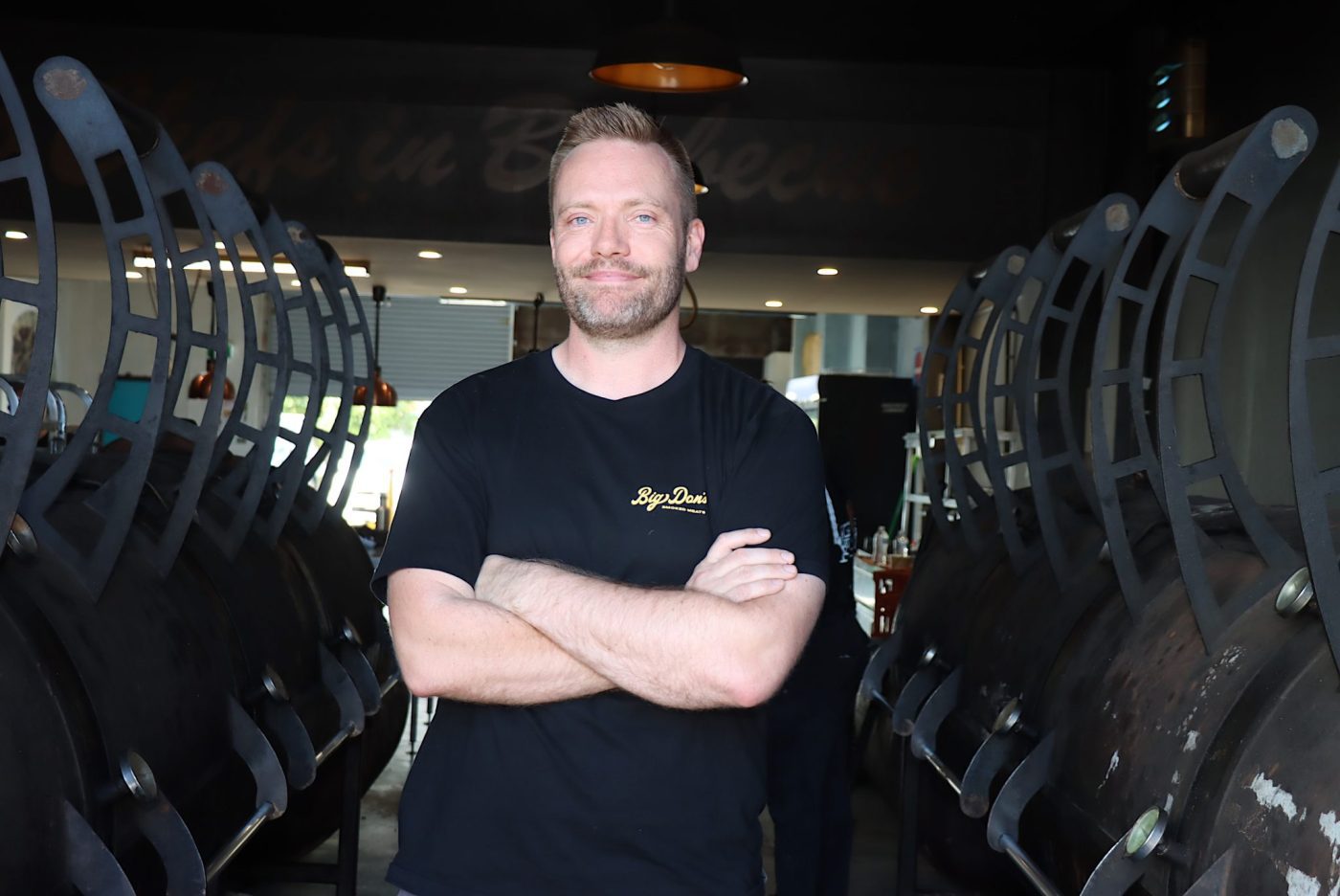
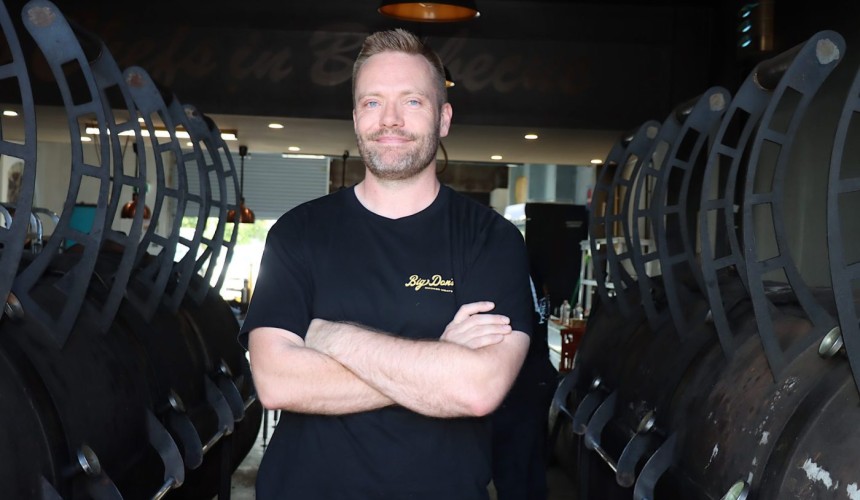
AS an 18-year-old, Donovan MacDonald travelled halfway around the world from his native Canada to Australia, where he proceeded to fall in love three times.
First with Perth, second with his now-wife Louisa, and third with Texan-style barbecue.
He readily admits the last one wasn’t reciprocated at first.
His initial attempt at a low-and-slow brisket in his backyard offered no hint of the barbecue mastery that would follow.
Don reckons he made every mistake it’s possible to make, from choosing a low-quality piece of meat and failing to season it or use wood, to finally glazing it with sauce.
The end result, he laughs, was “dreadful.”
“No one will ever have a worse first brisket than I have.”
How things have changed.
Today, Big Don’s Smoked Meats is a bona fide Perth phenomenon.
The business – which began as a food truck and pop-up restaurant until exponential customer growth forced a move to a permanent base – is now not only one of the biggest pit rooms in the world in terms of the number of barbecues in one place, but also, by any measure of customer satisfaction, clearly one of Australia’s best.
In a recent video (below), professional chef and YouTube star Andy Hearnden, whose “Andy Cooks” channel boasts over 6 million subscribers, described Big Don’s Smoked Meats as the “No.1 barbecue restaurant in Australia”.
Big Don’s is Australian-style Texan barbecue, but for many it is much more than that, bordering even on a spiritual experience.
The place of worship is not a church but a cavernous former workshop in a quiet industrial street in suburban Perth.
The altar is a stainless-steel-and-wood carvery that serves trays packed with low and slow smoked meats and sides at a rate of one every minute for 250 minutes (Watch Andy Cook’s video above to get an absorbing behind-the-scenes taste of the frenetic pace Big Don’s crew maintain during each serving).
It is a barbecue experience so good it’s worth waiting for – quite literally.
View this post on Instagram
Big Don’s opens only once a week, serving every Saturday from 11am-3pm in winter and 3pm-7pm in summer, just in time for the famous Fremantle Doctor sea breeze to blow cool relief over the suburbs of Perth.
The Pre-Order model that works for everyone
Customers pre-order online at 7pm on the Tuesday before each Saturday opening and have a choice of precisely one option: a BBQ share pack for four people.
It may seem counter to the ideals of customer service to open only once a week, offer only one menu option and require patrons to queue for up to two hours before getting served, but it clearly works for all involved.
Customers receive a tray for four brimming with freshly sliced meat and sides and sauces.
About half the menu changes weekly based on availability. While brisket, ribs and house-made sausages remain constants, trays may also include lamb ribs, scotch fillet, pork shoulder, Philly cheesesteaks, smoked Wagyu burgers and more.
The business also opens one or two Friday nights a month for a local steak-and-chips service, and does occasional catering cooks.
Pre-orders for each Saturday opening sell out within one to five minutes every Tuesday night.
Don said pre-ordering was introduced during COVID. As the pandemic eased, he asked his customers if they would prefer to return to walk-up ordering.
“The response was pre-order hands down, because you’re guaranteed not to miss out.”
Traditional Texas barbecue takes orders until the meat runs out, which means customers can sometimes end up empty-handed despite having queued for hours.
“This model is significantly better for us and our customers,” Don said.
About 1000 people attend Big Don’s weekly, consuming up to 150 briskets in a single sitting.
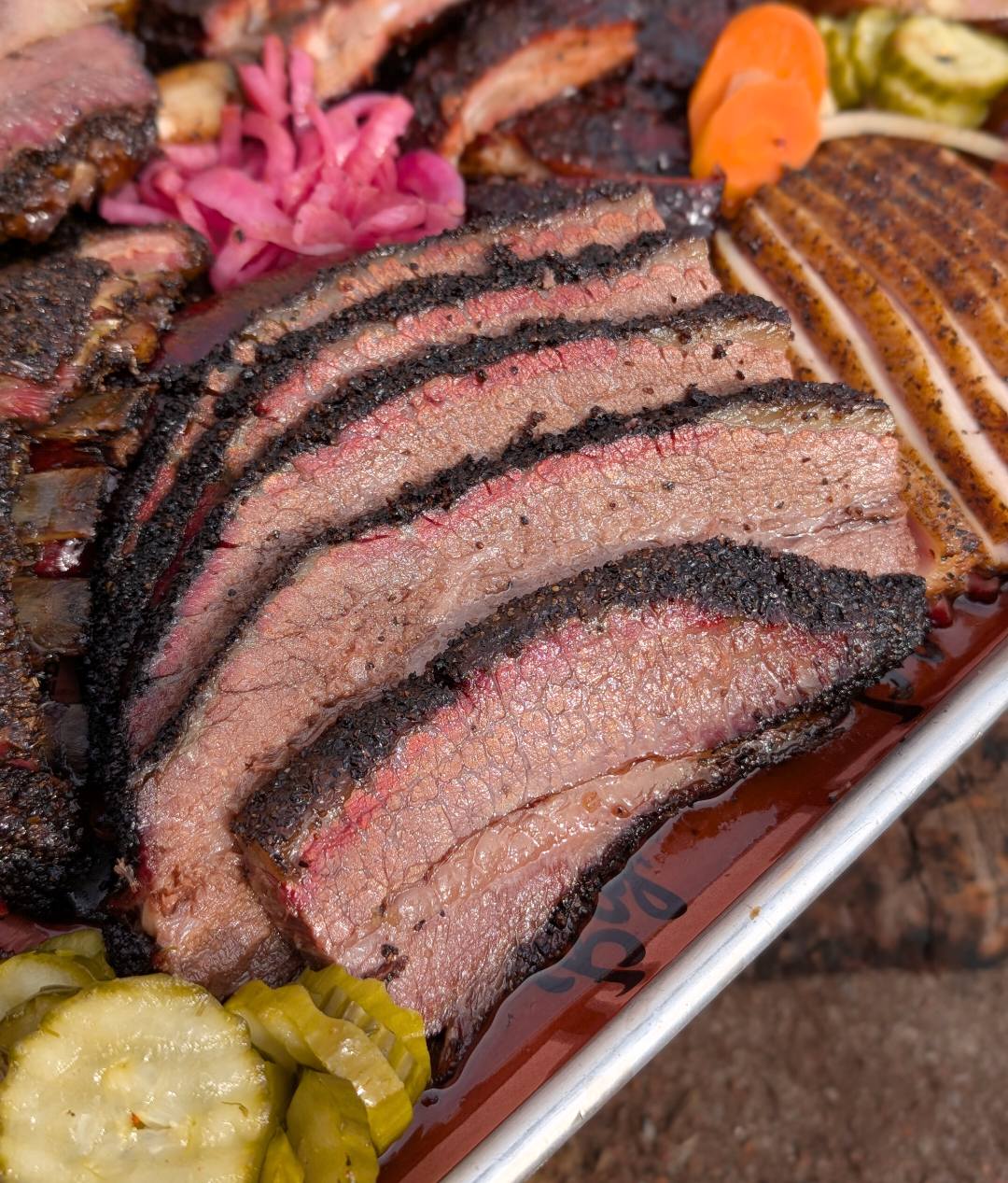
Brisket ready to go. Picture: Big Don’s Smoked Meats.
Opening once a week is also good for business.
The team only cooks what has been pre-ordered and paid for, which helps to control costs and ensures zero waste.
It also supports a strong staff culture and work-life balance.
Big Don’s has achieved a 100 percent staff retention rate for the past five years – almost unheard of in the hospitality sector.
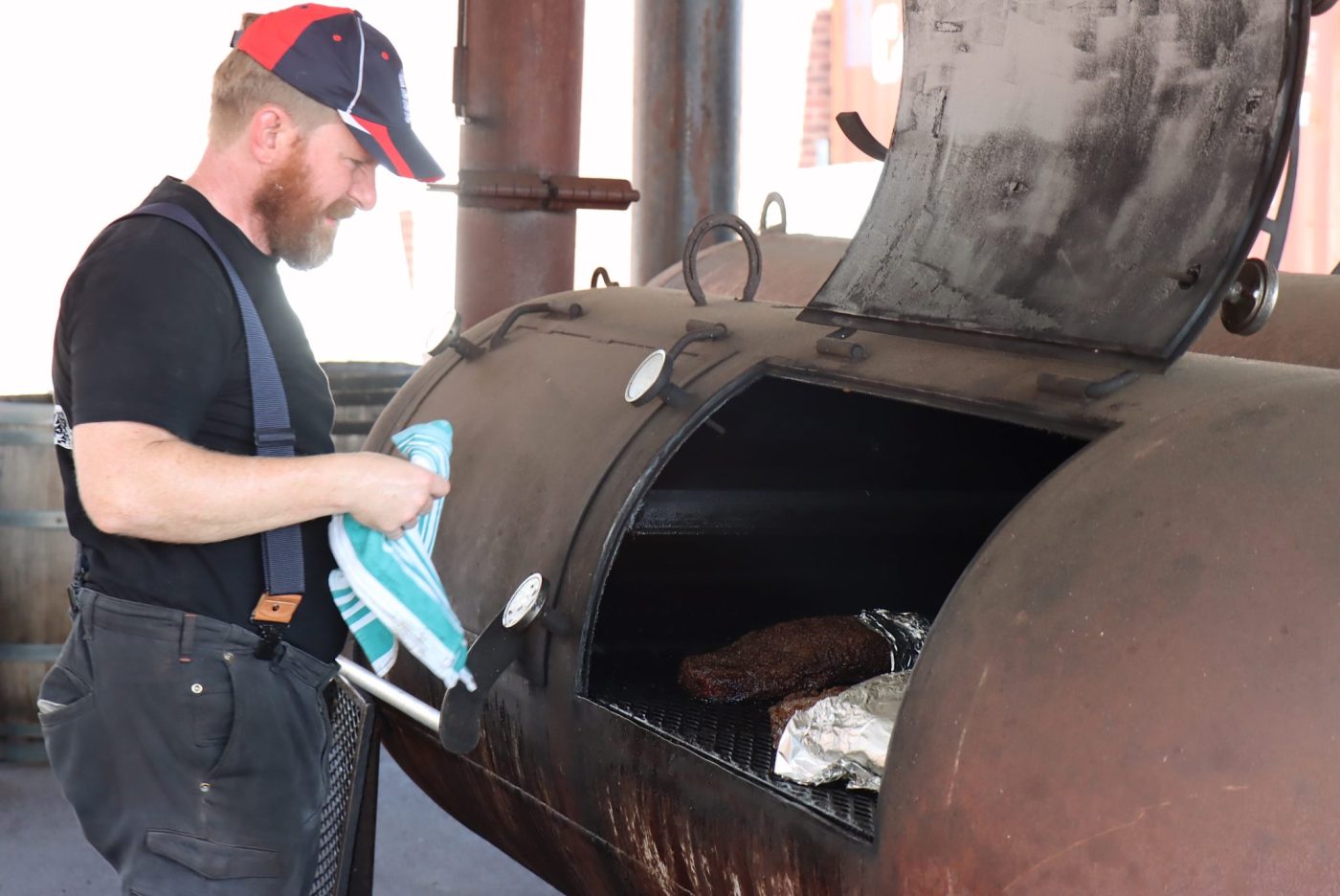
“By opening for a limited time, you can concentrate your labour,” Don explains.
“For most restaurants, labour is 40 percent of their COGS (cost of goods sold), our is 28-30 percent.
“We don’t have wait staff, and our rent is 2 percent of gross, most restaurants are 12 or 15 percent.
“So 50-60 percent of our gross sales is spent on COGS which is far more than any restaurant. Because we control the other two outgoings we can afford to buy the best meat by far.”
Around 500 labour hours go into preparing each Saturday serving.
The “secret sauce” of Big Don’s success
A key to the success is that it is “all about the food”.
But it is also, clearly, all about “the fun” as well.
When the business moved to its current premises in January 2023, Don set out to build a memorable experience.
“On Tuesday at 7pm they make their order, and then Saturday they come down.
“And when they get here they still have an hour or two to wait in the queue to be served.
“It is not like buzzers or anything like that.
“And that is actually the secret sauce to it, or the fun of it.
“The atmosphere while people are waiting to get to the front.
“We run samples down, they see the briskets sliced fresh here in the servery, so when you finally get to the front we serve it up as fresh as possible.”
He also loves the old-school engagement that comes with serving trays for four people which brings customers together in groups.
“If you come down with another couple, you are going to sit and talk.
“You look around and no one is on their phones.
“So we have all these little nuances in the business that lead to a Saturday being a really good experience.
“Everybody brings deck chairs, eskies, tables and we have live music and it just turns into a giant tail gate, so we keep a really fun element to the business.”
As pitmaster, Don is the high priest in this temple of fire, smoke and meat. He recently added another title – Councillor Donovan MacDonald – after winning election to Bayswater City Council in October.
How it all comes together
When Beef Central caught up with Don on a recent Wednesday in Perth, he and his team were in the middle of “sausage day”.
Tuesday is brisket-preparation day, Wednesday is for making sausages, Thursday is for cold-smoking snags and making sides and sauces, and Friday is when smoke, wood and meat come together in holy barbecue matrimony ahead of the Saturday service.
Briskets are cooked for 18 hours in 10 huge cylindrical steel offset smokers weighing about three tonnes each, before being rested in dedicated warming ovens in preparation for the opening.
From backyard battler to barbecue maestro
As Don willingly attests, his journey from backyard novice to one of Australia’s most respected pitmasters was far from instant.
He freely concedes his early cooking attempts weren’t great.
“I remember it was so dire I pushed the smoker into the corner of the shed and I don’t think I went back to it for another six months.”
When he did return, he relied heavily on a book that is a regarded as a bible for Texan style barbecue – Franklin Barbecue’s “A Meat Smoking Manifesto”.
“I read that cover to cover a dozen times.”
Each attempt sharpened his skills, but it wasn’t until he travelled to Texas in 2016 that he realised how far he still had to go.
“I went to Texas thinking I am amazing at this, and I left being like, oh my brisket is terrible, it isn’t even in the same hemisphere – literally or figuratively.”
A return trip in 2019 as a commercial operator brought him closer, but he still reckons “Big Don’s” only reached “Texas level” brisket in the past two to three years – thanks to better equipment, stronger farmer relationships and continuous refinement.
The ‘underground barbecue’ phase
Don began to perfect his cooking style and building up his clientele with backyard barbecues.
Then a run-in with bureaucracy proved to be a blessing in disguise, pushing the business out onto the streets and an even wider customers base.
“In 2018 I was fined $30,000 by the council for having barbecues in my yard.
“Things were getting out a bit out of hand.
“I was just ‘it is just backyard barbecue’, but we had a food truck registered and insured after that, and I would drive around town.
“With WA’s archaic food laws you needed 21 days lead time to get a permit to trade somewhere. If it rained and you couldn’t serve you had to wait and apply again 21 days later. You can’t run a business like that.
“So I would just say on social media ‘hey we’re in this suburb’, I wouldn’t say where, and when they ordered I would give them the address.
“So we traded for years, legally insured and registered, but basically we were underground barbecue, and that was the #hashtag we used.
“We kept that going when we started the shop by not giving the address out (until the customer had ordered).
“We were like, we don’t want people to walk up because we won’t be able to sell you anything anyway, we are only going to be able to serve people who have pre-paid, and as a result it is zero waste.”
Building a world-class pit room
“This is going to sound rude but print it anyway – there is not a good pit builder in Australia,” Don said bluntly when asked about how he developed his pit room.
After trialling smokers in the US, he imported models that matched the standard he needed and then modified them further.
“It is like Makita versus Ozito – you get better equipment, you are a better chef.”
The result is a pit room now believed to be the largest in the world by number of offset smokers in one place.
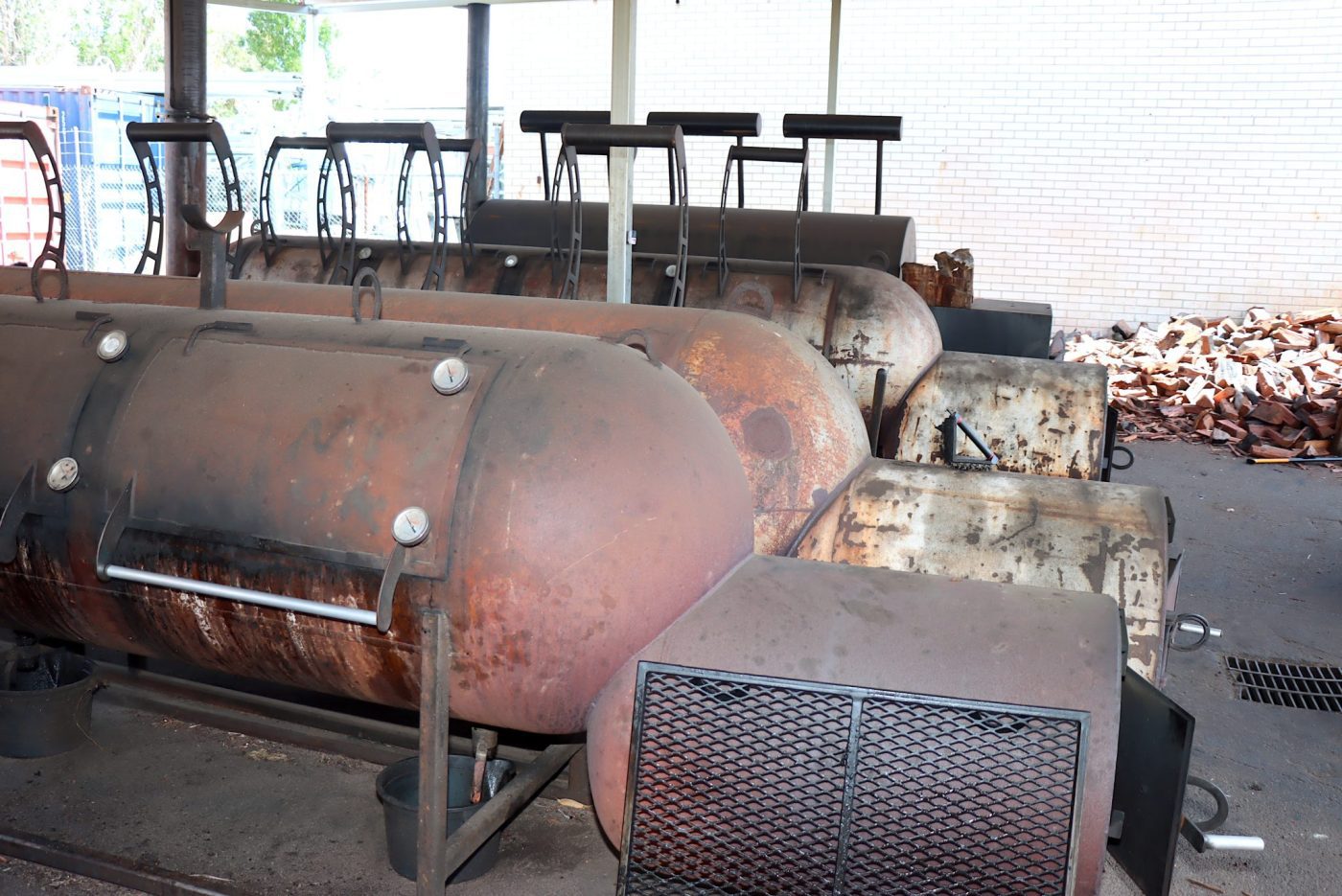
Don says a great smoker is all about air flow and the ability to choke and expand.
The importance of a high stack is routinely underestimated he says.
A rule of thumb is that the stack should be at least as high as the smoker is long.
But in his case his stacks are even higher at over 8 metres tall, with baffles also fitted to enable further control over air flow.
The beef behind Big Don’s
While technique and equipment matter, Don says premium Australian beef and Australian wood is what really makes Big Don’s briskets.
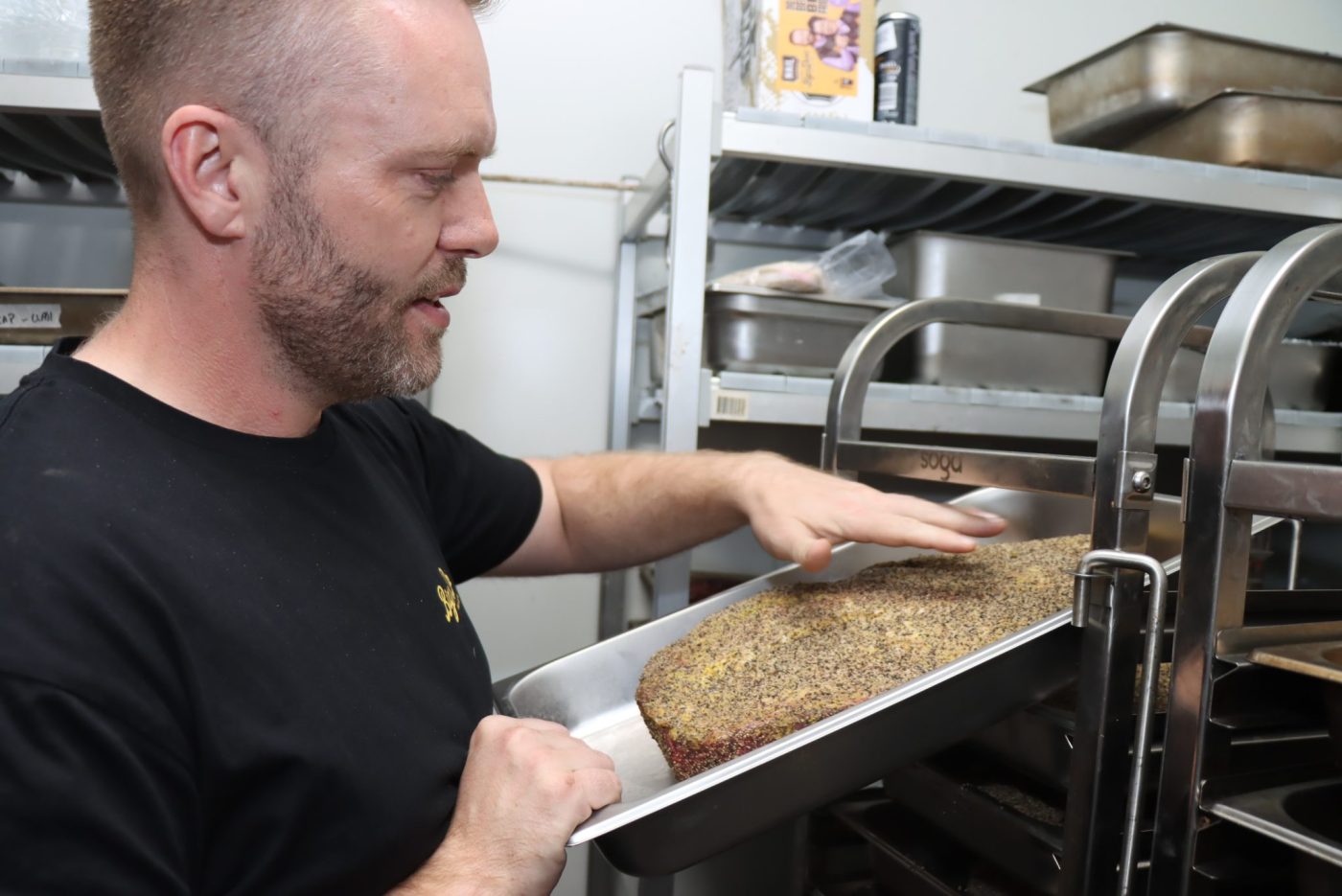
He prefers low marbling-score Wagyu (MS2-3) for its richness and reliability across large cooks.
The most important factor, he says, has been direct relationships with farmers.
“We found that the most important thing is relationships with farmers and beef suppliers.
Producers such as Lake Preston Beef, Margaret River Wagyu and Pardoo Beef are among the core suppliers.
“Pardoo probably has the all-around best briskets we have cooked.”
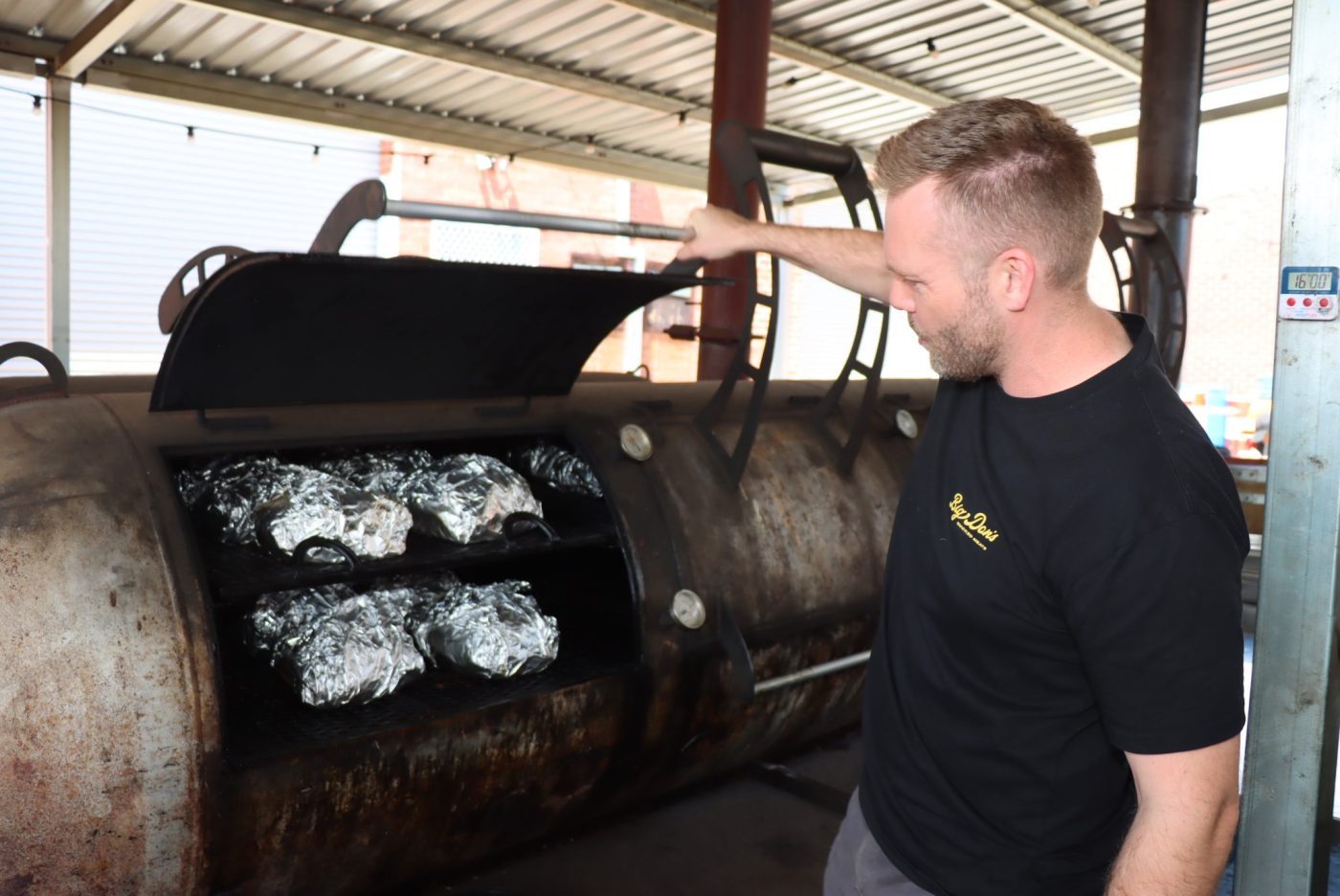
Checking the progress of pork butts.
Beef with trim specs
He says it can also be difficult to find processors who will meet his precise trim specifications.
“And that trim is actually not hard, it is actually less work,” he explained.
“In Australia briskets are all trimmed to a spec where they cut in under the deckle so that you can pull it open, so that if you want to remove it you can sell it to Korea.
“But then I can’t actually serve it any more because I have to remove that piece of meat, the best meat on the brisket and mince it, because I can’t cook a piece of meat that is hanging off the brisket.
“So the best plants in this country by far are John Dee – hands down, the best abattoir in this country – and they have the best trim spec. The other one is Western Meats in Osbourne Park.”
So frustrated is he with the trim spec issue Big Don took to social media to vent about it in this post couple of weeks ago:
Brisket itself doesn’t pay the bills
Despite being the cornerstone of his offering, Don says brisket is not a big profit driver of the business.
From an initial brisket weighing about eight kilos, he said about one third is trimmed, another third is lost during the cook, leaving roughly a 35 percent yield.
“We sell every brisket at break even price, if not a losing price,” he said.
“We lose money on brisket because of the labour, the time, the cost.
“Where we make money on that product is in sausage. So we remove one third of the brisket and we make sausage we sell at a 50 percent margin.
“I’m a numbers guy, and I don’t mind sharing anything.”
Fire and wood
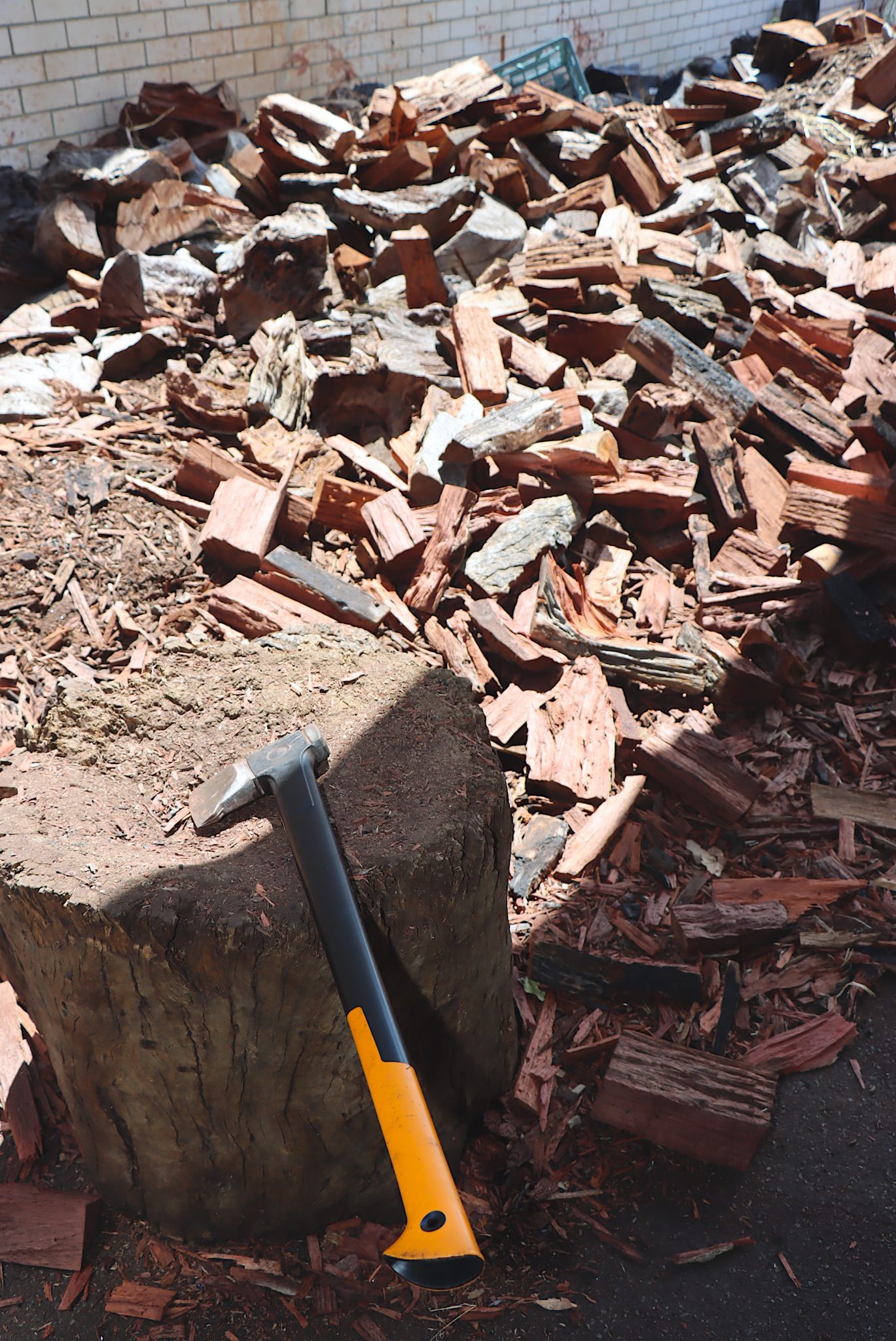
About two weeks supply of Jarrah and Marri.
Another secret to the success of Big Don’s is the suitability of WA native hardwoods to low and slow cooking, and particularly Jarrah.
“We have about 12 native hardwoods that are all food safe. And in Perth we have got dry Texas weather. This drier heat is very, very helpful for cooking this type of food, just to get the colour and the bark and the look that you want.
“Jarrah is the ironbark or red gum equivalent in WA – it is hands down the best wood you possibly want for barbecue.
“Great coals, no ash, burns well, straight and easy to split, it is just a wonderful wood.”
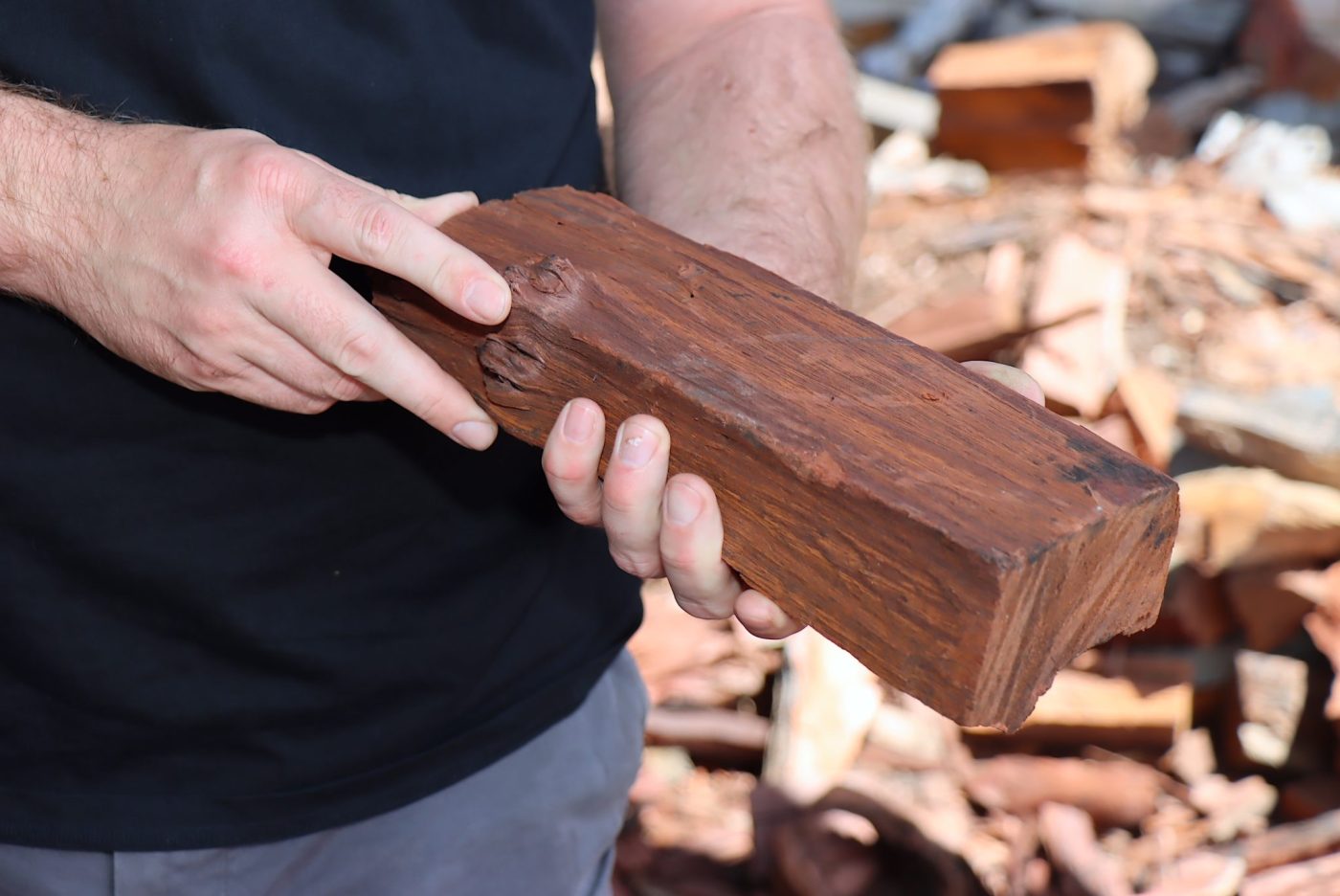
Jarrah
Franchise? ‘Never in a million years’
Beef Central asked Don if he ever plans to expand the business interstate.
His response was immediate and emphatic.
“I would never do that. Never in a million years.
Quality control is the non-negotiable, he said.
“There are just too many things that flow on… we’re already maxed out in a lot of ways.
“This is more than enough work, and the quality has never dropped in a decade because I am always around.
“The guys have a work life balance.
“There are just too many things that go on and even now we’re packed out for growth.
“I’d rather be one spot that is open for 25 years and is iconic, rather than open two or three or four of them and it all goes to hell.
“In Texas the only place that does multiple locations that does legitimate barbecue is Terry Blacks. Everyone else is owner operated. So Franklins, Leroy and Lewis, InterStellar, Snows, all these famous barbecue guys in Texas are owner operators.
“And that is the key really.”
Loving Western Australia
“I never expected to have a shop that had lines like this,” he said as we finish our tour and say our goodbyes.
“Perth is a wonderful city, Western Australia is a wonderful state.
“I’m just so lucky to have wound up here, doing something I genuinely enjoy.”
Don is currently writing his own barbecue cooking manifesto, which will include many of the secrets other books have left out. We will let you know when it’s available i keep an eye out for its release soon.
Don’s tips for backyard barbecuers
- Quality in, quality out.
“A lot of people start with a shitty brisket and think, ‘I will work on this one and then when I nail it then I’ll buy a Wagyu’. Get the boys around and do the good one. It is an arms race of quality.”
- Marbling score sweetspot.
“MS 8-9 is too high. Cook it, it is going to be good, but MS 2-3 is my sweet spot. The lowest score Waygu possible, because as the fat renders you get more loss, and it is already juicy enough at 2-3. I’d also recommend that a well marbled Angus also cooks very well.
- Perfect temperature.
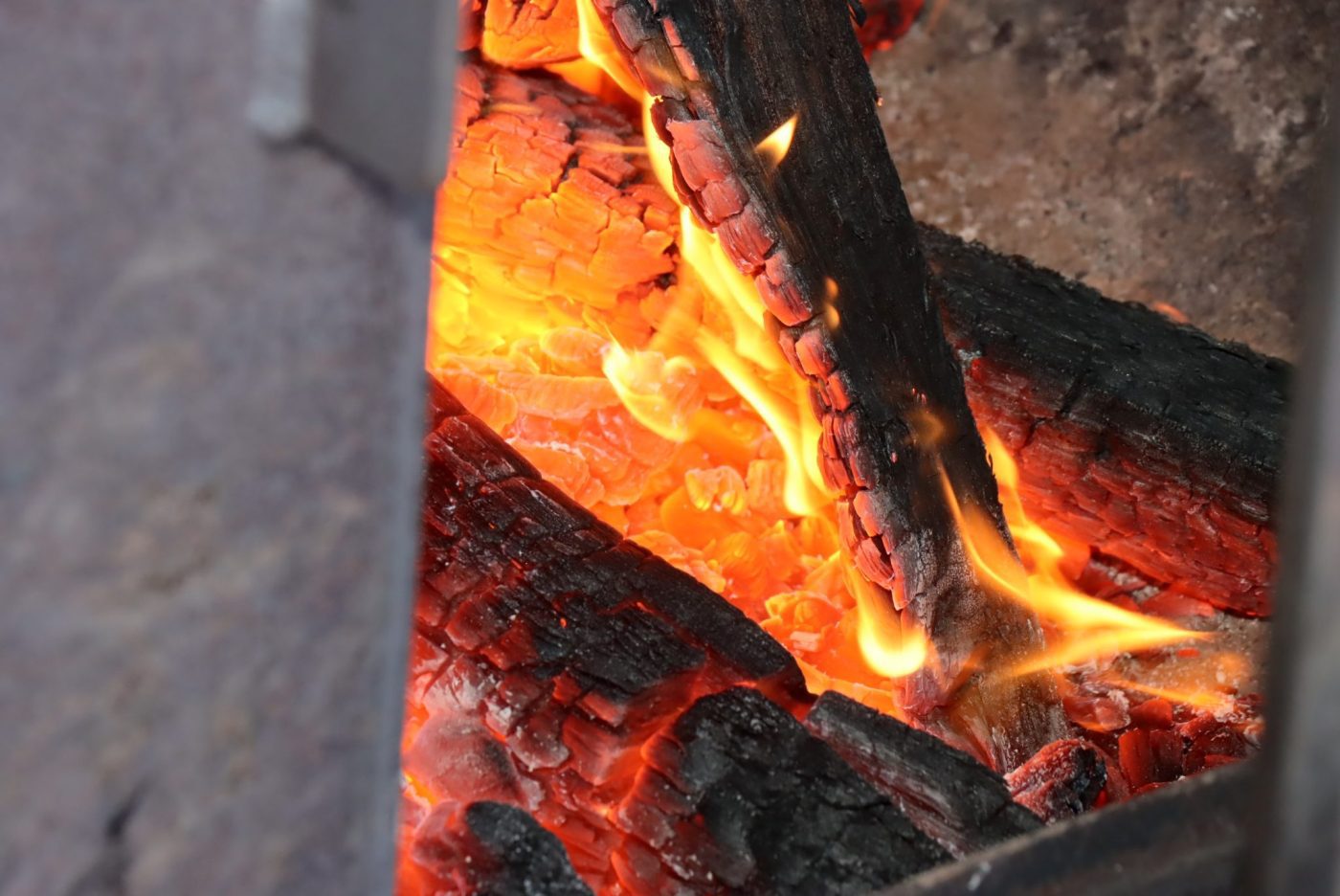 Don run his pits at 250F on the dial, which is about 110-115C, for 9-10 hours. “When we’re wrapping we will get that up to 270-275F, and at the very end of the cook the max we’re cooking is 300F. So there’s only a 50F or 20C gap over the course of 12-14 hours, it is a very tight window you are cooking. And at that temperature nothing burns for the most part.
- Avoid elaborate rubs.
“Rub wise, you see all these rubs on the shelf, just throw them out. Salt and pepper only. Pepper doesn’t burn at these temps, and salt melts. But sugar, herbs, and coffee, all this other crap they put in rubs, it all just burns so you end up with a brisket that either burns or tastes like spiky. The final flavour, the sweetness you taste, is smoke and Wagyu fat and salt. It is really really simple. We also serve a lot of sauce on the side.”
- The importance of a good rest (for the brisket, not you).
“Resting a brisket is equally important as cooking it. You can nail the cook, but mess it up if you don’t rest it properly.” Big Don’s works on a 14 hour cook and a 14 hour rest, using professional grade food warming cabinets to maintain temperature and juiciness.