

Click bait journalism has no place in agriculture. Webster dictionary definition: something (such as a headline) designed to make readers want to click on a hyperlink especially when the link leads to content of dubious value or interest. Author note: designed to draw readers to advertising content.
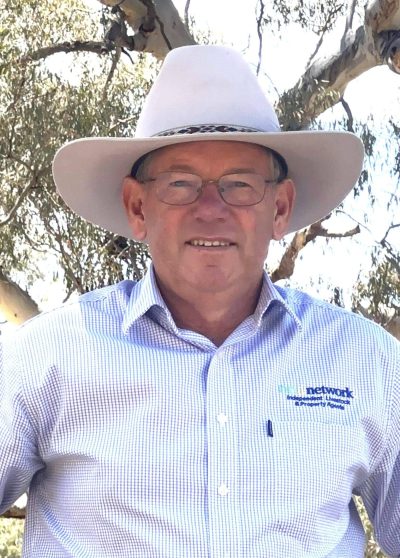
Chris Howie.
Following mainstream media there seems to be a growing sphere of stories that are designed to inflame opinion about the agricultural industry. I don’t think I can stop this “click bait snot” but I think if you are aware of the practice, it may help us all balance what causes us to become overly emotional for no good reason. Lower the heart rate, dismiss what we can’t change and see these articles for what they really are – advertising money grabs.
Great industry. After attending the recent weaner sales, a quick calculation was done on how many of those agents attending had been trained in the Agency and Supply Chain training at Wodonga TAFE: 28 was the number. Ranging from new starters to agents that are now principals in their own business, the number trained in total so far is nearly 350 spread across Australia. With MLA support this program has become a corner stone of developing professionalism and agency craft for the next generation.
I am very proud of the Australian Stock and Station Agency industry and whilst we are not perfect, we are the last relationship-based trade left. We are not the US sale barn system where the auctioneer talent is what you pay for. Not many cockies in Australia move their business because of the auctioneer talent. Australian agents are reliant on reputation, experience, marketing networks, work done in advance of any payment, del credre terms – where the agent often pays before being paid and most importantly an integral part of rural communities.
It seems some journalists are just sour on life instead of focusing on the positive aspects of what Stock agents do. For those producers in that “I don’t need an agent category”, they are actually agents themselves because someone needs to do the marketing. It always makes me chuckle a bit because like punting on horses the non-agent brigade never talk about the failed trade at the footy club, only about the commission they saved.
Chinese tariff – I have said this before. Do not become emotionally distressed by what you cannot change. Processors will navigate how to best supply China and I expect many conversations are being had on how to best redirect product once the tariff activation point is met. Key part for the balance of the cattle industry is to focus on genetics, feed and weight gain and get invested in following up how your livestock performed after leaving the front gate. Invest your time in what you can control.
Chasing price. When I was coaching football, the entire purpose was to build a side with a plan. In AFL there are 18 on the field. The top six are instinctive players and you leave them go, the mid six are very good players that will deliver your plan. The bottom six are coached to task and delivery. If I could get the bottom six to play above their level, we would normally win. The one thing that is fatal when playing footy is to be chasing the ball instead running to where it is going – drawn into the other side’s plan instead of executing your own. We have seen this in cropping when the sexy returns one year become an oversupply the next year because of “ball chasing”. I am observing this now with the influx of cattle producers to Wagyu. I’m not saying don’t, but I am saying make sure you have a plan and an exit strategy if it doesn’t work.
100 percent cropping. A few stories are starting to float up of farmers that have been convinced to sell all their livestock to go full time cropping in marginal areas. As much as this works for the financier spreadsheet the facts are that a season like the last two leave a full-time cropper exposed with some farm sales now appearing. Australia in most parts is very well suited to a mixed farming enterprise. Remember the old Merino ewe even in a poor year keeps trying to squeeze a wool clip out to help pay some bills whereas the $1 million header in the shed sucks money for 11 months of the year.
Cattle
Weaner sales: With a lot of ground covered since mid-December, Rockhampton and Clermont in Qld, the sale series with Naracoorte, Mt Gambier , Casterton, Hamilton, Leongatha and finally Bairnsdale, I think I have a fair idea on how the prices ended up. It also seemed that the sales were a bit more spread this year allowing buyers to operate in sequence instead of several sales on one day making it difficult.
We saw a great result for breeders and buyers. Weights were up by 15 to 20kg following a fantastic final three months. In a nutshell steers across all weight ranges made from $5.00 to $5.90 with the odd pen topping $6. It is the tightest spread of pricing across breeds and weight ranges seen for a long time. There are always the elite pens which bring big money and the below average cattle that struggle on price.
What we did not see was the distinct breed-based price variance. Hereford and Euros performed well and in many instances were equivalent or only 10-15 cents less than Angus. The influence of a Hereford and steer and heifer order from Marc Greening at Injemira Beef Genetics was a great example of how quickly one order can influence a sales series across multiple centres.
There is a report at most saleyards we can grab now that breaks a yarding into breed, weight and price. As an example, Bairnsdale average was Angus $4.94 and Hereford were $4.98 calculated across all weight ranges.
Black baldies are no longer the cattle to average the load back making the same as the straight Angus. I raised this on black baldies last year and perhaps the crossing performance is proving its worth or the change in the Angus trait percentage.
I thought heifers may have been the opportunity this year, but I was wrong. All breeds were keenly sought with the annual draft of Limousin heifers at Hamilton taking the price prize. Most heifers ranged from $4.35 – $5.00 with the price needed to buy numbers at $4.50 to $4.70. Between the various centres prices fluctuated by 10-20 cents but considering the values being achieved this is not even worth discussing as a percentage.
What did stand out was the reward for EU and weaned calves. I feel producers who made the effort were comfortably rewarded by 20 cents. Heavy weaners above 380 topped at about $5.20 with most $4.90 – $5.10. Weaned EU steers in the 340 – 380kg range were keenly sought by processors, feedlots and bullock fatteners. With TFI and JBS strong early as well as buyers from the Gippsland and Lower Sth East of SA in the mix. Later in the series Midfield meat made their presence felt on heifers with Miller Whan and John, Mt Gambier running several volume orders covering most centres. A number of northern orders as far up as Roma failed to get a start with the freight making it impossible to compete with the southerners.
Bairnsdale loaded a great run of cattle with several traditional mountain sale lines presented. David Hill, Elders Omeo said some properties in the high country are starting to get short on water and it was prudent to go early. Jake Fullgrabe, Bill Wyndham and Co stood over an excellent run of cattle and commented on the season and buying support that has continued to build at Bairnsdale over the past 15 years.
It was good to see the breed societies waving their respective flags on behalf of the producers and seed stock fraternity across the sale series. We are now entering southern sire season and without those invested in elevating genetics, herds and flock performance drops very quickly. I think it adds another dimension to the yearly events and hopefully rewards those that invest in their program.
PTIC females. These are still very buyable. The elite end is making $3500 however speaking to several agents there are plenty at $2700 – $3200 ready to calve in February / March. With these ladies remember your animal welfare responsibilities and do not truck inside a month before calving / lambing.
Southern stud season starts in February and the last two years of reduced buying may see many caught out with a need to buy more sires. Take the time to get your sire budget sorted but whatever you do, don’t drop the quality of what you buy because you need to buy a few more. It is bad business, and you will dilute all of your previous years investment in one season.
Sheep and lambs
Lambs, it is the time of the year that we will start to see a run of heavy lambs appear from stubble and pasture that were held over or brought as stores earlier. We also tend to see a run of unfinished lambs in February as feed cuts out and many return from holidays and have a bit of an “oh shit” moment when they drive around paddocks.
My suggestion for the next three months with current grain prices is supplementing lambs to finish them and gain a weight and price benefit. Indications are prices may soften a little on a run of heavy lambs that need to go from feedlot or have been contracted in advance during February. However, I feel this will be short lived as numbers are still light for the coming autumn.
Wool. The wool crew are back in the saddle again with quality 19–21 microns returning around $2000 – $2200 per bale and ranging from 1960 – 2040 cents clean across those microns. The Eastern market indicator is at 1665 and the Northern at 1707 with significant lifts in January. Compared to last year this is a jump of nearly 300 cents. The combined return when looking at Lamb $10.50/kg, Mutton at $7/kg and the wool clip is bloody good and should see a spring in a few steps about the place.
As an example, I was speaking to Ron Creek, Wool and Livestock rep for Fox and Lillie Rural, he had a client out of Wangaratta with Bogo blood ewes, 18.5 mic cut $104 per head – now that’s exciting stuff per acre return when you do the cast ewe and lamb calculation on top. Hot tip. Start locking some wool price in, cotton have been doing it for years and its about time the wool producers start doing it instead of hoping it will go higher.
What can’t we impact. Price – it will look after itself. Concentrate on your target market and weight gain. Leverage relationships, quality and volumes to write a better contracts, this is your stock agents job.
China tariffs – leave this to the processors to sort, the producers can’t influence this conversation.
Nobel peace prize and Greenland – four years of madness will take 40 years to fix.
Current political position in Australia – common sense needs to be regained as a cornerstone of our society. It’s time for Australians to throw apathy out the door and stand up for who we are, not be controlled by radical agenda driven ideology. In short politicians need to harden up and get back to old fashion nation building not perpetual election campaigning. If anyone managed a business like we are seeing they would be sacked. As Elmer Fudd said “Watts Wong with that idea?” Or is that idea a dead duck to the low skilled, limited practical life experience, professional politician.
Opportunities
- PTIC heifers
- SIL ewes, with a start in the jacket
- Taking the time to finish what stock you have. Supplement not feedlot.
- Keep the quality of your sires up, target your market.
- Positivity on how much return there is in sheep and lambs
- Lock some wool pricing in. Even if you don’t shear for 6 months.
- Sit down at the table with your agent and discuss your plan for the next 12 months.
- Hang onto your livestock, they pay the bills
Chris Howie is a regular Beef Central and Sheep Central market columnist and the CEO of RMA.
An excellent article Chris. Well written and plenty of detail to keep the mind engaged. You certainly covered some territory with the weaner sales.
regards Richard
not all give the farmers a fair chance to comment .
Thanks Ray. Beef / Sheep central is a fantastic platform to provide commentary to.
Even localised content is important..
great read again Mr Howie. consistency is the key. cheers Matthew Della Gola