
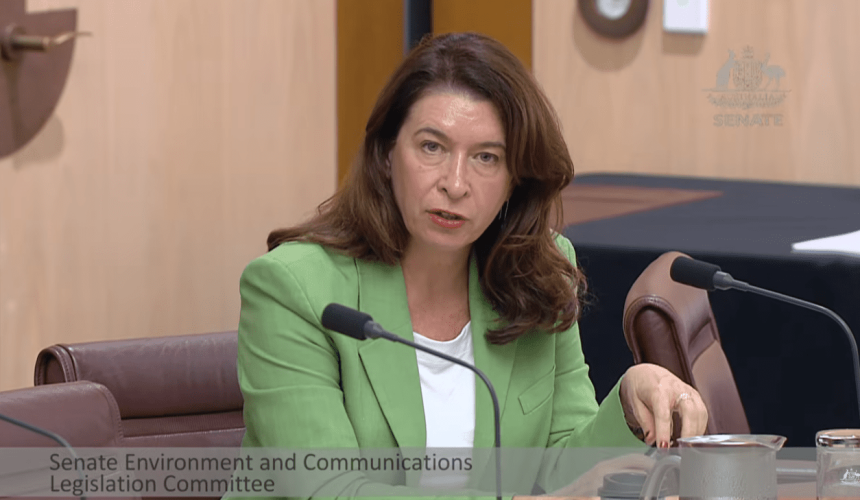
SENIOR public servants and environment minister Murray Watt have played down the impact of the new Federal environmental laws on agriculture, in facing questions about the industry’s concerns in Senate Estimates.
 In a deal between Labor and the Greens at the end of last year, the Federal Government passed the new laws – with serious concern about how they will play out on the ground.
Nationals’ senator Susan McDonald told estimates hearings today and yesterday ther her office had been flooded with questions from producers airing their concerns about the laws.
She said producers had already been caught up in lengthy delays getting Federal Government approval and the science underpinning the legislation was inconsistent with the rules.
Concerns over the 15-year limit
One of the most controversial parts of the law has been the reclassification of regrowth that is 15-years or older, meaning that producers will have to apply to the Government to clear that land.
Senator McDonald said the 15-year limit was added to the law at the last minute and was inconsistent with the scientific study referenced to put it in the legislation. She said it concluded that species use of regrowth ranged between scrub that was anywhere from three to 68-years-old.
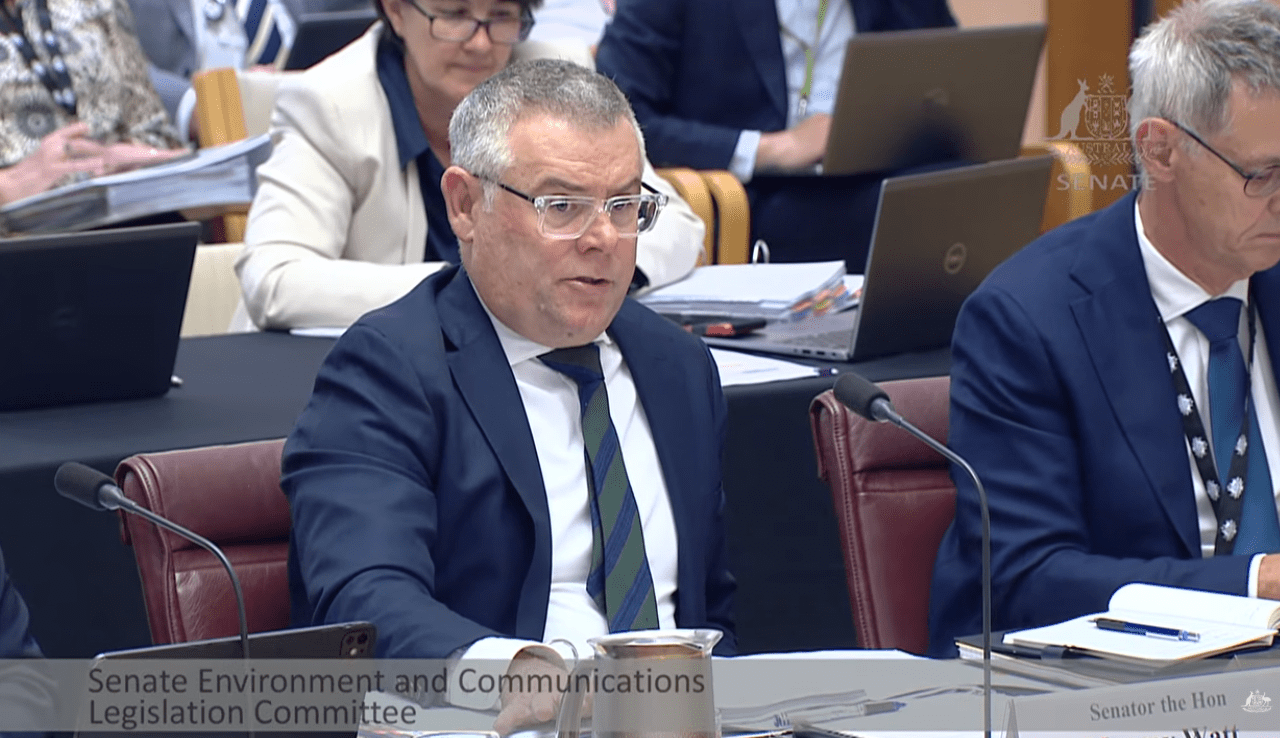
Murray Watt in senate estimates.
“In the same study that was cited, it says the median age of which regrowth vegetation that provided 75pc of the relative value of remnant habitat was at 36 years,” she said.
Asked why the Government had not considered the variation in landscapes and instead opted for an “arbitrary” 15-year limit, Minister Watt said it was about clarity.
“It is important for all stakeholders to have clarity in regulation,” he said.
“So, you need to pick a period of time and people will have different views. I don’t think it is in anyone’s interest to have a mix of years.”
New process to deliver approvals in 10 weeks
Senator McDonald said previous experience with landholders trying to get Federal Government approval to clear land had showed lengthy delays in getting approvals.
She there was a real concern that the delays could put some activities above the 15-year limit and force them into more assessment.
In response, Shane Geddes, who is the head of law reform at the department, said:
“There have been very few agricultural referrals and I’m not sure we have that much data that says it will take 18 months. But our new streamlined assessment pathway, if people have done the right due diligence and have met right information, they can have a referral withing 50 business days.
“Farmers will need to plan for that time and not leave if 15 years and leave it to the last minute to apply for approval.
“It is not a straight ban on clearing that hasn’t been cleared for the past 15-years. The changes mean that those properties that haven’t cleared for 15-years, which it is hard to make a case that it is continuous use if it hasn’t been cleared for 15-years, would need to then consider whether-or-not their actions would have an impact on matters of national environmental significance.”
Senator McDonald said there were plenty of agricultural projects that had not gone ahead because of the Federal Government process.
“What you are saying sounds very reasonable here in Canberra, but for land managers who are trying to make time efficient and reasonable decisions on their land this is not their experience,” she said.
Apart from the length of time in getting approvals, let's not forget the costs associated with with having your application in order to meet all of the new EPBC framework( as there are limited guidelines yet). The costs surroundinding inspections by third parties are comparible with Renewable and Mining applications. Already there has been one individual mooted to have been charged $40,000 for an application to clear 90 hectares. DNR are no help when it comes to queries on woody weed control either, except to tell you to meet Federal laws, what laws I ask, they have not been thought of let alone written, just a time stamp.
This sort of rubbish has been coming for years. It was the liberals and nationals that created the EPBC act to begin with and like all the rubbish it really got going in the 1990's.
Moral of the story is get two dozers and chain everything you can and keep it down. The government is not interested in good environmental outcomes with such stupid laws.
Can anyone tell me ( Eric?) does the 15 year limit apply to specific areas of a property, i.e, we have re-pulled most of our property less than 15 years ago, but there are areas that haven't been pulled for maybe 20 years.
Surely our property qualifies as "continuous use", and we are free to pull those areas that haven't been pulled for more than 15 years ?
<strong>Hi Tristan, will see what we can find out. The ambiguity of these laws was a point made repeatedly in yesterday's hearings. Editor
If only Senator McDonald and the coalition had been prepared to take the long view prior to the reform deals being done by the parties that are historically unsympathetic to non-urban concerns.
We have a government with a huge parliamentary majority, backed in by the lowest vote counts, with no credible alternative. Perhaps what we really need are fewer party representatives and more independents? Or a benevolent dictatorship?
Australia has been losing threatened species at an alarming rate. Farmers work on their land 7 days a week so know intimately what is there.
Humans have always responded to carrots not sticks..
Would it not make much more sense to engage farmers who own 50% of Australia’s land mass in a program
For preservation.
Greens who think prosecution is way forward will only deliver continued loss of TS.
Mal the issue is that land managers need to be able to continue to manage invasive native trees. To suddenly stop managing an invasive force, be that people or invasive trees, doesn't preserve anything. Invasive trees, simply goes on invading with exponential force. The result of native trees being left unmanaged is bare, exposed, hot, dehydrated, eroding soil. A huge loss for the environment, the ecology, and the economy.