
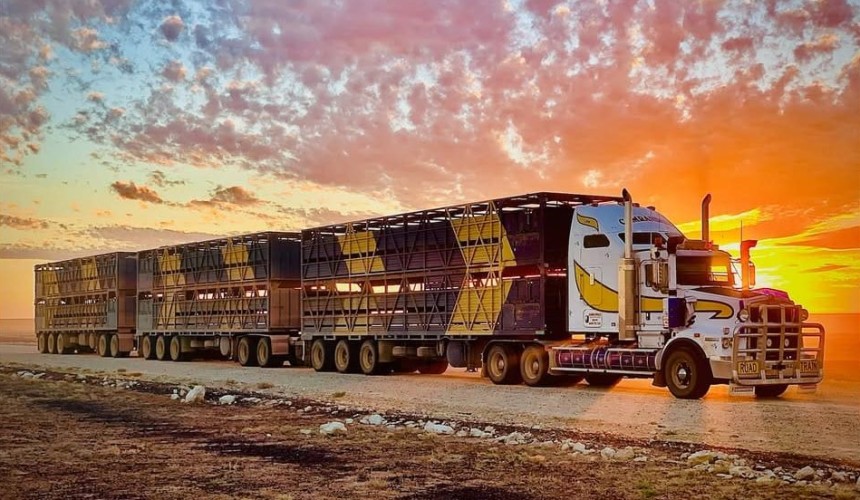
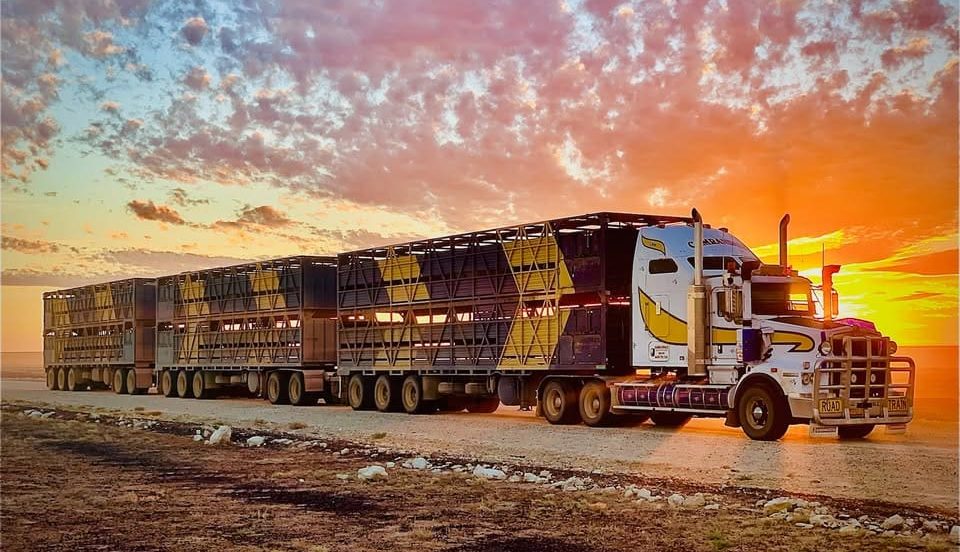
OPENING more roads to longer trucks which can transport more stock with less fuel should be considered as a key diesel saving measure during the current fuel squeeze, Australia’s peak livestock transport body believes.
The Australian Livestock and Rural Transporters Association (ALRTA) has joined with the Australian Trucking Association in calling for a coordinated national approach to issue temporary notices allowing longer truck configurations on more roads.
ALRTA chief executive Anthony Boyle said enabling higher productivity vehicles would allow operators to move more livestock using less fuel at a time when input costs are under acute pressure.

ALRTA CEO Anthony Boyle
Mr Boyle nominated several areas where the temporary allowance of longer freight configurations could unlock significant efficiency gains.
In Central Queensland, road trains are currently restricted from travelling through Rockhampton during daylight hours, which requires transporters to decouple at Gracemere and shuttle multiple loads across the city in smaller configurations.
Allowing road trains to transit during the day would enable direct access to processing facilities and remove the need for double-handling of cattle.
Similarly, improving access from Toowoomba into south-east Queensland processing plants was another classic example, he said, where longer combinations could operate more efficiently.
In southern New South Wales, Mr Boyle highlighted the example of AMG’s newly developed processing facility at Cootamundra, which sits just seven kilometres beyond the end of an approved road train route. “We want to get that last 7km opened up,” he said.
Wagga Wagga is a major cattle supply hub for Victorian processors, but to connect with the Victorian road train network, trucks have to detour west to Narrandera and enter Victoria at Finley. Opening the Olympic Highway from Wagga to Albury to longer trucks would provide a more direct and efficient corridor.
Mr Boyle also pointed to opportunities along the Hume corridor, including improved access for higher productivity vehicles into facilities such as Southern Meats at Goulburn and the Yass saleyards.
Improving access to numerous facilities in Gippsland would also improve efficiency, while in South Australia, enabling triple road trains from the Northern Territory to continue through to Dublin Saleyards near Adelaide, without having to break up at Port Augusta, was another example.
“That would solve a lot of cross loading and splitting up there,” Mr Boyle said.
“There’s plenty of scenarios where we could increase capacity to get into processing.”
Substantial productivity gains
Mr Boyle said the productivity gains from moving to longer combinations were substantial.
A standard 26-metre B-double carrying slaughter cattle typically moves about 60 head, while a B-triple or Type 2 road train at 36-metres can lift that to 80 head.
Moving from a 26-metre to 36-metre combination effectively added another deck of cattle per trip.
“You put 10 trucks on the road carting an extra deck each, that is 10 decks. It adds up pretty quick,” he said.
Victorian experience proves longer vehicles operating safely
Despite community concerns about larger vehicles, Mr Boyle said the industry had already demonstrated it could operate higher productivity vehicles safely.
He pointed to Victoria’s High Productivity Livestock Vehicle Scheme, which expanded allowable lengths from 26 metres to 36 metres, as evidence the sector was already meeting necessary safety standards.
“We as an industry have already proven we’re aware of the safety requirements to increase productivity and we’re meeting that.”
The primary obstacle to freeing up road use was in having to deal with multiple road authorities.
While major roads were governed by Federal and State transport departments, many secondary and connecting roads were managed by local councils, which meant many different mindsets in dealing with issues.
The ALRTA and ATA are calling for all levels of government to work together on a coordinated framework to streamline approvals and temporarily expand access for higher productivity vehicles during the current fuel crisis.
NSW backs longer vehicles
Proving that coordinated approaches can be achieved, the NSW Government yesterday announced the introduction of temporary restrictions on longer vehicles for some freight tasks under the recently launched National Fuel Security Plan.
In line with Level 2 of the Plan – Keeping Australia Moving – the NSW measures announced by Premier Chris Minns yesterday increase access to the road network for larger trucks that can carry more goods in a single trip, and ease restrictions on operating hours.
“This will help move more goods with fewer trips and less fuel, keeping vital supply routes running across NSW, especially to regional communities,” Mr Minns said.
New measures include adjusting load limits to freight to allow for bigger and longer freight to travel on our road network, and where applicable to allow more freight to travel, load and unload at night, while providing for flexibility for hours of operation and curfews.
“These longer trucks will use at least 18 per cent less diesel per ton of payload and can carry 33 per cent more additional freight.
“These temporary measures will ensure freight can continue to move safely and efficiently, keeping essential goods flowing to communities and businesses across NSW.”
Western Australia during the drought and south Australia when the trans access line has been washed away have demonstrated that allowing longer combernations during difficult and challenging economical times works extremely well
I'm very surprised that the bulk fuel transport industry has not already been granted higher productivity vehicle access
It's a no-brainer. Same with rail trains - they're more efficient when they're longer. Cattle don't appear at stations by themselves - trucks are vital - but putting the whole road and rail freight package together is where the savings are and where additional markets and opportunities lie.
this is absolutely correct they should let triples into Nyngan and Miles the roads west are not much different to out west.
Wonderful incentive - great to see ALRTA pushing to reduce not only freight costs for Livestock transport but also to maximise volume transported per unit of diesel consumed.
The Northern Tablelands, The North West Slopes and Plains, most of the Hunter and Central west NSW plus a major expanse of the Border districts of QLD are currently experiencing major drought and Beef Breeders have been forced to sell down breeders yet have had to maintain a base number to ensure business survival. These Core breeders will have to be feed on Hay Grain and Supplements freighted into properties. Road Train access to these locales is now essential to enable mentioned fodder to be transported cost effectively and so assist maintain these Beef enterprises.
thanks for the opportunity to comment