
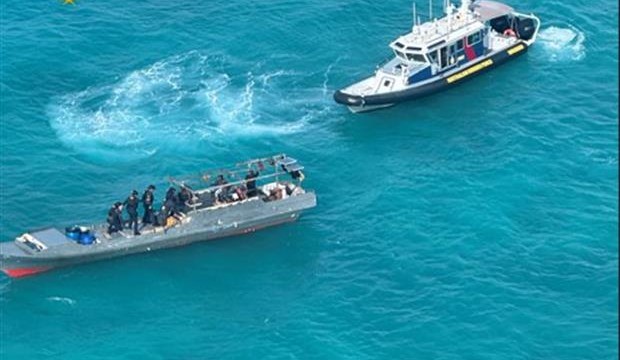
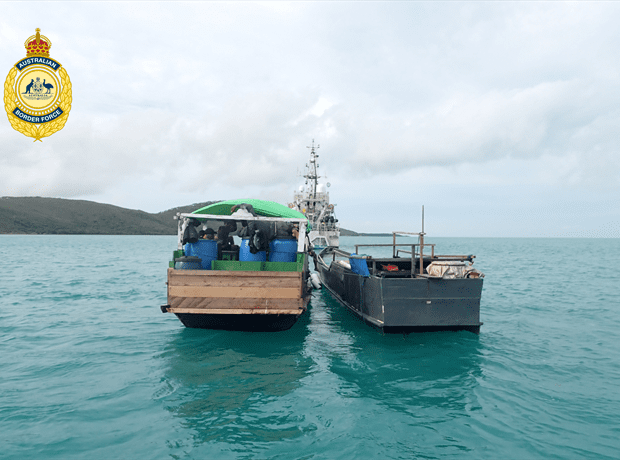
THE prosecution of 160 illegal Indonesian fishers in Darwin in just 10 months is raising fresh questions about whether enough is being done to protect Australia’s livestock industry from biosecurity threats posed by vessels arriving from disease-affected countries.
An Australian Border Force (ABF) media release today reported that seven Indonesian nationals pleaded guilty in the Darwin Local Court last Tuesday to fishing illegally in Australian waters.
That brought the total number of Indonesian fishers prosecuted in Darwin since 1 July 2025 to 160, the release revealed.
In Queensland, 13 illegal fishing boats were intercepted by authorities in January and February.
That included one incident in which three Indonesian fishers walked into a resort bar on Roko Island in the Torres Strait seeking a drink.
Hundreds of foreign fishing vessels have also been intercepted off the Western Australian coast in recent years, according to media reports.
Vessels originating from Indonesia, where the highly infectious foot-and-mouth disease and lumpy skin disease are now prevalent, present a serious biosecurity risk to Australia’s livestock herd.
An incursion of either disease in Australia would trigger an immediate livestock standstill, potentially significant stock losses in effected areas and major disruptions to livestock markets, with official estimates placing the likely damage to Australia’s agricultural sector and broader economy at around $80 billion.
Cattle industry groups fear unauthorised arrivals could provide a pathway for exotic livestock diseases to enter Australia outside formal biosecurity controls.
“We need to know what’s being done to prevent scourges like Lumpy Skin Disease (LSD) coming in from Bali,” AgForce Queensland President Shane McCarthy said in the wake of the illegal vessels being discovered in the Torres Strait in February.
“Illegal and unauthorised landings such as these expose critical weak points in the system that must be addressed.
“Australia’s agricultural advantage is built on biosecurity. Our global reputation for safe, high-quality food exists largely because we are free of many devastating animal diseases and pests that exist just kilometres away from our borders.”
Multi-agency campaign stepped up
Efforts to deter illegal fishing activity were stepped up in February when Home Affairs Minister Tony Burke announced Operation BROADSTAFF, a multi-agency campaign targeting illegal foreign fishing across northern Queensland and the Torres Strait, following similar operations off the Kimberley and Northern Territory coasts.
Last month, the ABF said it had intercepted and destroyed five foreign fishing vessels at sea since the commencement of Operation BROADSTAFF.
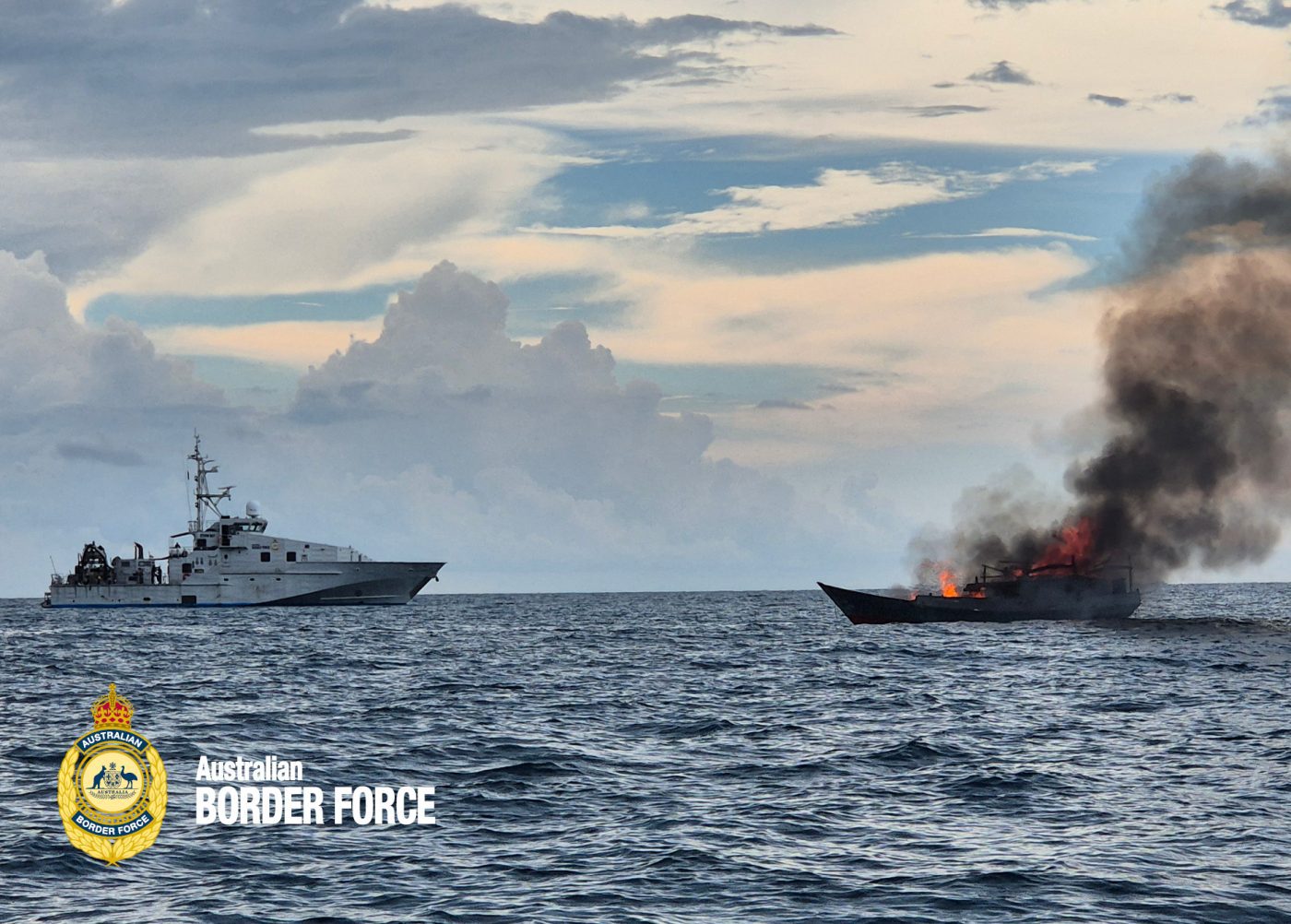
ABF Images provided to media from Operation BROADSTAFF
Despite those efforts, concerns remain about the continued presence of illegal vessels near Australia’s coastline and the potential pathways they create for disease incursion.
Repeat offenders raise doubts about effectiveness of deterrence efforts
In a concerning sign that existing deterrents are not proving effective, two of the seven Indonesian nationals who pleaded guilty to offences against the Fisheries Management Act 1991 in the Darwin Local Court on March 31 were identified as having been previously apprehended in Australian waters.
The master of the first vessel was convicted and given a two-year good behaviour bond, while the second master received a $1000 fine and a six-week prison sentence, suspended immediately.
One crew member served a 10-day prison term due to an outstanding warrant for a previous offence, while the remaining five received penalties ranging from $1000 fines to two-year good behaviour bonds.
The ABF said all fishers will be removed from Australia and returned to Indonesia following the completion of their sentences.
The ABF said Australian authorities were working with the Indonesian Government to address illegal fishing at its source through education campaigns, targeted communication and direct engagement with fishing communities.
While the ABF release highlighted the risks illegal fishing poses to the sustainability of Australia’s fish stocks, it made no reference to the potential biosecurity threat to the nation’s livestock sector.
How US is respondig to a major biosecurity threat to its cattle industry
Last month, Beef Central reported on a biosecurity issue in North America that highlights how seriously the United States Government is taking a potential threat to its large cattle industry.
As a New World Screwworm Fly outbreak spreads north across Mexico, the US military has been enlisted to help construct an enormous sterile fly production facility at Moore Air Base in Edinburg, Texas, at an estimated cost of up to A$140 million.
The facility will produce hundreds of millions of sterile screwworm flies each week for release along the US/Mexican border, to try to stem the advance.
The USDA release said the new production facility was projected to begin production in November 2027, with an initial goal of producing 100 million sterile flies weekly, before scaling up to 300 million/week.
Are these penalties really penalties? A stint in prison is probably like a 5 star holiday to these guys while a two year good behaviour bond really means, " don't get caught again for 2 years". The minimum penalty would have more effect if it was 10 years locked away.