I have seen a lot of unusual animal production systems in my travels but the one I visited in South Kalimantan recently was the strangest one yet.
A small herd of 40 water buffalo is managed in the “middle” of a vast swamp which I guessed to be at least 1,000sq km.
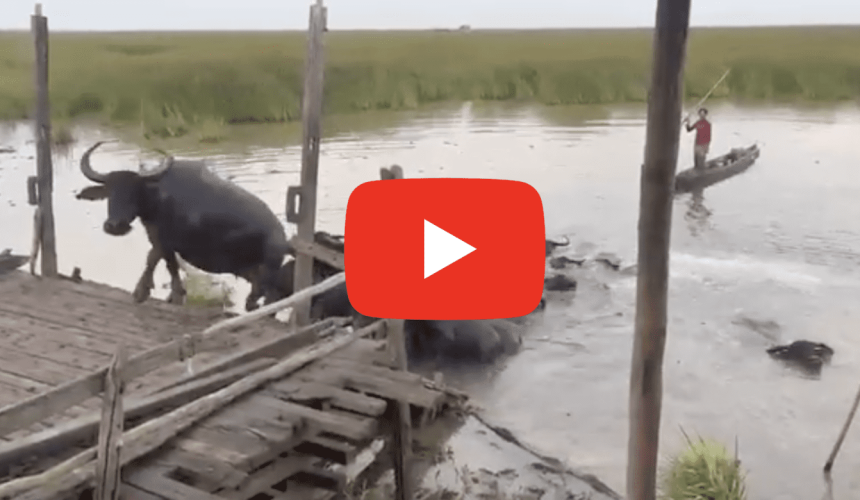
The animals are released from their elevated wooden platform each morning and swim out into the swamp where they spend the rest of the day grazing amongst the boggy reed beds until their stockman ventures out to collect them and swim them back to their platform in the evening.
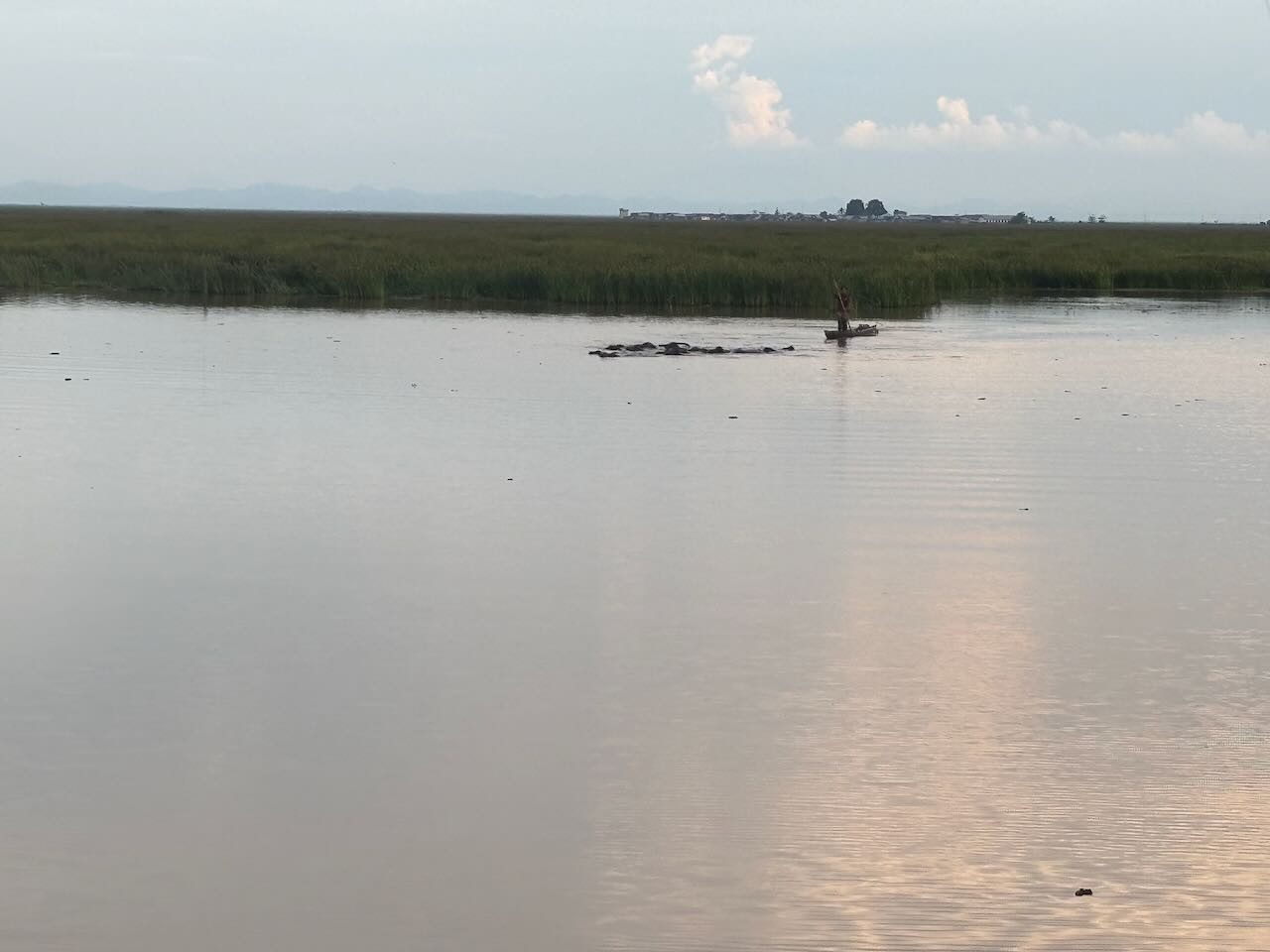
There are similar elevated platforms with small buffalo herds dotted all across the swamp a kilometer or two apart.
We could not hear any calling of the animals but the stockman managed to find the group waiting in the edge of the reed beds and somehow encouraged them to swim across about 500 meters of open water towards their home platform.
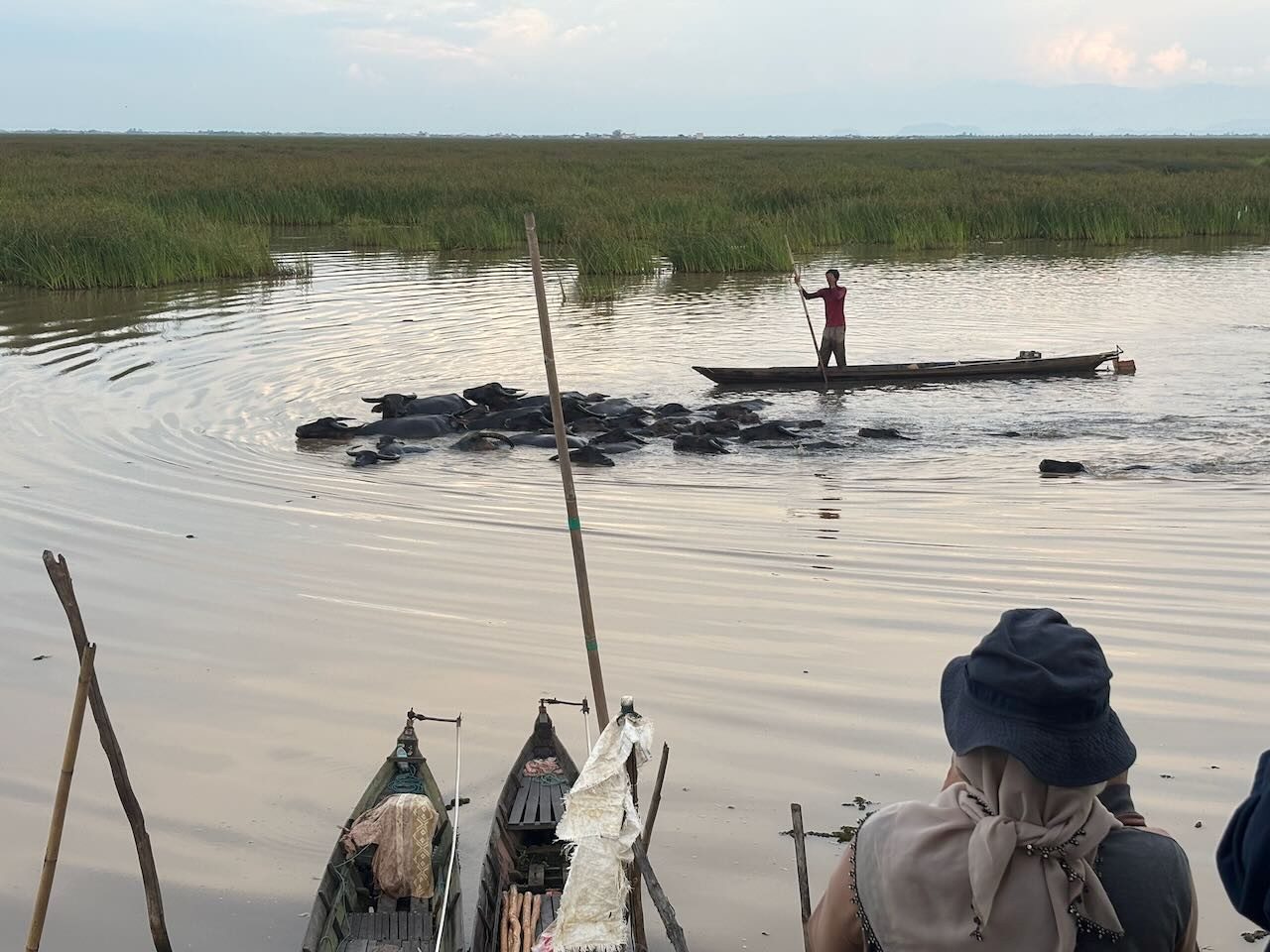
As they get closer to the platform he keeps them together and heading in the right direction just as a horseman would when yarding up on dry land.
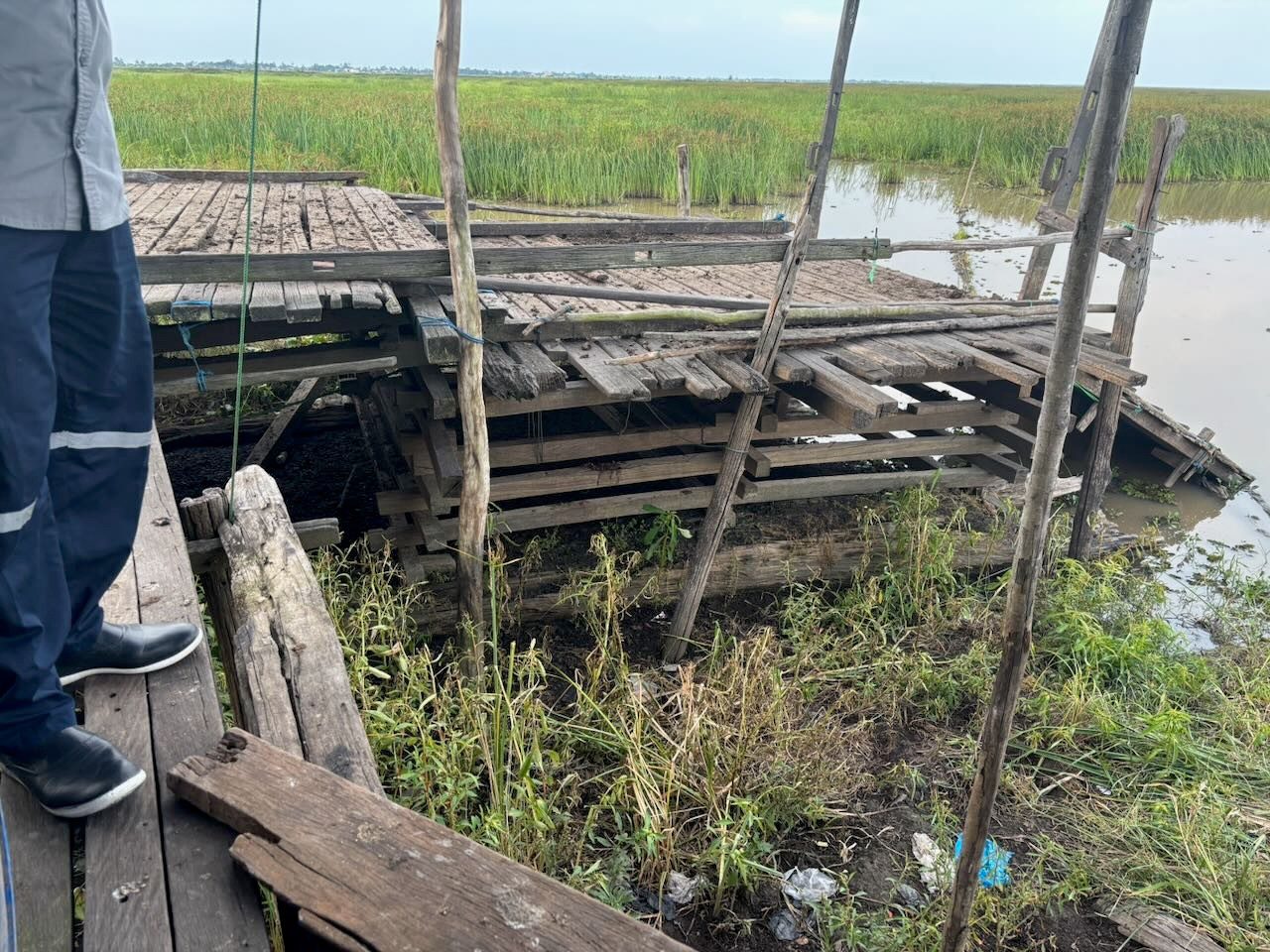
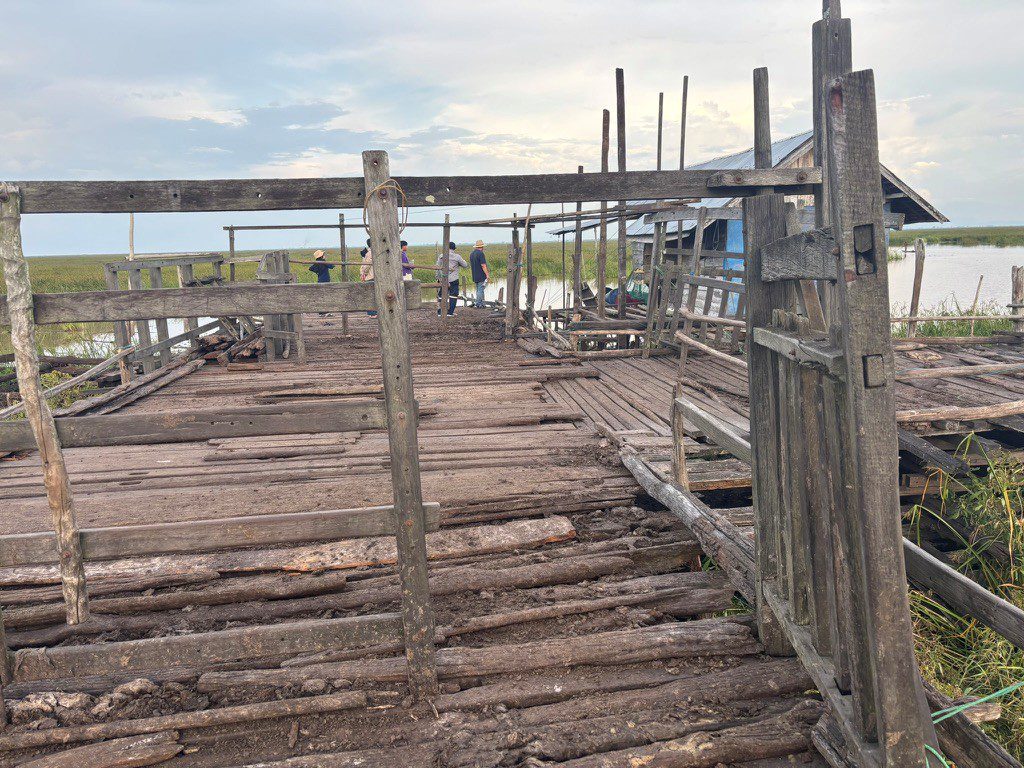
This wooden platform has been constructed in sections over decades with every single plank of timber brought out from dry land in a narrow canoe.
The canoe ride from the nearest land takes about 20 minutes through a network of very narrow waterways.
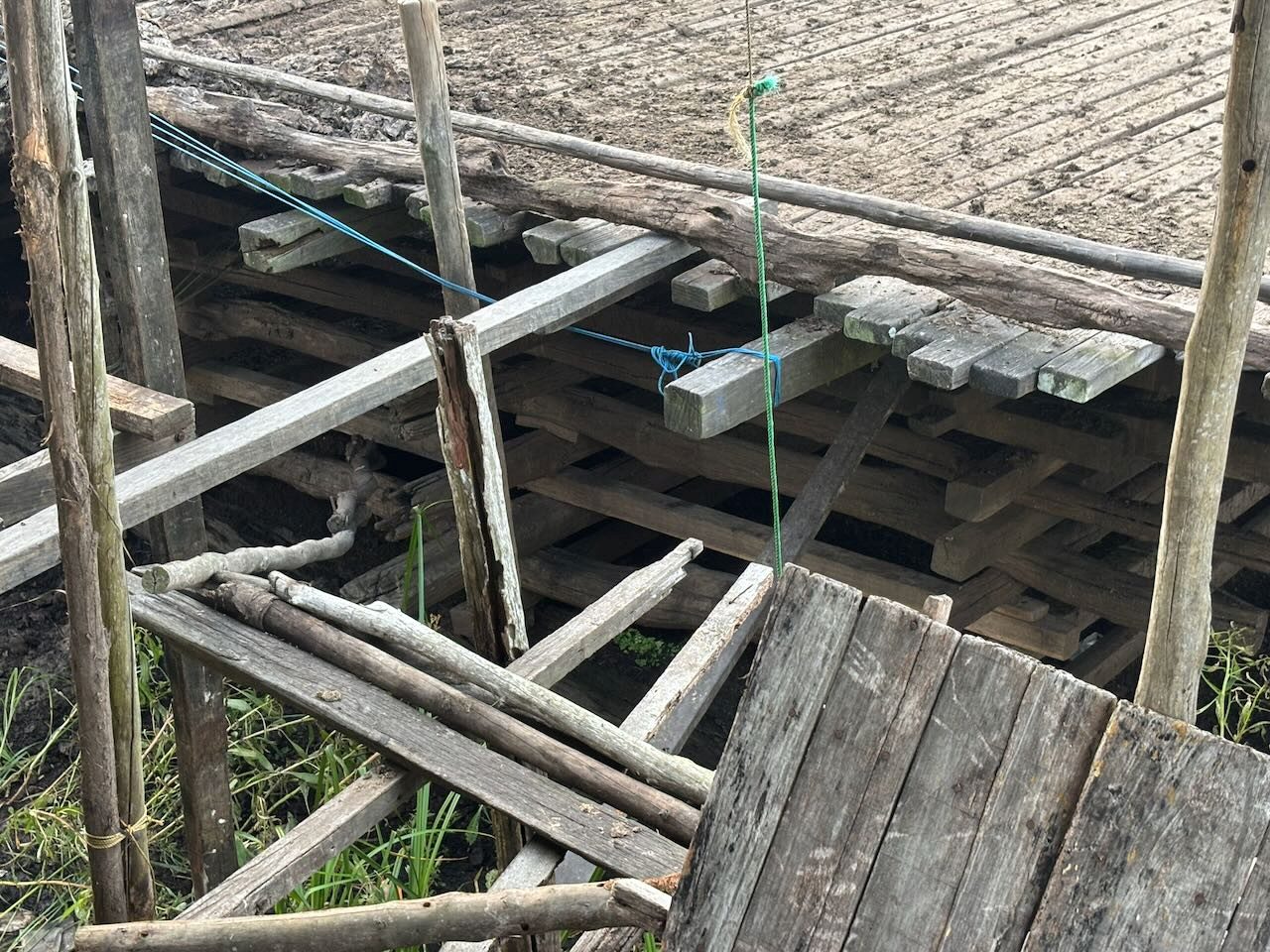
The water level changes depending on the season.
We visited during a relatively dry period so at this time the top of the platform was about 1.5 to 2 meters above the mud below.
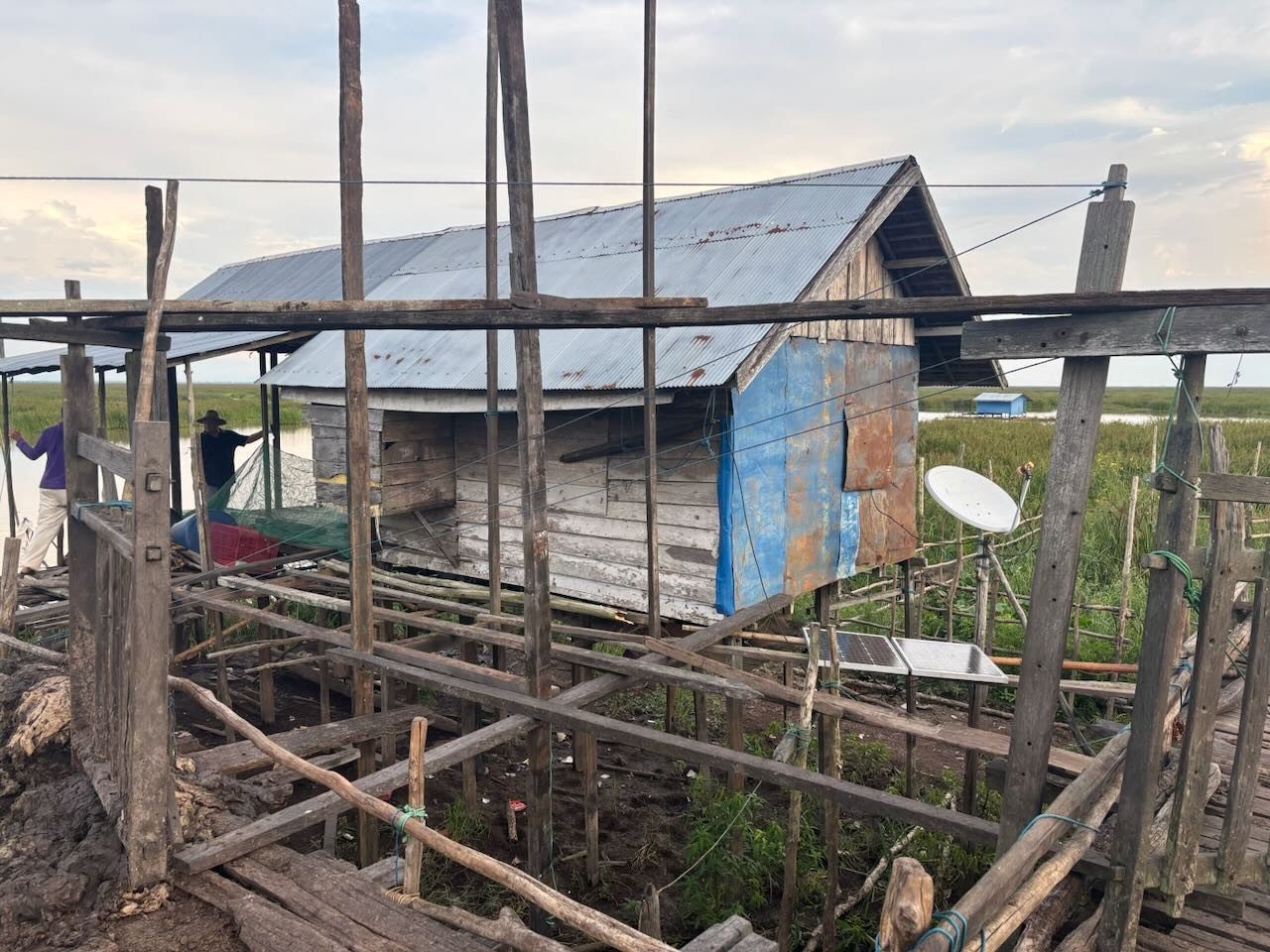
The single stockman caring for this group of swamp buffalo lives in this one room shack with solar panels and a battery for lights, a fan and a TV for the long nights. He has a small number of chickens to keep him in eggs and plenty of fish right at his doorstep.
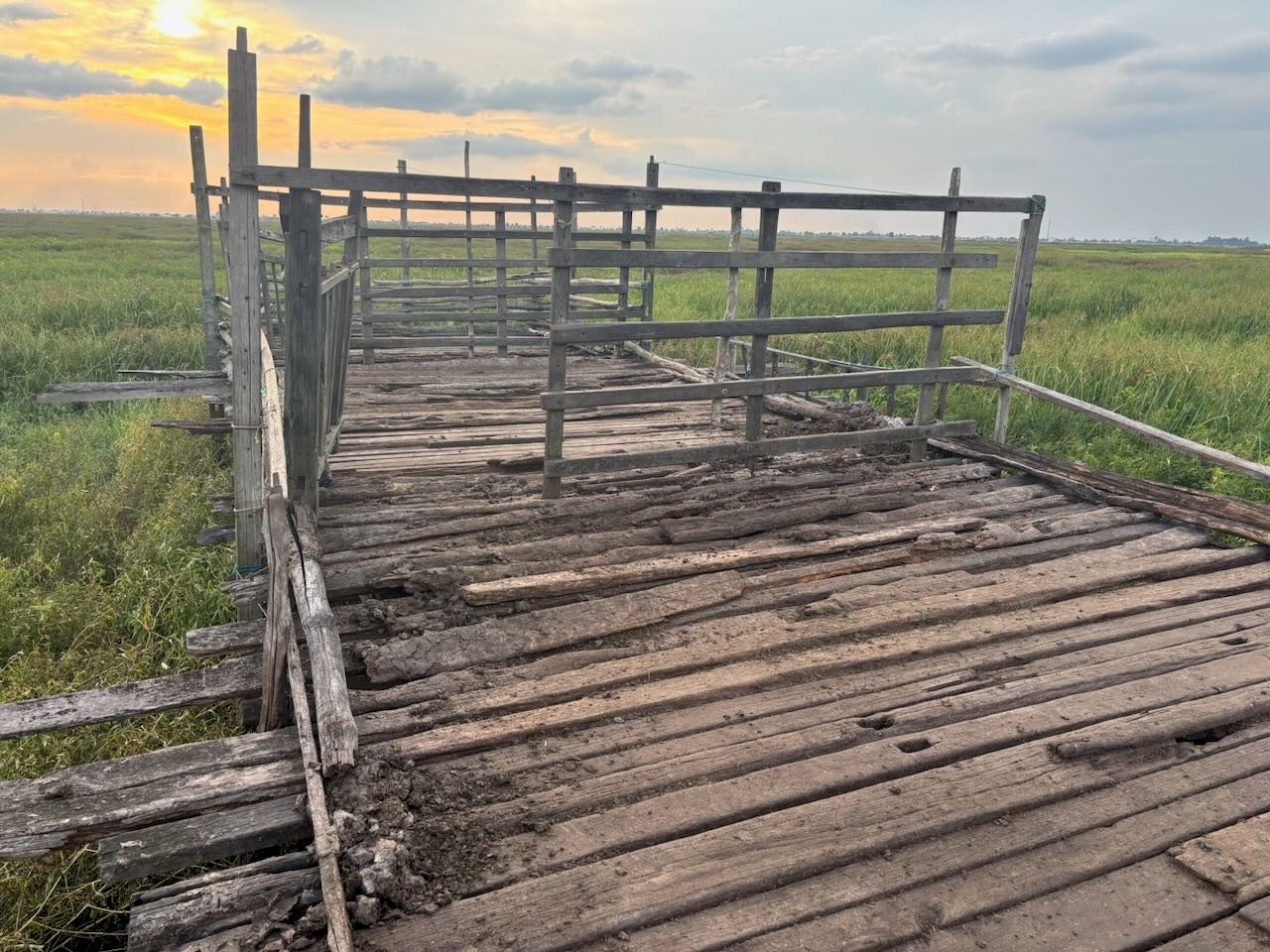
The platform is quite large with plenty of room for the 40 head of buffalo to rest for the night.
At two or three planks per trip from dry land this structure must have taken a very long time to complete.
(Notes on Video above) – I think the lead cow was slow to climb the ramp as she was able to see so many strangers around the shack. Note the stockman has spotted a young calf that has got underneath the ramp and can’t find his way out until he pushes him back out on the far side and assists him back onto the ramp to catch up with his mum.
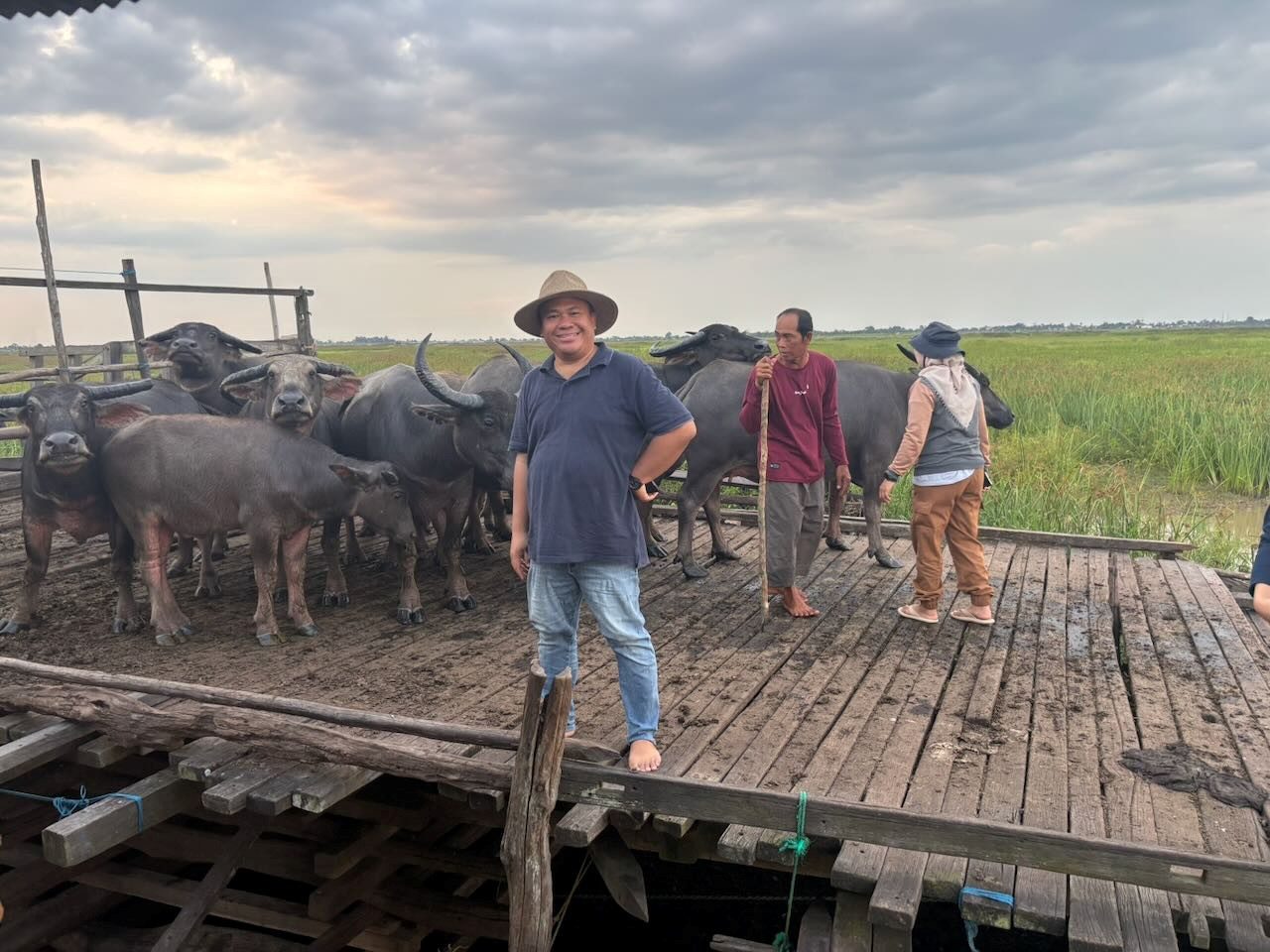
Robi Agustiar (in the hat) was kind enough to invite me to see this unique production system designed to utilize the central area of this vast swamp where no other enterprise is feasible.
The man in the red shirt is Mr Badrudin who inherited this swamp buffalo project from his father and grandfather who developed the first platforms many decades ago.
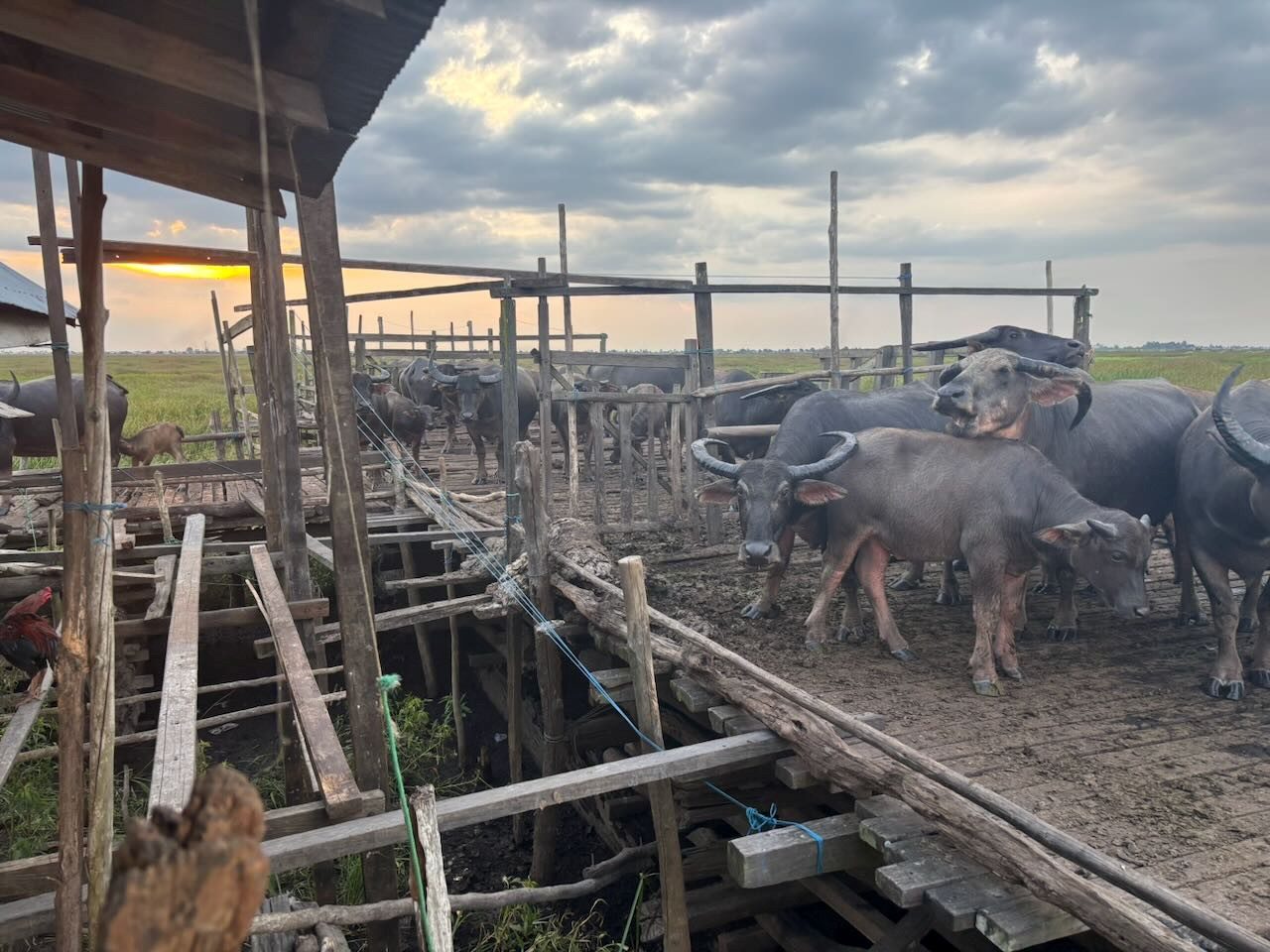
There are a number of subdivisions on the platform to allow animals to be segregated if required.
See on the left side there is a cow with a new calf that are given a separate pen.
The stockman tries to ensure that calves are born overnight on the platform then kept behind and given a few days of care for the calf to gain enough strength before its first swim out into the swamp with the rest of the herd.
Calf mortalities are high.
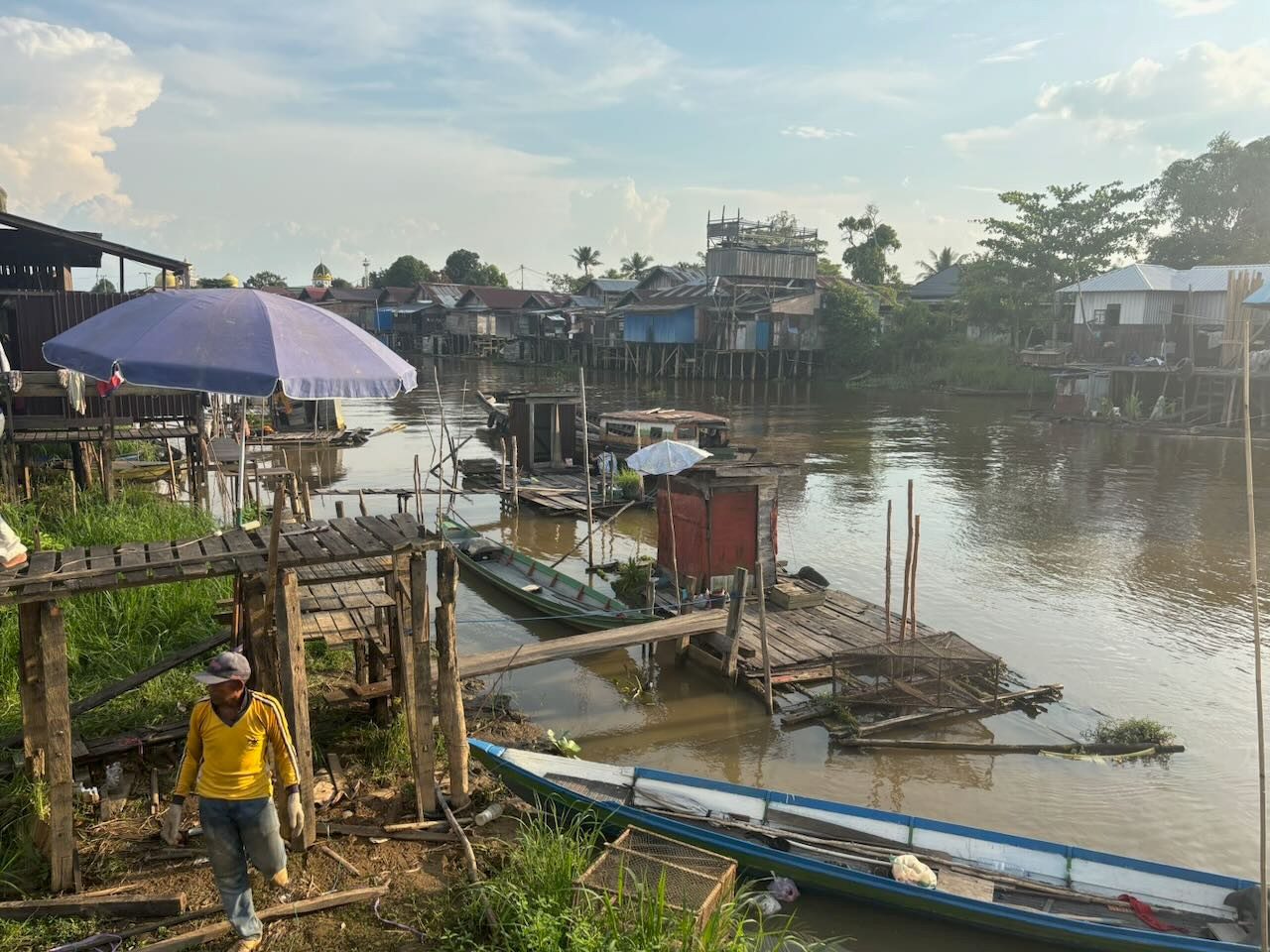
Mr Badrudin and his family live in a village on the edge of the swamp with houses built on the side of a man-made roadway built out into the swamp to improve access.
The front of each house faces onto the roadway with the rear of the dwelling extending out into the waterway with a small floating jetty for boat access.
The majority of people in this village are growing “floating rice” or vegetables with a smaller number breeding buffalo deep in the swamp.
“Floating rice” is planted into the edges of the receding swamp waters as they dry up at the end of the wet season.
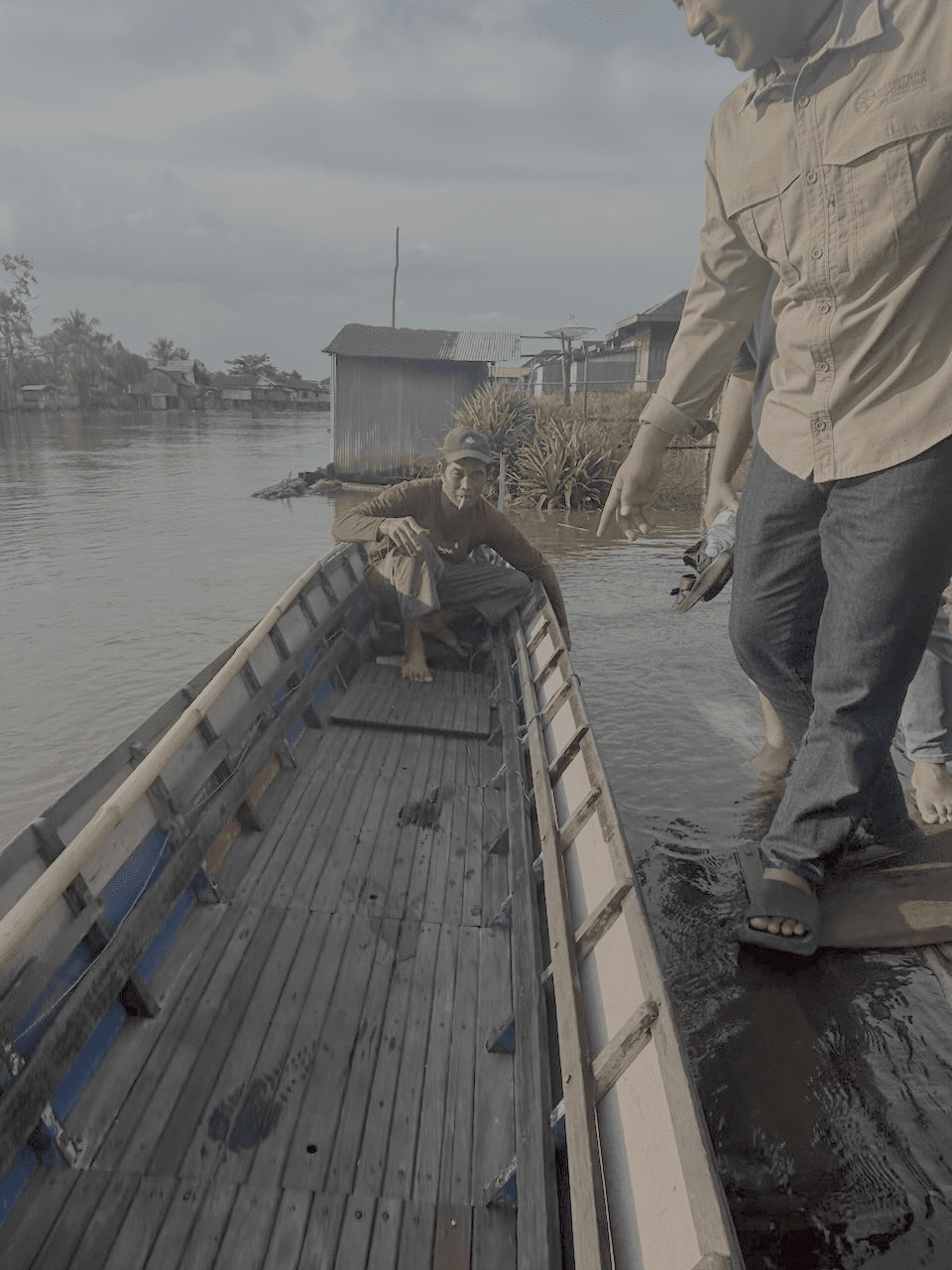
This is Mr Badrudin’s largest canoe which he used to take about 8 people out to the buffalo farm.
When I asked him how he sold animals from the farm he said that sale animals were mostly yearling males and that they were tied up and man-handled into this canoe and brought into a suitable landing point.
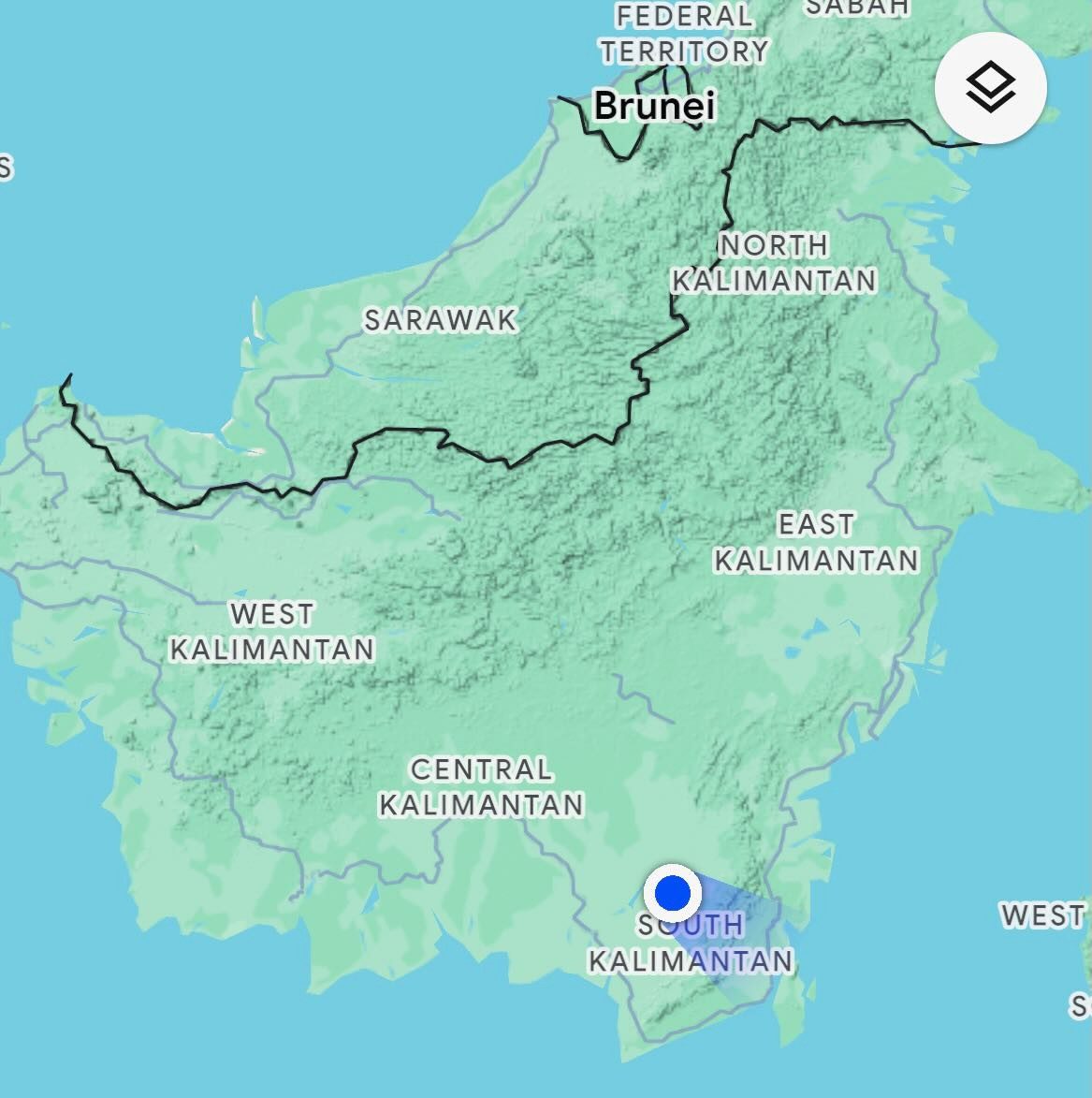
I recorded the location on my phone while we were in the swamp on the buffalo platform.
Always interesting to see how others live. Thanks Ross.
"Calf mortalities are high" - crocodiles?
The farmers tell me that there are crocodiles there but they don’t bother the buffalo. Calf deaths are mainly drowning, pneumonia and misadventure.
Very interesting read! Cheers
I have to say that wing is longer than some i have had to contend with in yarding even large mobs pf cattle. cheers ja