
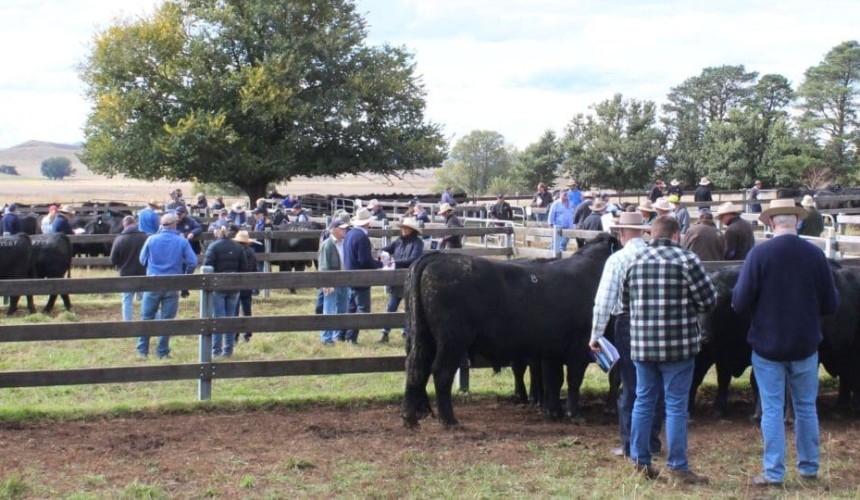
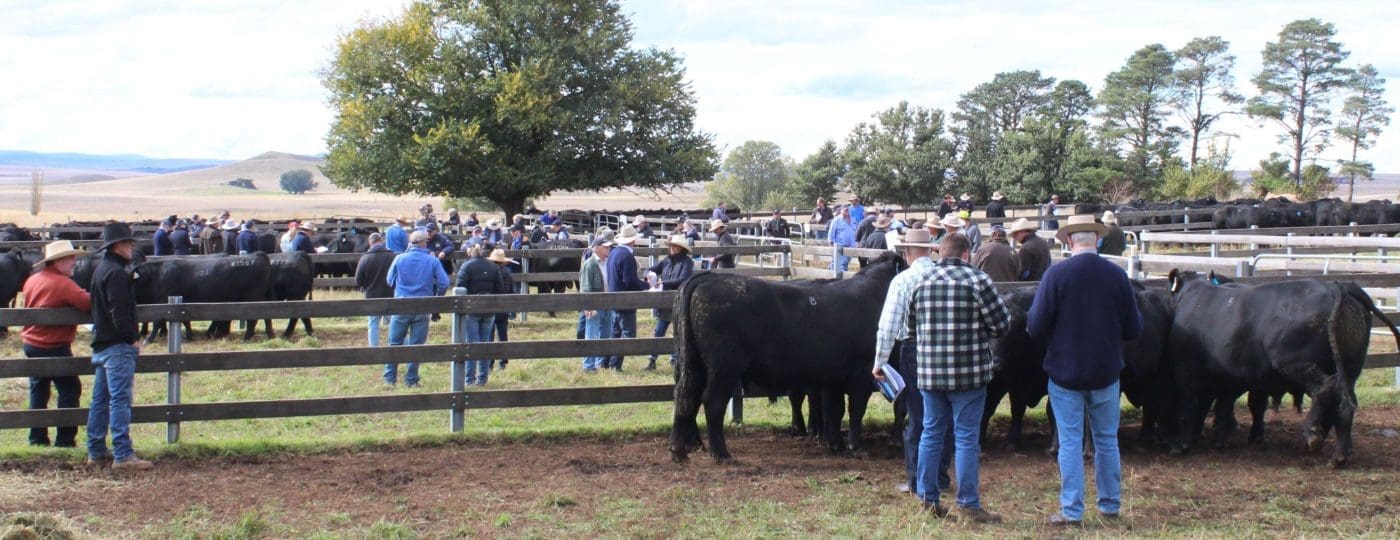
IN EVERY bull selling season, attention is frequently focussed on three key metrics. The first is generally what was the top price bull at the sale (which can be extended to what is the top price bull of the season); closely followed by what was the average price per head and lastly what were the clearance rates like. These are important metrics for many people.
It goes without saying that seedstock breeders are carefully watching as they prepare for their own sales. Equally many producers attempting to prepare budgets are also watching and attempting to gauge how strong the competition will be for their chosen sale or sires. While sale averages do provide a useful benchmark, relying on averages exclusively, particularly in preparing sale budgets can contribute to a misleading sense of value or expectation.
Since last week’s mid-season sale summary was published in Beef Central, several additional sales have been held in northern NSW and in Queensland. Again, there have been some very strong sales and high averages. However, digging into the data from the sales that have been held in the 2025 spring season illustrates that averages alone are not always the best benchmark.
From recent sale data collected across sales for breeds including as Angus, Hereford, and Charolais illustrate this point. As an example, the average sale price in 2025 has ranged from $7,686 to $17,618 across Angus studs alone, with further variation when comparing across breeds. This broad range shows that averages, can conceal the variability and stratification within a sale.
So far this Spring there has been over 100 sales, and many bulls have been clustered around an $11,000–$14,000 price point, but there are numerous examples well below and well above this mark. These high and low outliers pull the mean away from what many would consider the practical mid-market range.
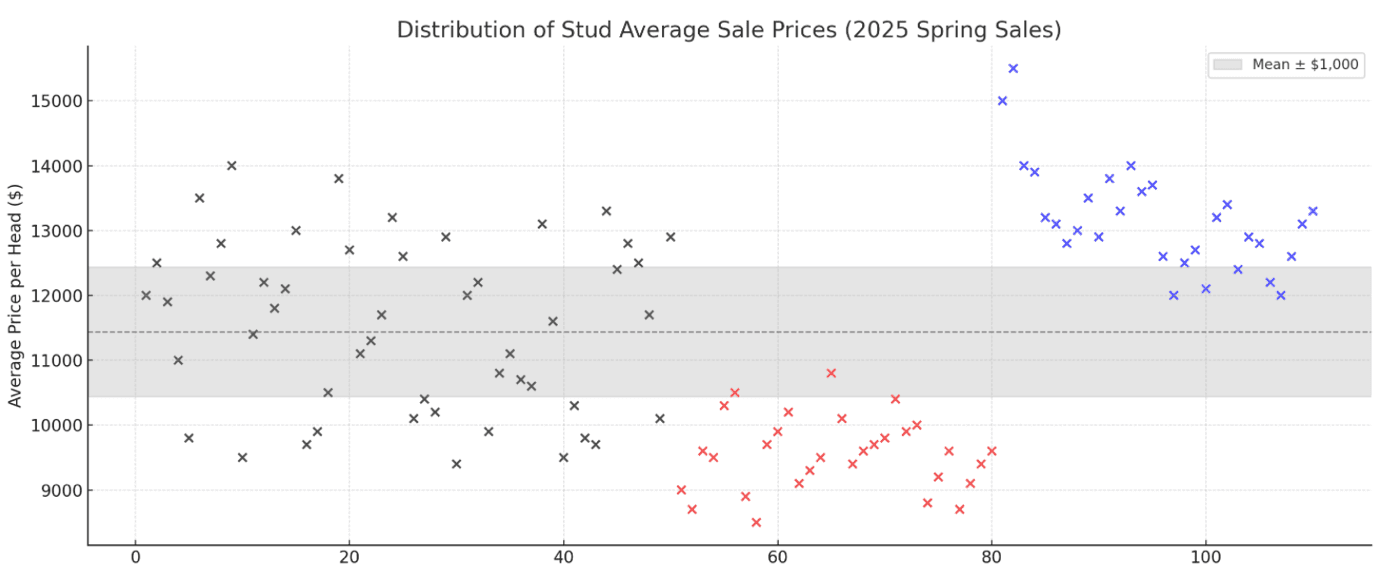
The data from these sales (presented in Figure 1) illustrates the variability that has occurred so far, not only between breeds, but within breeds as well. Each point on the graph represents one stud’s average sale price, colour-coded by breed—black for Angus, red for Hereford, and blue for Charolais. The grey shaded band of the graph marks $1,000 above and below the overall mean average sale price (which was $11,500), showing a ±$1,000 range from $10,500 to $12,500).
The visual spread is instructive. Although several studs are grouped near the average, a significant portion sit well outside the $2000 band surrounding it. These outliers, particularly the high-performing studs at the upper end of the market, elevate the average without reflecting what the ‘middle market’ buyer might realistically encounter or afford.
In practice this can create a budgeting dilemma for producers. If a producer plans to buy two bulls and allocates $26,000 based on a general $13,000 average, they may face one of two situations: The first may be that bulls suited to their breeding objective and physical requirements are fetching well over $14,000, forcing them to compromise on quality or take home one bull instead of two.
Alternatively, the producer may attend a different sale and find that bulls of their preferred quality and specifications are trading at $9,000–$11,000. These bulls still meet the producers’ expectations for genetic merit and physical suitability, even if they don’t meet the current average value.
In both cases, budgeting solely on the average offers limited guidance and may result in either over- or under-allocation of funds. This can be particularly risky for producers who rely on securing multiple bulls in each season or at a particular sale, as well as for those who are operating under tight cashflow constraints.
This is not to say that producers should not consider sale or breed averages when developing their budgets. However, it may be useful to again reflect on what role the bull or bulls will be playing in the operation and then building a more robust budget using price tiers accordingly. As an example, in preference to fixing a buffet on a single average figure, the following tiers could offer a more realistic budget framework.
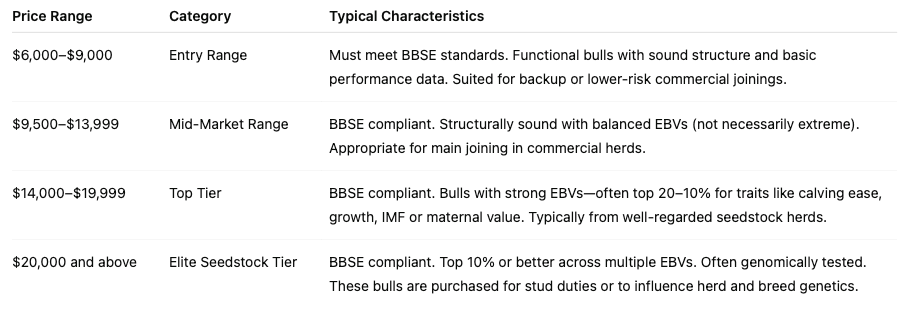
From a budgeting standpoint, this approach provides flexibility. A producer needing three bulls may aim to purchase one from the top tier, one mid-range, and one from the entry range, adjusting on sale day depending on availability and competition. Alternatively, they may determine that two higher-end bulls with broader impact over the herd is a better investment than three from the lower tier.
Importantly, this strategy aligns budgeting more closely with breeding objectives and operational goals, rather than solely with market benchmarks. It also helps guard against emotional decisions on sale day, where competition and momentum often drive prices above expectations.
With many sales still to come, producers who are still setting budgets should try to remember to use averages to inform an approach but, shouldn’t by the only directive. The variance within and between sales is too great to build a buying strategy around one number. An approach with structured tiered budgeting, informed by sale trends and matched to a specific program’s needs, offers a more resilient and realistic approach to purchasing bulls.
Alastair Rayner is Principal of RaynerAg and an Extension & Engagement Consultant with the Agricultural Business Research Institute (ABRI). He has over 28 years’ experience advising beef producers and graziers across Australia. Alastair can be contacted here or through his website: www.raynerag.com.au
Couple of points to consider on this topic,Al
Former Australian Brahman Breeders Assn GM John Croaker used to advocate for the use of mean average of prices from a sale - effectively the middle price in a sequence from top to bottom - as a good guide to prices paid.
Also popular in the past was a formula that removed the top one or two prices (bull breeders selling to bull breeders) and averaging the rest. That gave a better indication of what commercial herd bull buyers were prepared to pay.