
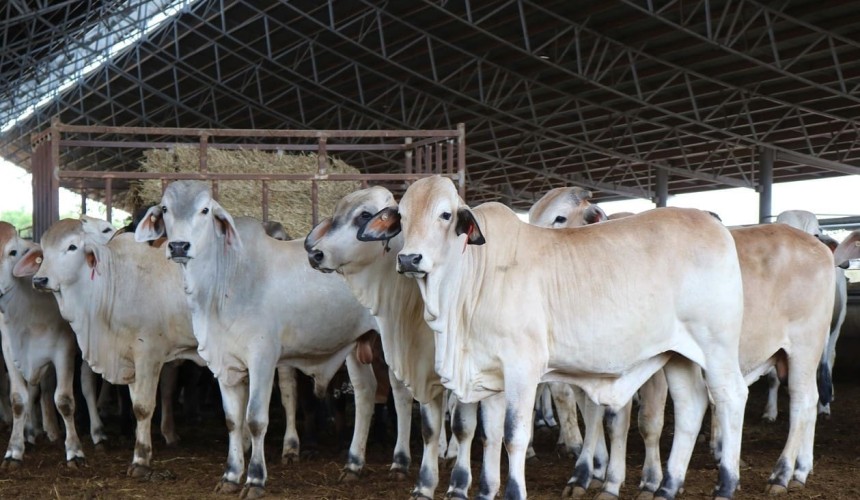
Offered rates for export cattle parked on northern flood plains for November shipping from Darwin have risen sharply in the past week.
The rise is being driven as exporters seek to entice vendors to sell earlier than they might normally prefer in order to meet 2026 Ramadan/Lebaran shipping deadlines.
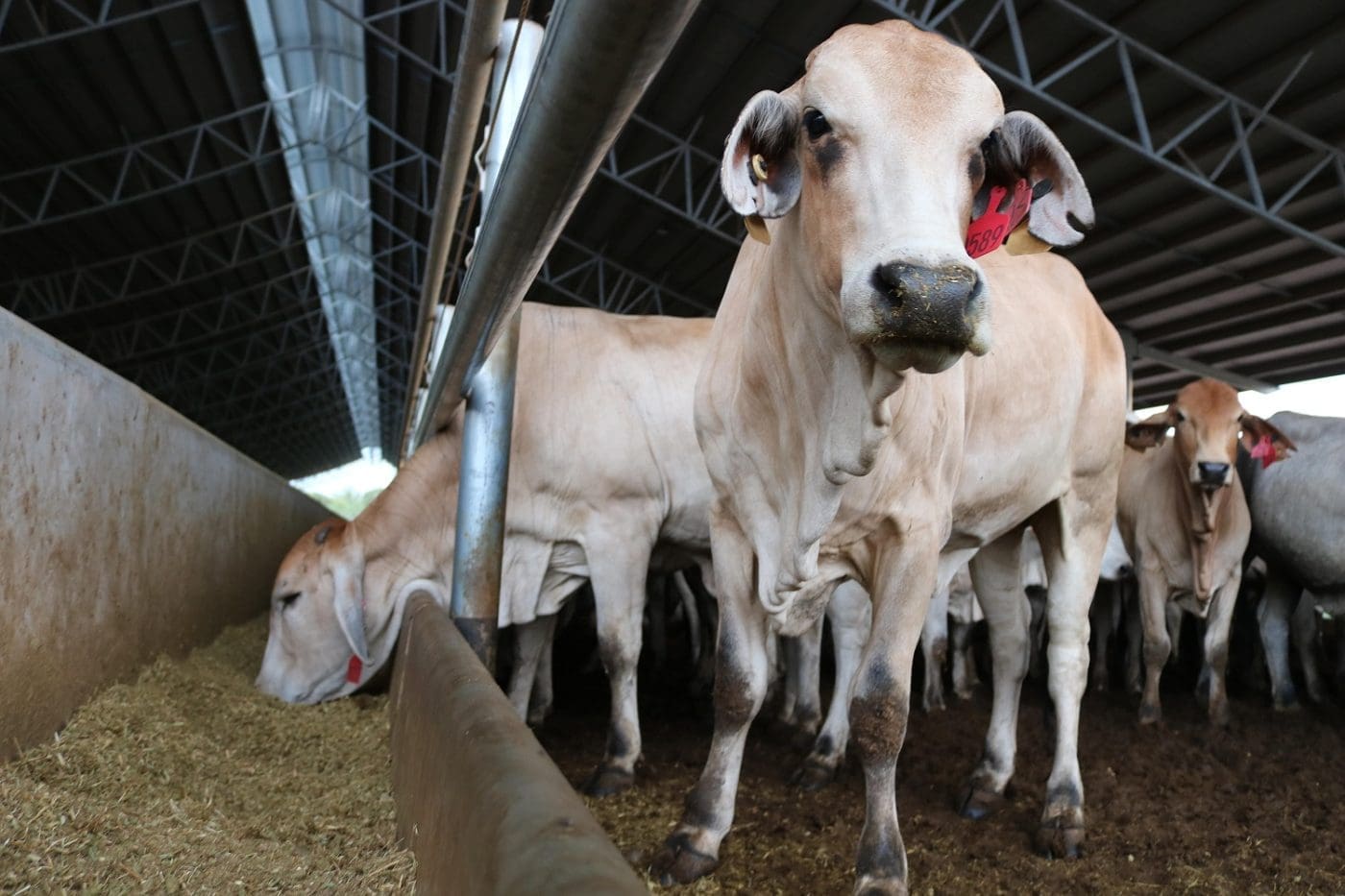
Australian cattle on feed at Berrimah.
About 50,000 cattle are moved onto northern flood plain properties near Darwin each year in order to supply shipments for Indonesian feedlots ahead of the peak Ramadan/Lebaran demand period.
The timing of the annual Ramadan/Lebaran period shifts by about 11-12 days each year, with the dates in Indonesia determined by the Indonesian Government based on lunar observations.
Next year the month-long daily fasting period of Ramadan will take place between February 16 to March 18, followed by a 10 day period of feasting, gifting and sharing, referred to in Indonesia as Lebaran.
As Paul McCormick from Elders explained to Beef Central from the Charters Towers cattle sale this morning, counting back by 100-120 days from the start of Ramadan identifies the date each year when demand from Indonesian feedlots for Australian cattle escalates, as importers move to ensure they have full supply of cattle on hand and fed and ready for processing in time for the festival period.
This year that date falls around the middle of November, which is a slightly awkward point on the northern cattle supply calendar.
 “That is about a month earlier than the floodplain operators ideally want to be getting their cattle off,” Mr McCormick explained.
“To maximise your weight gain, those cattle might have gone to the flood plain in May, June or July, with an expectation in a normal year of shipping out of there in the wet – so the middle of December or slightly into January – in a normal year.
“But we’re just in that odd space where there is going to be that pinch point of demand in November this year.
“So you’ve got to try to entice people to say, ‘well look, we know you might be tearing up 20kg or there abouts, maybe more, but what is going to entice you to crack the pen open early?'”
Market signals suggest the answer to that question is higher prices.
From conversations with a small number of exporters*, livestock agents and northern cattle producers, Beef Central was told that prices of $4.30-$4.35/kg (ex Darwin Port) have already been offered to producers with floodplain cattle for delivery in October. One large-scale producer told Beef Central he was aware of cattle contracted as high as at $4.50 for November/December delivery.
“Queensland feeders coming into Darwin at $4.40 with some broader spec feeder cattle at $4.20 to $4.30/kg,” was another perspective on pricing this week.
One exporter noted that demand in Indonesia is strong again with Ramadan/Lebaran to take place in February/March. “If exporters don’t get the limited cattle from the floodplain, they will have great difficulty filling ships,” he said, noting that the market for cattle in Queensland is also strong.”
* Additional exporter comment: Since publishing this article a WA-based exporter has provided his perspective to Beef Central stating comments in this article “dont’ stack up” and he would “be happy to contract Indo feeders for delivery mid December (with the extra 20kg) at 25 cents less than prices suggested”. We aknowledge that at any given time in a market without a clear formal pricing indicator there will be different pricing levels paid by different parties for different reasons, the full range of which are difficult to capture in a single report, but we also add that in reporting live export prices we check and cross-check price perspectives with multiple trusted and experienced sources at different parts of the trade to provide a reliable picture before publishing, as was done in the preparation of this report.
Of the cattle on the flood plain, the vast majority are Brahmans which should be in the prime 330-340kg range for Indonesia by the time the majority are shipped in November and December.
Mr McCormick said he believed the number of cattle available on the flood plain this year was at about normal levels
He said the market at Charters Towers today for a large yarding of 3700 head was slightly softer but that was also quality related. The small selection of 320-330kg shippable Brahman feeder steers available were making in the high 370c/kg range, while five pens weighing 340kg made just over 390c.