
SE Asia Report: Strong first half for indonesia, but regional trade still finding its pace
139th Edition: August 2025
Key Points:
- New room-temperature mRNA FMD vaccine could remove cold chain barriers
- Strong signal from Indonesia: more halal beef needed for school meals program
- Dairy herd target of one million by 2029 well above current import pace
- Vietnam’s major pork firms grow despite ASF, beef sector still investing in scaling up
Regional Trends and Overview
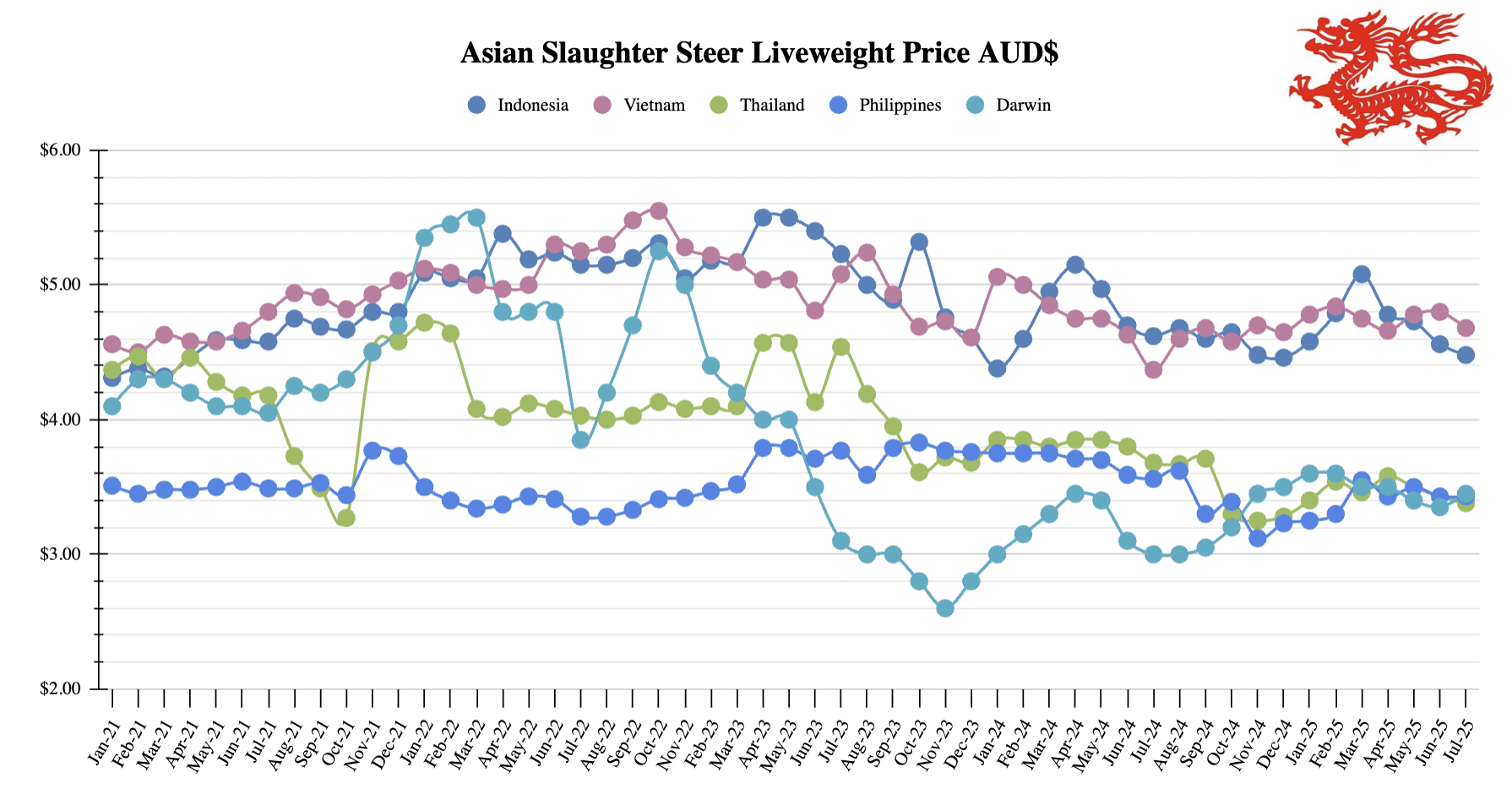
Regional Price Graph
New Vaccine Offers Hope for Regional Disease Control and Animal Welfare
The announcement of a world-first biodegradable mRNA vaccine for FMD is one of the more significant biosecurity developments we’ve seen in years—not just for Australia, but for our near neighbours in Indonesia and Vietnam, where both FMD and LSD have left a lasting mark.
As Ross Ainsworth has pointed out in Beef Central recently, the risk to Australia from even a single infected animal is still very real, with ABARES estimating the economic fallout from an outbreak at up to $80 billion.
What stands out to me about this vaccine is its storage profile—it can be kept at standard refrigeration and even at room temperature for a month.
That’s a big deal in countries like Indonesia, where cold chain bottlenecks have probably meant more than a few vaccines over the past couple of years didn’t work as intended.
 If this technology delivers on its promise, it could remove one of the biggest practical hurdles to effective disease control in the region. Beyond the trade and biosecurity angles, the potential animal welfare gains are enormous.
FMD and LSD cause production loss and pain, and a more reliable, accessible vaccine would be a genuine step forward.
An important limitation for its use in our neighbouring countries will be the ability to make the vaccine available.
I am going to place any scepticism on hold for this article and assume that the development and approvals of the vaccine will continue to progress and this isn’t spin.
From 2022 Australia promised to donate 4 million doses of FMD, it is understood that some of these expired or were not able to be effectively distributed. From my own experience in Indonesia and other countries in Southeast Asia (and Australia) consistent and correct use of many veterinary products, even when they are known to be beneficial, remains a challenge due to fragmentation of industry, limited veterinary and paraveterinary cover, knowledge, and just general poor compliance by farmers.
The other challenge will sit with the Government and Tiba BioTech who need to determine if this is something they have produced for Australia’s protection and will sit on the shelf, or something that we communalise for the benefit the region.
Indonesia: Slaughter Steers $4.48 AUD per kg live weight (IDR 10,632 = $1 AUD)
Prices
Since July, live cattle prices across Indonesia have eased slightly, with Java continuing to hold a modest premium over other regions. In Lampung, bulls and steers are now trading between IDR 47,000–48,000/kg (AUD 4.42–4.51/kg), while heifers remain steady at IDR 47,000–48,000/kg.
On Java, bulls and steers are fetching IDR 49,000–51,000/kg (AUD 4.61–4.80/kg), and heifers are holding at IDR 49,000–50,000/kg (AUD 4.61–4.70/kg).
The firm pricing on Java still reflects stronger local demand and possibly tighter supply in central markets. Overall, bulls and steers across both regions have softened by around IDR 2,000/kg compared last month.
Industry and Trade Developments
Indonesia’s government continues to advance its ambitious food security and livestock self-sufficiency agenda, with progress visible on both social and commercial fronts.
Halal Trade Talks Highlight Australia’s Expanding Role
At a bilateral meeting on July 10 at the Indonesian Consulate General in Melbourne, officials from Jakarta put their cards on the table telling their Australian counterparts Indonesia will need up to 650,000 metric tons of halal meat each year to meet the demands of the Free Nutritious Meals (MBG) program.
Australia currently supplies around 140,000 tons, so the gap is both clear and substantial. To me, this reads as an open invitation for Australia to take on a bigger role in Indonesia’s protein supply chain.
The discussions covered licensing more Australian slaughterhouses and dairy plants, introducing a single halal label for simpler clearance, and reinforcing Australia’s position as a trusted source of welfare-compliant product.
The subtext is obvious—Indonesia sees Australia as central to delivering the volume and quality of beef it needs, and the scope for growth here is significant.
Long-Term Opportunity for Dairy and Live Cattle Trade
The Indonesian government’s release of the 2025–2029 Fresh Milk Supply Road Map confirms what many in the trade have been expecting. Australia’s dairy and live cattle industries are set to be at the centre of Jakarta’s food security and public nutrition plans for the next five years.
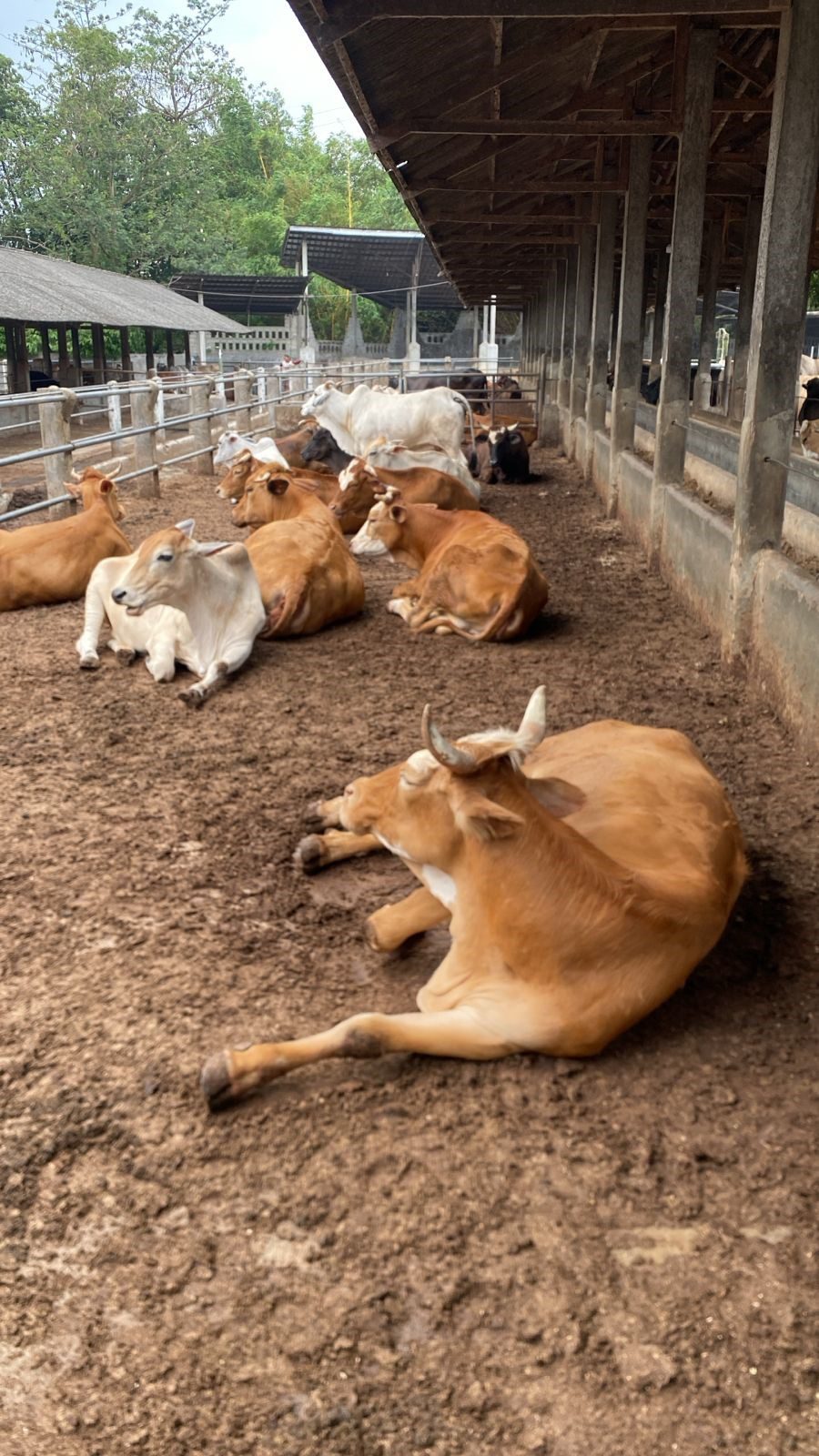 The target is ambitious: one million dairy cows by 2029, aimed at boosting milk production and supporting the broader National Milk and Meat Acceleration Program to cut reliance on imported milk and beef.
That demand is being reinforced by the rapid expansion of the Free Nutritious Meals Programme (MBG), which reached 7.1 million recipients in July, up from 5.58 million in June, and is driving additional demand for domestic poultry, dairy, and vegetables.
Progress toward the million-head goal has been modest. By July 2025, Indonesia had imported 25,097 breeding cattle—mainly from Australia—well above the historical average of around 6,000 a year, but still far short of this year’s target of 150,000–200,000 head.
Whether the million-head figure is achievable is a little more complicated. It is one thing for government to set a target, but without putting money on the table for commercial companies to make it happen, the figure is divorced from market reality. Australia’s entire dairy herd is only about 1.44 million cows, so even a fraction of Indonesia’s target coming from here would represent a significant draw on our herd and a clear win for our dairy industry. But until there is a viable commercial model to deliver the scale, the roadmap remains more a statement of intent than a guarantee of volumes.
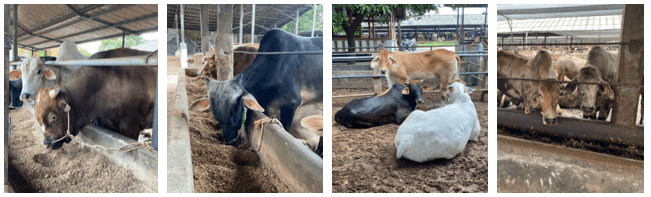
Photos: Local (left) and Australian cattle on feed in Indonesia
New Health Pact Flags Biosecurity Collaboration Potential
The newly announced KITA SEHAT program is a $100 million, eight-year partnership between Indonesia and Australia aimed at health sector development, with part of its scope dedicated to animal health capacity and workforce training.
Specific details are yet to be released, but the inclusion of animal health is notable given the ongoing regional risk from Lumpy Skin Disease (LSD) and Foot and Mouth Disease (FMD).
Biosecurity cooperation remains a critical factor in the cattle trade between the two countries, and the program’s progress will be closely monitored by industry stakeholders as implementation plans take shape.
Vietnam: Slaughter Steers $4.68 AUD per kg live weight (VND 17,020 = $1 AUD)
Industry and Trade Developments
Despite the persistent threat of African Swine Fever (ASF), Vietnam’s pork sector posted unexpectedly strong commercial results in the first half of 2025, with leading players like Dabaco, BAF, and Masan delivering standout financial performances.
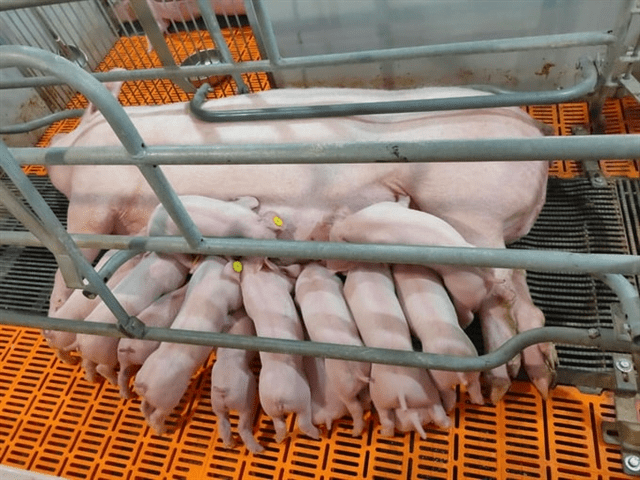 That sort of resilience under ongoing disease pressure tells me two things: first, the larger, integrated operators are getting much better at managing biosecurity and production risk; and second, we’re likely to see the pork share of the protein market continue to grow.
When pork supply stays relatively steady, it takes some of the heat out of substitution demand for beef and chicken—helping to keep beef and cattle prices on a more even keel which reduces volatility, but also creates some reduction in demand.
The Japanese–Vietnamese joint venture between TH Milk and Sojitz continues to build a refrigerated beef processing plant alongside their dairy bull offtake and dedicated cattle farm.
Vietnamese processing capability has been almost entirely in the hands of small family-run local abattoirs. Beef consumption is rising at around 8% a year with imported beef largely filling the significant gap to local production (including Australian imported cattle).
With shift in access, use, and acceptance of processed and vacuum packed product increasing, it’s no surprise that larger meat companies like C.P. Group, Masan MEATLife, and Vinh Hoan are edging further into the space.
Forecasts of 15–20% annual beef market growth to 2029 are likely over optimistic, but if even part of that materialises, the shift toward scale and branding is inevitable. For Australian beef exporters, the real opportunity will be in finding the right partners as this market transitions.
For cattle exporters it will be a decision to either support and invest in the local processing sector to mature, or remain in the traditional market beef supply chain and accept the slow decline in demand.
Philippines: Slaughter Steers $3.43 AUD per kg Live weight (₱37 = $1 AUD)
Prices
Wet market beef prices remain steady at around ₱390/kg ($10.54 AUD), though the AUD equivalent has softened slightly from $10.60 AUD to $10.54 AUD due to exchange rate movement. Supermarket rates have also held at ₱440/kg ($11.89AUD), with the AUD value easing slightly from $11.96 AUD to $11.89 AUD.
Slaughter steer prices have edged up slightly to ₱127/kg ($3.43 AUD) live weight, with the AUD equivalent rising marginally from $3.41 to $3.43.
Pork carcass remains at ₱240/kg ($6.49 AUD), unchanged from last month in both peso and AUD terms.
Broiler prices also remain unchanged from last month at ₱170/kg ($4.59 AUD).
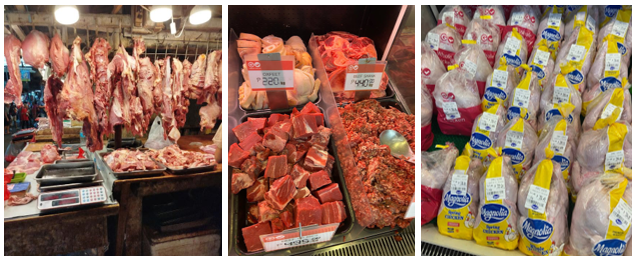
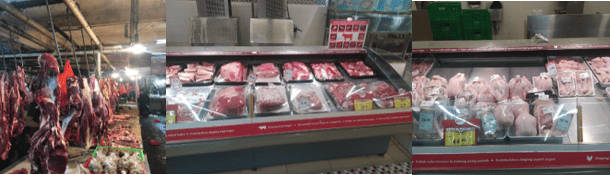
Photos: Local meat and livestock sales in Mindanao
Industry and Trade Developments
Cebu Province in the central Philippines is pressing ahead with plans to bring back large-scale cattle production, with four northern LGUs set to pilot a beef-focused agri-development program. The closure of a major sugar mill has freed up more than 10,000 hectares of idle land in Bogo City, Medellin, Daanbantayan, and San Remigio, now earmarked for integrated grazing and feed production. It’s part of Cebu’s broader five-year food security strategy, which also targets growth in aquaculture and crop diversification.
The project area is estimated to have the capacity to support up to 60,000 head a year—almost four times Cebu’s current beef consumption of 16,000 head. Plans include a branded beef program using Wagyu genetics, confined raising systems, silage production, and intensive producer training in breeding and feeding. If realised, the project could position Cebu as a premium beef supplier while delivering tangible rural development benefits. The challenge will be in translating the vision into commercially viable operations.
Australia: Feeder Steers Darwin $3.45
As reported by Beef Central, Indonesian buyers are showing renewed interest in medium-weight feeder steers and it’s not hard to see why.
By our calculations, the numbers are stacking up well and there’s a viable straight trade margin available for Indonesian importers on the right lines of cattle, unlike during 2021 and 2022, when high Australian cattle prices meant that profitability hinged almost entirely on feed margins post-arrival.
The price differential with Indonesia is actually wider now than it was during the big export year of 2019.
Yes, rising feed costs and freight still eat into that margin, but the opportunity is there, especially for operators willing to trial composite breeds or shift away from traditional sales models.
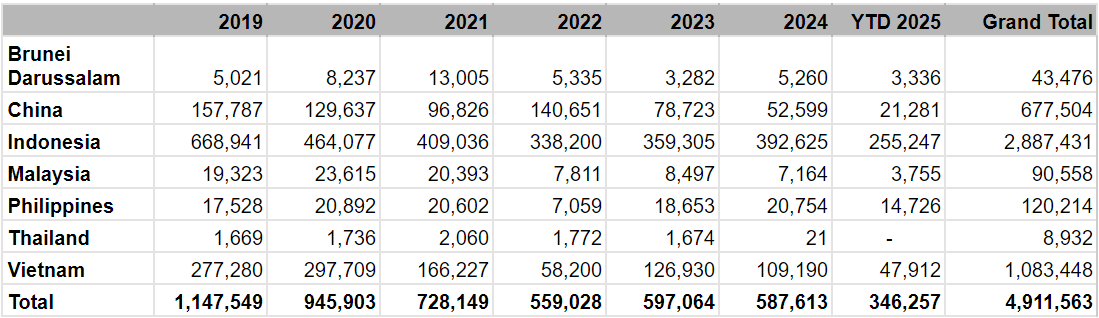
Year 2025 cattle exports – comparison across SE Asian markets
Source: DAFF website