
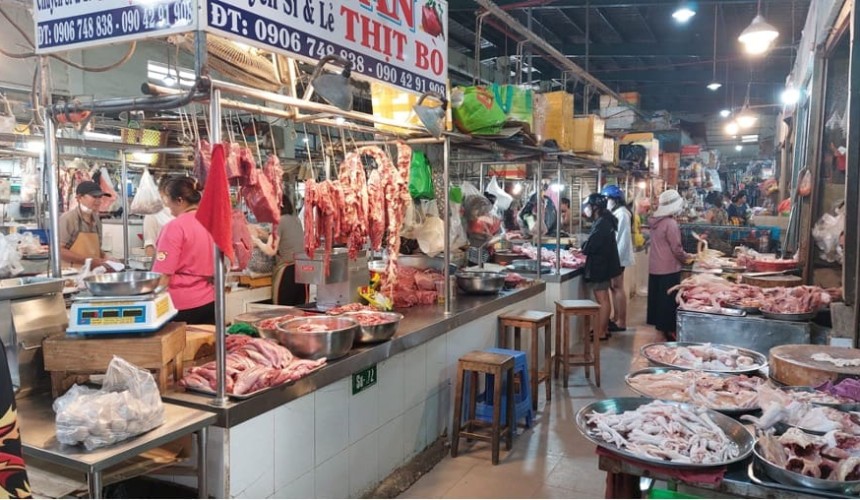
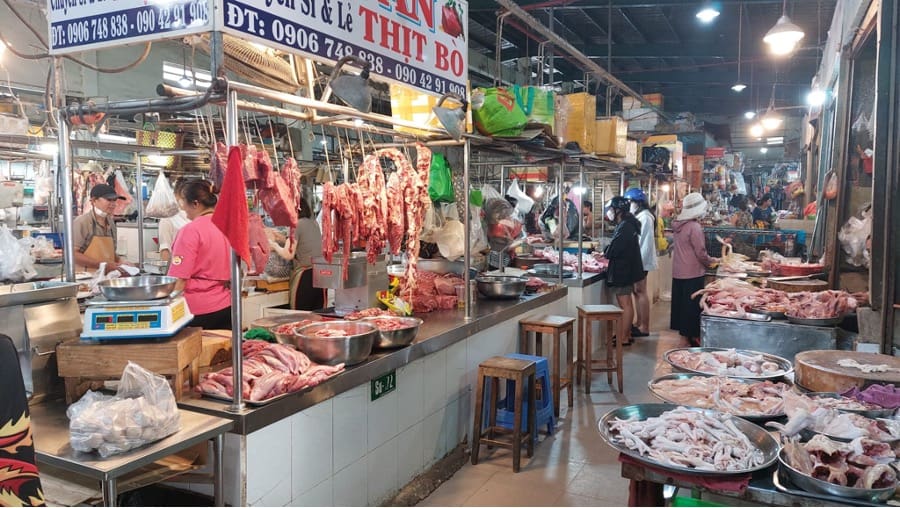
A wet market in Vietnam. Picture courtesy of Michael Patching
ONE view that regularly emerges in debates about the future of the livestock export trade is that as economies in Asia and the Middle East grow, traditional wet markets will eventually give way to modern supermarkets and international retail chains.
But according to analysis by Meat & Livestock Australia’s General Manager International Markets Andrew Cox, that does not reflect the reality of what actually occurs in markets.
 “I want to, from my perspective, potentially dispel a widely held belief, which I hear all the time,” Mr Cox told the 2025 LIVEXchange conference in Perth.
“I live in Singapore, and it gets bandied about quite easily that, as markets mature In Southeast Asia or in the Middle East, then wet markets will naturally somehow cease to exist.
“But from my experience, that couldn’t be further from the truth.”
He said anyone who had travelled around Asia would know that “wet markets thrive in all kinds of markets, no matter what stage of development they’re at because of cultural and religious reasons”.
“So I would really challenge this thought that as markets grow and develop, wet markets will disappear in favour of modern retail and supermarkets.
“Singapore is a good example, because Singapore is an extremely wealthy small island in Southeast Asia, but it developed from pretty humble beginnings, and wet markets were definitely part of that from day dot.”
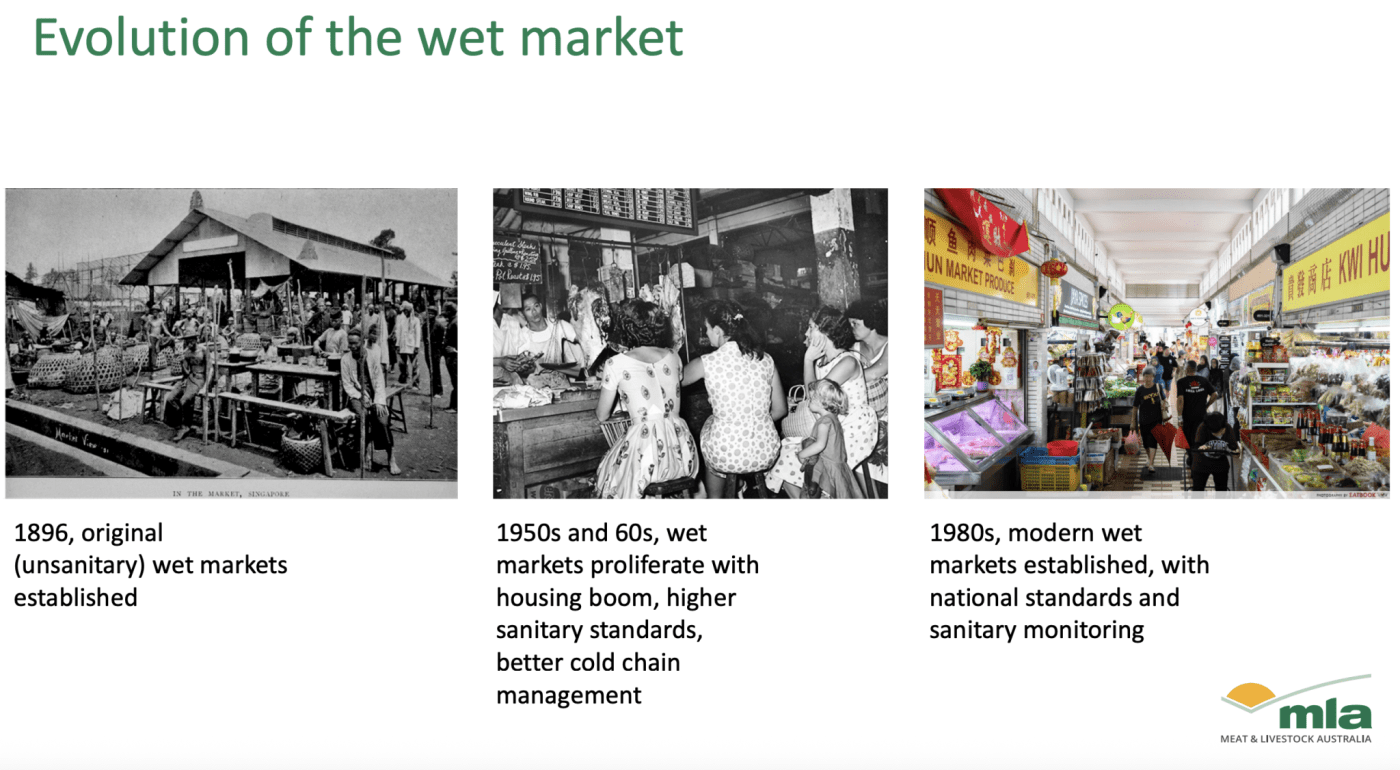
He showed a slide demonstrating that rudimentary wet markets in Singapore were established near docks or in street stalls, with poor sanitary standards.
Later, with the population boom post-war, modern wet markets were established and proliferated across the island. With that came national standards and sanitary monitoring by local authorities, which also resulted in consumers adopting habits of convenience that were aligned with their culture and their need for fresh food.
“Since then, of course, in Singapore and many other countries, these wet markets have come under severe pressure from modern international supermarket chains, but they have not disappeared.
“In fact, they’ve more or less held their own, much the same as the butcher channel in Australia, which are like mini wet markets in a way.”
He also noted that wet markets operators were adapting to survive.
“They haven’t thrived, necessarily, but they’ve survived because of their ingenuity and their ability to provide something different.
“So today, Singapore, a very small island, has over 100 wet markets, and the stall holders are probably not what they don’t look necessarily like they used to.
“They’re embracing online sales techniques, Tiktok, Instagram videos, specials, and they’re staying relevant to today’s consumer.
“So I think that same situation can apply to many other wealthier Asian countries.
“I lived in Japan for some time. People still shop every day for fresh produce in wet markets in Japan and Korea, Hong Kong, Taiwan and Malaysia, the so-called wealthier countries of Asia.
“So there’s little to no evidence, from my point of view, that economic growth will threaten the existence of wet markets, and therefore the key channel for live cattle to Indonesia, Vietnam and the Philippines.”
Middle East moving away from live animals imports is another enduring myth
Another point that has regularly been made to justify the Federal Government’s phase out of live sheep exports from Australia was that as Middle Eastern markets evolve, they will no longer want live animal imports, and will be happy to take boxed meat imports instead.
This did also not stand up to evidence-based scrutinty.
“It is often assumed that Middle Eastern markets are very rapidly evolving from live sheep markets to boxed meat markets with the development of sophisticated and modern retail chains,” Mr Cox said.
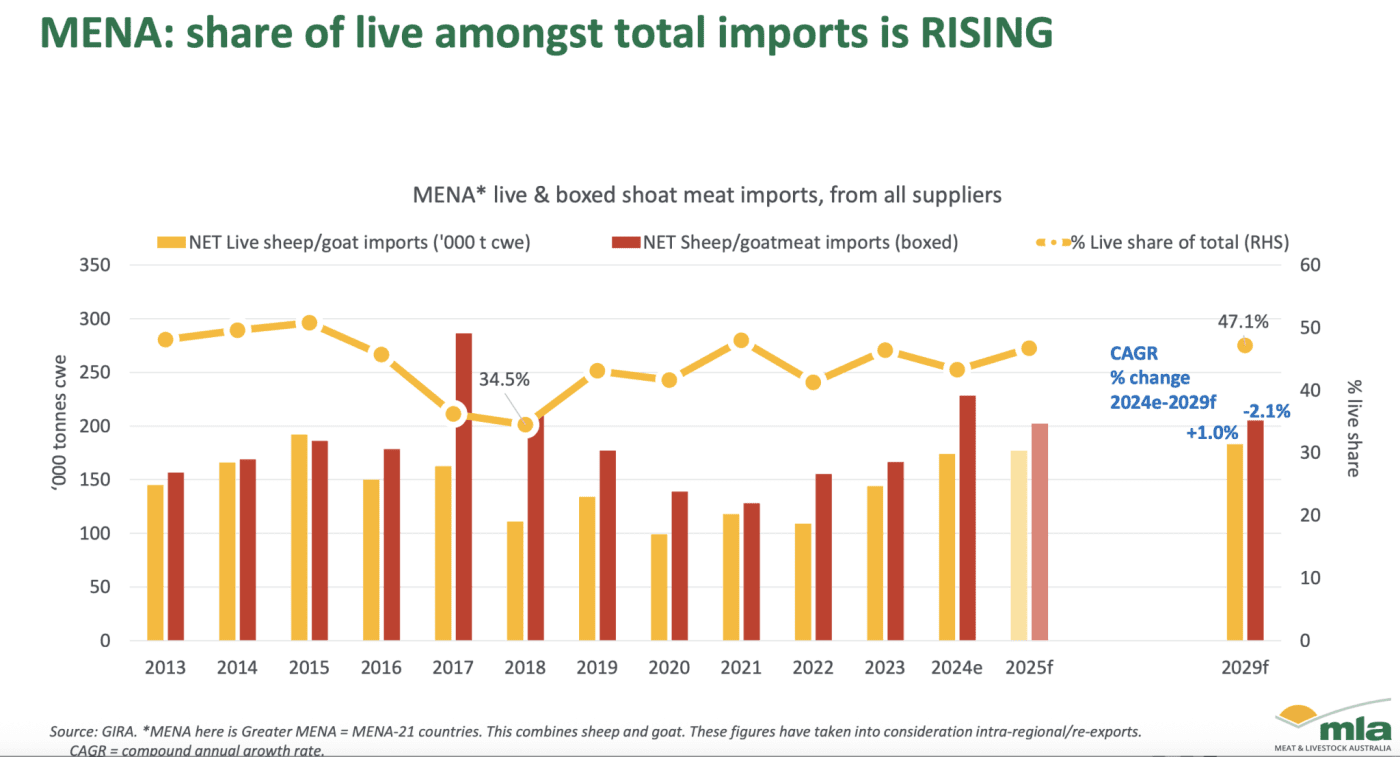
“The percentage of ovine imports to the Middle East that are boxed versus live has remained steady between 40 and 50 percent for the last 15 years.”
“And in fact it has actually increased slightly since 2018, so I think the sort of factoid that the Middle East doesn’t want live animals is not correct. ”
“What has happened, though, is that Australia’s share of sheep livestock imports to the Middle East has plunged, and we’ve been replaced in the last 15 years by sheep from elsewhere.”
Wet markets survive because they are government owned and not profit driven. There is a small fee to rent the kiosk from the local government only, and almost no other services so no extra costs. Adding air conditioning and super clean floors etc.. just adds costs.
The day the supermarket is cheaper will see the demise of the traditional markets.
Yes there is a culture attached to it.. but it's mostly a price thing.
Well noted Mr Slaney