
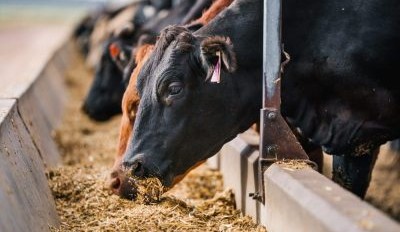
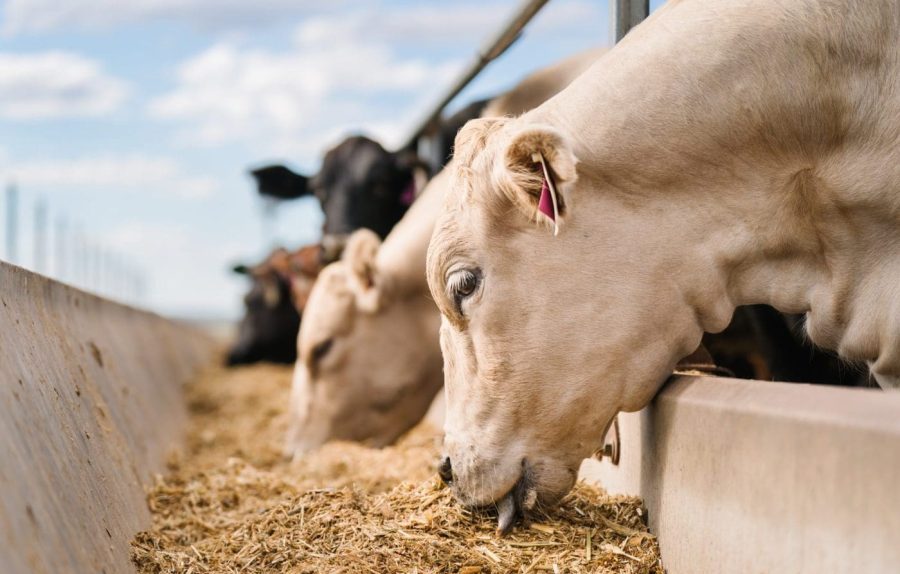
A RECENT Meat & Livestock Australia (MLA) and Australian Lot Feeders Association (ALFA) funded project has investigated whether the use of Bovine appeasing substance improved the production and health of beef cattle.
Through the evaluation of data from scientific publications, Associate Professor Ian Lean and Dr Helen Golder, lead researchers for Bovine appeasing substance: A meta-analysis of the effects on production, health and stress indicators, evaluated whether there was improvement on production and health in addition to lower stress levels of cattle treated with the substance.
 “There was enough data to undertake the meta-analysis to inform whether there are potential benefits of this product and to advise where more research is needed in order to determine statistical significance that the benefits are real.
Meta-analysis provides a larger dataset, meaning findings are more precise and reliable than those of individual experiments.
What is Bovine appeasing substance?
Bovine appeasing substance is a synthetic version of a pheromone naturally produced by lactating cows. The natural pheromone is released from a cow’s udder and has a calming effect on calves.
The substance, an oil type product, has primarily been sold by US-based Fera Diagnostics & Biologicals since 2022, but is not yet registered in Australia.
“It is believed that through applying the substance behind the ear and/or behind the poll of an animal four to six hours before a stressful event, such as entering a feedlot, transport, weaning, etc, it will have a calming effect on the animal,” Dr Golder said.
What was discovered?
The project found animals that had the substance applied had a significant decrease in concentrations of the stress indicator, blood cortisol.
“The decrease seen suggested that animal welfare may be improved with the application of the Bovine appeasing substance before a stressful management event,” Dr Golder said.
The data analysed did not show an overall improvement in production or health, which may have been due to the limited number of contributing experiments to the meta-analysis and the variation in experimental designs across them.
“Some experiments did show an improvement in body weight, lower mortality, and an increase in virus antibodies,” Associate Professor Lean said.
“This suggests potential for improvements in both production and health with the use of Bovine appeasing substance, but more testing would be required to increase the dataset size to evaluate this.”
Despite a small dataset for a meta-analysis, considering this is a relatively new technology, there was a reasonable number of scientific publications indicating interest in the product.
“What we found shows a potential to improve animal welfare during routine management events, and with more research, there is potential for accompanying production and health benefits,” said Dr Golder.
Both Associate Professor Lean and Dr Golder explained a randomised study on eight Australian feedlots would allow for further understanding of the product and its potential benefits.
MLA is working with Fera Diagnostics & Biologicals to assist in research in Australia, if the product can be registered.