
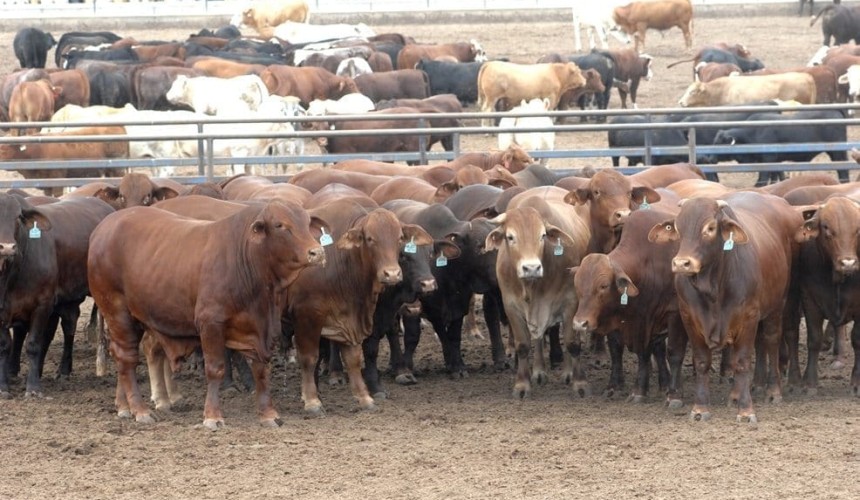
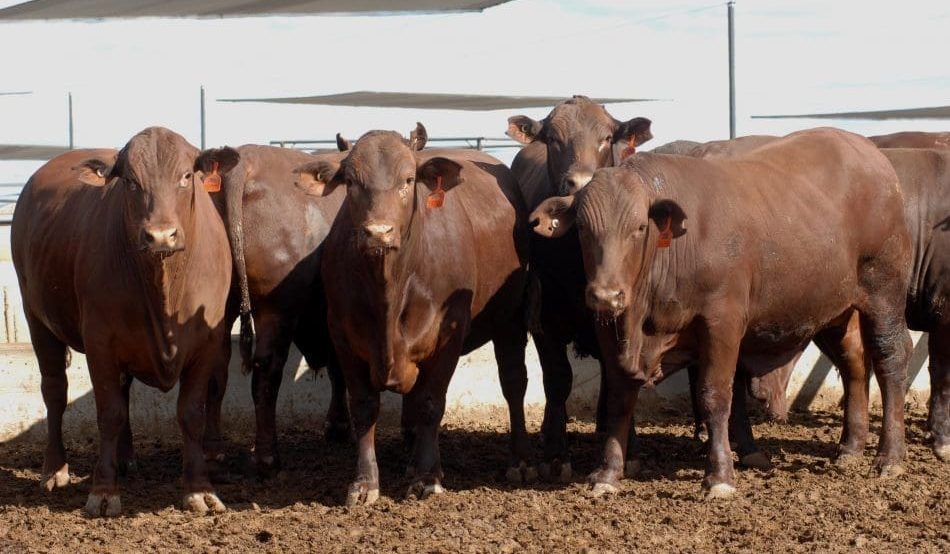
THE sharp rise seen in feeder cattle prices has driven an enormous swing in profitability in grainfeeding 100-day cattle, Beef Central’s latest grainfed trading budget shows.
Using our standard set of variables (see list at bottom of page) our typical flatback feeder steer entering a 100-day program this week and closing-out in December, week two, would deliver a trading loss of $236 a head (apologies – a typo appeared in this figure in the original version – now corrected: editor).
Compare this with our previous trading budget calculation made back on 19 June (click here to access) when we forecast a $10/head loss, using the same variables.
The sharp rise in feeder steer procurement cost seen since then, combined with a ‘sluggish’ response from grainfed export processors in pricing signals to reflect it, is the primary reason for the decline in trading terms.
Better-performing cattle producing higher average daily gains of 2.2kg (versus our standard steer ADG of 2kg/day) would fare a little better than that, returning a loss of $150 (profit of $90 in our previous budget six weeks ago), the latest calculation shows.
Our latest grainfed trading budget uses a standard set of variables applied since 2011, based on purchasing a heavy flatback feeder steer going on feed this week for custom-feeding, and closing-out in December after 105 days on feed in a typical Downs feedyard.
Feeder price surges
For today’s budget, we have applied a heavy flatback feeder price (ex Downs) of 480c/kg. That is 10c/kg above the upper end of the range published in Monday’s fortnightly feeder steer price update, reflecting a strengthening market this week.
 Heavy feeders +400kg at Dalby sale this morning (note: all breeds represented – not just ‘flatbacks’) averaged 494c/kg, up 22c on last week.
Normally by now, northern feeders intended for 100-day programs would start to show some softening in demand due to the Christmas holiday processor closure period, but there is little evidence of that yet this year.
The lack of that ‘drift’ in prices in early September is put down to the fact that a few Queensland/Northern NSW lotfeeders are still short on numbers, keeping buyers a little more aggressive to refill pens.
Today’s trading budget purchase price at 480c/kg values our 450kg liveweight feeder at $2160. In comparison, our previous budget six weeks ago on 19 June priced the same feeder at 375c/kg, for an outlay of $1687.
Ration prices
Finished ration price on a typical Downs feedlot at present is quoted at $450/t, with some a little higher than that, based on performance. That’s based on old season grain price, with new season crop still six or eight weeks away. Other commodities including cottonseed and hay remain solid in price.
While we’ve applied $450/t for finished ration in today’s budget (the same as six weeks ago), ration prices are now likely to trend lower, given current bids and offers in grain markets, and as new season grain draws closer.
Spot grain prices ex downs is currently around $330/t for wheat, down from $345/t delivered Condamine in our previous mid-June trading budget. New season crop off the header is below that figure, but for those Downs lotfeeders who are current and want grain today, $330/t is still the number.
It’s likely that many lotfeeders will now let stocks decline, so they are ready to buy new season supply at lower prices when it comes off the header. Retaining enough cover to get through to then is the catch, to avoid chasing the market.
Out next trading budget before the end of the year should reflect those lower new season grain prices, having a material impact on outcomes.
A year ago, our trading budget had Downs ration prices still being quoted at around $500/t, with all ration ingredients remaining high due to drought demand. Some rations back then were still as high as $520/t, while others were around $480/t, depending on performance.
Based on the above numbers, total feeding cost on today’s trading budget (consumption 15kg/day @ 105 days) delivers a total feeding cost of $705, the same as last time.
Total production cost (feeder purchase plus feedlot costs) in today’s budget is $2912, driven squarely by the live animal cost.
Cost of gain
The above ration price figures suggest cost-of-gain on our benchmark feeder steer gaining at 2kg/day at 336c/kg – a 25c/kg drop on COG from June last year.
With feeders purchases quoted above at 480c/kg, that COG advantage over buying heavier feeders is about as wide as we have ever seen it in this data-set, stretching back 15 years.
It means that some lotfeeders at least, are being tempted to feed-on lighter cattle of the right frame/description, to take advantage of the cheaper weightgain option. Some Down feedyards are evidently 20-40 days longer on average days-on-feed presently, as a result, buying steers light, and feeding them perhaps 135 days, instead of 105-110.
“The cost of gain advantage is as attractive as it has been for a very long time,” one grainfed supply chain manager told Beef Central this morning.
While in a typical market there is a higher c/kg price for lighter domestic-type feeders steers over heavier feeders, that has not been so evident this year – primarily because of the high demand for heavy feeders for export programs. Here’s an example: Dalby sale this morning (yarding = almost 7000 head) averaged 501c/kg for 330-400kg feeders, versus 494c for heavier feeders +400kg.
That declining price differential is only further motivating some lotfeeders to feed-on lighter cattle.
However the flipside is greater market risk. Plenty of grainfed processors are happy to contract cattle 90-100 days forward, but feeding lighter cattle for say, 135 days exposes yards to a greater risk profile.
Breakeven 838c/kg
Driven hard by rising feeder prices, based on the figures above, and our standard rate of gain of 2kg/day, it gives a breakeven on our feeder steer today of 838c/kg carcase weight – that’s up from only 703c/kg six weeks ago, and 680c/kg back in October last year.
For a better-performing steer growing at 2.2kg/day, the breakeven today comes back to 812c/kg.
Forward contracts on grain-finished cattle
Southern Queensland forward contracts for finished 100-day ox for mid-December delivery are currently quoted at 770c/kg carcase weight – up from 700c/kg in our previous budget calculated in mid-June and 680c a month or two before that.
At those figures including a breakeven of 838c/kg, today’s trade on a steer of average ADG performance (2kg/day) would produce a $236 trading loss ($10/head loss in our previous budget). For better performing cattle (2.2kg/day), where the breakeven drops to 812c/kg, it delivering a loss of $150 (profit of $90 last time).
Losses of that consequence will inevitably put pressure on grainfed cattle processors to respond, with some stakeholders telling Beef Central this week that the slaughter cattle market must rise to 820-840c/kg to adequately reflect cost of production.
“Are processors going to shift their forward contracts up to the low to mid eights for deliveries early next year? one large grainfed supply chain manager asked.
“They have to determine whether they can market the product at those higher cost levels, but looking at the incredible export outlook for Australian beef during the back half of this year and into 2026, it looks very likely,” he said.
“They have to juggle keeping their plants full, obviously, but they don’t want to see numbers on feed decline too much, given the meat sales opportunity that lies ahead.”
“There will be some head-scratching going on between now and Christmas.”
“Virtually all grainfed programs have expanded numbers over the past 12 months, which has given them a long position. They are definitely the beneficiary of that – but at some point they don’t want to maintain a long position. Is that now, or does the finished cattle and meat market move higher?”
“Australia is still trading beef at a discount to the US, suggesting there is more upside ahead.”
Forward contacts Vs spot market 100-day cattle
So how do this week’s forward contact prices for December delivery grainfeds look again this week’s spot market for grainfed cattle?
While not a lot of grain cattle are traded these days on the direct consignment spot market, September spot market for 100-day cattle are currently around 680-700c/kg, versus 770c/kg for forward contracts, December delivery.
About Beef Central’s 100-day grainfed trading budget
 Beef Central’s 100-day grainfed trading budget calculation is based on a standard set of representative production variables, ex Darling Downs. The calculation is built on a feeder steer 450kg liveweight, fed 105 days; 356kg dressed weight at slaughter; ADG of 2kg; consumption 15kg/day and a NFE ratio of 7.5:1 (as fed); $25 freight; typical implant program. Bank interest is included. The trading budget should not be interpreted as a comment on the viability of the lotfeeding sector – it is simply a gauge of the exercise of buying feeder steers, sending them to a feedlot for custom-feeding, and then selling them at the expected grid price at a processor. The opportunity costs of the exercise can easily be misunderstood.