
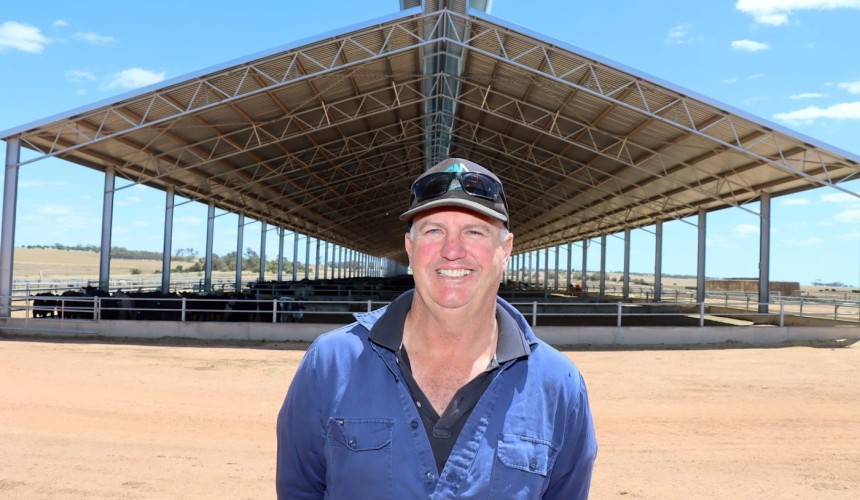
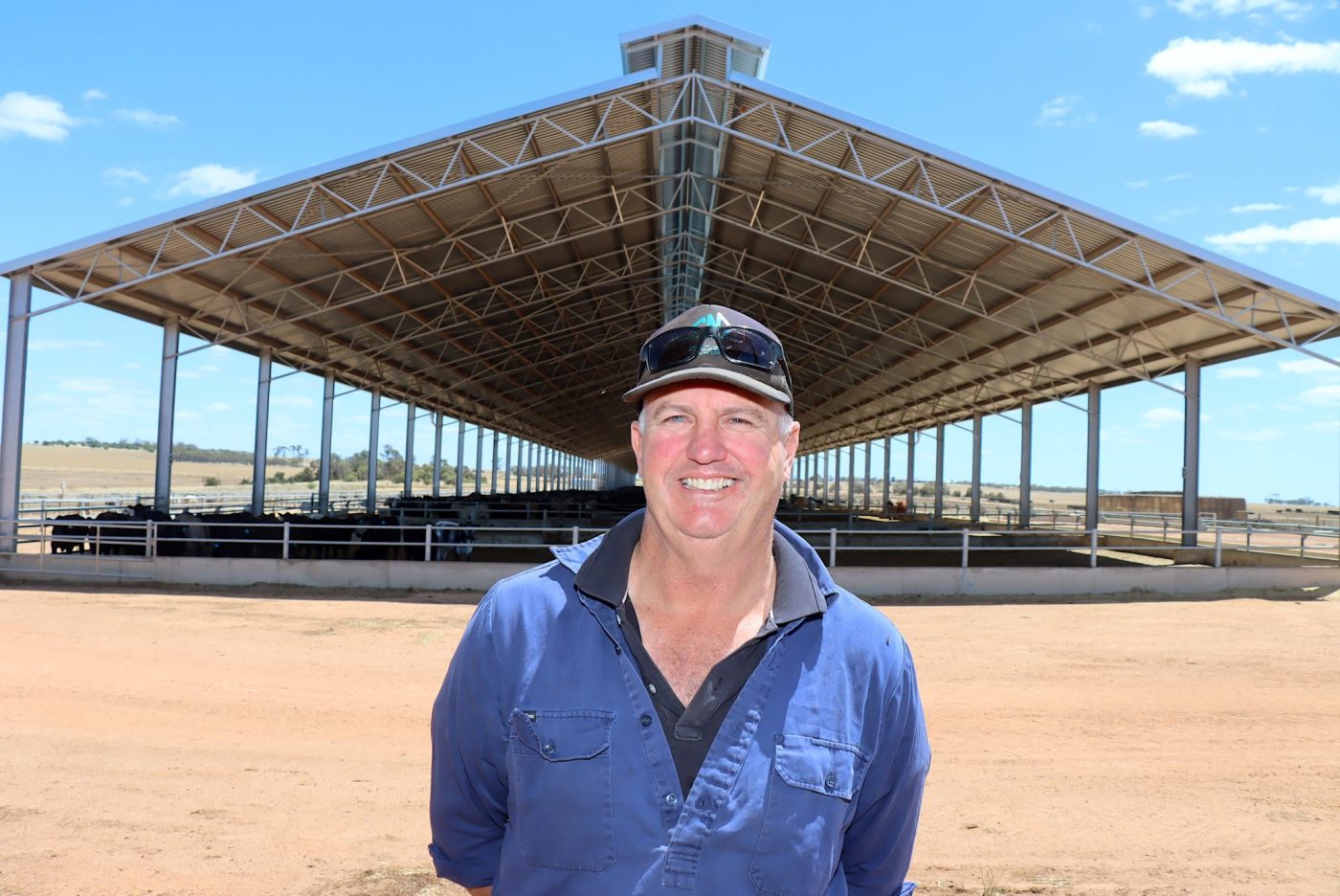
Todd Quartermaine in front of the second shed at Ucarty feedlot.
This is the second profile of a feedlot in Western Australia working to smooth out fluctuations in supply through strategic thinking and significant investment. Click here to read the first profile on the Rogers family from Kylagh feedlot.
TWO big shiny sheds, a strategic approach to cattle procurement and significant investment into staffing are the main pillars driving the Quartermaine family’s growing lotfeeding operation on Western Australia’s wheatbelt.
The Quartermaines built Ucarty feedlot in 1990s on their property near Dowerin, about two-and-a-half hours north-east of Perth – as a value ad to their mixed cropping and livestock operation.
The big investment into sheds has required a strategic approach to keeping the 4000 head yard full year-round, with relationships needed to secure markets for cattle leaving the feedlot and investment into backgrounding programs for cattle going into the feedlot.
The surprising benefits of the shed
Owner Todd Quartermaine said the original idea for building the sheds was about providing more shade for cattle during summer, where temperatures regularly exceed 40°C.
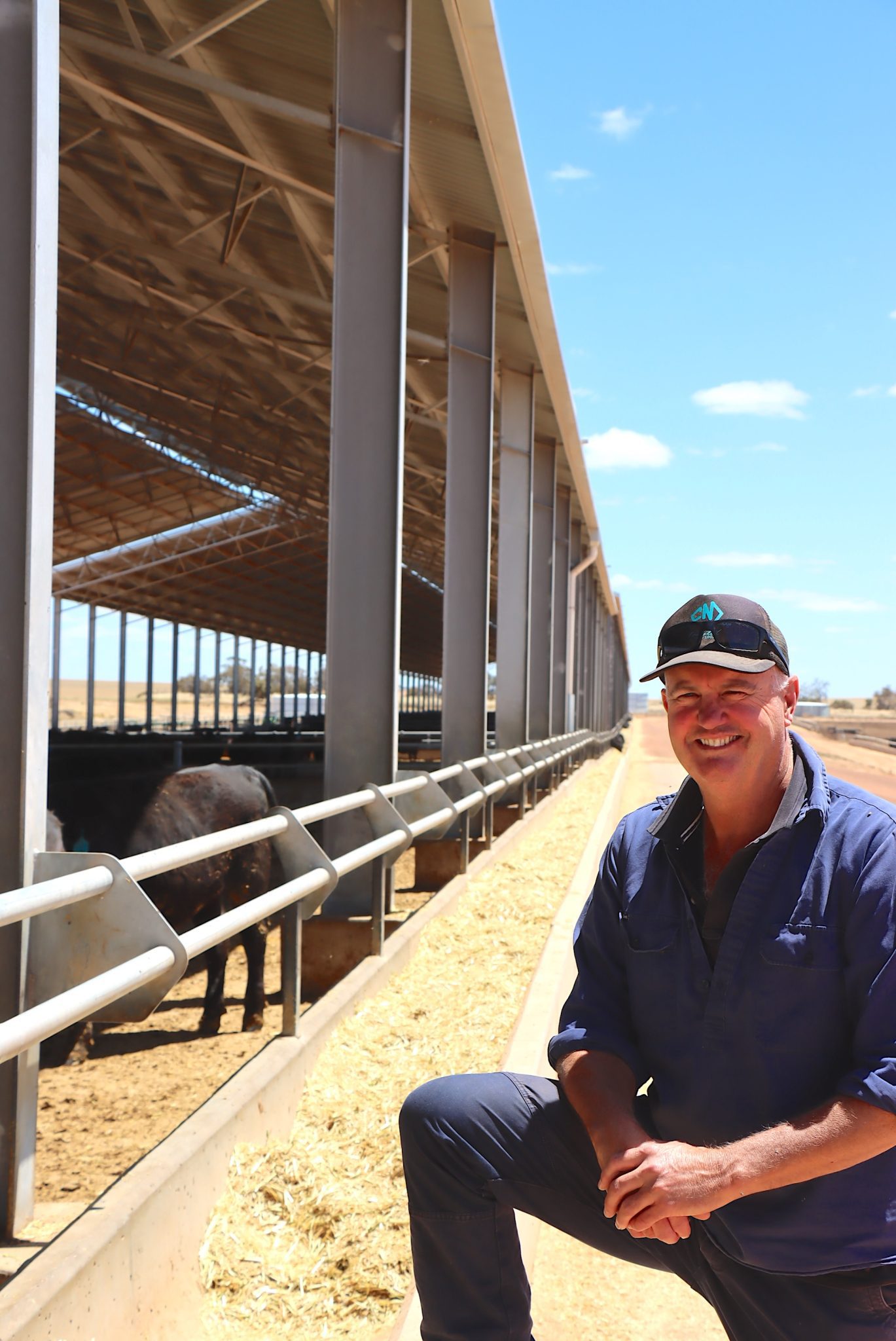 However, he said it was the performance during winter that cemented it as a good investment.
“The average weight gain for cattle underneath the shed was 0.3kg/head/day more than cattle outside the shed,” Mr Quartermaine said.
“A lot of that benefit was during winter because the cattle were not so cold and, rather than going into a maintenance cycle, they would just stay under the shed and keep growing.
“It is about 15°C cooler under there in summer as well.”
The sheds have been set up to capture water that is then put back into the feedlot, which would otherwise be completely reliant on underground water. Mr Quartermaine said the sheds captured enough water supply the feedlot for most of winter and the start of summer.
Straw from the wind rows on their grain crops is spread on the pen floors under the shed, with the bedding and manure then used to fertilize the crops.
“The manure is brilliant, it almost self-composts in a shed and we just take it from there and spread it,” Mr Quartermaine said.
Increasing cost of building sheds
Mr Quartermaine said the WA border was closed due to Covid when was looking to build the first shed and he was unable to tour some Victorian feedlots that had already done it, as he had intended.
Instead, he decided to go ahead and build a 240/30m shed through local manufacturer Wheatbelt Steel. A decision he was glad he made by the time he built the second shed, which he started feeding in at the start of this year.
“The second shed was 60m shorter than the first shed and cost $300,000 more,” he said.
Mr Quartermaine said he had always worked on a five-year-payback for the sheds.
“It was more like three years because the average weight gain increased by 0.3kg/head/day,” Mr Quartermaine said.
“The second shed will be closer to five years for payback.”
Backgrounding program filling supply gaps
While the sheds are the most noticeable investment the Quartermaine’s have made into lotfeeding, a big effort has gone into smoothing out fluctuations in cattle supply over the years.
Most of the cattle going into feedlots on the wheatbelt are from a reasonably concentrated area that is almost-exclusively autumn calving and short-fed supermarket programs have been the main market on offer.
Until recently, the Quartermaine’s had their own breeder herd in paddocks adjacent to the feedlot, which were planted with Tagasaste trees – otherwise known as tree lucerne.
While the breeder program was designed to fill the supply gap later in the year, the Quartermaine’s have decided to instead focus on their backgrounding program for the same reason.
They are currently in the process of pulling out the Tagasaste trees and using those paddocks for grain crops or pastures to assist the backgrounders. They are also building some specialist backgrounder pens, which are bit bigger than the average feedlot pen.
Most of the Southern WA turn-off is sold over the summer months, with the extra backgrounding space allowing the Quartermaine’s to purchase their requirements for the year while the sales are on.
“That should give us an extra 1000 head to have a few more up our sleeve and do inductions when the feedlot is quiet,” Mr Quartermaine said.
“We will background them in the pens in groups of 200, so they can just go straight into the feedlot – which we are hoping helps reduce the amount of sick cattle.”
The Quartermaine family has also managed to access some longer fed programs, which are helping smooth out the fluctuations in occupancy. They feed combination of short-fed cattle for domestic supermarkets and a 150-day Angus program that goes to China – through local processor V&V Walsh.
The combination of programs allows the family to purchase the same types of cattle and then draft them into the different programs based on their performance.
They also have a longer fed Wagyu program feeding onsite through a custom feeding arrangement.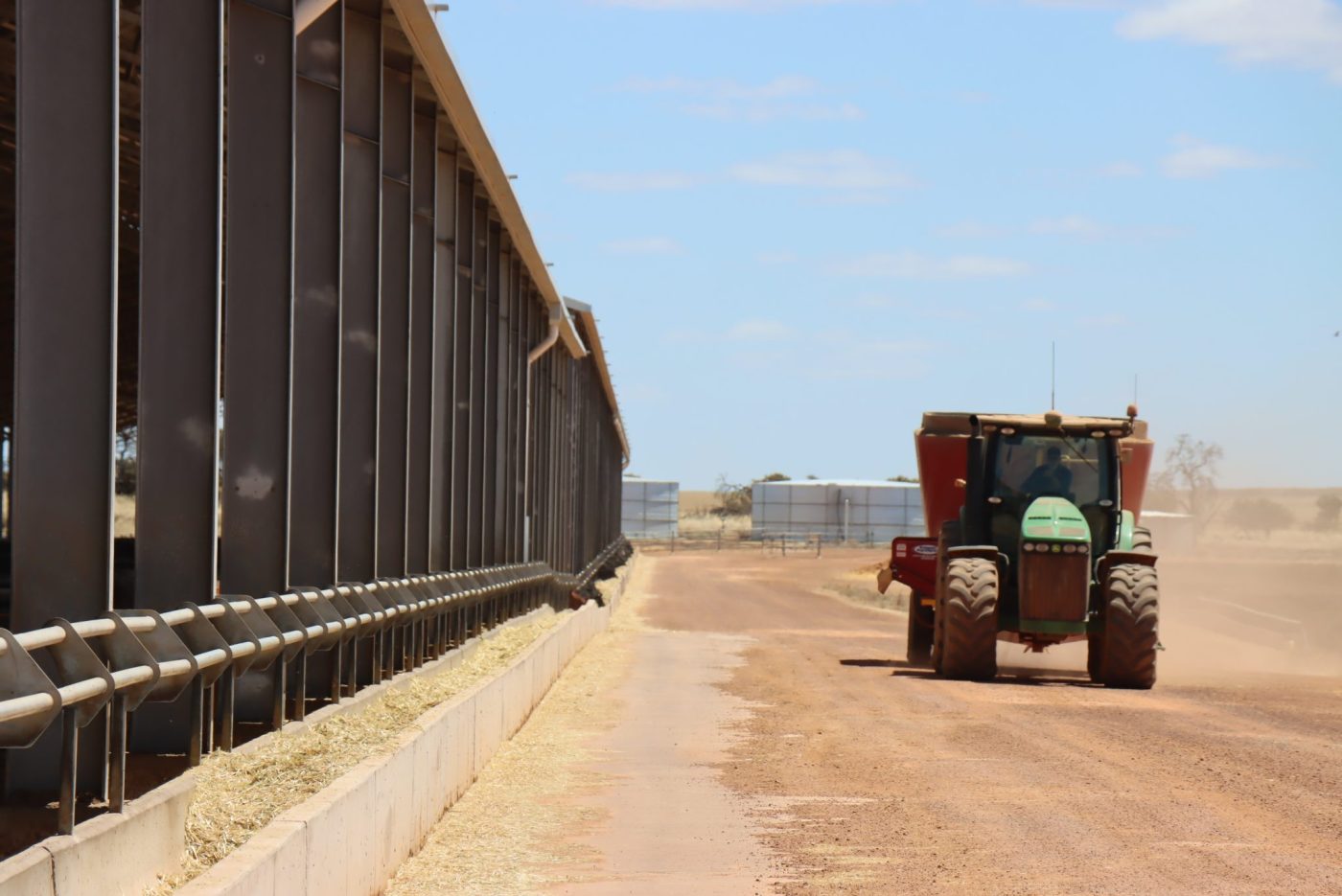
Filipino families moving to WA
In recent years, the Quartermaine family has developed a relationship with a group of Filipino families who work across all facets of the farming operation – doing inductions, walking pens checking for sickness, cleaning sheds, driving chaser bins and other tasks.
“They were working at a machinery dealership when we advertised the job, they saw the ad and made contact with us,” Mr Quartermaine said.
“They hadn’t done any cattle work, so we had to teach them that and eventually we were able to sponsor them and bring their families over.”
Mr Quartermaine said sponsoring the workers was a big process.
“We had to do three months advertising across Australia to make sure we weren’t stopping an Australian from getting the job,” he said.
“Then we had to go to the immigration department to get their visa’s sorted, which was also a big process.”
The Filipino families live in the local town of Dowerin, where the kids go to school and some of the adults work at a local cleaning business.
On farm, Mr Quartermaine said the Filipino workers were currently pulling out the Tagasaste trees and have already requested he build another shed to keep them busy when the trees are gone.
Asked whether he would consider another shed, Mr Quartermaine said: “Possibly, the sheds are going are really well and we would be keen to build another one when these sheds are paid for and we have the energy to do it.”