
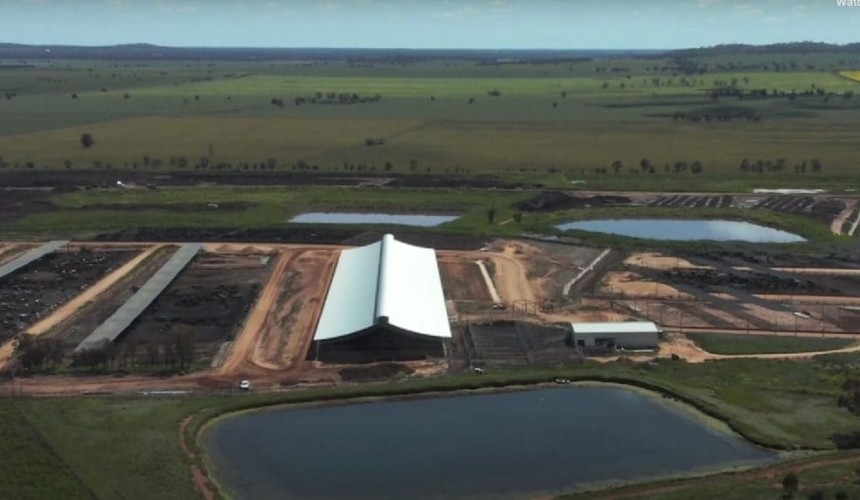
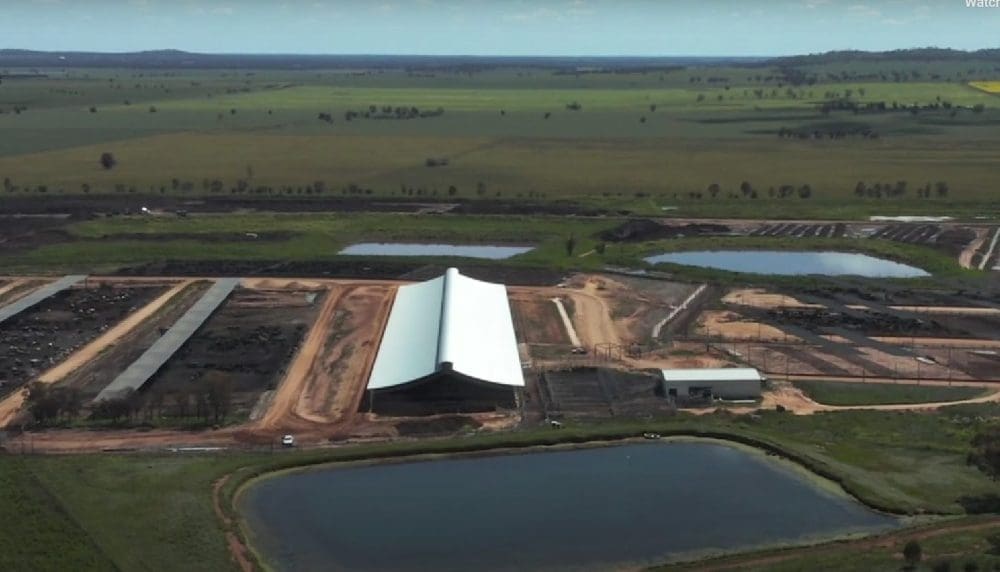
ONE of Australia’s largest lotfeeders says sheds are opening the possibility of feeding more cattle on less land, having covered pens at one of its feedlots three years ago.
Teys general manager of feedlots and Australian Lot Feeders’ Association president Grant Garey ran last week’s grainfed beef symposium in Toowoomba through some of the company’s learnings since installing a 200m long, 36m wide shed on its Charlton Feedlot in Victoria in 2022.
“What I’d say for the sheds is that they are very specific to the site and environment and the type of cattle that you’re using,” Mr Garey said.
“For us, it’s about the southern wet winters, they are very hard on cattle performance.
“The other thing at Charlton is that we can’t expand our footprint if we want to expand the number of cattle on feed. So, the shed does potentially lend us the opportunity to be able to increase our numbers without expanding our footprint.”
Increasing cattle density in sheds
The shedded area at Charlton is running a higher density of cattle than other parts of the feedlot, at 6m2/animal.
Mr Garey said alongside the increasing numbers on feed, the increasing density had opened the possibility of working cattle on foot.
“We’ve found horses probably not as happy in that more intensive environment than they are out in the pens,” he said.
“Having enough horse-based livestock people has been one of the challenges for us at Charlton. And so this has really lent itself quite well to be able to work it on foot.”
Improving cattle performance
Teys has divided the shed at Charlton into halves, with one side hosting the hospital and the other half as general feeding pens.
There is 16.6cm of bunk space, with the posts that hold up the shed situated on the bunk, which had reduced bunk space.
Mr Garey said feed intake had not changed and cattle performance had improved.
“We have seen higher hot dress weights and average daily gain from the cattle that we have fed in the shed,” he said.

Grant Garey, ALFA President since 2024.
“We have seen greatly improved hospital recovery rates, especially with any of those foot or lameness-type issues. They’re going back into a dry pan with bedding, which is a really good surface for those cattle to recover.
Wheat and barley straw best suited for bedding
Bedding is one of the biggest challenges with feedlot sheds and is often highlighted as a problem by feedlots who had invested in sheds.
Teys has trialled several types of bedding including wood chip, almond hulls, rice hulls, sawdust and wheat and barley straw.
He said wood chip was the best form of bedding but accessing it was an issue. Rice hulls, almond hulls and sawdust did not work and the company has ended up using wheat and barley straw – with a preference for long cut rather than header trailings.
Mr Garey said the wheat and barley straw as also helping the company capture more value selling the composted manure.
“We’re working on 2-3kgs/head/day of bedding, and we think we can get we can get that to be a little bit less. The way that you spread the bedding definitely has an impact, and this is something we’ve only come across in the last six months,” he said.
“We’re putting the bedding in the pen, giving it a bit of a toss around with the loader, and then letting the cattle spread it out, which actually, when you look at it, seemed to work quite well.”
Teys has been trialling a specialist machine for breaking down straw bales and spreading it in the shed, which had the potential to reduce the amount of bedding needed.
“I think some of the spreading methods that are available will lend themselves to be able to use less bedding and then subsequently less cost,” Mr Garey said.
A new research project has kicked off at Charles Sturt University, in collaboration with Meat & Livestock Australia and ALFA looking at solving some of the bedding issues.
Not a cent spent on floor maintenance
Mr Garey said the company had not spent any money on pen floor maintenance since installing the shed three-years-ago, which he said was a good sign.
“Typically at Charlton, that’s an annual event with the wet winters in the south,” he said.
“The cost of pen maintenance in regular pens in wet winters is pretty enormous.
The dry environment in the shed had also yielded some benefits with the cost of the floor. Mr Garey said Teys had trialled a hot bitumen mix with bedding and gravel, which had both worked well.
He said with the gravel floor not receiving much weather damage, the cost of the bitumen was not worth it.
Teys had also done some odour modelling at Charlton, which Mr Garey said was expensive but showed a reduction in odour underneath the shed.
“When we’ve got wet pens in winter, the reduction in odour is quite significant from our bedded shed pens compared to wet outdoor pens, and that’s even with twice as many cattle,” he said.
Capturing drinking water
While the pen floors are being kept dry by the shed roof, it is also able to capture water in the wet winters.
Mr Garey said it was capturing about 20pc of the drinking water for those cattle in the shed, without factoring in the probability that those cattle were drinking less water.
ROI calculator helps decision-making for lotfeeders
Feedlot shedding infrastructure manufacturer Entegra, which produced the shed complex at Charlton, has developed a unique decision-making tool to help lotfeeders examine likely return on investment from a shed installation.
The company’s Ridgeback ROI calculator takes into account both the investment and the performance and efficiency gains likely.
The data points in the matrix are derived from existing Ridgeback shed clients’ experiences, in the form of “real life” grainfed beef production systems.
The calculator includes 37 input variables which affect issues like mortality, morbidity, feed wastage, carcase quality, consistency during heat events, staff productivity and pen cleaning.
For lotfeeders considering moving to some permanent shedding structures, a few simple intangible benefits are claimed in the matrix:
- Density increase means more production per square metre invested – ie, density of 7sq m vs 14sq m in an open pen would almost halve the overall cost of site civil works for the same SCU (Standard Cattle Units) capacity.
- Environmental and council approvals are simpler, more cost effective and more likely to be successful when the pens are completely covered, Entegra claims. ie, effluent management, contaminated run-off, stormwater management are all simpler to design and satisfy.
- Working conditions are improved for staff – rain, hail or shine
- Potential to integrate load out facility under-roof
- There is no ongoing cost with permanent shedding – fixed passive asset
Entegra also claims a potential marketing advantage over other lotfeeders, in that corporates may be more likely to support a covered feedlot, potentially attracting a premium.
- Click here to access the Entegra website with access to the ROI calculator
Shedding is a great idea and I think it should be implemented wherever possible