
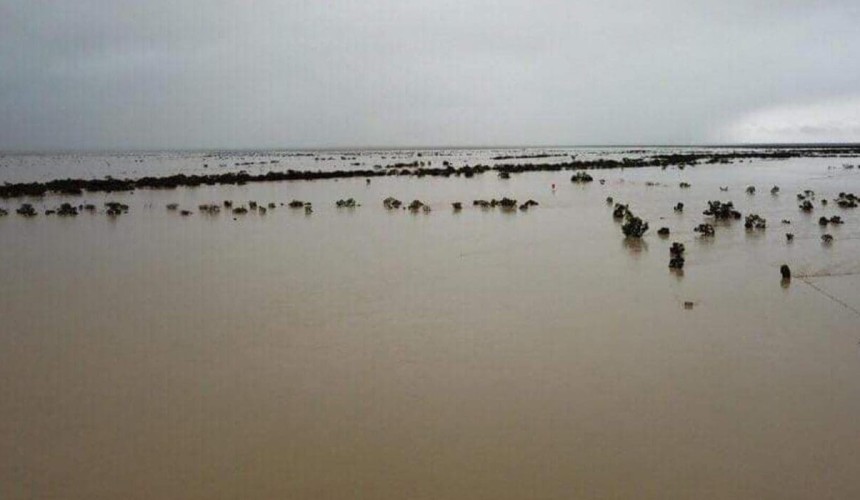
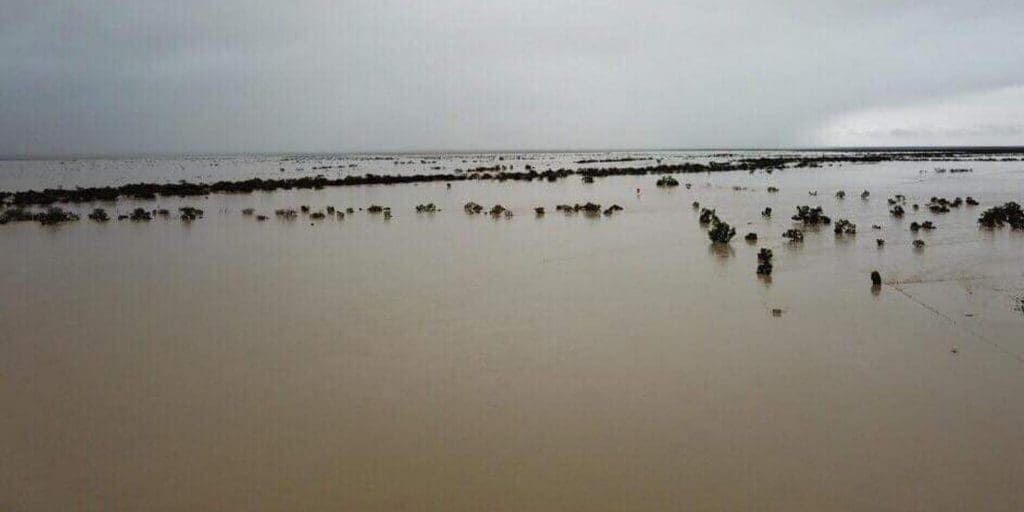
THE Australian Agricultural Co has told investors that heavy rain and flooding throughout north-western Queensland since late December has impacted three of the company’s northern breeding and growing properties.
Dalgonally and Carrum Stations on the Fullerton River and Gilliat Channels 80km north of Julia Creek, and Canobie Station on the Cloncurry River 260km south of Normanton in the lower gulf region have been impacted by the recent heavy rain event, the company said.
“The full effects of the flood are yet to be determined and are being managed in real time,” AA Co said.
“Our immediate focus is on our people and the welfare of our animals. Management will continue to monitor the situation closely and take all possible steps to mitigate the impact on our people, cattle, land and operations.”
AA Co runs a herd of about 450,000 cattle. The three Gulf properties impacted by the flooding are carrying a total of about 55,000 head – a significantly lower head- count than the 2019 flood event in the same region.
In May 2019, after earlier record flooding affecting some 800,000ha of company-owned country, AA Co estimated livestock losses of about 43,000 head across Wondoola, Canobie, Dalgonally and Carrum, worth an estimated $47 million including emergency expenditure.
The company warned that any comparisons between the 2019 flood event and the current event should be approached with caution, due to current cattle valuations, operating practices, property and livestock conditions, weather and rainfall variations and seasonality.
“At this early stage, as conditions are evolving and remain challenging, a credible assessment of the impact on livestock and infrastructure is currently unable to be undertaken – noting there is still the possibility of further wet season impacts,” the company said.
“People’s safety and animal welfare, as well as support for our local communities, will continue to be of the highest priority. Currently, staff and their families on the impacted properties are safe.”
Monday’s update to shareholders sent AA Co’s share value tumbling, down 2.1 percent to $1.42.
South-western Queensland and the Northern Territory, where the majority of AA Co’s properties and cattle are located, continue to experience favourable rainfall for the season, the company reported.
“The company remains able to fulfil supply obligations to its key markets in line with its strategy. Aligned with industry practice and given the prohibitive costs involved, AA Co does not hold insurance for its herd and infrastructure for flooding events. While the impact of the situation is continuing to be determined, the company’s balance sheet and financial position remain strong.”
The overall impact of this flooding on the company’s financial earnings for the March 2026 financial year is still to be determined, and likely to be material.
Management is currently assessing and managing the situation and an update will be provided as appropriate, when further assessments of the impacted properties are available.
Satellite maps tell flood story
Meanwhile, satellite maps compiled by pasture monitoring service provider Cibo Labs have graphically illustrated the impact of the recent rain event.
The preliminary Cibo maps published below shows the recent flood event to be approaching 2019 in affected area, being up to 70km wide in some regions.
We expect to update these maps with more detailed versions tomorrow.
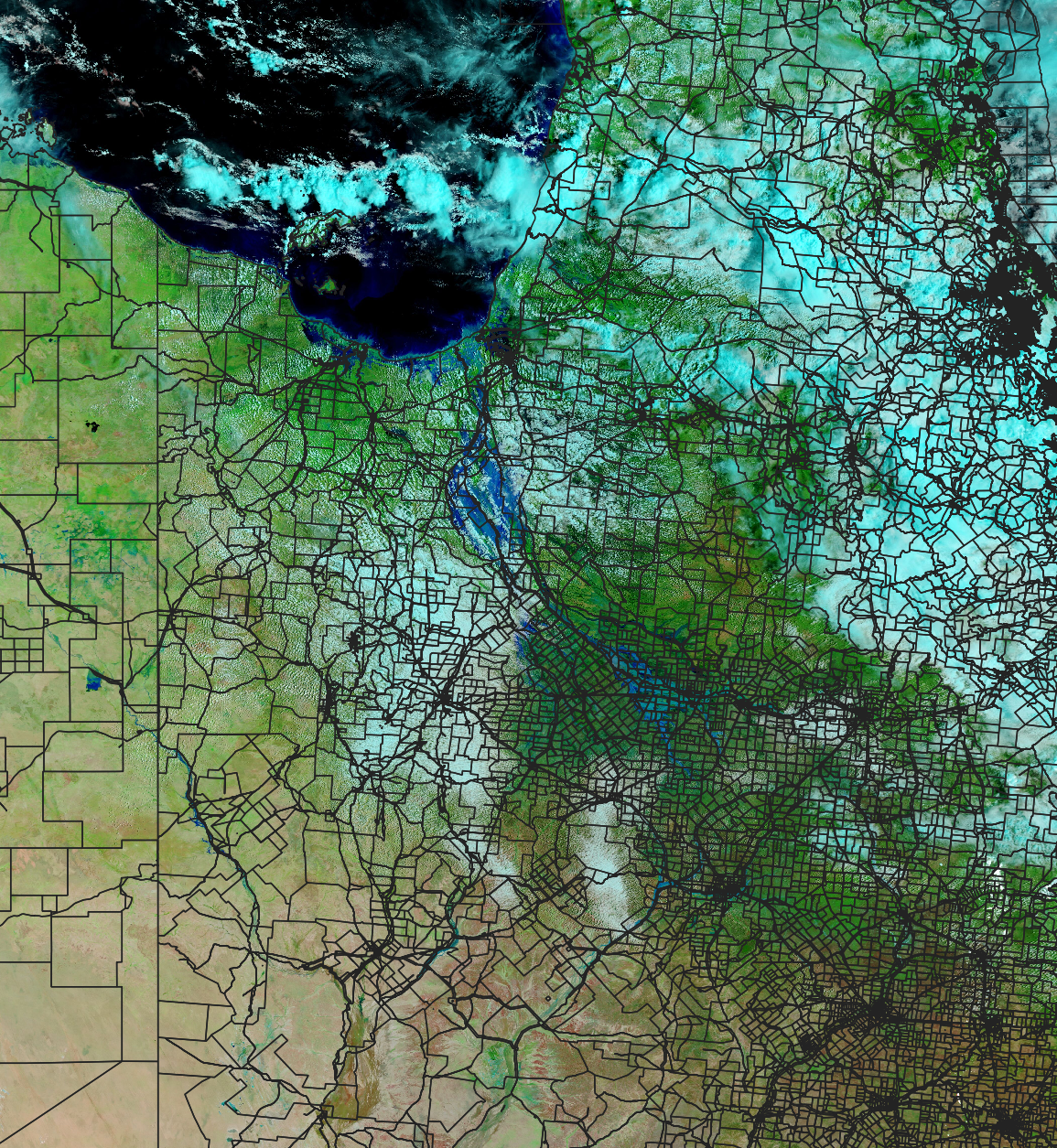
Source: Cibo Labs. Click twice on images for a larger view
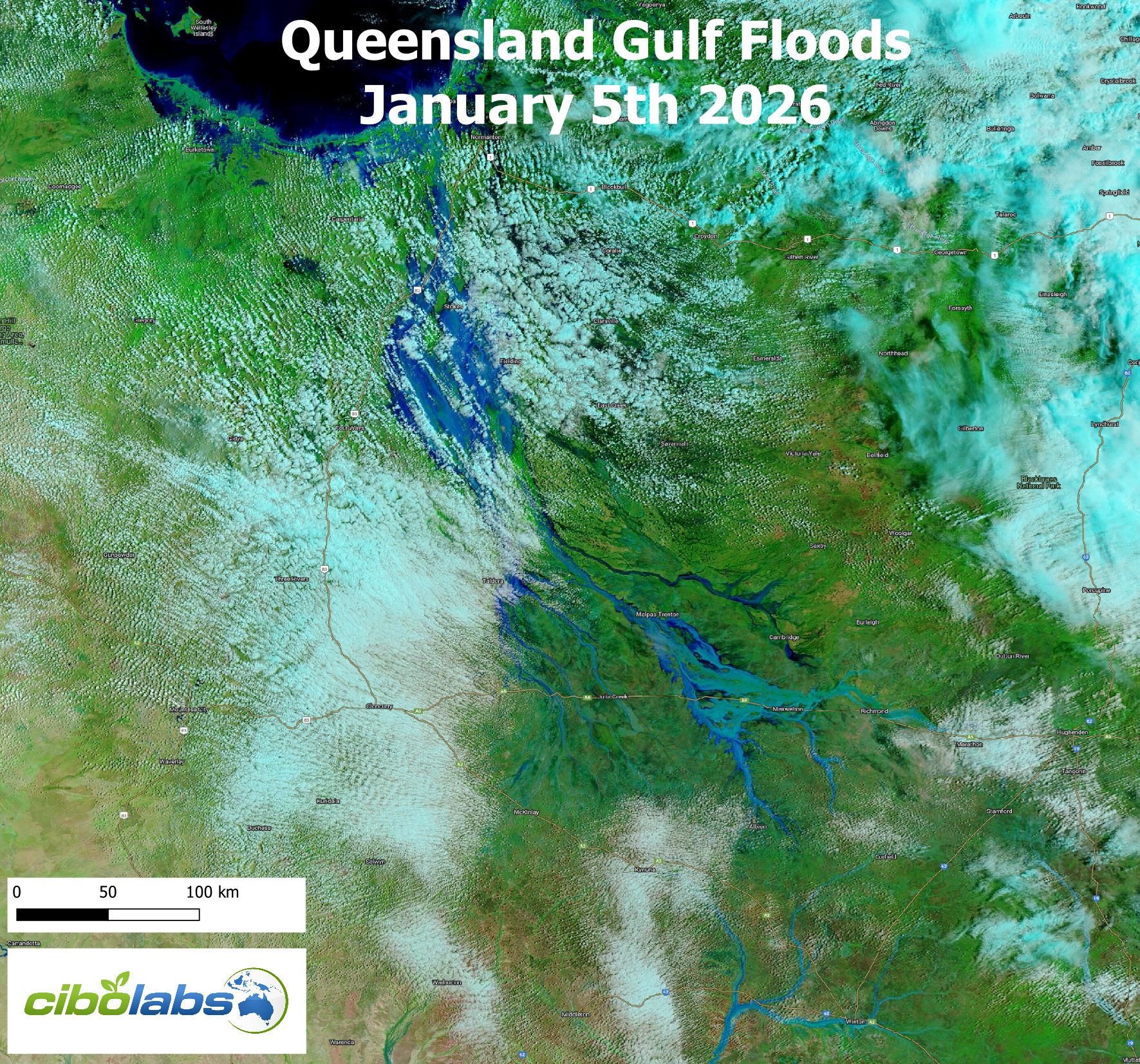
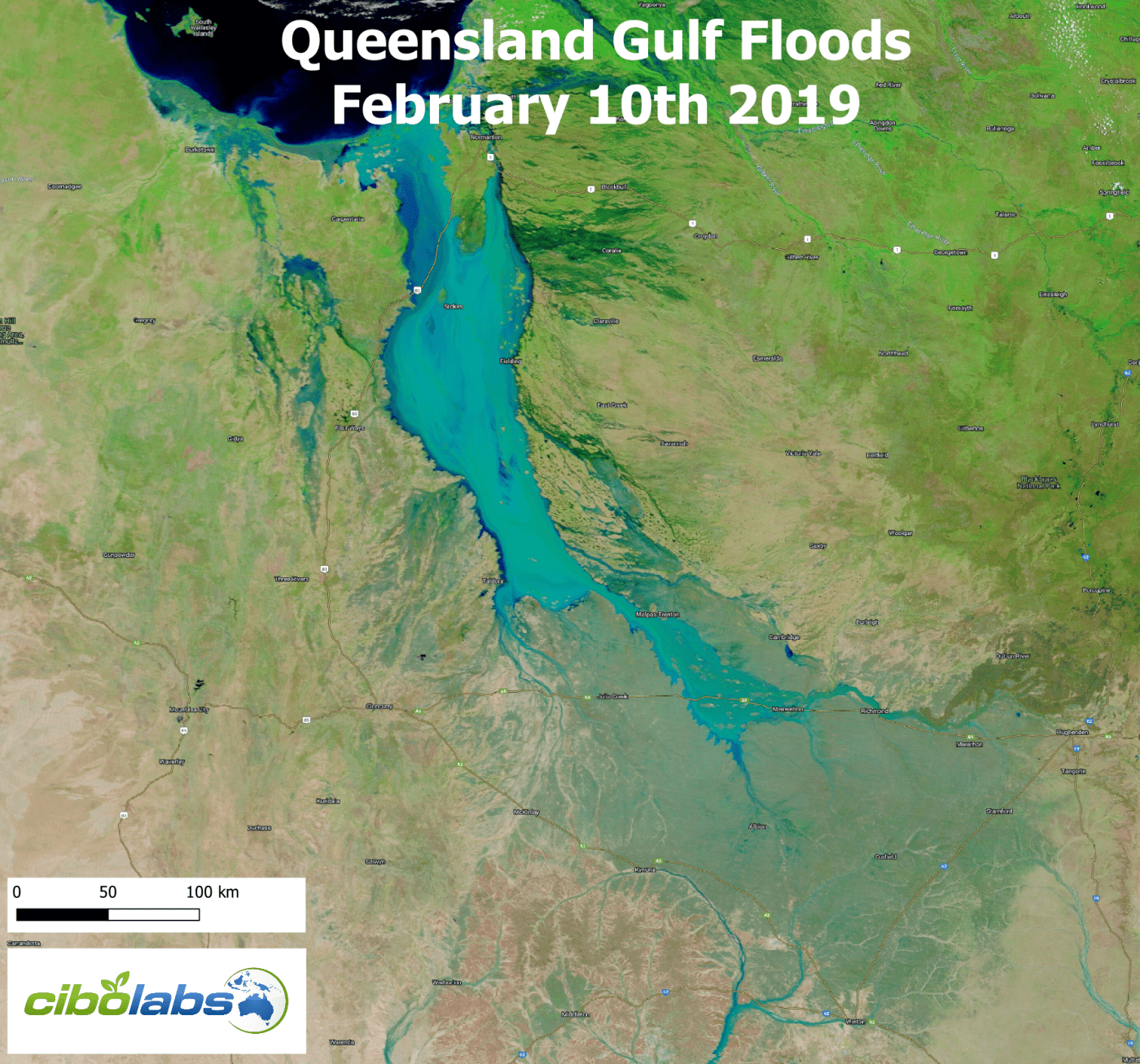 By 9am this morning (Tuesday 6 January) local Northwest Queensland producers had reported an estimated 20,580 head of livestock missing or deceased following the floods.
Preliminary assessments by Queensland’s Department of Primary Industries indicated significant damage to infrastructure, with around 980km of fencing destroyed and more than 1600km of private roads impacted.
These figures could change as floodwaters recede and producers continue to report losses.
- See tomorrow’s weekly rainfall update.
Banks supporting flood-hit clients
Agribusiness banker Rabobank has announced of a range of support measures available for livestock industry clients with operations adversely impacted by extreme monsoonal rainfall and flooding in the region.
Rabobank deputy regional manager North Queensland Joe Webb said heavy and persistent rainfall from the monsoonal system had caused major flooding in a number of agricultural regions in the north west and Gulf areas of the state.
“While it is still too early to tell the full impact on agricultural operations in these regions until areas dry out enough to enable proper access for property owners to assess damage, reports are there is still significant water to flow through to impacted areas and out to the Gulf,” he said.
“Property owners have been moving cattle where possible and dropping hay by helicopter where feasible, but overall they need dry weather to allow cattle to get out of the boggy mud, and this won’t happen for several days yet.”
Mr Webb said the bank would work directly with individual clients whose farms or agribusinesses have been adversely affected to provide support and offer a range of assistance measures in applicable circumstances.
These included:
- carry-on finance to keep viable operations running,
- waiver of break costs on early redemption of Farm Management Deposits to allow access to needed funds,
- deferral of scheduled loan payments and
- waiver of fees on loan increases necessary for rebuilding operations.