
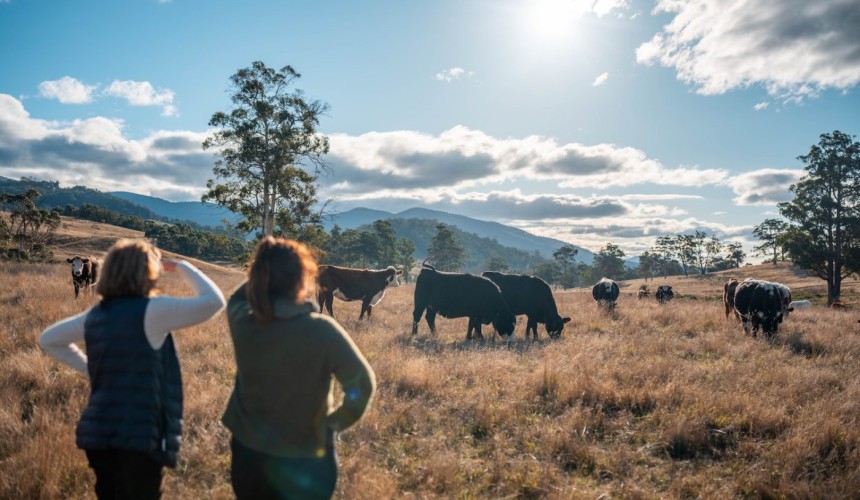
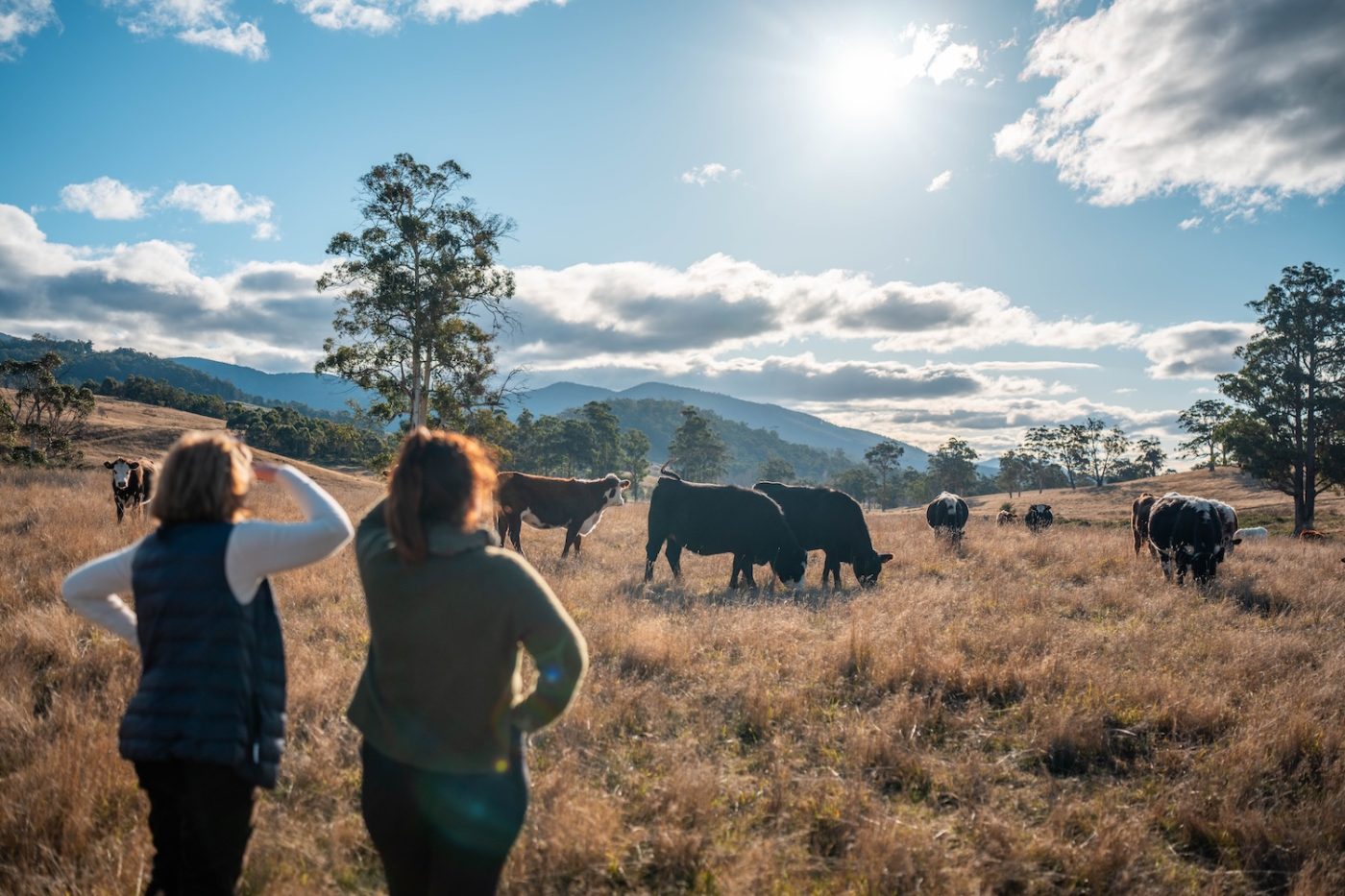
A 2009 research report commissioned by the Australian Government found that ‘it is likely that women contribute over 49 per cent of the total value of the output that might be attributed to farming communities’. Image: Shutterstock.
COINCIDING with today’s UN’s International Day of Rural Women, a newly-published Journal of Rural Studies paper sheds light on how women on family farms work within three powerful forces: a male-dominated culture, the “farm-as-business” mindset, and enduring agrarian ideals – love of land, intergenerational continuity, community.
Of these, the study finds, it is pursuing agrarian ideals that is a strong motivator for many rural women and the source of strength through which they negotiate the other forces and which helps them to achieve resilience and empowerment within family farming enterprises.
The paper, Agrarian pragmatics: How women on family farms in Queensland, Australia negotiate competing discourses to enact their agrarian ideals, is published in the latest edition of the Journal of Rural Studies.
It is authored by Marlyn Mcinnerney and Jane Palmer from the University of Southern Queensland, and draws on interviews with 20 women from farm family enterprises in south-western Queensland.
The study refers to women’s everyday navigation of the competing discourses they encounter as “agrarian pragmatics” – noting that through everyday practices they seek to leverage, adapt and reconcile prevailing social, gendered and economic constraints to enact or preserve their agrarian ideals.
By leveraging business skills and technology, they expand influence within enterprises while holding fast to agrarian values that give the work meaning.
 “We find that agrarian ideals provide both a criterion for farming women’s wellbeing and a motivation to act in ways that support the intergenerational endurance of the family farm, secure their position within a farming family, and build an enduring agrarian lifestyle for themselves and their family, based on love of the land,” the authors write in the paper.
“The women navigated these discourses by the careful deployment of resilience and empowerment strategies.
“Any navigation and negotiation skills the women possessed upon entry to the farm family were enhanced during the integrative acculturation they experienced when they first married into farm families.
“These processes empower women to have significant influence in their farm enterprises after an often extended period of uncertainty of several decades which can vary from a few years to several decades.”
The study notes that one of the significant stresses for new wives on family farms is learning to conform with expectations about, for example, their role in the family and the community, and supporting the priorities that ensure the viability of the farm itself.
The process of meeting these expectations through interactions with the family and community is that of acculturation: a series of “cultural and psychological changes that involve various forms of mutual accommodation”.
“Addressing gender inequalities, such as men controlling land and capital while women contribute unpaid labour, means ‘asking what types of work we celebrate as “agrarian,” who we label “the farmer,” who we teach to use the tractor, and who is expected to do the unromanticized work of reproducing the agrarian n household- that is, the laundry, the dishes, the taxes and the wage work that provides health insurance’ (Carlisle 2014:138).
“As our study reveals, these issues are being addressed by women through a range of strategies that empower them on the family farm.”
The authors also point to what they refer as a “new agrarianism” from their conversations with women on farms in South-West Queensland.
“This includes the superior value placed by the women on the farming way of life, values and custodianship of the land.
“The majority of the women in the study expressed some or several agrarian ideals and feelings.
“Their perspectives on agrarianism included love of the land, the desirability of families staying on the land for many generations, feelings and actions concerning land stewardship, living and working within a farm family as a privileged and superior lifestyle, pride and satisfaction in the work.
“There is also the symbolic capital and financial opportunities of farm ownership, the advantages of bringing children up on a family farm.”
A 2009 research report commissioned by the Australian Government found that ‘it is likely that women contribute over 49 per cent of the total value of the output that might be attributed to farming communities’, representing a slight increase over the preceding 10 years.
Understanding and supporting women in farm families is crucial for the success of the agricultural sector, and more broadly, for land stewardship in Australia, the study notes.
To read the full paper click here
The UN International Day of Rural Women is observed each year on October 15 and highlights the vital contributions of rural women to global agriculture and food security. It also recognises the fundamental role they play in producing, processing, preparing and distributing food for their families, communities and the wider world.