BOTH of Australia’s major supermarkets have now pledged to only source beef that is not the result of “deforestation”, with Coles formally announcing plans to go “deforestation free” by the December 31 this year.
Woolworths became the first of the two major supermarkets to announce the no deforestation target last year. Coles has been indicating since then that it was working towards following its main competitor with a similar commitment.
The supermarkets are signed onto the Science Based Targets initiative, an organisation set up by five partners including the World Wildlife Fund, the World Resources Institute and the UN Global Compact. As part of their membership with the SBTi, the supermarkets are required to set “zero deforestation” targets.
In announcing the move today, Coles said its zero-deforestation commitment would extend to all beef directly sourced by Coles for its “Coles Own” range – which is the everyday offering of Coles beef. Coles says more than 85pc of the Coles Own brand is directly sourced.
 Coles said, in the first instance, that it will only be tracing beef back to the place of last consignment – which is the last place before the animal heads to the abattoir.
In the case of Coles, that traceability would mainly be going back to feedlots.
Coles says as a retailer it is currently unable to access the National Livestock Identification System (NLIS) database, which means it can not use whole of life traceability for the deforestation target. However, the company says it plans to have whole of life traceability over time.
Coles says it will be aligning with Australia’s National Forest Inventory definition, which is described as an “area dominated by trees having usually a single stem and a mature or potentially mature stand height exceeding 2 metres and with existing or potential crown cover of overstorey strata about equal to or greater than 20pc.”
“We do not underestimate the significance of this issue for our beef producers, and we are committed to continuing to engage with them as we operationalise our no deforestation ambition,” the sustainability report said.
“In accordance with SBTi FLAG guidance, Coles will disclose further information on its progress with respect to all commodities in scope of our no deforestation ambition within six months of 31 December 2025.”
CA welcomes definition, raises concerns about NLIS use
Cattle Australia says it welcomes Coles decision to align with the ANFI definition of forest, which it says excludes clearing on existing agricultural land from being classed as deforestation.
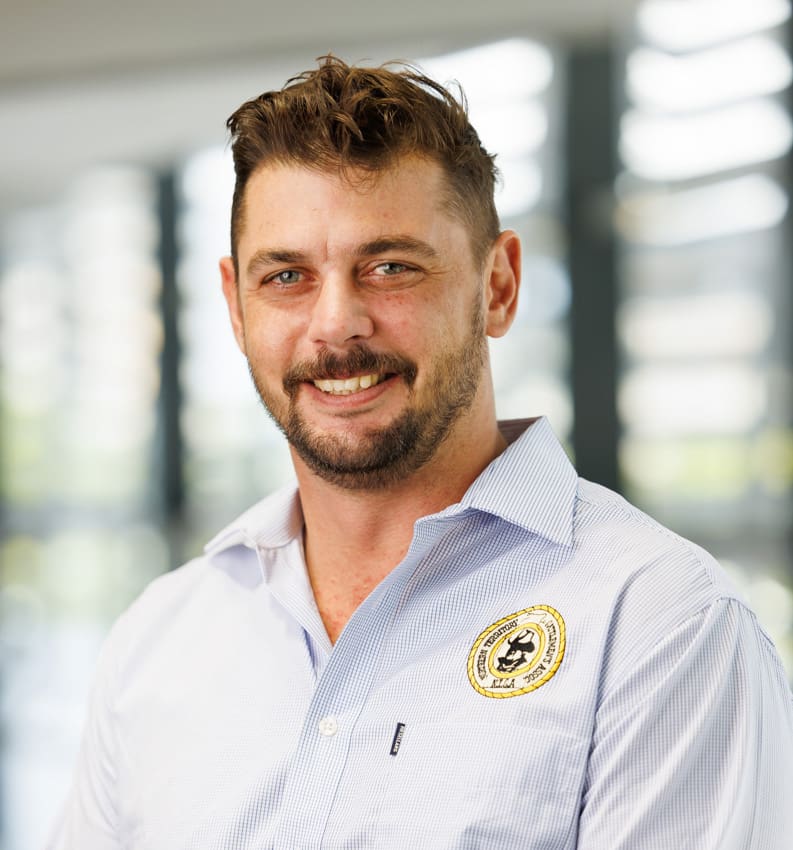 “The Australian Government has long aligned with FAO and EUDR definitions for deforestation which specifically preclude legal agricultural land management and development activities from being considered as such,” CEO Will Evans said.
“Any entity continuing to make claims relating to significant negative deforestation outcomes within the beef industry is deliberately perpetuating falsehoods and should face appropriate Government sanctions for doing so – especially where that entity may also be a registered ‘charity’.”
Mr Evans said the organisation had some concerns about the policy.
“We note with some concern that Coles has expressed a desire to access the NLIS database for the purpose of confirming production practices and the absence of deforestation from within their supply chains,” he said.
“Producers enter their data into the NLIS database for the purposes of facilitating traceability outcomes that underpin food safety, biosecurity and market access and to mitigate against the risks of animal disease outbreaks. Under some circumstances producers may agree voluntarily to share information for other purposes.
“However, no single entity is given access to the entire database outside of the explicit purposes for which the database was designed and is managed. We will engage with Coles further to better understand this position and the context of their request.”
Environmental groups lobby for access to NLIS database
Environmental groups, Greenpeace, the Wilderness Society and the Australian Conservation Foundation have already started lobbying the Federal Government to open access to the NLIS database.
Wilderness Society Queensland campaigns manager Hannah Schuch said it was on Coles to open access to NLIS.
“There are some blind spots that we encourage Coles to address to bring their commitment into line with international best practice. To ensure Coles is aligned with the Science Based Targets initiative (SBTi), it must concretely apply the internationally-recognised AFi definition of deforestation and broaden its commitment to include all products–including pallets used to transport groceries and its entire beef supply chain,” Ms Schuch said.
Greenpeace campaigner Gemma Plesman called on the Government open access to NLIS.
“We urge the Albanese government to introduce the robust and much-needed reforms to the EPBC Act, including closing deforestation loopholes that allow for harmful industries to carry out mass bulldozing in Australia.”
The Australian Conservation Foundation put it on the processors.
“Privately, the supermarkets say Australia’s big meat processors, dominated by controversial Brazilian giant JBS and US-based Cargill, are the main barrier to traceability, as they withhold data,” said the ACF’s Nathaniel Pelle.
“It shows why the Albanese government needs to take steps to ensure public funding of the national traceability system (NLIS) is conditional on the system being transparent.”
where are Coles going to buy there beef from because all land has been cleared to raise beef lamb and pork and also cleared land for crop growth for feed
so what? you can "deforest" agricultural designated land just fine under this, and who in their right mind would deforest non agricultural land in this day and age anyway? this will have no effect on producers.
much ado about nothing.
@Trent Pennin that is not correct. The environmental organisations make up their own definitions of "deforestation" and they do not mind spreading misinformation and disinformation to achieve their aims. This includes calling perfectly legal clearing "illegal". A laissez fair attitude by producers, which I doubt you are, certainly not in Northern Australia, will see the severe shrinking of the beef industry.
The NLIS database is not open for anything beyond what its present purpose is.
Ifit really is "much ado about nothing" why are so many environmental organisations devoting so many resources to it.
ok, If they want to go deforestation, ditch all the seed oils, especially CANOLA!
WA is full of it, so depressing.
Coles and Woolworths are owned by Black Rock no data base access should be allowed for any reason. It is time to start shopping at IGA.
This certainly is the first step to destroy the meat industry. There is a concerted effort across the board by Gates to sell his fake meat through supermarkets in Australia. A move away from Cole’s to IGA would be now pertinent.
<strong>Fact check, Chris: Coles and Woolies are not owned by Black Rock. Both are publicly listed on the ASX, and have a broad shareholder base - institutional and private, Australian and offshore. Editor</strong>
Political activist environmental groups are supporting mass Clearing of Wilderness and even Rainforest in the Wild High Altitude Regions of the Great Dividing Ranges.
If they were serious about Tree clearing then they would be fighting to stop the Garwara Bay Wind Project adjacent to the World Heritage Wet Tropics National Park in Far North Queensland.
This is looking suspiciously like a Political attempt to destroy the Beef Industry.
Very sad that anyone is even discussing this issue as a possibility - The NLIS database has a specific purpose and certainly would have to be approved by all producers as to if they trust passing this information onto people of such extreme views trying to destroy our industry. Woolworths and coles are simply being used as a tool and need to be upfront about their real involvement and their long term direction - are they also trying to close down our industry so that pretend meat can takeover.
This won't affect our family business which is on the open downs country of central-west Qld, but it is a bad decision that misses the mark by a long way.
I spent my first thirty years on the family property in northern Qld, on basalt tableland and beautiful black soil country. In the space of fifty years I have difficulty recognising it now when I go and visit for it has become so heavily timbered. Why - lack of fires to burn eucalypt seedlings when they are vulnerable to fire. After about ten years they become resistant and it's all over red rover.
Coles will be able to source its beef almost anywhere.
“Because nothing says ‘eco-conscious’ like tracing your steak back to a concrete feedlot and calling it forest-friendly.”
I saw the headline and couldn’t resist diving into the copy. The deeper I read, the more amused I became. Then came the gem: “In the case of Coles, that traceability would mainly be going back to feedlots.” I actually laughed out loud. Yup—no forests here, just concrete and cattle.
I can picture the Coles boardroom now: “Let’s show customers we care about the environment.”
Ahem, says the butcher from the back. “Sir, a quick Google search shows that around 50% of Australia’s original forests have been cleared or degraded—much of it for agriculture. So, technically, most of the land we source from has already been deforested.”
Boardroom silence. “Right… well then, we’ll just trace everything back to the feedlots. Problem solved.”
This will be the first steps towards full promotion and sales space for fake meat. By pushing green credentials Coles and Woolworths are phasing out naturally produced meat from their shelves. All producer representative bodies need to start mass promotion of the "Private Butcher" as the only place to source naturally grown and finished meat products.