THROUGHPUT in the nation’s largest beef processing facility will rise from Friday, when JBS Australia activates an additional weekly shift at the company’s giant Dinmore beef processing facility near Ipswich in southeast Queensland.
Dinmore has been operating a two-shifts-per-day, four-days-a-week (extended daily hours) Monday-Thursday roster in recent times, but will add a ninth weekly shift each Friday from this week.
The shift will add an additional 1600 head, taking weekly capacity to around 14,400 head.
An additional 25 percent (around 200 staff) were needed to fill the staffing level required to schedule Dinmore’s nint h weekly shift, made up locals, PALM visa holders, 482 skilled labour visa holders as part of the recruitment process.
Dinmore announced plans to attempt to build a second daily processing shift back in September 2023, having operated only a single daily shift for the previous two years following herd rebuilding after the 2019-20 drought.
Heavier carcase weights
Once responsible for killing mostly grass fed ox, cows and bulls, some 50 percent of Dinmore’s weekly throughput is now grainfed, reflecting the broader trend in the industry.
 That has meant heavier carcase weights, with around 1600 currently being processed per day.
Head-count through the plant will from next week be at its highest level, since the crazy drought turnoff period in 2019-20.
While during the 2019 peak of the drought turnoff period when Dinmore was operating at its absolute capacity (two eight-hour daily shifts, five days a week, plus frequent Saturday shifts), Dinmore now accounts for around 10pc less cattle per week, but higher boneless beef production, due to much heavier carcase weights influenced by the growing proportion of grainfeds.
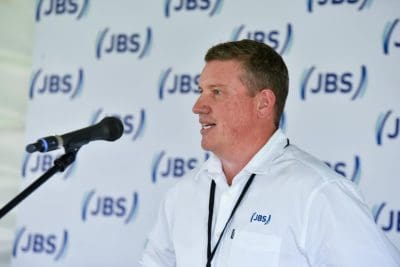
JBS Northern COO, Brendan Tatt
JBS Northern chief operating officer Brendan Tatt told Beef Central the latest production lift reflected JBS Australia trying to grow its business in line with strong international demand and local supply.
Recently the company has scheduled occasional Friday shifts (including overtime) especially in the fabrication (boning) room, mostly around tidying-up after slow periods, but also about adding extra kill and bone capacity.
As part of staff expansion, JBS last year looked at building accommodation for staff at a number of locations, including Dinmore. Supplying accommodation for foreign workers is now a commonplace occurrence within the meat processing industry, out of necessity – tens of millions of dollars that could otherwise be injected into plant upgrades to deliver greater efficiency.
The increase in daily capacity comes after Dinmore and JBS Beef City – along with three other plants in NSW and Queensland – were re-listed for chilled and frozen export to China in May last year.
With forecasts of continued strong international beef demand out of the US, China and other markets heading into 2026, Dinmore’s additional production capacity could not be better timed, a large supply chain manager told Beef Central.