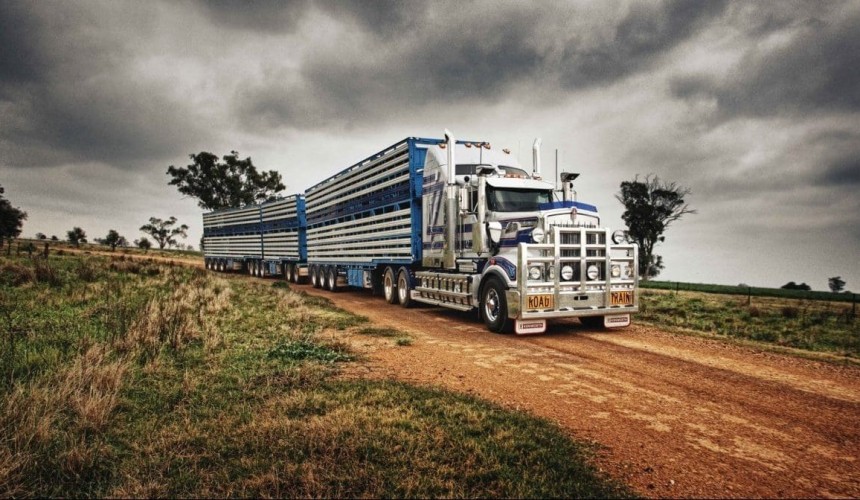
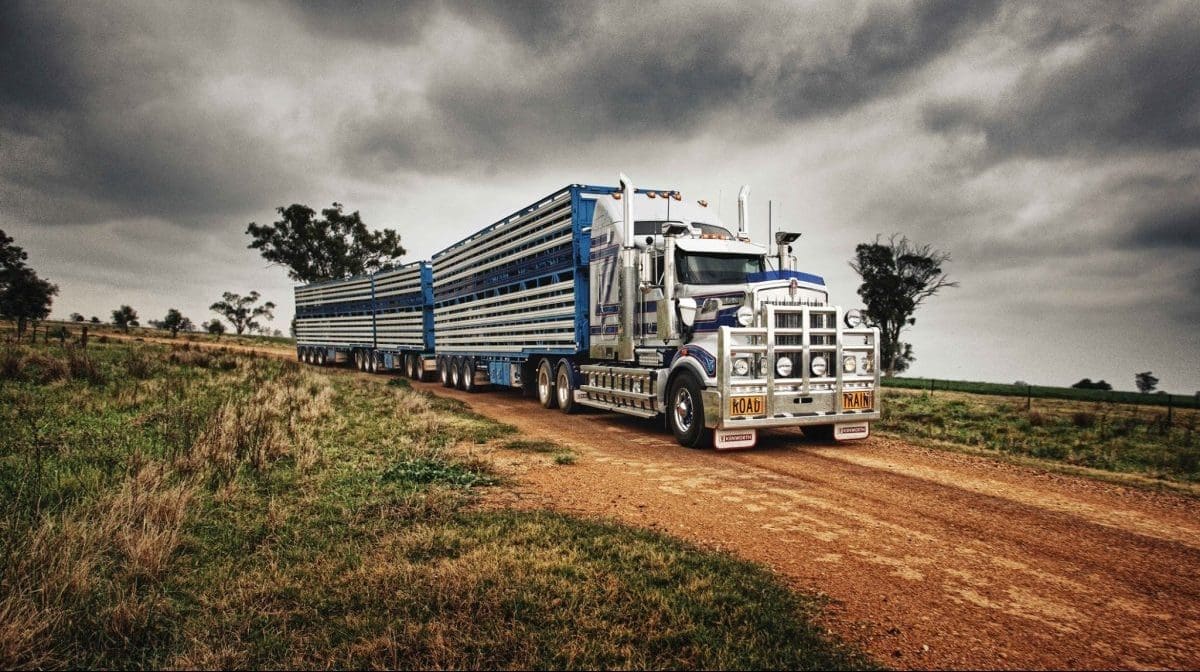
Cattle producers have been given a sobering reminder that their legal responsibilities under Chain of Responsibility (CoR) laws do not end once cattle trucks leave their boundary fence.
Talking at a Meat & Livestock Australia and AgForce Qld field day in North Queensland earlier this week, National Heavy Vehicle Regulator representative Andrew Gill provided several real-life examples to demonstrate how a grazier’s potential liability can extend far beyond their own properties under heavy vehicle laws.
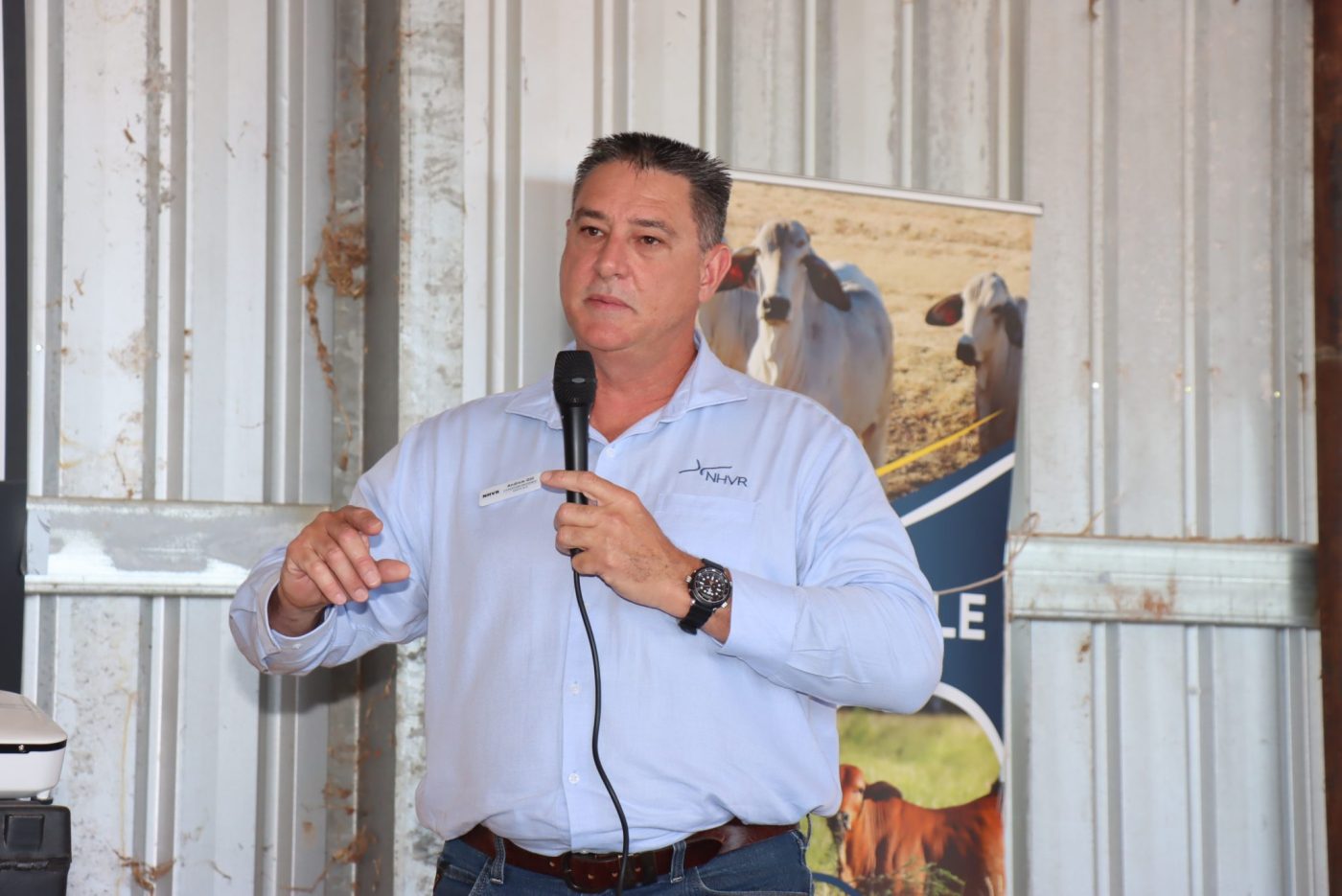 Mr Gill said under Chain of Responsibility laws graziers carry a primary duty of care and are responsible for everything that goes on with that vehicle right up until cattle are unloaded at their final destination.
“If a Grazier thinks once they’ve loaded the cattle onto that truck and it leaves their boundary fence and it’s on the road, that’s the end of it for them, they’re sadly mistaken,” he said.
“So it’s very important that you understand what your primary duties are with that transportation of your cattle.”
He pointed to a number of real-life case studies to demonstrate how the original consignor of freight retained a primary duty of care for the duration of the journey.
In one example a business consigned heavy vehicles to transport shipping containers. The load inside the imported 40-foot shipping container was not restrained properly, and the vehicle rolled.
Fortunately, there were no deaths or injuries. NHVR’s investigation revealed that the consignor had failed to comply with its own Chain of Responsibility policy. The company pleaded guilty and was fined $75,000.
Jail sentence underscores repsonsibilities of primary duty holders
Another recent case in northern New South Wales involved a heavy roll of wire fencing falling from a truck into the path of an oncoming car, which resulted in the death of the driver, a young father of two children.
The vehicle had been loaded by two owners of the fencing company. The next day the loaded truck was driven by a driver who did not check the load before leaving. The prime mover broke down on the journey. Another driver brought a replacement prime mover which was hooked up to the load, and then continued on in the passenger seat with the driver.
A few kilometres further down the road a mesh fencing roll fell off and went through the windscreen of a vehicle carrying the man and his two young daughters.
 In a court decision handed down in July, the passenger – the driver who had bought out the spare prime mover and continued with the load as a passenger – pleaded guilty to a 26F Category One offense.
Despite not being the driver, or the person who loaded the truck, he was deemed to have had a primary duty when he arrived with the replacement prime mover to make sure the load was safe.
He received a three-year jail sentence.
The driver and two executives who loaded the truck will go before the courts next year.
“That is an example of how the Chain of Responsibility works,” Mr Gill said.
“If you have a primary duty with that truck, it doesn’t stop just because your role in that has ceased.
“So in a nutshell, if a truck was leaving here with cattle, everything that makes that vehicle safe to enter the roadway, safe for the driver and all other road users, must be in place.”
‘No one can delegate their primary duty to someone else’
He also emphasised that “no one can delegate their primary duty to someone else”.
“So the operations manager can’t say, ‘well, I didn’t load it’.
“The loaders can’t say, ‘Well, I didn’t drive it’.
“Everyone is responsible for that journey from when it starts to when it finishes.
“For graziers, you don’t really work in the heavy vehicle industry, but you’re covered by the heavy vehicle laws, and if you don’t know, you’ll fall foul very quickly.”
Giving inadequate notice to truck drivers can put graziers in breach
Organising a truck at short notice without allowing the driver enough time to travel safely is another compliance risk for livestock producers, Mr Gill said.
“You cannot consign freight or cattle or whatever the case may be, where there’s not enough time for the driver to get there safely or within the confines of the law.”
In another recent case a business that scheduled the journeys of heavy vehicles was prosecuted for numerous fatigue management offences following an anonymous tip off to the heavy vehicle confidential reporting line.
The business was charged with a Category Three offense because it had failed to schedule trips in a way that enabled drivers to avoid fatigue.
“So a Grazier who calls up a transporter could very easily find themselves in that Chain of Responsibility for that type of offence,” Mr Gill said.
“Especially if the driver of that vehicle or the company wasn’t given the adequate time to rest or comply with the Heavy Vehicle National Law (HVNL).”
Using ‘rogue operators’ can also expose graziers to liability
Another message that may come as a surprise to producers not familiar with CoR law is that if they hire transporters that ignore fatigue laws or fail to maintain their vehicles and equipment adequately, they risk prosecution themselves.
“If a Grazier was to repeatedly use a transporter that was a bit rogue, who didn’t worry about fatigue laws, didn’t worry about maintenance requirements on their vehicles, you’re actually breaching the chain responsibility by using that that transporter.
“You must be utilising people who are reputable, responsible and adhering to all laws.
“If you are using someone who’s a little bit dodgy because he’s cheaper, you might find yourself before the courts if something goes wrong”.
Mr Gill added that something did not necessarily have to go wrong with that vehicle for ramifications to be incurred.
“If that vehicle’s pulled over and found that there’s maintenance issues or the driver is not doing his logbook, we can come and knock on your door, and depending on the circumstances you can find yourself before the Magistrate. So it’s a lot to think about.
“… if you as a grazier was to use someone like this, you’re liable for the same offenses that that company is committing, because you should be using someone reputable and someone who’s within the operating within confines of the HVNL.”
How can a grazier know?
So, how can a grazier possibly tell if the livestock transporter he or she is consigning is operating within the confines of the HVNL?
In response to that question Mr Gill conceded this can be “a grey area”, acknowledging that the NHVR and Transport Department do not issue memos stating how many offences individual transport companies may have had.
He suggested the best option for producers to mitigate those risks with the use of contracts.
“You ensure that your policy and procedures and your contracts and the way they are written up are that the hauler must comply to that.
“It is about mitigating the risk. We can’t always remove the risk. We know we can mitigate against it.
“So to mitigate against that, you would make sure that you’ve written good contracts with those operators.
“You make sure you give them training on what policy and procedures that you have when they come onto your property, and how they transport for you, and you must give them training for that.
“Good contracts and policies are the best way to mitigate risk.”
Penalties are severe and can include jail
Fines for breaching CoR laws range from tens of thousands to millions of dollars, with Category One offences carrying potential jail terms, Mr Gill said.
“If an individual commits an offense under Category One, $398,776 or five years imprisonment or both. Or if a corporation commits the offense, $3,987,760.”
“We want the industry to be safe”
Mr Gill said the NHVR did not want anyone to get to the stage where they have to go to court.
“We want the industry to be safe and we want it to be productive.
“We have one of the best industries in the world, I sincerely believe that.
“Everyone should come home from work safely and not at the cost of someone losing their life.
“Be very mindful that where you sit on that Chain of Responsibility, and that if the cattle have left the property, that’s not the end of it for the grazier.
“All I can say is identify the risks and what risks exist and mitigate against it.”
The message delivered here is not helpful, its trying to induce compliance through fear. When you wield a 'big stick' to farmers, you actually don't improve safety, you get the middle finger. I would suggest the NHVR reassess their messaging because this is not encouraging in any way. If you truly want to improve safety, you take the industry along with you, not create a combative environment of 'us versus them'.
As a farm safety consultant(Dip OHS) and a grain & sheep farmer with our own truck under NHVAS Accreditation, this is my experience and understanding of CoR:
Farmers are within the Chain of Responsibility, so any incident investigation will look at all aspects of that chain and what steps contributed to the incident. That does not mean that the farmer is automatically 'responsible', but they are within the investigation chain.
Under all workplace safety law is the principal of 'reasonably practicable'.
- What could you have reasonably done to prevent something?
- Did the driver looked tired or on drugs? Did you question it with head contractor or livestock agent etc? .
- Were you not happy with that driver last time? Notify livestock agent or freight company and refuse to accept them next time.
These are some example steps you may take to mitigate risk.
Be clear on your safety expectations in a 'carrier agreement', it can be kept quite simple, but be clear.
From the NHVR website:
The primary duty is the obligation to ensure so far as is 'reasonably practicable' the safety of your transport activities.
What is 'reasonably practicable' is assessed based on:
- the probability of an incident
- the harm that could result
- what you know about potential risks and how to control them
- whether controls are available and suitable
- the cost of controls in proportion to the risk.
I suspect most of the mishaps could be directly or indirectly attributed to the condition of the roads including driver and premature machinery fatigue .
And of course lawyers have to make a living too.
Time to kick the can back!!!
I do not own a truck, but use a reputable contractor. I am actually deeply shocked, horrified and angered that the National Heavy Vehicle Regulator expects that an average farmer/ person has the skillset to legally determine the safety of heavy vehicle operations on a public road. The Regulator is not doing its job if it allows a truck to arrive at my front gate, if there is a problem with the truck or the driver. The truck is specifically designed to carry livestock and should not be allowed to work if it or the driver are not fully compliant.
My duty of care is to ensure that nothing happens on the property that compromises the safety or compliance of the driver or truck. It should leave the property as safe and compliant as it arrived.
Once back on public roads I have no legal control over the operation of the truck. The load was compliant when it left.
The Regulator is not thinking clearly if it expects unskilled people to ensure heavy vehicle safety on public roads. Law is failing public safety if this is allowed to occur.
This is so not right, once a load is on a truck, it should be 100% the responsibility of the transport company. If they are not willing to employ component drivers, that should do their job properly, by checking and prestarting their gear, it should fall back onto the driver and transport company, and I am speaking from experience, I AM a interstate truck driver. These Farmers/ businesses engage us because it's our profession, we don't tell them how to farm, and they shouldn't tell us how to truck. It's the CoR system finding the easiest way to point the finger....
Once you gain a heavy vehicles or license you become a professional driver… am I also responsible for his speeding fines, log book breaches or vehicle checks?
So essentially if input a kid on a school bus and send them to school amd something happens to that vehicle I as a parent am
Responsible.
NHVR have a place in the industry and it’s to remain behind a desk
the grazier should not be accountable for the truck driver or how to load the truck . each one has his responsibility. sorry to say but this is just shifting responsibilities.
And if a driver elects to drive more than 5 hours straight, instead of taking the required break, is the cattle owner somehow partly responsible?
What if the driver speeds, or runs a red light ?
I'm happy to take responsibility for actions over which I have control, but I sure as hell won't take responsibility for those that I don't
it's a pity the chain of responsibility does not apply to politicians and ministers . They can usually sidestep the issue or throw an underling under the bus.
well I have heard it all,to say a farmer is responsible for anything that goes wrong once it leaves his property beggers beleaf, I wouldn't expect anything from beauacrats or our judicial system, it's. made up from people who have never done a hard day's work and have no common sense
All comments are 100% spot on.
What absolute "Pass the buck" nonsense. Always looking to push the blame onto someone else.
This appears to be a bureauracratic witch-hunt.
When a grazier books a livestock haulier, the onus must be on the trucking company AND driver to manage fatigue and vehicle machinery condition.
Does all this rubbish red tape designed by bureaucrats who never dirt under their fingernails mean that the grazier needs to inspect the drivers logbook and do a machinery inspection on the vehicle prior to loading?
I think not! I don't think the grazier would have a legal right to ask for the logbook anyway.
The drivers would know if the livestock have been correctly loaded and they also have the right to refuse livestock not fit for loading.
By the driver having signed the stat dec does mean he/she is happy taking charge of the load once on the truck.
NHVR .... go back to bed!
Love how I have just put in several long days mustering drafting prepping stock for transport and now I'm responsible for what someone else, running their own business and equipment has been doing for the last 24 hrs as well
By the way good luck telling a truckie after he has driven 200 kms on shit roads to get to you to load. “Oh sorry mate you need to have a sleep”, or “show us your log book I'm worried your out of hours”
They sign a stat dec on the vendor dec to say they are in charge of the livestock during transit. I would assume that means their capacity to transport them. If not the rules need changing.
what a load. Everyone blaming everyone else for their mistakes. just imagine 4am in the morning ya tell the truckies to pull in to the shed so u get can get ya flashlight ans clip board out and go over there trucks before loading a couple of hundred bullocks.
So if I hire a "rogue" operator people like Mr Gill will be in jail beside me as the NHVR never provided me with the information that the operator was a "rogue" operator? Therefore they failed the chain of responsibility laws themselves.
I suspect like politicians the NHVR are conveniently immune to chain of responsibility laws themselves.
Personal responsibility seems to have been thrown out the window.
all truckers are responsible for loading their trailers. They are responsible for their paper work. There are responsible for their truck maintenance and repairs trailers maintenance and repairs. The feedlots are reasonable of the cattle before they are loading - make sure the wait for buyer and no sick or weak animals, or there paper work. Also I worked in feedlots in Alberta Canada