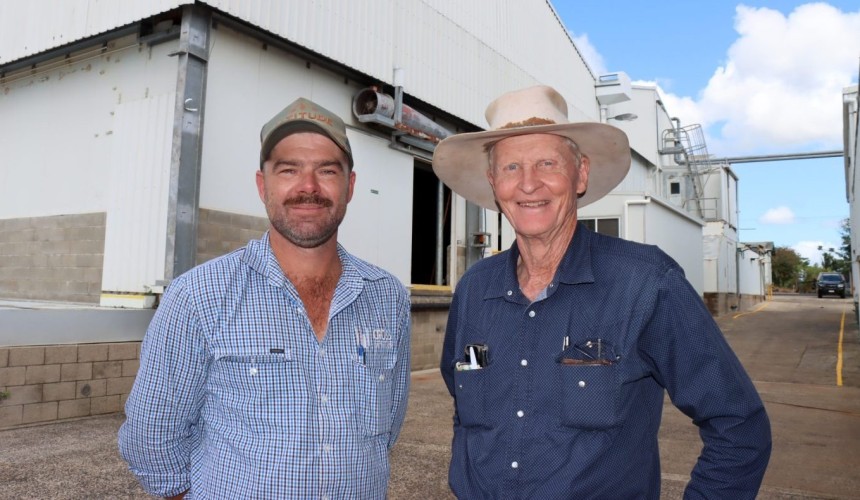
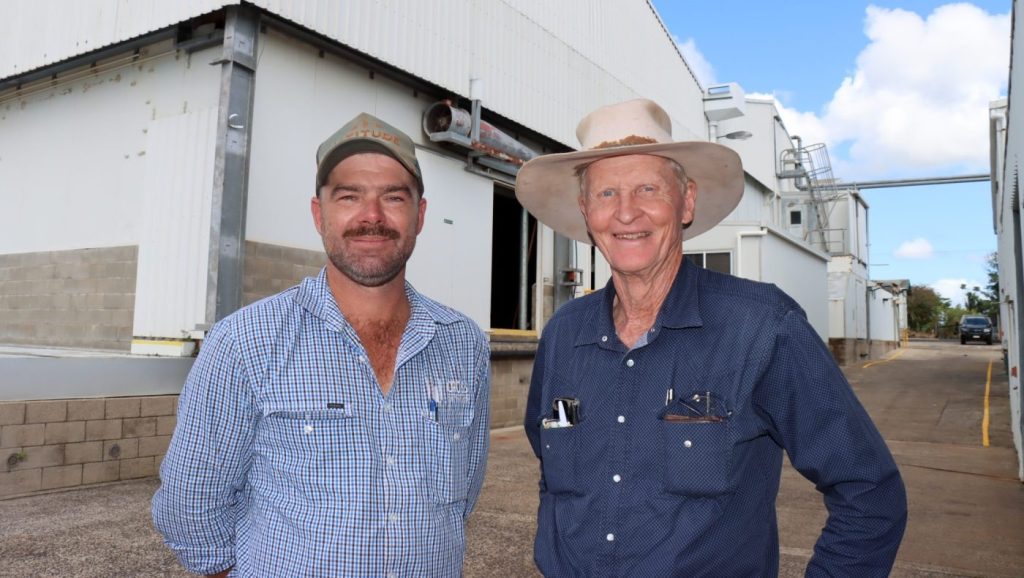
Cross Custom Meats owner Doug Cross with long-time extension officer and pasture specialist on the Atherton Tablelands Bernie English.
A GROWING grass finished beef industry on the Cairns hinterland is the driver behind the purchase and development of an abattoir that has sat dormant for almost 20 years.
Atherton butcher and Altitude beef brand owner Doug Cross purchased the dilapidated Innisfail abattoir earlier this year and is currently re-fitting it with hopes of getting it operational next year.
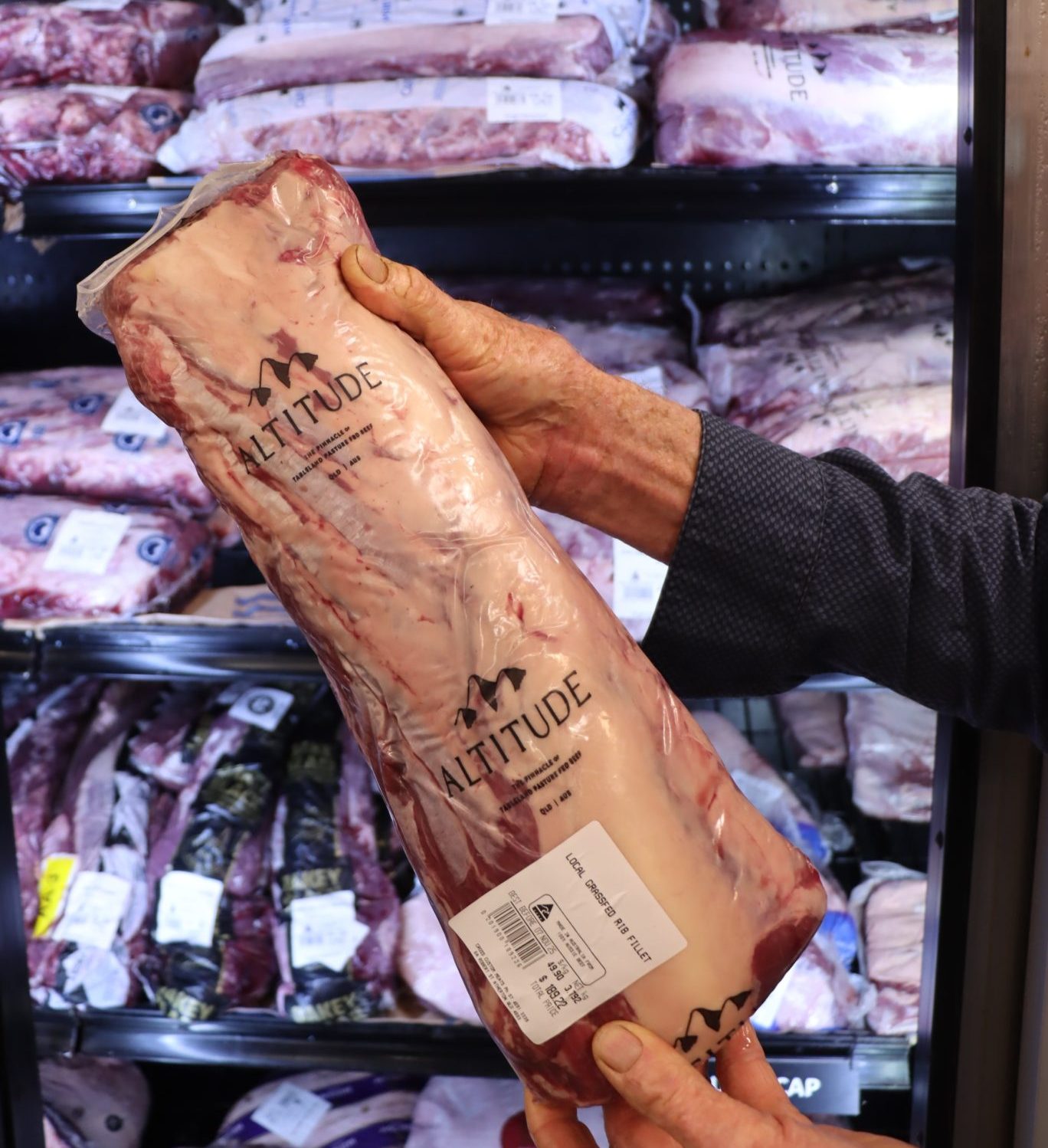 Mr Cross has been growing his business alongside the grass finished beef industry on the Atherton Tablelands. He has developed his butcher shop, Cross Custom Meats, in Atherton and the Altitude Beef brand which is sold across the eastern seaboard and the Northern Territory.
Altitude Beef processes about 100 carcases/week through service kill arrangements at other abattoirs – currently using the Biggenden Meatworks. Mr Cross said bringing the processing in-house would secure the future of the business.
“There is fair bit of turmoil finding service kill providers throughout Australia and I didn’t want to be susceptible to that anymore,” he said.
“We have a good consumer base that supports the brand and the vision is to grow it into the future.
“If we can just get this place operational, we will first make sure the staff get the hang of it, iron out any wrinkles, make sure processes are flowing right and then hopefully we are up to 100 head/week by the middle of next year.”
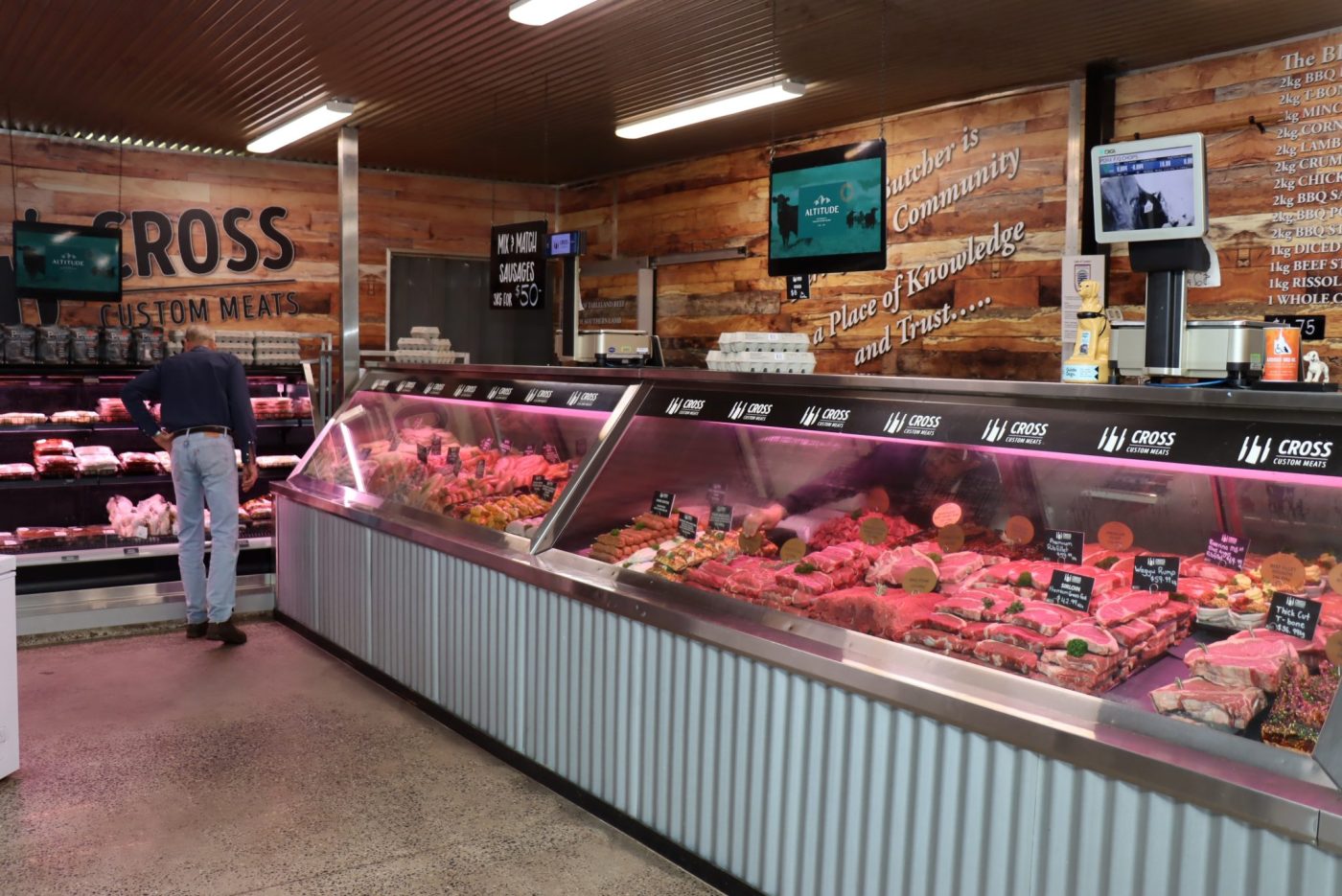
Part of the display cabinet at the Cross Custom Meats shop in Atherton.
Atherton’s grassfed beef industry
Mr Cross has been working closely with a network of beef producers on the Atherton Tablelands and industry experts like pasture specialist Bernie English for several years. The Atherton Tableland -Far North Wet Coast has about 560 producers with 140,000 head cattle turning off 40,000 head annually to a range of markets including live export, JBS Townsville, local butchers, local fatteners and feedlots further south.
(See previous article about the growth of the grassfed beef industry on the tablelands)
 Alongside the growth of Cross Custom Meats, Tablelands producers have been working to keep improving the quality of cattle and benchmarking through carcase competitions using Meat Standards Australia. Many of the carcases in the competition are returning MSA scores higher than index 60.
More than 400 dairy farms once operated on the southern Tablelands, before dairy deregulation and milk processing became more centralised and many of the farms were transitioned to beef.
The dairy industry put a lot of work into developing grass and legume pastures and fertiliser requirements over the years, allowing the now-beef producers to operate with ideal stocking rates producing 220-250 kg annual live weight gain which is necessary to produce a good weight for age animal which is the corner stone of high meat quality.
With ticks still a problem on the Tablelands, producers have been working to find good crosses that provide tick resistance and produce high-quality carcases. There is a wide spectrum of breeds, however Belmont Reds, Brangus, Droughtmaster and Senepols are particularly popular among the bulls.
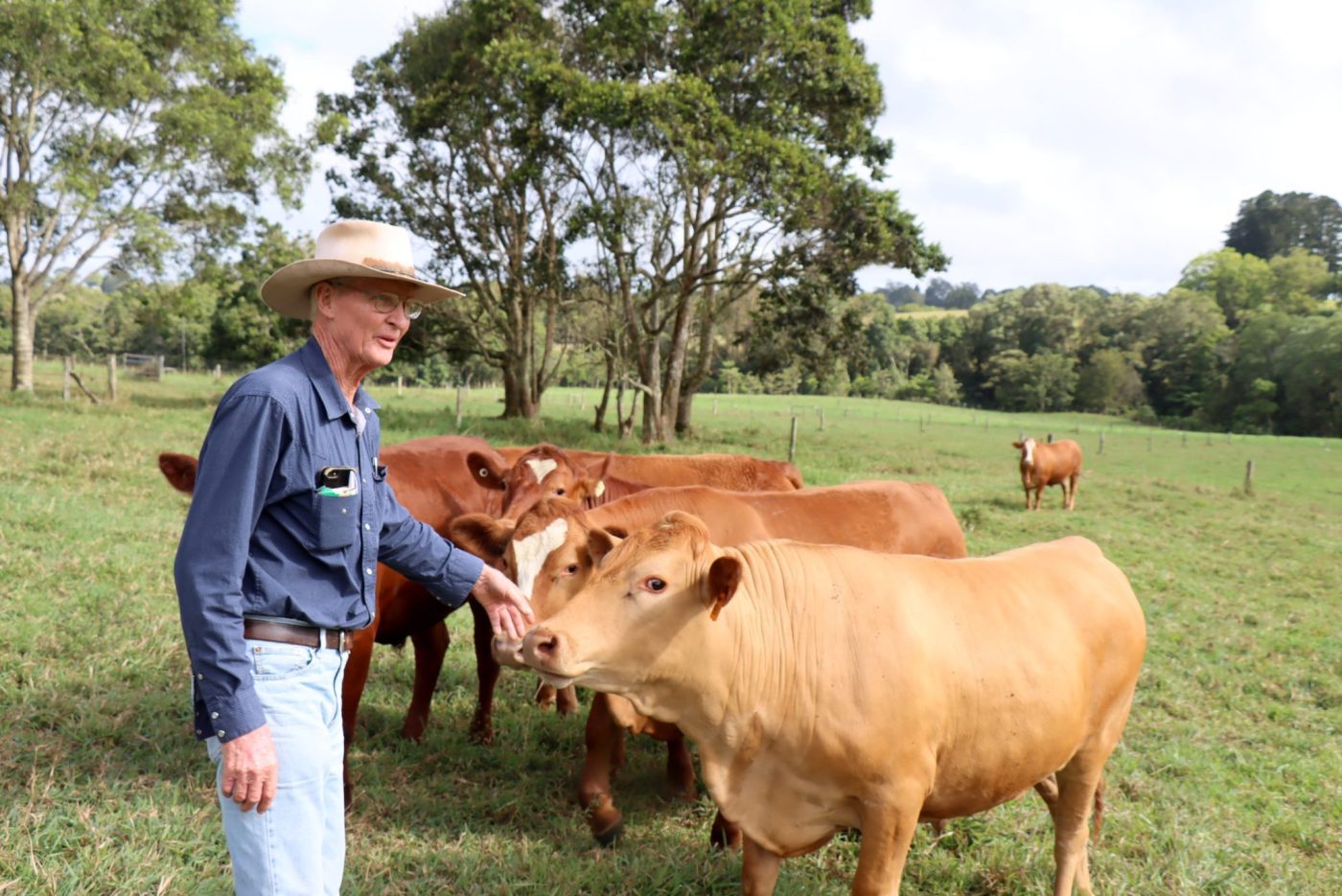
Bernie English with Bill and Jeremy Tranter’s cattle on the Southern Tablelands. The Tranters are long-time suppliers of Cross Custom Meats, running Belmont Reds on what was once a dairy farm.
Mr Cross said the ability to finish cattle on the Tablelands provided a good opportunity for surrounding areas – which is mainly large-scale breeder properties targeting the northern meat trade and live export.
“There’s a few producers we started with, Bill Tranter, Russell Geraghty, Cam and Fred Whiting, Hanrahan boys, Bernie English, you have Telpara Hills one of the leading Brangus studs in the north and Nick Trompf with the red and black Angus,” he said.
“There is a huge future for the meat industry in the north to grow a better article. You are still going to need those Brahman breeders but using softer bulls produces an ideal cross bred animal for fattening on the Tableland to generate a premium and pass that on.”
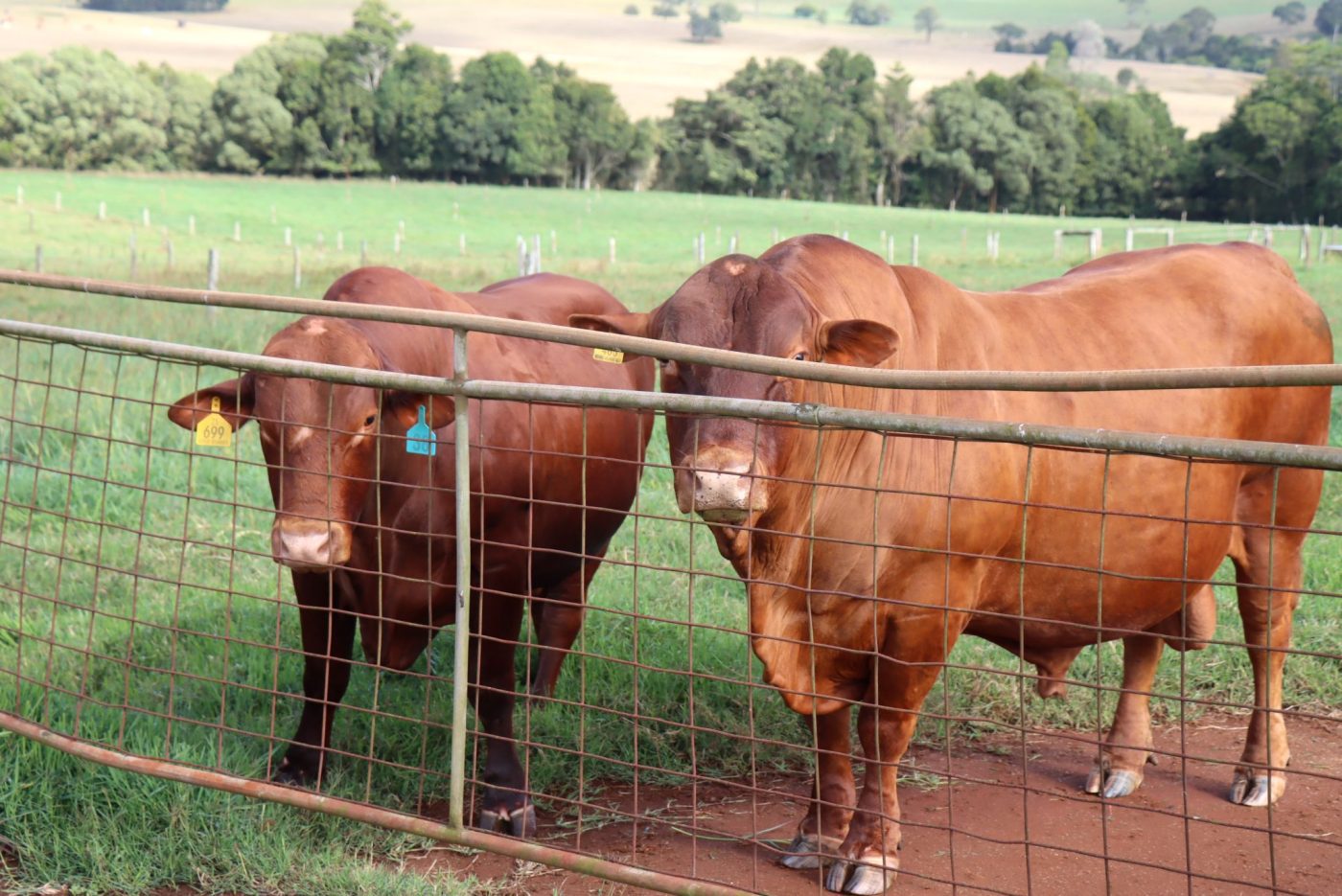
The Tranters Belmont Red bulls.
Asked whether he was going to invest in MSA grading in the plant, Mr Cross said he was open to it.
“To start we will do it under the AUS-meat program until we can make sure everything is happening,” he said.
“I think a lot of the butcher shops in Australia, they will still buy under the MSA program, but a lot of them are just buying on marble score.
“But I would like to go right through to the MSA, we will just need to see with producers if they come with us and do their part.”
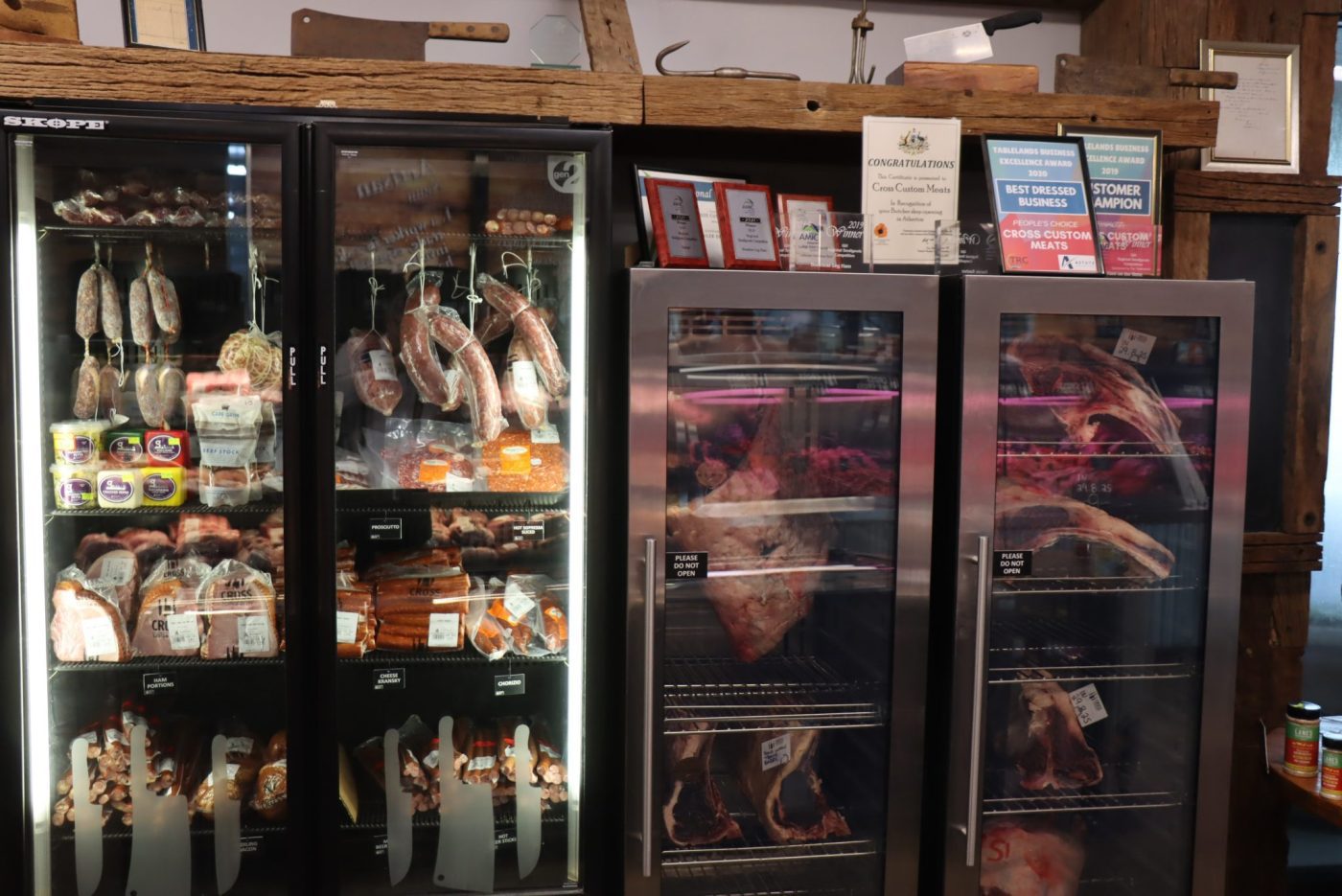
Fridges and dry ageing cabinet in the Cross Custom Meats shop.
The Innisfail meatworks
The Innisfail meatworks was last operated in 2006 by Teys Brothers, before it suffered extensive damage from Cyclone Larry and ultimately closed. The 40-year-old plant was once able to process 700 cattle/day.
Several attempts have been made to resurrect the plant – ranging from plans to use its equipment to start an abattoir on the Solomon Islands, to running a rural supplies shop to raise the capital needed to re-start processing.
The plant is currently being fitted out to suit a smaller scale operation, putting false walls in refrigerated areas to reduce power costs, while keeping room for expansion.
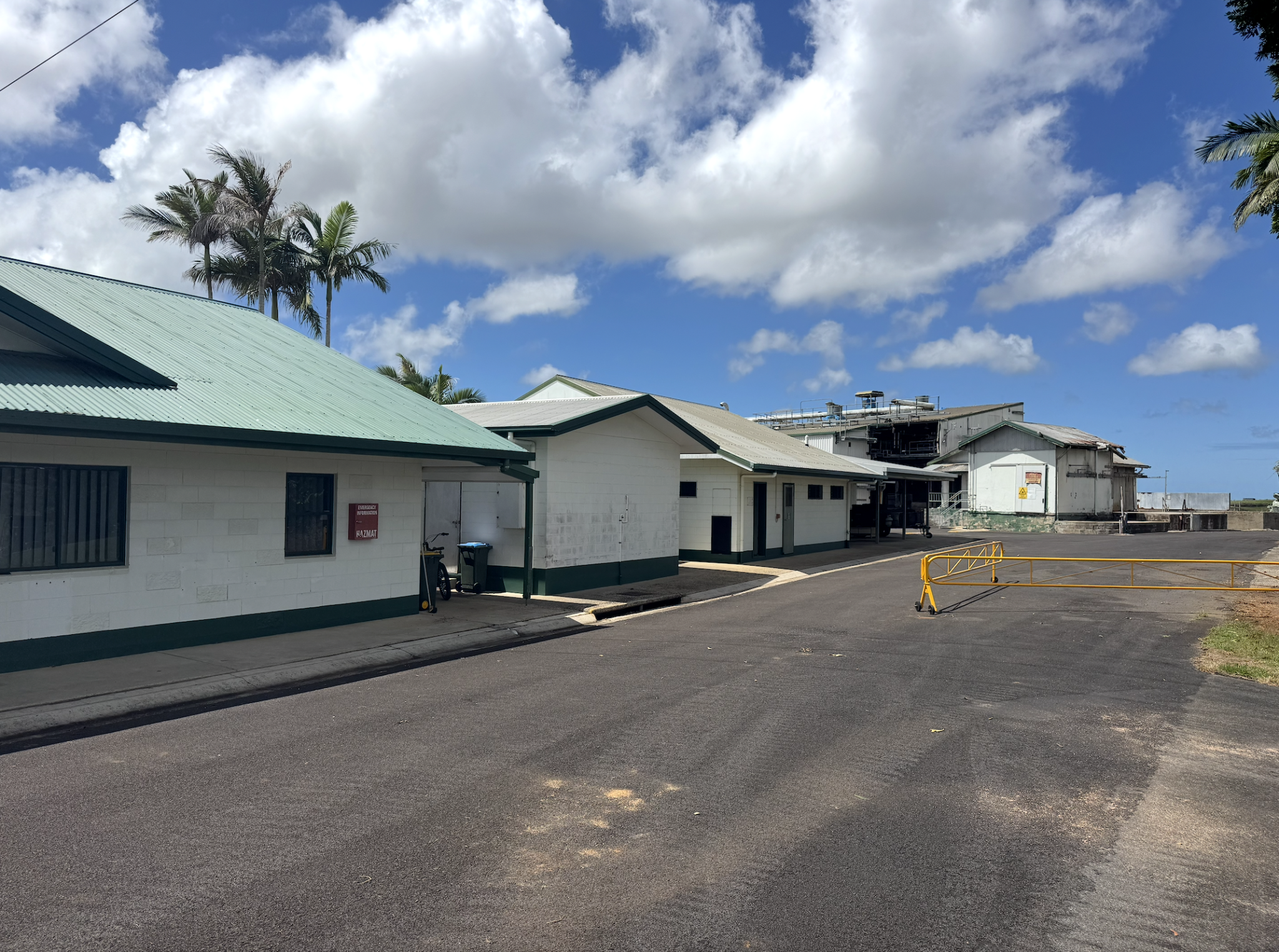
The front of the Innisfail abattoir, which has not been in use for almost 20 years.
Mr Cross said the local community and the Cassowary Coast Regional Council had been supportive of its development, helping him with some of the trickier parts of processing like waste and water management.
Cross Custom Meats already has a boning and packing plant in Atherton used to break down carcases and box the meat. Mr Cross said with good staff already working in that plant, it was going to stay part of the business.
Opportunity on the domestic market
The early stage of the renewed Innisfail plant will be servicing the domestic market exclusively.
Mr Cross said it was a good time to be selling meat within Australia, as record amounts of beef is heading offshore – an opportunity he is already experiencing in the butcher shop.
“Because we have slowed down production for Altitude Beef while we get the Innisfail plant operational, we have had to try and buy some more meat for the butcher shop and it has been that difficult,” he said.
“It is definitely tricky trying to buy some quality product.”
fantastic re open of Innisfail abattoir, best news ever for the whole area , jobs jobs jobs & the best beef ever thanks , was just speaking to customers on a beach horse ride at kurrimine beach , that if I ever won lotto I would re open the meat works .... bravo Regards Chrissy Homan kurrimine beach horse rides
So good to see the Innisfail meatworks being restored and securing the quality of products of Cross Custom Meats..
Ticks shouldn't be a problem now with that new Coopers Exzolt.
Unbelievable stuff!!
Great to see the abattior being resurrected.
A great plus for the meat industry.
Do you have an outlet in Townsville cheers