
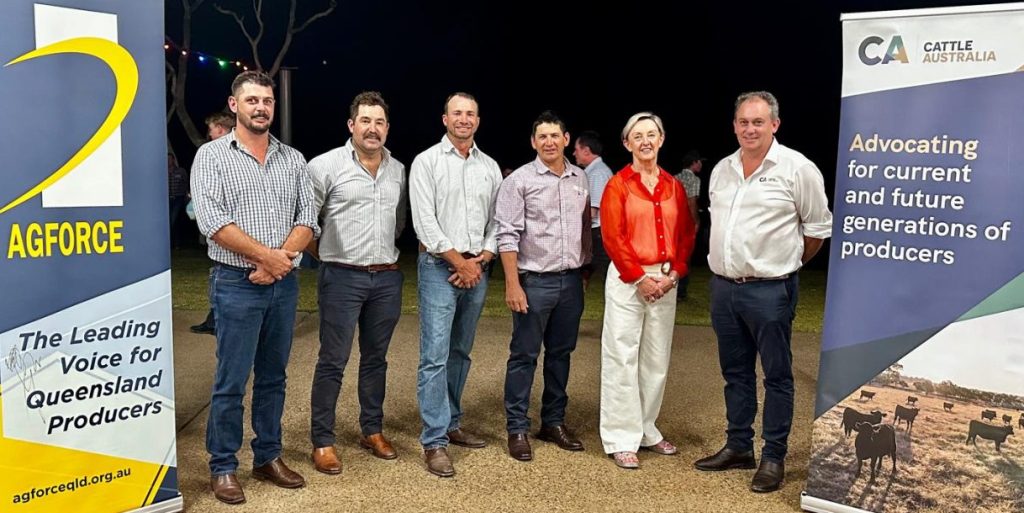
Will Evans, Bryce Camm, Robert Chaplain, Adam Armstrong, Jane McMillan and Garry Edwards at the AgForce Cattle and Cattle Australia producer event in Cloncurry last night.
INDONESIA’S ambassador to Australia believes the two countries have a unique opportunity to become an “economic powerhouse” by combining Australia’s agricultural production strengths with Indonesia’s lower labour and energy costs to boost processing and trade.
Dr Siswo Pramono outlined his vision at a combined AgForce and Cattle Australia forum in Cloncurry on Thursday night.
“If we can do more cooperation, processing in Indonesia and turning it back to Australia, the two countries can flourish together,” Dr Pramono told the gathering or northern cattle producers.
He noted that Australia produces around 30 million cattle – more than its human population – while Indonesia has 270 million people and just 18 million head of cattle.
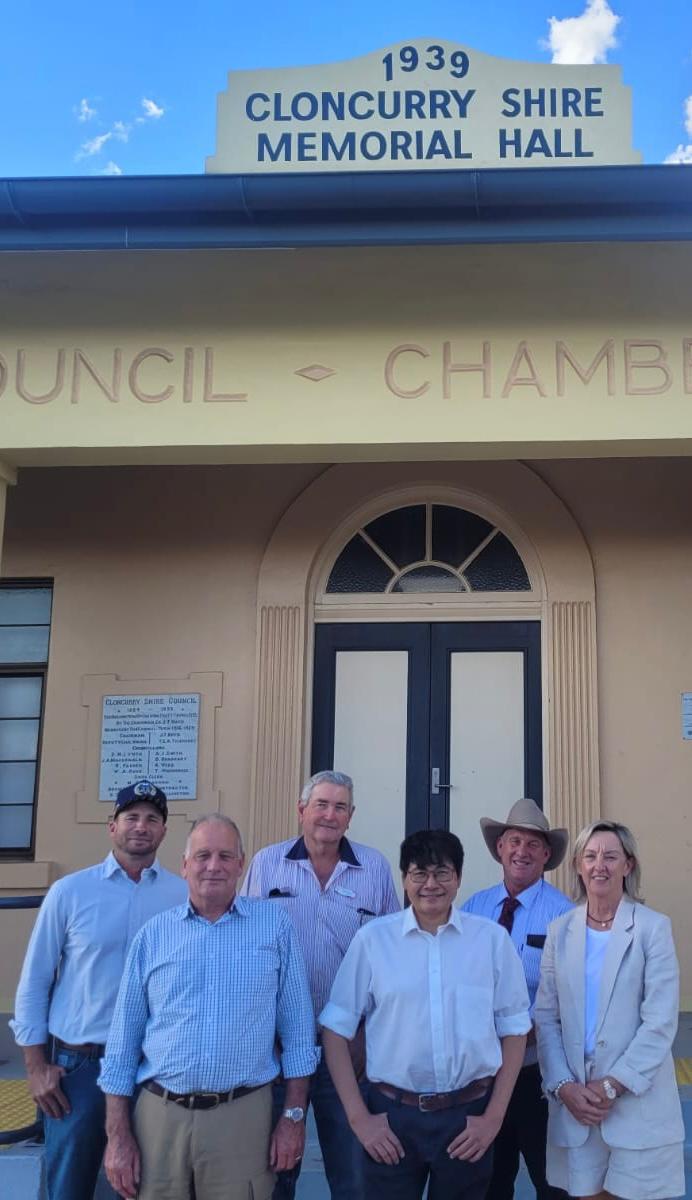
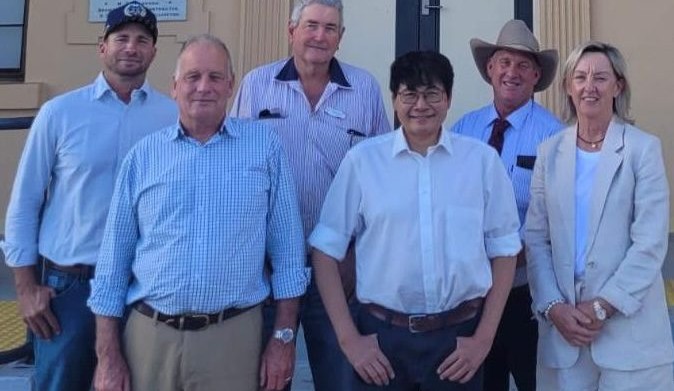
Indonesian Ambassador to Australia Dr Siswo Pramono met with cattle producers in Cloncurry.
Processing agricultural products such as meat and wheat in Indonesia could dramatically lower costs, he said.
Energy prices in Indonesia are around 7 cents per kilowatt hour compared with 30–40 cents in Australia.
Similarly, labour costs in Indonesia averaged about A$300 per month, compared with A$3500–$4000 in Australia.
“Processing takes a lot of energy and people,” he said.
“Energy and labour are much cheaper in Asia… if we can do more cooperation, this is my dream to have a so-called Indonesia Australia economic powerhouse.”
Indonesia already spends around A$1.2 billion annually on wheat imports, previously sourced largely from Russia and Ukraine, but increasingly from Australia since the war.
The ambassador said Indonesia’s new “Nutritious Meal” program, which will provide free meals to 83 million schoolchildren, will significantly increase demand for protein.
“Our kids are always hungry, they want to eat protein and milk too,” he said.
Indonesia currently produces only one million tonnes of milk annually but consumes five million tonnes, meaning four million tonnes are imported, much of it from New Zealand and Australia.
He said demand for lean Brahman beef, well suited to Indonesian cooking methods, was also expected to grow as purchasing power increases.
A new wave of Indonesian investment
Dr Pramono also pointed to Indonesia’s recently established a US$1 trillion sovereign fund called Danantara to support agricultural and mining investments, with Australian enterprises a key target.
He said the focus is on “brownfield”rather than greenfield investments, with Indonesia looking to take small equity stakes, for example of 10-20 percent, in existing operations and “learn by doing” in Australia’s red meat and dairy industries.
 “Investing in Australia is safe for us because of the strong biosecurity and established supply chains,” he said.
Since the Indonesia-Australia Comprehensive Economic Partnership Agreement (IA-CEPA) came into effect in 2020 bilateral trade between the two countries has doubled.
Trade in goods and services grew from A$17.7 billion in 2019 to A$35.4 billion in 2024. Indonesia recorded a trade surplus of A$3.13 billion with Australia last year.
A review of IA-CEPA is currently underway, and Dr Pramano has previously stated that will provide an opportunity for both countries to increase their level of regional economic collaboration for the mutual benefit of both.
Dr Pramono stressed that the rise of developing Asia – now accounting for 45 per cent of the GDP of G20 nations – underpins the strategic case for closer Indonesia-Australia integration.
“In 2000, developing Asia accounted for 35 per cent of G20 GDP. Today it is close to 50 per cent,” he said.
“In ASEAN countries the contribution of manufacturing to GDP is 20pc. If you compare with Australia, the contribution of manufacturing o GFP is 5-6pc
“Taking the basic material from here, and processing in Indonesia, and then we can send it back to Australia because you are very good on technology and the last end of the production.”
He also spoke of the role Federal Member for Kennedy Bob Katter had played in helping to encourage him to meet northern producers who supply Indonesia with cattle.
“This year I accompanied Prime Minister Albanese to Jakarta to meet with my President,” he said as he opened his talk.
“At my transit in Sydney, someone called me from Brisbane – it was Bob Katter.
“And he told me, ‘there is a very important delegation from the northern part of Queensland coming to Jakarta, you must meet them’.”
The ambassador said he replied: “Mr Bob, I am accompanying your prime minister”.
To that he said Mr Katter replied: “This one is for cattle, it is more important.”
“And then we met (with northern cattle producers) in Jakarta, it was a very productive meeting.”
In conjunction with other Cloncurry producers we had the pleasure of giving Dr Siswo a tour of our Gipsy Plains brahman operation today. The continued interaction with Indonesia is an extremely important part of the Australian beef industry. With federal government appreciation of this trade and logistical positive support our ability to build our industry further to put nutritious meals in the mouths of hungry Indonesian children is possible.