
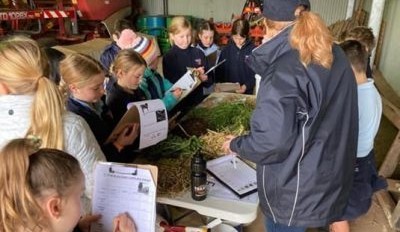
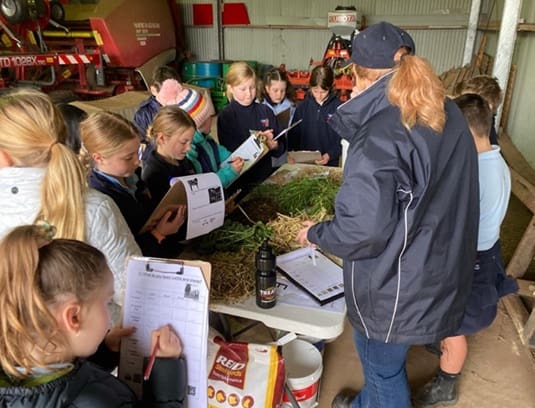
Paddock to Plate Year 3-4 Science, Timboon School Agricultural Project
How often have you heard – schools need to be teaching kids where food comes from?
In 2023 the need to expand agriculture’s influence in Australian school curriculum became the centre of a think-tank of national food and fibre leaders and lead to the development of the draft National Schools Food and Fibre Education Strategy.
Led by AgriFutures Australia on behalf of 15 Research and Development Corporations, this national Strategy aims to expand the reach and deepen the impact of food and fibre education with a focus on primary and secondary education, including Vocational Education and Training (VET) in schools.
The Strategy sets a vision for the future where: ‘Australian students and educators are informed and empowered to champion a sustainable and thriving food and fibre sector’.
Why does ag need to be taught at schools?
While there are many excellent examples of food and fibre education in Australian schools, it is lacking consistent traction in primary and secondary schools nationwide.
This issue presents significant challenges for the food and fibre sector, including difficulties in attracting a skilled workforce and building the understanding necessary to maintain widespread community trust.
These challenges are further compounded by several factors, including:
- Narrow and outdated public perceptions: nearly one in five Australians believe rural industries have seen little change in the past 50 years.
- Low levels of agricultural knowledge: nearly 80 per cent of primary students and 60pc of secondary students mistakenly identified hand milking as a current technique used in commercial dairy production systems.
- Limited interest in food and fibre careers: Youth Insights data reveals that only 4pc of young Australians express interest in agricultural careers.
- Trust in sustainable practices: just 53pc of Australians agree that farmers, fishers and foresters manage their environmental impacts effectively.
- Urban-rural divide: with 73pc of Australians living in major cities, there is a growing disconnect between urban and rural communities.
“Despite these challenges, 88pc of the Australian community recognises that rural industries are important to the way of life in Australia,” the Strategy outlined.
“Food and fibre education is essential for fostering a more accurate, informed, and future-focused understanding of agriculture … while also opening up meaningful opportunities for students to engage with, contribute to, and see themselves within the sector’s future.”
The draft strategy identified three priority areas for collaboration to improve the traction of food and fibre education in Australian schools:
- School-industry connections and support
- School-focused support and engagement
- Government support and structure
Improve school and industry connections
The strategy highlighted the importance of both investment and direct connection from industry to support schools.
“Only 25 per cent of food and fibre educators find it easy to access industry contacts to support their programs, revealing a significant gap between schools and industry,” the draft strategy highlighted.
“Educators consistently identify strengthening this connection as a key priority to advance food and fibre education, providing real-life experiences, opportunities for VET assessments, and inspiration for students and educators.”
School support for educators
The strategy also outlined the need to inspire, equip and provide support to new and existing food and fibre educators.
“There is also a critical need to broaden understanding of what food and fibre education involves and the career opportunities it offers,” the strategy outlined.
“Among both teachers and principals, student perceptions are identified as a major barrier to delivering specific food and fibre subjects.
“Providing targeted support for school-based staff (teachers, career advisors) and students is essential to raise awareness, boost interest and strengthen engagement in food and fibre education.”
Consistent government support key to longevity
Strong government backing through co-investment and improvements to curricula and compliance requirements is vital to advancing food and fibre education in Australia.
“State, territory and federal governments hold key responsibilities in the development of curriculum, setting school compliance requirements and providing school funding and infrastructure that directly impact the delivery and quality of education,” the Strategy outlined.
This is your final chance to have input into the Strategy. Feedback is being collated via a survey closing on Wednesday, August 20.
A public webinar will be held on Monday, August 4, 6pm to provide an overview of the draft Strategy, outline its key priorities, and offer an opportunity for participants to ask questions. Click here to register.
It is wonderful to finally see a discussion happening in the ag education space after successive governments have destroyed and sold up all of our agricultural training facilities. Curriculum is extremely important to ensure our future communities and industries succeed. We need to move way past the old university knowledge base of the green revolution and into the new era of regenerative agriculture, soil health, carbon and balancing nutrition for healthy food.
So, this will require a group of industry people to create links between the available information on regenerative agriculture and how food is produced and the context for healthy food vs ultra-processed junk food. Children and families need to be given every opportunity to grow their own food at home and learn while in school.